Union Parish Louisiana Bayou D’Arbonne Folk Festival
Each autumn, the plaza of the Union Museum of History and Art in downtown Farmerville fills with bluegrass, wood smoke, and the patient work of hands that still know old trades. The Bayou D’Arbonne Folk Festival — printed in some listings as the Bayou D’Arbonne Folk Life Festival — is a single-day gathering that puts the parish’s music and making side by side, free and open to anyone who walks onto Main Street. Three bluegrass bands headlined the sixth annual edition on Saturday 24 October 2026, and around them the day carried a gospel band, the high school band, dance students, historical re-enactors, food vendors, Dutch oven cookers, a Children’s Art Tent, handmade crafts vendors, a pie-eating contest, and demonstrations of skills that run from pine needle basket-making to hide tanning. The museum presents the festival, and the plaza and adjoining streets hold it.
About
The Bayou D’Arbonne Folk Festival belongs to Farmerville, the seat of Union Parish, and it belongs to the museum at the centre of town. The Union Museum of History and Art presents the gathering on its own plaza on Main Street, with the adjoining streets drawn into the day as well, so the festival feels less like a fenced enclosure and more like a downtown that has turned itself over to music and craft for six hours.
Most layers print “Bayou D’Arbonne Folk Festival,” while a television layer prints “Bayou D’Arbonne Folk Life Festival.” Neither form is a different event, and the sheet title matches the first of the two.
A television layer published on 7 October 2025 describes a 2025 edition held at the museum over the weekend just past, and public radio layers published on 12 and 14 October 2026 announce the sixth annual edition for Saturday 24 October 2026, from 10 a.m. to 4 p.m.
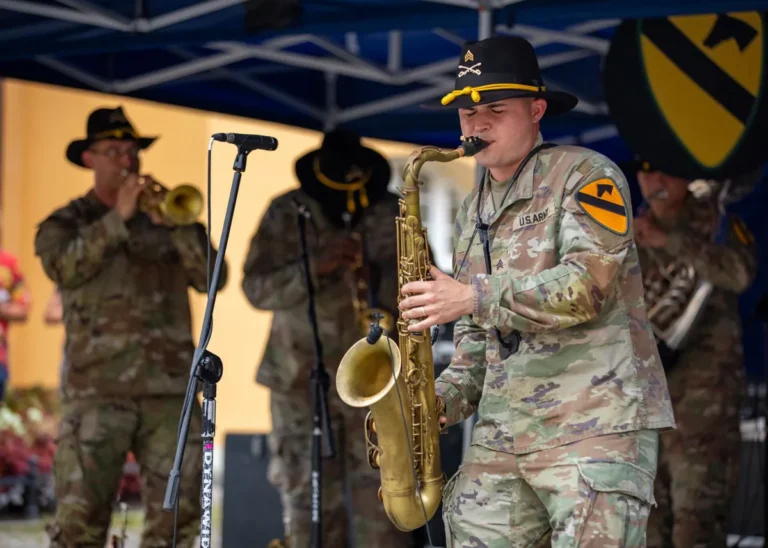
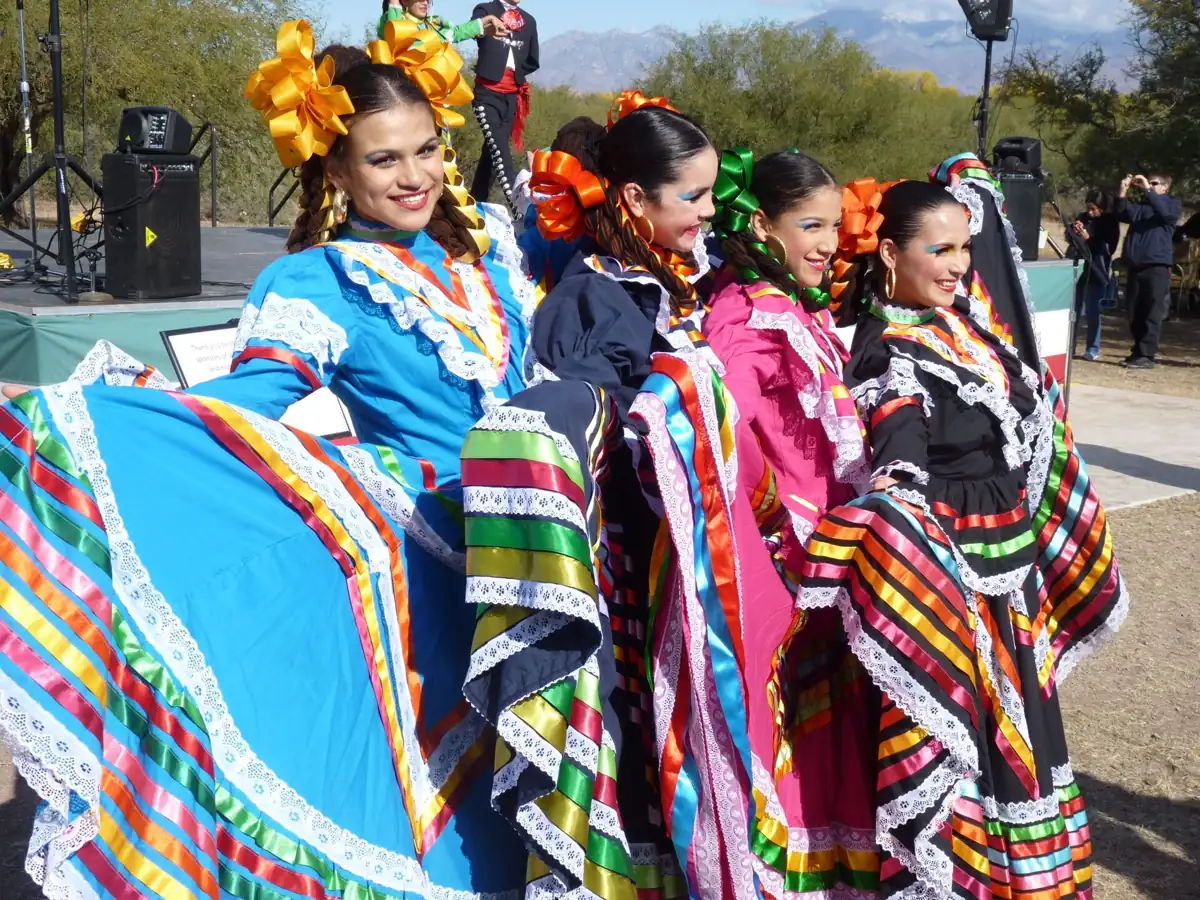
Live bluegrass leads the music, with three bands headlining the 2026 edition, and a gospel band, the high school band, and dance students fill out the stage programme. Alongside the music, the plaza carries the work of makers: handmade crafts vendors, Dutch oven cookers, and demonstrators of pine needle basket-making, blacksmithing, cane syrup-making, quilting, seed-saving, rope-making, crocheting, and hide tanning. Food vendors, a Children’s Art Tent, historical re-enactors, and a pie-eating contest round out a day that asks visitors to listen, watch, taste, and try things with their own hands.
For a useful comparison, see the Union Parish Louisiana Mayhaw Festival for another county festival.
Quick Facts
| Fact | Detail |
| Sheet title | Union Parish Louisiana Bayou D’Arbonne Folk Festival |
| Published names | Bayou D’Arbonne Folk Festival; Bayou D’Arbonne Folk Life Festival |
| Host town | Farmerville, parish seat of Union Parish |
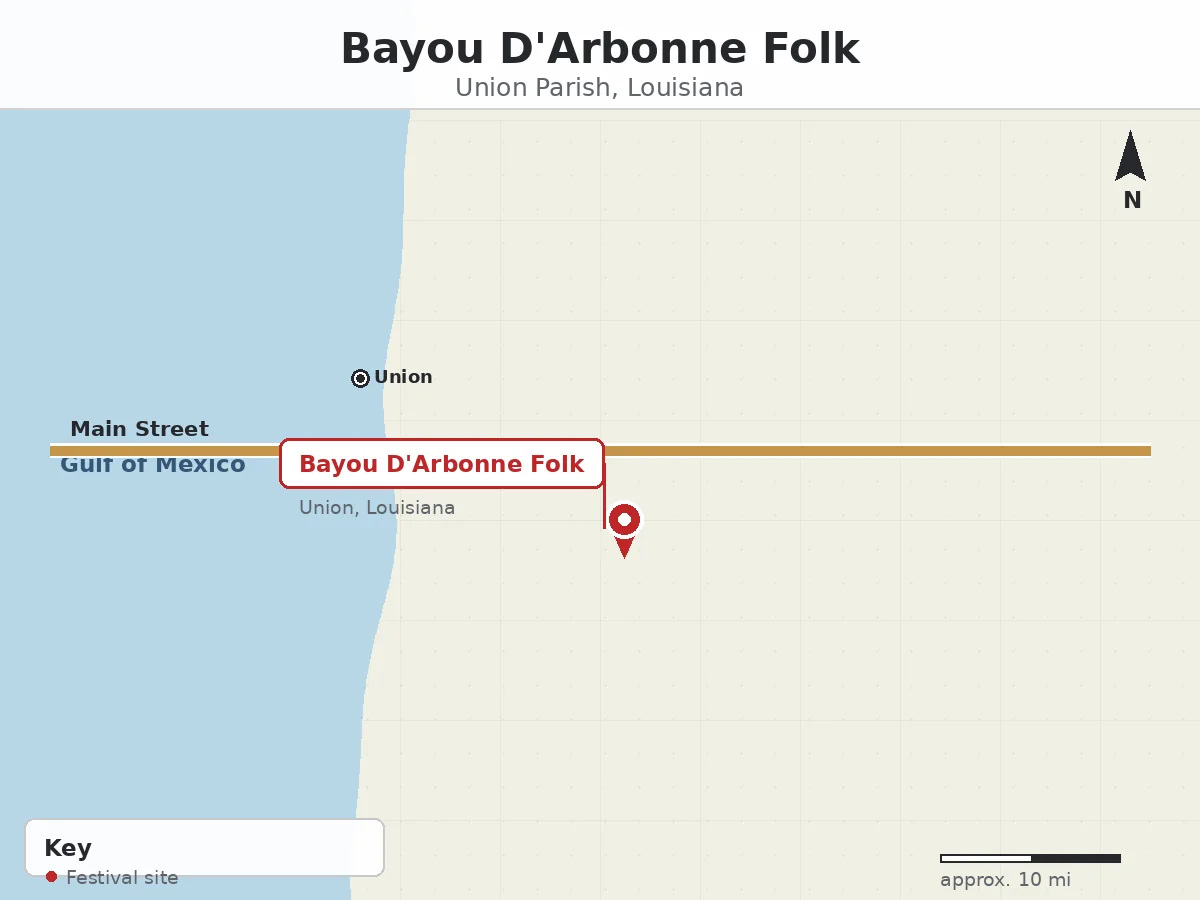
| Venue | Plaza of the Union Museum of History and Art, Main Street, downtown Farmerville |
| Organiser | Union Museum of History and Art |
| Latest dated edition | Sixth annual, Saturday 24 October 2026, 10 a.m. to 4 p.m. |
| Earlier dated edition | 2025 edition, held the weekend before 7 October 2025 |
| Admission | Free and open to the public |
| Music | Three bluegrass bands headlining, plus gospel and high school bands |
| Crafts and skills | Handmade crafts vendors and traditional skills demonstrations |
History
The history of the Bayou D’Arbonne Folk Festival, as the layers read tell it, is short and plainly told. The earliest dated edition in the record is the 2025 gathering at the museum, described by a television layer published on 7 October 2025 as having taken place over the weekend just past. A year later, public radio layers published on 12 and 14 October 2026 announced the sixth annual edition for Saturday 24 October 2026.
The sixth-annual billing in 2026 is a billing, not a birth certificate, and turning it into a starting year would be guesswork dressed as fact.
The Union Museum of History and Art does not merely lend its plaza; it presents the festival, which places the event inside the museum’s own work of keeping parish history and art in public view.
What to Expect
Music leads the day, and bluegrass leads the music. Three bluegrass bands headlined the sixth annual edition in 2026, and the stage programme around them included a gospel band, the high school band, and dance students, so the sound shifts through the hours from driving string-band picking to hymn singing to the bright energy of young local performers. Visitors who arrive at the 10 a.m. opening and stay until the 4 p.m. close will hear the full range, and those who come for part of the day will still catch at least one full set of the music the festival is built around.
Away from the stage, the plaza belongs to makers. Handmade crafts vendors line the grounds with work made by hand, and the traditional skills demonstrations give visitors a chance to watch old trades done properly: pine needles worked into baskets, iron shaped at the forge, cane boiled down into syrup, quilts pieced by hand, seeds saved for another season, rope twisted, yarn crocheted, and hides tanned. The demonstrators work in the open, answer questions, and let visitors see how much patience and practice each craft demands.
Food vendors keep the day fed, and Dutch oven cookers add the smell of wood smoke and slow cooking to the plaza air. The Children’s Art Tent gives younger visitors a place to make something of their own, and historical re-enactors bring the parish’s past into the present in costume and conversation.
Planning Your Visit
The plaza and adjoining streets hold the event, and the morning hours are the best time to walk the grounds while the crowds are still thin and the demonstrators are setting up their work. Comfortable shoes matter, because the day is spent on foot between the stage, the crafts vendors, the demonstration areas, and the food vendors, and there is no reason to hurry from one to the next.
Visitors travelling from elsewhere in Union Parish or beyond can treat Farmerville as a day trip, with the festival filling the middle of the day and the downtown streets offering a place to stroll before or after.
The six-hour window is short enough that a single visit covers the whole programme, but visitors who want the fullest experience should plan to stay from opening to close rather than dipping in for an hour.
A Sample Itinerary
Arrive close to the 10 a.m. opening and start with a slow circuit of the plaza while the day is fresh. Walk past the crafts vendors, watch the demonstrators settle into their work, and get a sense of where the stage, the food vendors, and the Children’s Art Tent sit.
Settle near the stage for a full set, then drift to the demonstration areas while the next act prepares. Watch a basket take shape from pine needles or iron take shape at the forge, and ask the demonstrator a question — the makers expect it and welcome it. Midday is the time to eat, with the food vendors and Dutch oven cookers at their busiest and the plaza at its liveliest.
Look in on the Children’s Art Tent, watch the historical re-enactors, and keep an eye out for the pie-eating contest. Return to the stage for the headline bluegrass sets, which are the heart of the day, and use the last hour for a final pass through the crafts vendors before the 4 p.m. close.
A Comparison
The festival holds two kinds of experience side by side, and the pleasure of the day comes from moving between them. The stage programme is performance: bluegrass bands, a gospel band, the high school band, and dance students, all presented for an audience that sits and listens. The demonstration areas are the opposite: work done in the open, at the pace of the craft, with visitors standing close enough to see every movement. One asks for attention, the other for curiosity, and the festival is built so that neither crowds out the other.
The crafts vendors sit between the two. Their stalls are shops, but they are also small exhibitions, with handmade goods that carry the same traditions the demonstrators practise. Buying a piece there is a different kind of participation from watching a set of music or a forging demonstration, and visitors who do all three will have had the fullest day.
It is worth keeping this festival distinct from the Natchitoches-NSU Folk Festival, a different event in another parish that shares only a broad folk theme. The Bayou D’Arbonne gathering is smaller, shorter, and centred on a single museum plaza in Farmerville, with free admission and a programme that pairs three headlining bluegrass bands with hands-on traditional skills. Anyone comparing the two should treat them as separate occasions with separate histories, not as two editions of one event.
A Checklist
- Arrive near the 10 a.m. opening to walk the plaza before it fills
- Start with a full circuit of the crafts vendors and demonstration areas
- Settle in for at least one complete set of bluegrass music
- Watch a traditional skill being practised, from basket-making to blacksmithing
- Visit the Children’s Art Tent with younger visitors
- Try food from the vendors and the Dutch oven cookers
- Look in on the historical re-enactors and the pie-eating contest
- Leave time for a last pass through the crafts stalls before the 4 p.m. close
Beyond the Festival
The festival occupies the plaza of the Union Museum of History and Art, and the museum itself is the natural place to linger once the music ends. A museum that presents a folk festival is a museum that treats history and art as living things, and its galleries give the day’s demonstrations and music a setting that deepens them. Visitors who have watched a quilter or a blacksmith at work will find the museum’s own rooms a fitting continuation of the same story.
Downtown Farmerville rewards a stroll as well. Main Street and the adjoining streets hold the festival, and they are the parish seat’s centre, with the courthouse square nearby and the town’s shops and eating places within easy walking distance. A visitor who arrives early or stays after the 4 p.m. close can spend an unhurried hour on those streets and get a sense of the town the festival belongs to.
The festival’s name points beyond the plaza, too. Bayou D’Arbonne is the waterway the gathering is named for, and its presence in the title is a reminder that the parish’s identity runs through its bayous as much as through its towns. The festival brings that identity into the middle of Farmerville for a day, with music and making that belong to the place.
Why It Matters
A free festival presented by a museum does more than fill a Saturday. It keeps traditional skills in public view at a time when many of them survive only through the people who still practise them, and it does so by letting visitors watch the work happen rather than reading about it. Pine needle basket-making, blacksmithing, cane syrup-making, quilting, seed-saving, rope-making, crocheting, and hide tanning are not curiosities here; they are the working programme of the day, given the same prominence as the music on the stage.
The music matters in the same way. Three bluegrass bands headlining, alongside a gospel band, the high school band, and dance students, give the parish’s musical life a public stage, and the fact that young local performers share it with seasoned bands says something about how the tradition is passed on. A festival that puts the high school band on the same programme as its headliners is a festival that treats music as a community inheritance, not a purchased entertainment.
Free admission is the third part of what makes the gathering matter. With no ticket and no gate, the festival belongs to anyone who walks onto the plaza, and that openness is part of its character. A parish seat, a museum, a plaza, and a day of music and making, all open to the public: that is the festival’s significance, and it is why the sixth annual edition drew a crowd to Main Street in Farmerville.
Frequently Asked Questions
Why do some listings call it the Folk Life Festival?
Two name forms circulate for the same event. Most layers print “Bayou D’Arbonne Folk Festival,” while a television layer prints “Bayou D’Arbonne Folk Life Festival.” Both refer to the same gathering on the museum plaza in Farmerville, presented by the Union Museum of History and Art, and the programme is the same whichever form a listing uses.
What kind of music fills the day?
Bluegrass leads the programme, with three bands headlining the 2026 edition. A gospel band, the high school band, and dance students fill out the stage, so the sound moves through the day from string-band picking to hymn singing to the energy of young local performers.
What awaits younger visitors at the Children’s Art Tent?
The Children’s Art Tent gives younger visitors a place to make something of their own during the festival, alongside the music, the food vendors, the historical re-enactors, and the pie-eating contest. It is one of the day’s hands-on stops, and families often pair it with a visit to the craft demonstrations.
Is there anything to buy or eat on the plaza?
Yes. Handmade crafts vendors sell work made by hand, and food vendors keep the day fed, with Dutch oven cookers adding slow-cooked food to the plaza. Entry to the festival itself is free, and the stalls and food stands are part of the day’s programme.
What to Expect From the Next Union Parish Louisiana Bayou D’Arbonne Folk Festival
How often is Union Parish Louisiana Bayou D’Arbonne Folk Festival held?
The festival keeps an annual rhythm, with a dated edition in 2025 and a sixth annual edition on Saturday 24 October 2026. Each gathering is a single Saturday on the museum plaza, running from 10 a.m. to 4 p.m.
When is the next Union Parish Louisiana Bayou D’Arbonne Folk Festival?
No date for a following year has been printed anywhere the record covers, so the honest answer is to watch for the museum’s announcement. The pattern so far points to a Saturday in October, matching the 2025 edition and the 24 October 2026 edition, but the exact date will come from the organiser.
Will the dates change?
A date has not been fixed for a following year, so there is nothing to move yet. Once the museum announces the next edition, its date will be the one to plan around, and the October pattern of the two dated editions is the best guide until then.
The Bayou D’Arbonne Folk Festival is a small, free, single-day gathering with a clear character: bluegrass on the stage, old trades at work on the plaza, and a museum at the centre of it all. Visitors who come to Farmerville for its six hours will leave having heard the parish’s music, watched its crafts being made, and spent a day in the company of a town that keeps its traditions in public view.