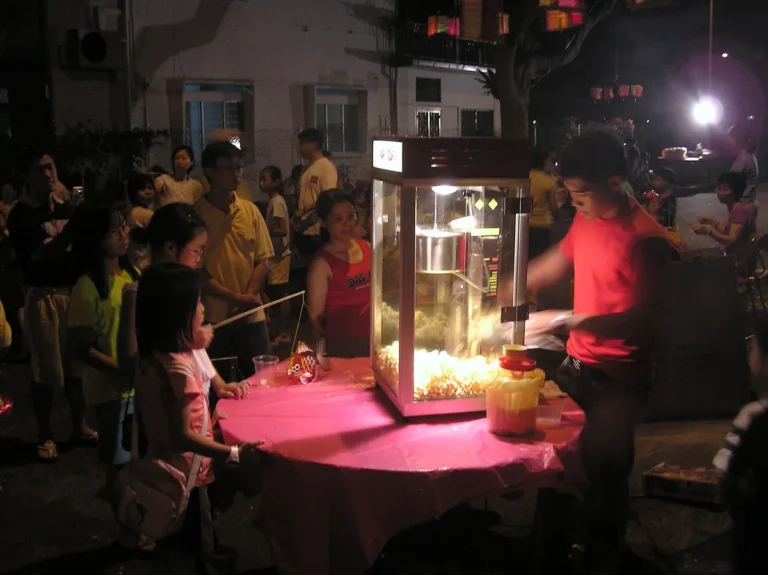
Custer County Montana Fair Festival
Search for a Custer County Fair in Montana and the name you actually land on is a bigger one: the Eastern Montana Fair. That is the name this county’s fair travels under, and it suits an event that pulls its crowds from a wide sweep of ranch country rather than one county alone. The fair is held each year in August at the Custer County fairgrounds in Miles City, the county seat, running to a building rhythm — two rodeo nights, a freestyle motocross night and a name-brand concert night stacked on a working 4-H week. The documented 2026 edition filled Wednesday to Saturday, August 19 to 22. One honesty note belongs at the front: the county publishes its headline event prices openly, yet it does not publish a general gate figure, and this article will not pretend otherwise.
A Regional Name for a County Fair
The bridge between the title and the event is simple. No fair in the county’s own record is published under the bare name Custer County Fair; the fair Custer County actually holds is the Eastern Montana Fair, and its fair book — the premium list governing exhibits and judging — is where the event’s paper trail lives. The organising name appears in two published forms: the fair book’s Eastern Montana Fair Board, and Custer County Fair Board in the county press. Both forms are recorded here as they appear in print; they are not fused into a single invented legal name. The fair office sits at 42 Garryowen Road in Miles City, and the fairgrounds it serves are the county’s own.
Eastern Montana Fair Quick Facts
| Item | Detail |
| Fair name | Eastern Montana Fair |
| County | Custer County, Montana |
| Fair town | Miles City, the county seat |
| Grounds | Custer County fairgrounds (Eastern Montana Fairgrounds), Miles City |
| Fair office | 42 Garryowen Road, Miles City, Montana 59301 |
| Season | Late August, Wednesday to Saturday |
| Documented 2026 edition | August 19–22, 2026 |
| Organiser | Eastern Montana Fair Board in the fair book; Custer County Fair Board in county press reports |
| Admission | No general gate price published; headline arena events are ticketed separately |
| Camping | No fair camping offer or rate published |
Four Nights, Four Different Headliners
Two Nights of PRCA Rodeo
The 2026 bill opened with the PRCA Rodeo on Wednesday and Thursday nights, August 19 and 20, starting at 7 p.m. The published card ran through bareback riding, bull riding, bronc riding, tie-down roping, team roping, barrel racing and steer wrestling, with a total purse of 18,000 dollars as published. Woven into the same performances were two home-grown contests: a Businessman’s Wild Cow Milking contest and, for the young crowd, a Kids Calf Scramble open to ages 9 to 15 and a Kids Boot Race for ages 8 and under — the arena programme making room for local businesses and children alongside the professional card.
Freestyle Motocross on Friday Night
Friday, August 21, belonged to a different kind of horsepower: the Octane Addictions Motorcycle Legends Freestyle Show. After two nights of bucking stock, the arena floor handed over to freestyle riders, and the change of register is deliberate in the fair’s design. A visitor who only wants rodeo can take the opening nights; a visitor who only wants the machines can aim for Friday. The fair spreads its headline risk across four evenings instead of betting the week on a single act.
Diamond Rio on Closing Night
The Saturday of the documented 2026 edition, August 22, closed with a concert by Diamond Rio, with Grady Johnson and Riley Rae opening. Those names belong to the 2026 edition alone; a future bill will carry its own lineup, and nothing here should be read as a standing promise about who plays Miles City in any other year. What can be said generally is that the closing-night concert is the week’s summit — the night the fair aims its biggest single ticket at.
For a useful comparison, see the Chouteau County Montana Fair Festival for another county festival.
The Carnival and the Shows That Cost Nothing
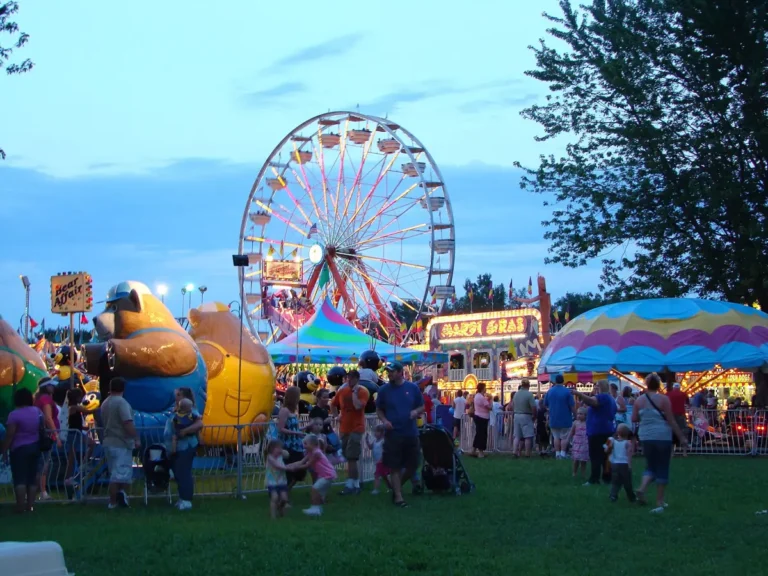
The Mighty Thomas Carnival ran all four days of the 2026 fair. Its wristbands were priced at 25 dollars in presale, rising to 30 dollars at 6 p.m. on August 18, each band good for one day of riding. Against those paid amusements, the fair also billed genuinely free grounds entertainment: a magician, Keith Raymond, with his Balloon Factory, and the Adventure Zone slides. That mix — ticketed arena nights, a paid midway and free acts — is why no single number can honestly be called the price of the fair.
4-H at the Heart of the Week
Underneath the arena lights, the week belongs to 4-H. Shows and judging ran across the fair’s days, worked to the rules of the fair book, and they are the reason the fair exists in the form it does: a year’s worth of livestock projects and exhibits from Custer County’s young exhibitors, gathered in one place for judging, ribbons and premiums. The headline nights draw the region in; the show rings are what the region’s families actually came to settle.
A History the Record Leaves Open
Anyone looking for this fair’s founding year will not find it in the county’s published record — no first-fair date and no edition number is printed in the fair’s own pages, and this article declines to invent one. What the record does support is context. Miles City grew up as a military and then a cattle town on the Yellowstone River, where horsemanship was working equipment long before it was entertainment. A fair in such a town was never going to be decorative: it grew out of the same livestock culture that fills its show rings today. Fair books from earlier years survive in the local record and show the event’s shape in their own seasons, but their terms belong to those years. The honest history here is a living one — a past carried in grounds and habits rather than in a printed birthday.
Planning a Trip to Miles City
What You Will Pay, and What Is Not Published
Budget for this fair by the event, not by the gate. For the documented 2026 edition, the county published these figures: the PRCA Rodeo at 20 dollars for adults and 10 dollars for children, with children 5 and under admitted free alongside an adult ticket holder; the motorcycle freestyle show at the same 20 and 10 dollars; the Diamond Rio concert at 30 dollars for general admission; and carnival wristbands at 25 dollars presale or 30 dollars on the day pattern described above. Every one of those is an event ticket. None is the price of walking through the gate, because the fair’s published material states no general admission figure at all. The fair’s own earlier books treated concert tickets as an extra sold on top of a gate charge, so a gate cost may exist whose current figure simply is not in print — carry some margin, and check the fair office’s current notices before you travel.
Finding the Grounds and the Fair Office
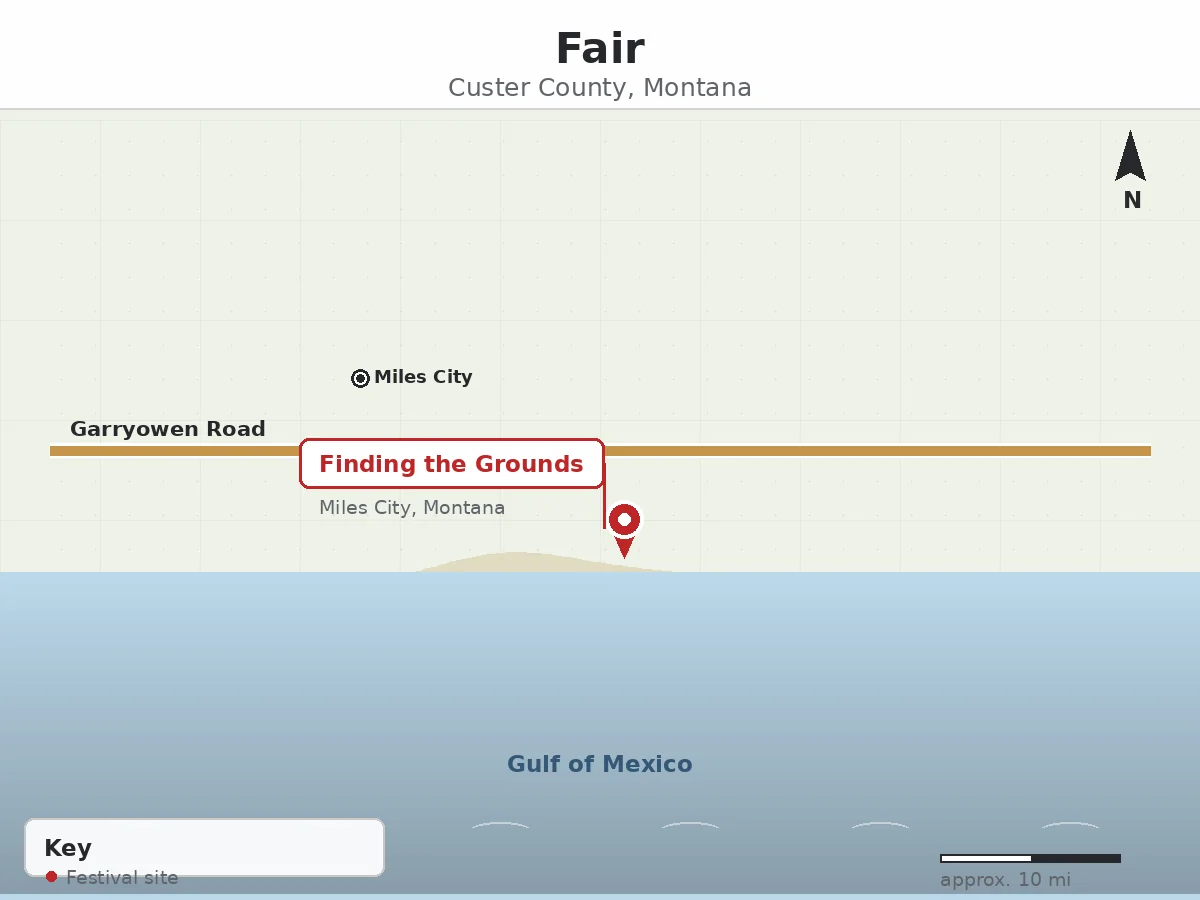
The fairgrounds are in Miles City itself, and the fair office — the address published in the fair book — is 42 Garryowen Road, Miles City, Montana 59301. The fair book also publishes the office telephone number, 406-234-3758, which is the sensible first call for entry deadlines, ticket questions and anything the printed schedule does not settle. Because the week’s headline events all happen in the evening, most visitors will find the town’s layout forgiving: exhibits and judging by day, the arena after dark.

Staying Over, and the Camping Question
No fair-run camping offer or rate appears in the fair’s published record, so this article cannot sell you a pitch. Miles City has commercial campgrounds and motels that serve fair visitors, but those are separate businesses with their own prices, and none of their rates is a fair rate. If camping at the grounds matters to your trip, ask the fair office directly rather than relying on any listing that bundles the fairgrounds with a nearby campground’s charges.
Do Not Confuse It With the Bucking Horse Sale
Miles City’s other famous event, the World Famous Bucking Horse Sale, is a separate institution held in May, with its own organisation. It is not part of the Eastern Montana Fair, none of its dates falls in fair week, and a trip planned for one event will not catch the other. The two share a town and a horse culture — nothing else.
Saturday at the Fair: A Sample Day
A closing-day visit, shaped on the documented 2026 pattern, might run like this. Start in the show barns while the morning is cool, watching the last of the week’s judging. Late morning belongs to the exhibit side of the fair book — the projects that never make the arena posters. Give the early afternoon to the carnival, remembering that a wristband covers a single day, and catch one of the free grounds shows while you are off your feet. Eat before the evening crowd peaks. Then settle in for the closing concert, the week’s biggest room, and let the fair end as it was designed to — with the whole region in one grandstand.
How It Compares With Other Montana Fairs
Scale is the first difference. Many Montana county fairs are single-county affairs anchored to one town’s fairgrounds; this one answers to a regional name and draws like it, stacking four headline nights where a smaller fair might manage one. The second difference is pricing architecture. Some large fairs publish a complete gate ladder; the Eastern Montana Fair instead publishes event by event — rodeo, freestyle, concert, wristbands — while leaving its general gate unpublished, which makes it unusually transparent about its big nights and unusually quiet about the cost of simply walking in. The third is the company it keeps: few county fairs share a hometown with a second world-famous event, and part of this fair’s discipline is staying itself — an August fair — while the Bucking Horse Sale owns May.
Packing and Planning Checklist
- Price your trip around event tickets, since no general gate figure is published.
- Keep the rodeo’s published child terms in mind: in 2026, children 5 and under went free with an adult ticket holder.
- If carnival rides matter, the 2026 presale wristband undercut the on-the-day price by five dollars — buy early when the current year’s terms appear.
- Plan evenings first; every headline event on the 2026 bill started after dark or at 7 p.m.
- Leave the May dates alone — the Bucking Horse Sale is a different trip entirely.
- Telephone the fair office on its published number if your question is not answered by the printed schedule.
- Pack for hot August afternoons and cooler nights in the Yellowstone River valley.
- Check the coming edition’s own dates before booking, because the fair’s span is set afresh each year within its late-August season.
Beyond the Fairgrounds
Miles City rewards a spare half day. The town stands where the Tongue River meets the Yellowstone, and its main street still reads as a cattle-era supply point — brick storefronts, stockyard history and a working ranch town’s plain confidence. Museums in town tell the story of the open-range years and the military post that preceded the town, and the river itself is the oldest attraction of all. Treat these as the fair’s setting rather than its programme: the Eastern Montana Fair makes most sense once you have seen the town whose livelihood it celebrates.
The Fair’s Place in Eastern Montana
Eastern Montana is big, dry and thinly settled, and its gatherings carry weight that a city calendar never has to. For the ranches and small towns of the region, this fair is the late-summer meeting point — the week when the year’s youth livestock work is judged in public, when neighbours who live an hour apart actually meet, and when the region’s horse culture takes an arena instead of a pasture. A fair that calls itself Eastern Montana’s is making a claim about who it serves; judged by its four nights, its show rings and its regional draw, the claim is the point of the event, not a slogan pasted over a county fair.
Frequently Asked Questions
Is the Eastern Montana Fair the same event as the Custer County Fair?
Yes — they are one event under two descriptions. Custer County’s fair is published under the name Eastern Montana Fair, and that is the title on its fair book and its county fair page. Anyone advertising a separate Custer County Fair in Miles City is describing this event loosely, not a second fair.
When does the fair take place?
The fair sits in late August, running Wednesday to Saturday. Its documented 2026 edition ran from August 19 to 22, 2026; that span belongs to that edition, and each year’s fair is dated in its own published schedule rather than by a fixed calendar rule.
What will you actually pay at this fair?
There is no published general admission price to quote. What the fair publishes is event pricing — in 2026, 20 dollars for an adult rodeo or freestyle ticket, 30 dollars for the closing concert, and carnival wristbands at 25 to 30 dollars. Do not let any listing talk you into reading the 20-dollar rodeo ticket as the cost of entering the fair; the fair’s own record does not say that.
Is the Bucking Horse Sale part of the fair?
No. The World Famous Bucking Horse Sale is a separate May institution in Miles City, run by its own organisation. It shares the town, and some of the same horse-country audience, with the Eastern Montana Fair — but it is not fair programme, and it never falls in fair week.
What to Expect From the Next Custer County Montana Fair Festival
How often is the Custer County Montana Fair Festival held?
The fair is an annual event, held once each year in its August season under its published name, the Eastern Montana Fair.
When is the next Custer County Montana Fair Festival?
The next edition is expected in the same late-August window, on a Wednesday-to-Saturday pattern, with its exact days set in the fair’s own published schedule for that year. No specific dates for a future edition are stated here, because the fair has not put them in the record this article draws on.
Will the dates change?
The fair’s season is a settled habit and its exact span is not. Its week sits in the second half of August, but the particular Wednesday it opens on is fixed edition by edition — the 2026 fair ran August 19 to 22, and a later fair can sit a week earlier or later. Anyone travelling from distance should confirm the current edition’s dates with the fair office before committing to the road.
That discipline — a regional name, four distinct nights, prices printed where they exist and silence where they do not — is what a fair in Miles City owes its visitors. The Eastern Montana Fair keeps its own books honestly. This account has tried to do the same.