Natchitoches Parish Louisiana Melrose Arts and Crafts Festival
Each spring, when the light turns soft along Cane River, a small community south of Natchitoches opens the grounds of a historic plantation to makers, painters, woodworkers and cooks. The Melrose Arts and Crafts Festival spreads across the lawns of Melrose Plantation, where more than eighty vendors set out handmade goods beneath old trees and visitors wander between stalls, garden paths and the plantation house itself. It is a quieter kind of festival than the big riverfront gatherings farther north in the parish, and that is much of its charm. The pace is unhurried, the work on display is made by hand, and the setting carries a depth of history that no temporary fairground can borrow. People come to buy a ceramic bowl or a jar of preserves, to watch a woodworker shape a piece at a bench, to take a guided tour through rooms that once hosted artists and writers, and to spend a slow April weekend in a place where Louisiana’s Creole past still feels close at hand. The festival has run for decades, drawing repeat visitors who plan their spring around the third weekend of April, and it remains one of the most distinctive handmade markets in the region.
About
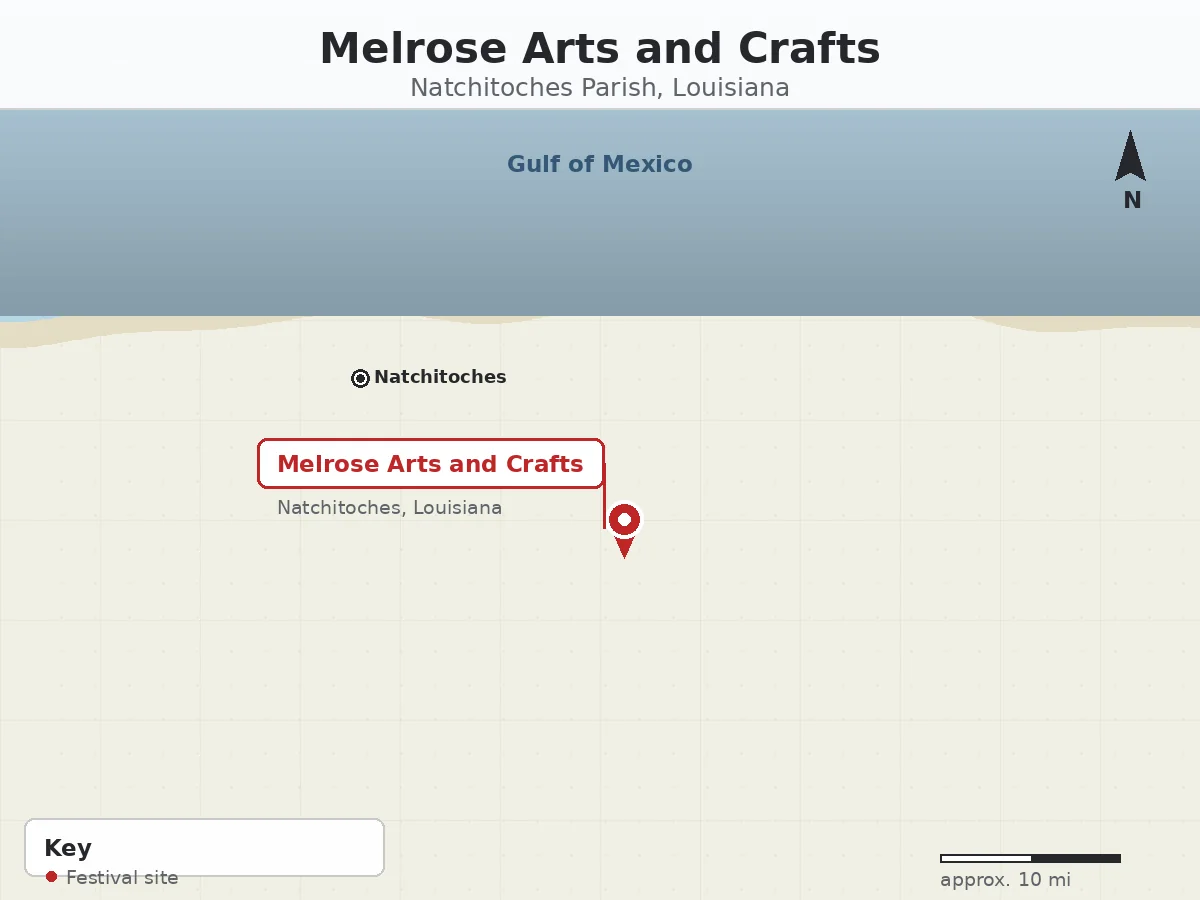
The Melrose Arts and Crafts Festival is a two-day handmade market held on the grounds of Melrose Plantation in the community of Melrose, south of Natchitoches on Cane River. The event is organised by the Association for the Preservation of Historic Natchitoches, the group that cares for the plantation and its buildings. Vendors offer ceramics, jewellery, painting, photography, woodworking, metalwork, jams and sauces, and the plantation house is open for guided tours during the festival. The gathering takes place on the third weekend of April in recent years, running across a Saturday and a Sunday. Its most recent documented editions fell on the twenty-sixth and twenty-seventh of April in twenty twenty-five and the eighteenth and nineteenth of April in twenty twenty-six. Earlier editions were billed as the forty-eighth annual on the twenty-third and twenty-fourth of April in twenty twenty-two and the fiftieth annual on the twentieth and twenty-first of April in twenty twenty-four. Melrose itself is a small community, not the parish seat, and the festival’s scale suits it: large enough to fill the grounds with colour and conversation, small enough that a visitor can see everything in a single unhurried day.
Quick Facts
| Detail | Information |
| Event name | Melrose Arts and Crafts Festival |
| Host community | Melrose, south of Natchitoches on Cane River |
| Parish seat | Natchitoches |
| Venue | Grounds of Melrose Plantation, a National Historic Landmark |
| Organiser | Association for the Preservation of Historic Natchitoches |
| Most recent edition | Eighteenth and nineteenth of April, twenty twenty-six |
| Prior edition | Twenty-sixth and twenty-seventh of April, twenty twenty-five |
| Typical timing | Third weekend of April |
| Vendors | More than eighty, offering handmade items |
| Admission in twenty twenty-two | Five dollars for adults, two dollars for children ages six to twelve |
History
The festival’s age is recorded through its printed billings rather than through a stated founding year. The edition held on the twenty-third and twenty-fourth of April in twenty twenty-two was billed as the forty-eighth annual, and the edition held on the twentieth and twenty-first of April in twenty twenty-four was billed as the fiftieth annual. Those billings are carried as printed, and no founding year is derived from them. The festival’s home, Melrose Plantation, has a longer story of its own. The plantation became a hub of art and education in the late nineteenth century, a place where painters and writers gathered and where Creole culture found a meeting point along Cane River. That history belongs to the plantation rather than to the festival, and it is worth keeping the two apart: the festival draws on the plantation’s reputation, but the plantation’s nineteenth-century artistic life predates the market by many decades. Over the years the festival’s timing has moved. A newspaper layer from nineteen ninety-seven places the gathering in June, while recent editions sit firmly in April, on the third weekend of the month. The shift is recorded without explanation, as the layers read offer none. What has stayed constant is the shape of the event: a spring weekend of handmade goods on the plantation grounds, organised by the preservation association that tends the property.
What to Expect
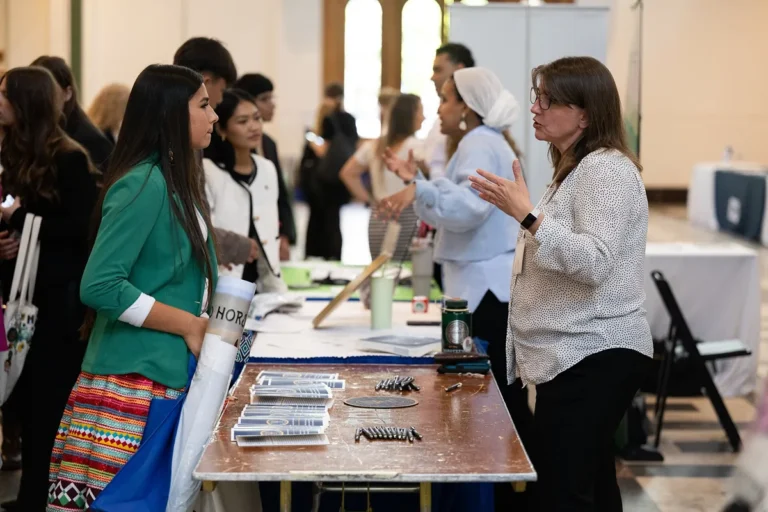
Visitors arriving at Melrose Plantation during the festival find the grounds turned into an open-air market of handmade work. More than eighty vendors spread across the lawns, their tables holding ceramics glazed in earth tones, jewellery worked from metal and stone, paintings and photographs of river country, carved and turned wood, ironwork and metal pieces, and jars of jams and sauces made in small batches. The work is the heart of the event, and makers are usually present at their stalls, ready to talk about how a piece was made. Guided tours of the plantation house run through the weekend, giving visitors a look inside the rooms where the plantation’s artistic history unfolded. House-tour tickets are a separate element charge from festival admission. The grounds themselves are part of the experience: wide lawns, old trees, outbuildings and garden paths that invite slow walking between purchases. There is no single headline performance to chase and no schedule of stages to keep; the festival rewards browsing, conversation and time spent looking closely at work made by hand.
Planning Your Visit
The festival is a weekend event, and most visitors come for a single day, arriving in the morning and leaving in the afternoon. April weather in this part of Louisiana is usually warm, with the possibility of a spring shower, so a light layer and comfortable walking shoes suit the day. The grounds are outdoors and the walking is on lawns and paths, so footwear that handles grass is a better choice than anything delicate. Visitors who want a guided tour of the plantation house should plan that part of the day early, since tours are a popular part of the weekend and the house is the one part of the festival with a separate ticket. Admission for the twenty twenty-two edition was five dollars for adults and two dollars for children ages six to twelve; no admission figure is documented for later editions in the layers read, so visitors should be ready for a modest charge at the gate without assuming a particular figure. Melrose is a small community, and food and fuel options nearby are limited, so many visitors stop in Natchitoches, the parish seat to the north, before or after their visit. The drive south along Cane River is itself one of the pleasures of the trip, passing plantation country that changes little from year to year.
For a useful comparison, see the Natchitoches Parish Louisiana Bigfoot Festival for another county festival.
A Sample Weekend
A good first visit starts on Saturday morning, arriving as the vendors finish setting out their work and the grounds are still cool. Begin with a slow circuit of the stalls, noting which makers catch the eye, and then take the guided tour of the plantation house before the middle of the day. After the tour, return to the vendors for a closer look and a purchase or two, whether a ceramic piece, a jar of preserves or a small painting. Midday is a good time to find a shaded spot on the lawn and take a break, watching the grounds fill with other visitors. In the afternoon, walk the garden paths and outbuildings, talk with a woodworker or metalsmith about their craft, and finish the day with one last pass through the stalls for anything missed in the morning. A second day, if the visit stretches to Sunday, can be slower still: a return to a favourite vendor, a longer look at the house and gardens, and a drive back north along the river with the weekend’s finds packed carefully for the journey home.
How It Compares
Within Natchitoches Parish, the Melrose festival sits apart from the larger riverfront gatherings in the parish seat. The meat pie festival, the jazz and rhythm-and-blues festival and the folk festival all draw bigger crowds to downtown Natchitoches, with stages, contests and evening crowds. Melrose is smaller, quieter and more focused: a market of handmade goods on historic grounds, with the plantation house as its centrepiece. It also differs from the other events in its own community. The Louisiana Forest Festival in Melrose and the Melrose Heritage Festival are separate events in the same community, and neither should be confused with the arts and crafts festival. Each has its own timing and character, and the arts and crafts festival is the one built around makers and their work. For visitors choosing between parish events, the distinction is simple: come to Melrose for handmade goods and history, and come to the parish seat for music, food contests and crowds.

Checklist
- Arrive in the morning for the fullest choice among the vendors
- Wear comfortable shoes suited to lawns and garden paths
- Bring a light layer for a spring shower
- Plan the plantation house tour early in the day
- Carry cash as well as a card, since small makers vary in how they take payment
- Leave room in the car for a ceramic piece, a painting or a jar of preserves
- Stop in Natchitoches before or after for food and fuel
- Check the weather before setting out, and expect a warm April day
Beyond the Festival
Melrose and the Cane River corridor reward a longer stay. The parish seat, Natchitoches, lies to the north, with its riverfront, historic downtown and the other festivals that fill its calendar through the year. The drive between the two follows the river through plantation country, and the landscape itself is part of the visit: live oaks, cane fields, and the low, wide water of Cane River. Visitors who come for the festival often pair it with a walk through downtown Natchitoches or a look at the other historic plantations along the river. The region’s Creole heritage is visible everywhere, in the architecture, the food and the stories attached to the old houses. A weekend built around the Melrose festival can easily stretch into a broader tour of the parish, with the festival as the quiet centre of the trip and the river country around it as the setting.
Why It Matters
The Melrose Arts and Crafts Festival matters because it keeps handmade work and historic preservation in the same place at the same time. The Association for the Preservation of Historic Natchitoches organises the event on grounds it tends, and the money and attention the festival brings help keep a National Historic Landmark alive and open to the public. For the makers, the festival is a working market: more than eighty vendors bring work that is made by hand, and the weekend gives them a direct connection to buyers who value craft over mass production. For the community of Melrose, the festival is a spring anchor, a weekend when the plantation grounds fill with visitors and the small community along Cane River has its moment in the parish calendar. And for visitors, it offers something the larger festivals cannot: a slow, close look at handmade work in a setting where the history of the place is not a backdrop but the reason the gathering exists at all.
Frequently Asked Questions
Which weekend does the Melrose gathering fall on in April?
In recent years the festival has been held on the third weekend of April. The twenty twenty-five edition ran on the twenty-sixth and twenty-seventh of April, and the twenty twenty-six edition on the eighteenth and nineteenth. A newspaper layer from nineteen ninety-seven places an earlier edition in June, so the April timing is a more recent pattern rather than a rule from the beginning.
What kinds of handmade work can visitors expect to find?
More than eighty vendors offer ceramics, jewellery, painting, photography, woodworking, metalwork, jams and sauces. The emphasis is on work made by hand, and makers are usually present at their stalls. Guided tours of the plantation house are also available, with house-tour tickets as a separate element charge.
Is the festival the same as the other Melrose events?
No. The Louisiana Forest Festival in Melrose and the Melrose Heritage Festival are different events in the same community. The arts and crafts festival is the one organised by the Association for the Preservation of Historic Natchitoches on the grounds of Melrose Plantation, built around makers and their handmade goods.
What should a first-time visitor know about the venue?
The festival takes place on the grounds of Melrose Plantation, a National Historic Landmark in the community of Melrose, south of Natchitoches on Cane River. Melrose is not the parish seat; Natchitoches holds that role. The grounds are outdoors, with lawns and garden paths, and the plantation house is open for guided tours during the weekend.
What to Expect From the Next Natchitoches Parish Louisiana Melrose Arts and Crafts Festival
How often is Natchitoches Parish Louisiana Melrose Arts and Crafts Festival held?
The festival returns each spring, with recent editions falling on the third weekend of April. The twenty twenty-five edition ran on the twenty-sixth and twenty-seventh of April, and the twenty twenty-six edition on the eighteenth and nineteenth, so the next gathering should be looked for in April as well.
When is the next Natchitoches Parish Louisiana Melrose Arts and Crafts Festival?
No date beyond the twenty twenty-six edition appears in the layers read. The pattern of recent years points to the third weekend of April, and the twenty twenty-six edition ran on the eighteenth and nineteenth of that month, so a visitor planning ahead would do well to watch for an April announcement from the preservation association as spring approaches.
Will the dates change?
The festival’s timing has moved before: a newspaper layer from nineteen ninety-seven places an edition in June, while recent editions sit in April. The April pattern has held for the recent editions, but the record shows the weekend is not fixed forever.
The Melrose Arts and Crafts Festival endures because it asks little of its visitors and gives a great deal in return: a spring weekend among makers, a historic plantation open to the public, and a slow walk through Cane River country at its best time of year. Come for a ceramic bowl or a jar of preserves, stay for the house tour and the shade of the old trees, and leave with something made by hand and a clearer sense of why this corner of Louisiana keeps drawing people back.