Natchitoches Parish Louisiana Bigfoot Festival
On the first Saturday of September, the Natchitoches Event Center fills with a particular kind of curiosity, when the Louisiana Bigfoot Festival opens its doors to believers, doubters, and everyone standing somewhere in between. The gathering is young, only a few editions old, yet it already draws crowds in the thousands to a parish seat better known for meat pies, brick riverfront streets, and Christmas lights. What brings people here is a question that has followed Louisiana woodlands for generations.

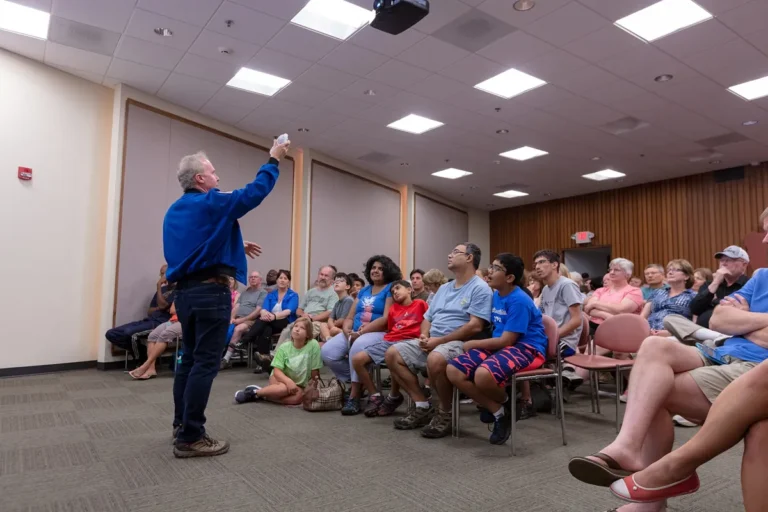
The festival treats that question seriously, and playfully, both at once. Researchers take the stage to present casts, recordings, and field notes. Neighbours stand up to tell, in their own words, what they saw on a back road or heard outside a deer camp after dark. Vendors sell books, carvings, and field gear. Food trucks line up outside. The day is built around the evidence, the stories, and the company of people who enjoy arguing about both.
About the Festival
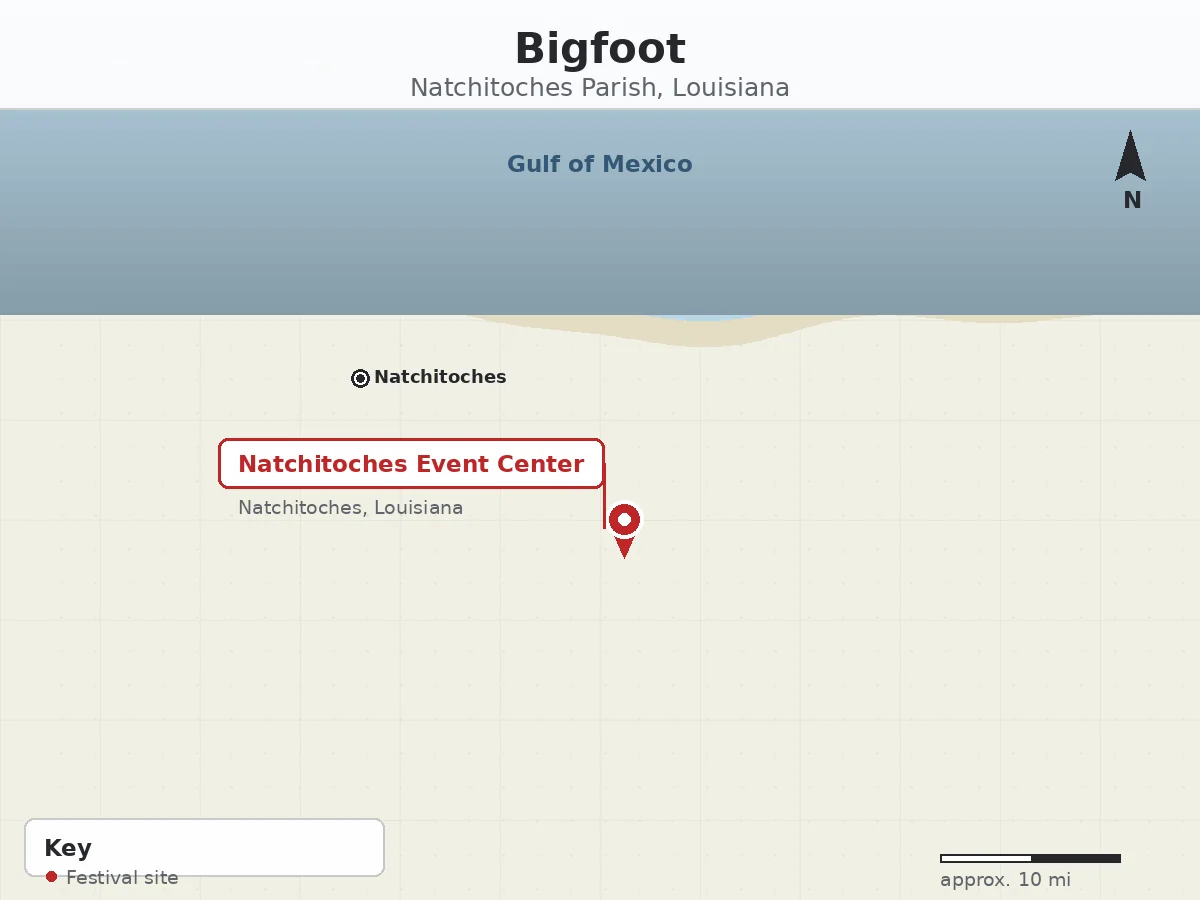
The Louisiana Bigfoot Festival belongs to Natchitoches, the oldest town in the Louisiana Purchase territory and the seat of Natchitoches Parish. Its home is the Natchitoches Event Center, a modern gathering hall that suits a festival built around talks, displays, and indoor exhibits. The event is published under two names, the Natchitoches Louisiana Bigfoot Festival and the shorter Louisiana Bigfoot Festival, and both forms appear in the layers that document it. The sheet title is printed as the event’s name in layers read.
No organising body is named anywhere in the material the brief section draws on. A regional radio layer describes the festival as the brainchild of local Bigfoot enthusiasts, and that description is the fullest account the record offers of how the event came to be. It began, as far as the record shows, because people in and around Natchitoches wanted a place to gather around a subject long discussed in kitchens and deer camps.
The subject itself needs little introduction in Louisiana. Reports of large, upright, hair-covered figures in the state’s pine forests and river bottoms go back decades, and the Kisatchie National Forest, which spreads across the region around Natchitoches, has long been part of that lore. Hunters, loggers, and hikers have reported strange calls, broken branches arranged in odd patterns, and footprints pressed deep into soft ground. The festival gathers those threads in one place.
For a useful comparison, see the Natchitoches Parish Louisiana Cane River Zydeco Festival for another county festival.
Quick Facts
| Detail | Information |
| Festival name | Natchitoches Parish Louisiana Bigfoot Festival |
| Published forms | Natchitoches Louisiana Bigfoot Festival; Louisiana Bigfoot Festival |
| Host town | Natchitoches, parish seat of Natchitoches Parish |
| Venue | Natchitoches Event Center |
| First held | 2024 |
| Most recent dated edition | Saturday 5 September 2026, third annual |
| Hours | Nine in the morning to six in the evening |
| Admission | Fifteen dollars for adults and ten dollars for children twelve and under, 2026 edition |
| Programme | Guest speaker sessions, panel discussions, eyewitness stories, vendors, food trucks, outdoor equipment displays |
| Signature displays | Authentic footprints and videos on display |
History
The festival’s history is short, and the record is honest about that. The first annual Louisiana Bigfoot Festival took place on Saturday 7 September 2024, running from nine in the morning to six in the evening at the Natchitoches Event Center. A magazine layer records that the inaugural edition drew more than two thousand five hundred guests, a strong opening for a first-year event.
No founding claim beyond that first edition is stated in any layer read. There is no account of a planning meeting or a named founder. The festival simply appears in the record in 2024, fully formed, with speakers, vendors, and a crowd, and the layers that describe it treat that first edition as the beginning. This one arrives with a date, a venue, and a crowd count, and nothing more.
Between the first gathering and the third, the layers read hold no dated account of a 2025 edition. The second annual edition is not documented in the material the brief section draws on, and this article does not invent one. What the record does hold is the third annual edition, on Saturday 5 September 2026, again at the Natchitoches Event Center. The billing tells its own story: first annual in 2024, third annual in 2026, with the middle year passing without a printed trace in the layers read. A visitor should check the current year’s listing before travelling.
The 2026 edition also fixed the admission picture. Fifteen dollars for adults and ten dollars for children twelve and under, per a magazine layer covering that edition, is the only admission figure documented anywhere in the record. No admission figure is documented for 2024. The 2026 figure is fenced to that year and that layer, and a visitor should confirm the current price before setting out.
What to Expect
A day at the Louisiana Bigfoot Festival divides, roughly, into three kinds of activity: listening, looking, and browsing. The listening happens in the guest speaker sessions and panel discussions, where Bigfoot researchers present their work and take questions from the floor. These are the heart of the event. A researcher might walk the audience through a set of footprint casts, explaining what the depth and stride suggest about whatever made them. Another might play audio recordings and invite the room to judge whether the calls match any known animal.
The looking happens at the displays. Authentic footprints and videos are on display, according to the layers that describe the programme, and they are the objects visitors gather around most closely. A cast footprint is a strange thing to hold in the hands: heavy, detailed, unmistakably shaped like a foot and unmistakably larger than any human foot ought to be. The videos, shown on screens around the hall, range from shaky trail-camera clips to longer pieces of field footage.
The browsing happens among the vendors and the outdoor equipment displays. Stalls sell books on cryptid research, hand-carved figures, prints, clothing, and field gear of the kind a person might take into the woods. Food trucks outside handle the midday meal, so a visitor need not leave the grounds to eat.
Eyewitness encounter stories form a thread of their own through the day. These are not lectures. They are neighbours and visitors standing up to describe, in plain language, what they saw or heard: a shape crossing a logging road at dusk, a call that matched no animal the speaker knew, a footprint found beside a creek after a night of strange noises. The speakers are referred to by role only in this article, as the brief section instructs.
Children are part of the crowd. The footprint displays are tactile and immediate, and the vendor stalls sell the kind of small souvenirs children actually want. Parents should note, though, that the eyewitness stories can be genuinely eerie, and a younger child might find an account of something moving through the trees after dark harder to shake off than an adult would.
Planning Your Visit
The festival is a single-day event, running from nine in the morning to six in the evening. That gives a visitor nine hours on site, which is ample for the full programme, and the event center’s indoor setting means weather is rarely a concern. Arrive at opening if the speaker sessions matter most to you, since the most popular researchers draw the largest crowds. Arrive closer to midday if the stalls and displays are the priority.
Admission in 2026 was fifteen dollars for adults and ten dollars for children twelve and under. Bring cash as well as a card, since some smaller vendors deal in cash only. There is no admission figure documented for the first edition, so a returning visitor should not assume the price has stayed still. Check the current listing before travelling.
Natchitoches itself rewards a longer stay than the festival alone requires. The town’s riverfront historic district, with its brick streets and old storefronts, is a short drive from the event center, and its restaurants serve the parish’s signature dishes, including the meat pie that gives the town’s other September festival its name.
Lodging in Natchitoches fills up on festival weekends, and the Bigfoot Festival’s crowds, more than two thousand five hundred at the first edition alone, are large enough to matter. Book a room early, and consider staying in a neighbouring town if the riverfront inns are full.
A Sample Itinerary
A first-time visitor who wants the full day might follow this shape. Arrive at the event center a little before nine in the morning, ticket in hand, and head straight for the speaker hall. Spend the morning with the researchers, listening to two or three sessions and staying for the questions at the end of each one.
Break for lunch around midday, stepping outside to the food trucks. Use the break to look over the outdoor equipment displays. Return inside for the afternoon panels, and give the eyewitness stories the attention they deserve.
Spend the last hour of the day among the vendors and the footprint displays. This is the time to buy the book, the print, or the cast that caught your eye in the morning. Leave at six in the evening, and walk the riverfront before dinner if the light holds.
A visitor with children might reverse the emphasis: start with the displays and stalls while energy is high, catch a single speaker session in the late morning, and spend the afternoon outdoors, skipping the longer panels.
How It Compares
Natchitoches hosts several festivals across the year, and the Bigfoot Festival sits apart from them in tone. The meat pie festival in the same month is a food celebration, built around eating contests and music on the riverbank. The jazz and rhythm-and-blues festival in May is a music event, built around stages and headliners. The folk festival in July is a craft and heritage gathering. The Bigfoot Festival is none of those things. It is a conference with a festival wrapped around it, a day of talks and evidence with vendors and food trucks attached.
A visitor who arrives expecting a street fair with rides and a parade will find something quieter and more focused. A visitor who arrives expecting a lecture hall will find something livelier than the label suggests. The festival’s strength is the space between those two poles: serious enough that researchers travel to present their work, informal enough that a neighbour can stand up and tell a ghost story to a room full of strangers.
Checklist
- Confirm the current year’s date and admission price before travelling, since only the 2024 and 2026 editions are dated in the record
- Arrive at nine in the morning for the speaker sessions, or closer to midday for the vendor floor at its liveliest
- Bring cash as well as a card for smaller vendors and food trucks
- Plan lodging early, since festival weekends fill Natchitoches rooms
- Allow time to walk the riverfront historic district before or after the festival day
- Keep an open mind at the eyewitness sessions, and a sceptical one at the displays
Beyond the Festival
The Bigfoot Festival’s real subject is not a creature. It is the habit of paying attention to the woods, and the community that forms around that habit. The researchers who speak at the festival spend their weekends in forests most people never enter, returning with material that is always suggestive and never conclusive. The eyewitnesses are, for the most part, ordinary people who saw something they cannot explain and have lived with the memory ever since.
That community extends beyond the event center. Louisiana’s pine forests and river bottoms, including the Kisatchie National Forest that spreads across the region, are the landscape the festival’s stories come from. The festival does not claim to settle the question of whether Bigfoot exists. It claims, more modestly, that the question is worth a day of careful attention, good company, and honest argument.
Why It Matters
A festival like this matters for two reasons, one local and one larger. Locally, it brings visitors, spending, and attention to Natchitoches in early September. More than two thousand five hundred guests at the first edition is a meaningful number for a town of this size, and the food trucks, vendors, and inns that serve them feel the benefit directly.
More largely, the festival matters because it takes a subject that is easy to mock and treats it with a seriousness that earns respect. The researchers present evidence and invite scrutiny. The eyewitnesses tell their stories without embellishment, as far as the record shows. The audience listens, questions, and argues. The festival does not promise proof. It promises a fair hearing, and a fair hearing is worth a day of anyone’s time.
Frequently Asked Questions
What can visitors expect from the guest speaker sessions?
The sessions feature Bigfoot researchers presenting footprint casts, recordings, field notes, and video material, followed by questions from the floor. Speakers are referred to by role only, and the talks are pitched for a general audience rather than for specialists.
How can parents plan the day for younger children?
The footprint displays, the vendor stalls, and the outdoor equipment displays suit children well, since they are tactile and visual. The eyewitness encounter stories can be eerie, so parents may want to judge whether a younger child will enjoy them or find them unsettling.
How far ahead should a visitor plan a trip to Natchitoches for the festival?
Book lodging as soon as the current year’s date is confirmed, since festival weekends fill rooms in town and the first edition alone drew more than two thousand five hundred guests. Arriving the evening before allows a relaxed start on the day itself.
What makes this gathering different from a general outdoor fair?
The festival is built around talks, panels, and evidence displays rather than rides, parades, or contests. Vendors, food trucks, and equipment displays surround the speaker programme, but the listening is the point.
What to Expect From the Next Natchitoches Parish Louisiana Bigfoot Festival
How often is Natchitoches Parish Louisiana Bigfoot Festival held?
The dated editions in the record are the first annual edition in 2024 and the third annual edition in 2026, both held on the first Saturday of September. The layers read hold no dated account of a 2025 edition, so a visitor should confirm the next edition’s date from a current listing.
When is the next Natchitoches Parish Louisiana Bigfoot Festival?
No date beyond the third annual edition on Saturday 5 September 2026 is documented in the layers read. The first Saturday of September is the pattern the two dated editions share.
Will the dates change?
The two dated editions both fell on the first Saturday of September, which suggests a stable seasonal pattern, but the record holds no statement about future scheduling. A visitor should check the current listing before making travel plans.
The Natchitoches Parish Louisiana Bigfoot Festival is a young gathering with an old question at its heart. It asks nothing of its visitors except attention, curiosity, and a willingness to listen to people who have seen something they cannot explain. For a day in early September, that is enough to fill a hall and send people home looking at the tree line a little differently than they did when they arrived.