Linn County Iowa Freedom Festival
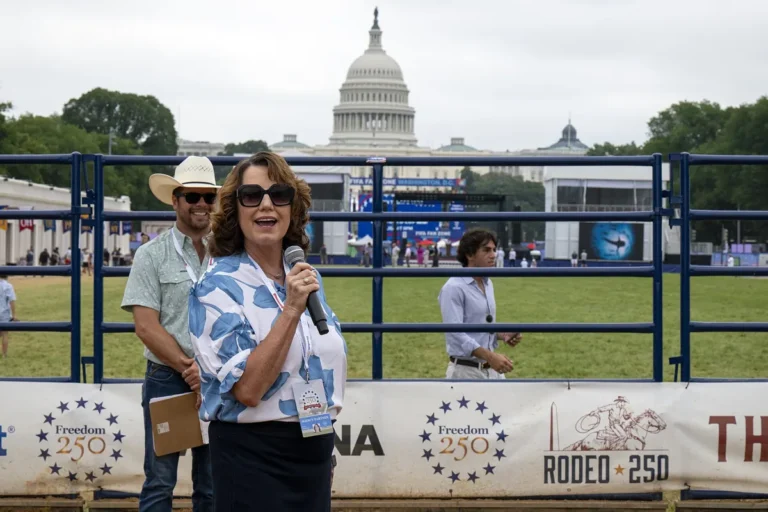
Cedar Rapids marks Independence Day the long way. For ten days straddling the fourth of July, the county seat of Linn County fills its downtown and its parks with a parade, a balloon glow, a drone show, a foam party and, at the end of it all, fireworks launched from a downtown bridge. The celebration is published as the Freedom Festival and the Cedar Rapids Freedom Festival, and it has been part of the city’s summer since nineteen eighty-four, when five thousand people watched fireworks from Mays Island. Its parade even left the city limits in twenty twenty-six, stepping off in neighbouring Hiawatha. It is a festival built around a small piece of tin: a button that opens gates, earns discounts and ties the present day back to the one-dollar button of nineteen eighty-eight.
About the Festival
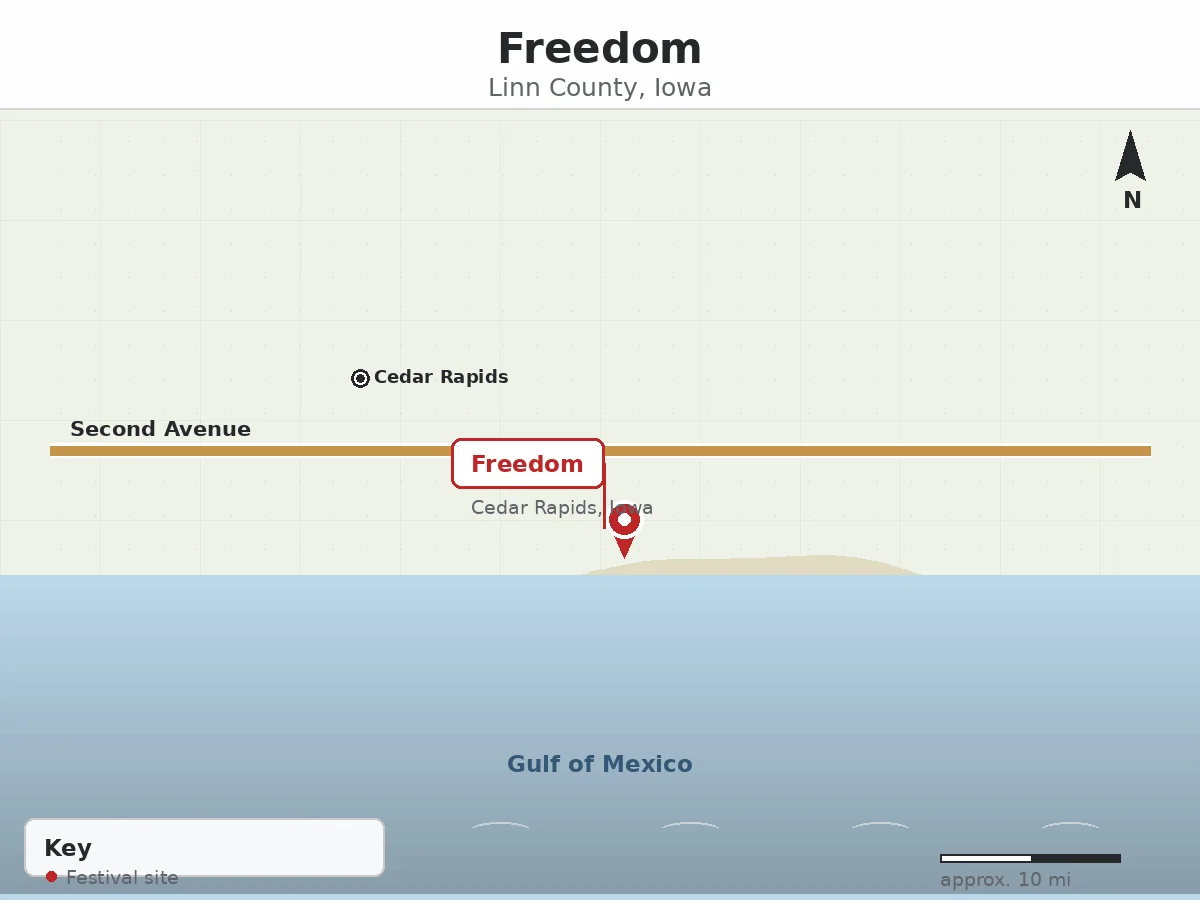
The Freedom Festival is a multi-venue Fourth of July celebration held in Cedar Rapids, Iowa, the county seat of Linn County, a standing a county-seat list layer confirms. Rather than gathering on a single fairground, it spreads across the city: the finale, called the Celebration of Freedom, takes place at McGrath Amphitheatre in downtown Cedar Rapids, while other events appear in parks around town. A local news layer records that the twenty twenty-six parade moved to Hiawatha, a neighbouring community also inside Linn County, finishing alongside a chalk festival at Guthridge Park. The organising body is a not-for-profit corporation whose name is printed in two forms the record keeps side by side rather than merged: the organiser’s own history page calls it Cedar Rapids Festival Incorporated, while local news layers print Cedar Rapids Freedom Festival, Inc. A twenty twenty-six news layer names Brittany Barnhart as its executive director.
Quick Facts
| Item | Detail |
| Published names | Freedom Festival; Cedar Rapids Freedom Festival |
| Host city | Cedar Rapids, county seat of Linn County, Iowa |
| Organiser | Cedar Rapids Festival Incorporated, as the organiser’s history page prints it; Cedar Rapids Freedom Festival, Inc., as local news layers print it; the forms stand unmerged |
| First celebration | Nineteen eighty-four, from an idea Peter Teahen conceived in nineteen eighty-three |
| Twenty twenty-six dates | Thursday the twenty-fifth of June to Saturday the fourth of July |
| Finale | Celebration of Freedom at McGrath Amphitheatre, half past four to half past ten in the evening on the fourth of July, fireworks launched from the Second Avenue Bridge |
| Parade in twenty twenty-six | Ten in the morning on Saturday the twenty-seventh of June in Hiawatha, followed by a chalk festival at Guthridge Park |
| Admission | Many events are free or discounted with a Freedom Festival button; the twenty twenty-six button cost ten dollars apiece, children aged five and under needed none, veterans could claim one free, and the city tourism layer states a button was required for the twenty twenty-six Celebration of Freedom |
| Twenty twenty-six theme | “Party Like It’s 1776!”, tied to the two hundred fiftieth anniversary of American independence |
History
The organiser’s history page tells the founding as one man’s project. Peter Teahen conceived the idea in nineteen eighty-three and hosted the first celebration in nineteen eighty-four together with the Veterans Council and Cedar Rapids volunteers. That first Cedar Rapids Fourth of July Celebration of Freedom drew five thousand attendees, and its fireworks were watched from Mays Island. Growth came quickly on the same page’s account: the nineteen eighty-seven celebration drew eighty thousand attendees. In nineteen eighty-eight the corporation named on the history page, Cedar Rapids Festival Incorporated, was established to run the celebration, with Peter Teahen as the first president of its board and Ray Johnston as its first executive director. The same year brought two more changes: the celebration was renamed Freedom Fest, and the Freedom Festival button was introduced, sold for one dollar. The page’s later account is candid about interruption as well as success. Flooding disrupted the festival in two thousand eight, and twenty twenty brought the first full cancellation in its history, during the pandemic. One part of the telling resists tidy summary: the page headlines forty-four years of celebration, yet its text states that twenty twenty-six marks the forty-third year, hosted annually since nineteen eighty-four with one exception. The two figures come from the same page and do not agree, so this article records the disagreement and adopts neither.
What to Expect
The festival’s programme has two documented layers, an established bill from earlier years and a newer bill from twenty twenty-six. The organiser’s history page lists the elements that carried the celebration through its earlier decades: fireworks, a parade, a pancake breakfast, a car show, a balloon glow, classic rock concert nights and patriotic pops performances. The twenty twenty-six edition kept the ten-day frame and added fresh pieces. Downtown commission minutes recording the organiser’s own briefing, together with a local news layer, describe a drone show that returned that year, a foam party and mini-golf among the new elements, with many events tied to the two hundred fiftieth anniversary of American independence under the printed theme “Party Like It’s 1776!”. The finale held its established form at McGrath Amphitheatre on the fourth of July, from half past four until half past ten in the evening, with live performances, family activities and fireworks launched from the Second Avenue Bridge, according to regional television and radio list layers. The parade took an unusual route in twenty twenty-six, stepping off at ten in the morning on the twenty-seventh of June in Hiawatha and giving way to a chalk festival at Guthridge Park. One smaller event carries two accounts left as they stand: the Freedom FEASTival food-truck gathering was held on the eleventh of June at Green Square Park according to the commission minutes, while a radio list layer notes it was rescheduled from that date with a new date to be announced.
Planning Your Visit
The fullest recent frame for a visit is the twenty twenty-six edition, which a downtown commission’s minutes and an events-data layer agree ran from Thursday the twenty-fifth of June to Saturday the fourth of July. Ten days rewards picking anchor events rather than attempting everything. The parade anchored the first weekend, at ten in the morning on the twenty-seventh of June in Hiawatha, with the chalk festival at Guthridge Park following it. The Celebration of Freedom anchored the close, at McGrath Amphitheatre on the fourth of July from half past four to half past ten in the evening. Admission runs through the button system, whose terms come from separate layers. A regional radio list layer gives the twenty twenty-six terms: ten dollars apiece, no button needed for children aged five and under, a free button for veterans, and many events free or discounted with a button. The city tourism layer adds one firmer requirement: a button was required for entry to the twenty twenty-six Celebration of Freedom. Treat the button, then, as the key that unlocks the finale.
For a useful comparison, see the Lee County Iowa Big Dam Street Festival for another county festival.
A Sample Itinerary
A visit shaped by the documented twenty twenty-six programme might begin in Hiawatha. On Saturday the twenty-seventh of June, the parade stepped off at ten in the morning there, according to a local news layer, and the chalk festival at Guthridge Park followed, before the festival’s centre of gravity shifted back to Cedar Rapids. A midweek day could then sample the newer elements the commission minutes and news layer describe for twenty twenty-six: the returned drone show, the foam party and mini-golf. The Freedom FEASTival food trucks at Green Square Park belong in an itinerary only with their caveat attached: the commission minutes place the event on the eleventh of June, before the main run, while the radio list layer says it was rescheduled with a new date to come. The natural climax is the fourth of July at McGrath Amphitheatre, arriving for the Celebration of Freedom’s half past four opening, staying through the live performances and family activities, and ending with fireworks launched from the Second Avenue Bridge.
How It Compares
Searches for a freedom festival turn up identically named celebrations in other states, and the organiser’s own page is explicit on the point that matters: this is the Cedar Rapids, Iowa celebration. Few namesake events can point to a button sold for one dollar in nineteen eighty-eight that still structures admission nearly four decades later, or to a founding summer in which five thousand people watched fireworks from an island, followed within three years by a crowd of eighty thousand. The scale is unusual too: ten days, multiple venues, a parade that in twenty twenty-six crossed into a neighbouring community, and a finale in an amphitheatre with fireworks fired from a bridge. It is less a festival weekend than a season of civic events gathered under one name and one button.
A Visitor’s Checklist
- A Freedom Festival button, which the city tourism layer states was required for the twenty twenty-six Celebration of Freedom
- The ten dollars the radio list layer gives as the twenty twenty-six button price, unless you are a veteran claiming a free button or bringing children aged five and under, who needed none
- A parade plan that accounts for its twenty twenty-six move to Hiawatha and the chalk festival at Guthridge Park afterwards
- An arrival at McGrath Amphitheatre by half past four on the fourth of July
- Patience for the fireworks, launched from the Second Avenue Bridge at the end of the finale evening
- Time midweek for twenty twenty-six additions such as the drone show, the foam party and mini-golf
- A check on the Freedom FEASTival’s date, which the commission minutes and the radio list layer leave in disagreement
- Room across the full ten-day run
Beyond the Festival
The festival’s documented geography doubles as a short tour of the working city that hosts it. Mays Island, where the first crowd watched fireworks in nineteen eighty-four, sits in the river at the city’s heart. McGrath Amphitheatre anchors the downtown riverfront end of the modern festival, and the Second Avenue Bridge, from which the twenty twenty-six finale fireworks were launched, belongs to the same fabric. Green Square Park hosted the Freedom FEASTival food trucks in the commission minutes’ account, and Hiawatha, just to the north and still within Linn County, enters the story through the twenty twenty-six parade and the chalk festival at Guthridge Park.
Why It Matters
On its own history page’s account, this festival began as one resident’s idea in nineteen eighty-three, and within four summers it was drawing eighty thousand people. That trajectory says something about Cedar Rapids itself: a celebration carried first by the Veterans Council and volunteers, then given a permanent corporation in nineteen eighty-eight, found an audience out of proportion to its beginnings. The button tells the same story in miniature. Introduced at one dollar, it turned attendance into a small act of membership, and its survival into the ten-dollar twenty twenty-six version, with free buttons for veterans and none required of the youngest children, shows a festival still balancing openness against staging costs. A flood year and a pandemic cancellation sit beside the growth figures, and the festival’s continuation past both makes it a marker of the city’s resilience as well as its patriotism.
Frequently Asked Questions
What does the Freedom Festival button actually do?
The button is the festival’s admission key. The regional radio list layer gives the twenty twenty-six terms: ten dollars apiece, none needed for children aged five and under, a free button for veterans, and many events free or discounted for button holders. The city tourism layer adds that a button was required for the twenty twenty-six Celebration of Freedom. The device is an old one: the history page records its introduction in nineteen eighty-eight at one dollar, a separate era’s terms standing alongside, not merged with, the twenty twenty-six figures.
What was new at the festival in twenty twenty-six?
The downtown commission minutes and a local news layer describe several additions. A drone show returned, and a foam party and mini-golf appeared among the new elements. Many events were tied to the two hundred fiftieth anniversary of American independence under the theme printed as “Party Like It’s 1776!”. The parade also changed its ground that year, moving to Hiawatha for a ten o’clock start on the twenty-seventh of June, with a chalk festival following at Guthridge Park.
What happened with the Freedom FEASTival in twenty twenty-six?
The record holds two versions, left as they stand. The downtown commission minutes place the Freedom FEASTival food-truck event on the eleventh of June, twenty twenty-six, at Green Square Park, before the main run began. A radio list layer, however, notes it was rescheduled from that date with a new date to be announced. The layers do not reconcile the accounts, so a future visitor would need the organiser’s current word rather than either.
Has the festival ever been cancelled or disrupted?
Yes, on the organiser’s history page’s account. The page records flood disruption in two thousand eight and the first full cancellation in the festival’s history in twenty twenty, during the pandemic. It otherwise describes a celebration hosted annually since nineteen eighty-four with one exception, making that cancellation the single full break in the run.
What to Expect From the Next Linn County Iowa Freedom Festival
How often is Linn County Iowa Freedom Festival held?
The organiser’s history page describes a celebration hosted annually since nineteen eighty-four, with the twenty twenty pandemic cancellation as its one full exception. On that account it is a yearly fixture of the Cedar Rapids summer, and nothing in the layers read suggests the pattern has been abandoned.
When is the next Linn County Iowa Freedom Festival?
The most recent documented edition ran from Thursday the twenty-fifth of June to Saturday the fourth of July, twenty twenty-six, closing with the Celebration of Freedom at McGrath Amphitheatre. The layers read give no fixed date for a following edition, so the honest expectation is a comparable span rather than any specific day.
Will the dates change?
They have moved within their season before: the twenty twenty-six parade left Cedar Rapids for Hiawatha, and the Freedom FEASTival’s date sits unsettled between two layers. The history page’s year count also disagrees with itself, headlining forty-four years while its text calls twenty twenty-six the forty-third year, and neither figure is adopted here. The safe expectation is a familiar window with details only the organiser’s next announcement can settle.
A Final Word
The Freedom Festival’s record is unusually well documented for a civic celebration: a corporation with two printed names, a history page that counts its years two ways, a food-truck event with two dates and a parade that visited the neighbours. Underneath stands a simple, durable fact. An idea conceived in nineteen eighty-three became, by nineteen eighty-seven, an eighty-thousand-person celebration, and it is still filling ten days of the Cedar Rapids summer. That is the festival the layers describe, and it needs no embellishment.