Dubuque County Iowa Dubuque County Fair Festival
Dubuque County has carried its name since October 1, 1834, when the newly organized county was named for Julien Dubuque, the trader and lead miner whose story is bound up with the bluffs above the Mississippi River. The county seat took his name as well, and today Dubuque County holds 99,266 residents across 616.461 square miles of river town, ridge, and farmland. Every summer, a good share of that county gathers in one place at the same time.
The Dubuque County Fair is that gathering. It is a summer fixture in northeast Iowa, usually landing in late July or early August, and it keeps the older rhythms of a county fair intact: livestock in the barns, projects in the exhibit halls, a midway lit up after dark, and a grandstand that fills as the evening cools. For a few days, the county’s towns — Dubuque and Asbury, Peosta and Epworth, Farley, Cascade, Dyersville — all seem to lean toward the same patch of ground.
What follows is a plain guide to the fair and the county around it: what the event is, how it took hold here, what a day on the grounds feels like, and how to plan a trip that includes a hotel in Dubuque, a parking spot, and maybe a stop at the riverfront.
The Dubuque County Fair in Ten Lines
| Festival | Dubuque County Fair |
| Town / area | Dubuque County area, northeast Iowa |
| County | Dubuque County, Iowa |
| County seat | Dubuque |
| County population | 99,266 (2020 census) |
| County land area | 616.461 square miles |
| County founded | October 1, 1834; named for Julien Dubuque |
| Typical timing | Summer, most often late July into early August |
| Admission | Typically free to enter the grounds |
| Setting and organizer | Fairgrounds with midway, barns, exhibit halls and grandstand, run by local volunteer organizers and county agricultural groups |
A County Fair That Fits Dubuque County’s Shape
The Dubuque County Fair is the county’s annual agricultural and community fair. It is not a giant music festival and does not pretend to be. It is a county fair in the classic Iowa sense: an event built around youth livestock shows and static exhibits, wrapped in a midway, food stands, and evening entertainment in front of a grandstand.
Because Dubuque County stretches from the Mississippi riverfront out into farm country, the fair draws two audiences at once. Families come from the county seat and its suburbs looking for a night of rides and fried food. Exhibitors — 4-H and FFA members, farm families, gardeners, bakers, quilters — spend months getting ready for judging day. Both groups end up in the same aisles.
For another look at how a community turns its own traditions into a gathering, see the Dubois County Indiana Jasper Strassenfest Festival for a useful comparison.
The result is a fair that feels local rather than corporate. You are likely to pass a neighbor in the cattle barn, a coworker at the funnel cake trailer, and a former classmate working a booth. Gate admission is typically free, with vendors and rides setting their own prices, which keeps the fair easy for families who want to drop in for an hour or stay all evening.

How Fair Week Took Hold in Dubuque County
Dubuque County was established on October 1, 1834, making it one of Iowa’s earliest organized counties, and it was named for Julien Dubuque, the French Canadian trader and miner who worked lead deposits along the Mississippi. Lead mining, river traffic, and the farms that followed shaped the kind of gatherings people held here.
County fairs across the Midwest grew out of nineteenth-century agricultural societies and harvest celebrations. Farmers wanted a place to compare livestock, seed, and machinery; towns wanted a reason to come together. Those impulses produced the template the Dubuque County Fair still follows: a permanent grounds with barns and halls, a program of judging, and entertainment that runs from afternoon into the night.
As the county’s population spread from riverfront Dubuque outward to Peosta, Epworth, Farley, Cascade, and Dyersville, the fair adapted. Rail lines and later highways made it easier for families across all 616.461 square miles to attend. Youth programs moved toward the center of the schedule, and the fairgrounds became the annual showcase for work that young exhibitors had poured months into.
Through wet summers and dry ones, the fair’s role has stayed constant. It is the week when the county’s rural and urban halves stand in the same line for lemonade. That continuity, more than any single attraction, is what has kept fair week on the calendar for generations of Dubuque County families.
Food, Stages, and Barns: Inside Fair Week in Dubuque County
A day at the fair has a pleasant, predictable arc. Afternoon belongs to the barns and exhibit halls, early evening to the midway and the food row, and night to the grandstand.
Fair Food Along the Midway
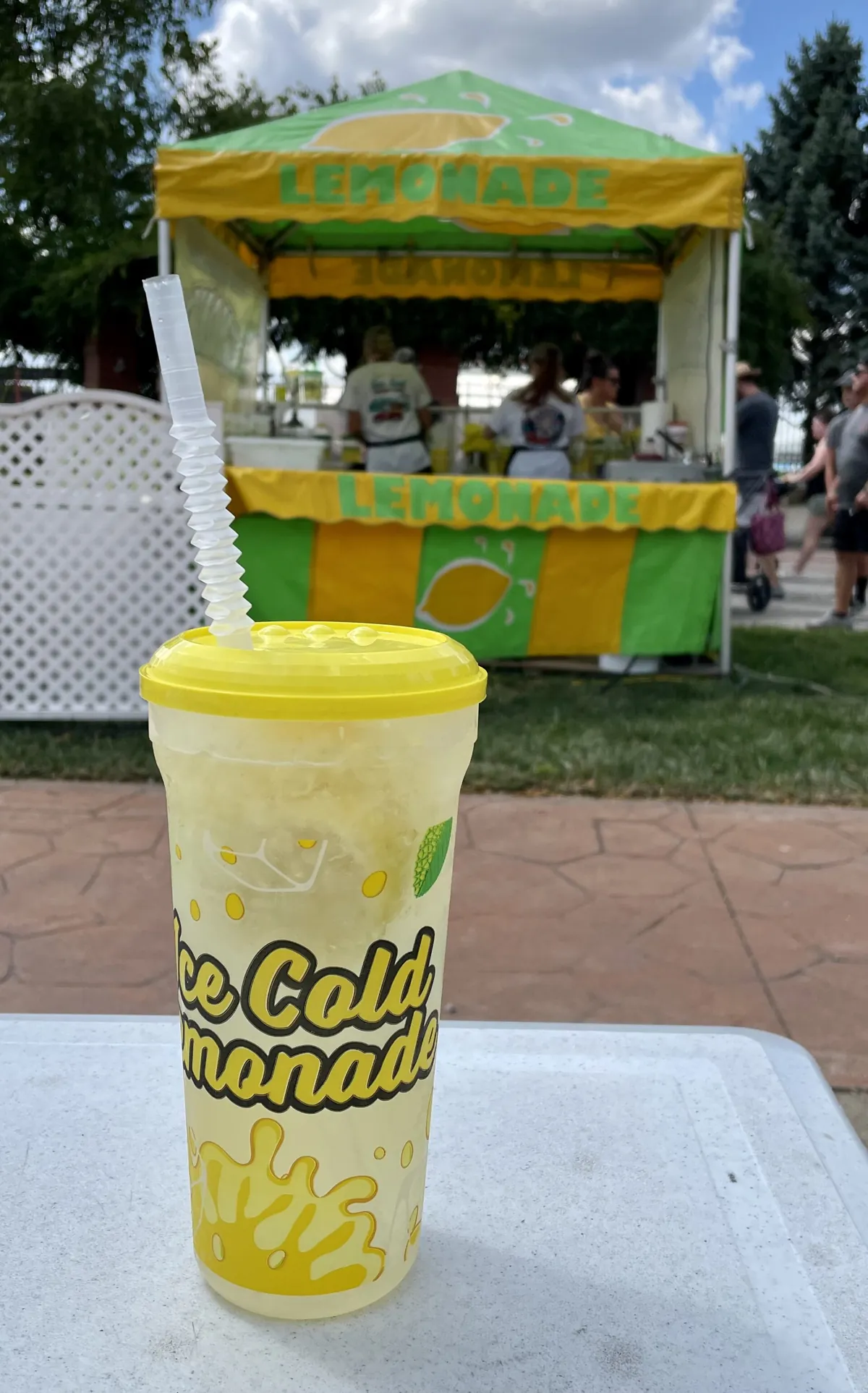
Fair food here looks like fair food anywhere in Iowa, and that is part of the appeal: corn dogs, funnel cakes, elephant ears, pork sandwiches, walking tacos, lemonade, and ice cream. Vendors line the main walkway, so grazing from the gate to the grandstand is easy and expected. Prices are set stand by stand rather than by a single gate fee, and the mix of vendors shifts from year to year, so it pays to scout the row before committing.
Grandstand Music and Evening Entertainment
Evenings are when the grounds fill. The grandstand traditionally hosts the headline entertainment of the night, a mix that has leaned on country, rock, and regional acts, along with crowd-pleasing events such as tractor pulls and motorsport shows that draw their own loyal audiences. Smaller stages and roaming performers keep the midway lively between sets. Since the lineup changes each year, check the fair’s published schedule before deciding which night to attend; the biggest draws usually fall on weekend evenings.
Family Activities, Youth Projects, and Livestock Barns
Families with young children tend to start at the midway, where rides range from gentle kiddie options to the spinning, high-flying sort that teenagers gravitate toward. Beyond the rides, the fair’s real heart is the barns and exhibit halls: cattle, swine, sheep, goats, poultry, and rabbits, plus static entries covering baking, canning, photography, flowers, and crafts. Many of those come from 4-H and FFA members, and watching a young exhibitor walk an animal into the ring is one of the most genuinely local experiences the county offers. Livestock shows run on their own schedules, so pick up a program at the gate.
Planning a Fair Trip Around Dubuque County
The fair is a summer event, and summer in northeast Iowa means heat, humidity, and the occasional thunderstorm. A little planning goes a long way.
Getting to the Dubuque County Area
Dubuque County sits in northeast Iowa along the Mississippi River, with the county seat of Dubuque as its largest city. Most visitors arrive by car, using the highway corridors that link Dubuque with surrounding towns and with neighboring counties in Iowa, Illinois, and Wisconsin. Coming from out of state, Dubuque is the natural base: it has the largest concentration of hotels and restaurants, and the drive to the fairgrounds is short.
Where to Stay Near Dubuque
Because the fair is a short drive from the county seat, most out-of-town visitors stay in or near Dubuque and commute to the grounds each day. Options include chain hotels along the highway corridors, smaller independent motels, and bed-and-breakfast style lodgings in the river town. Campgrounds and RV parks in the region serve fairgoers who prefer to stay closer to the action. Book early for fair week, since summer weekends in Dubuque also draw river tourism.
Parking and Arrival Timing
Parking is typically on-site or in adjacent lots, often with a modest charge and volunteers directing traffic. Arrive early in the evening for a closer spot and a shorter walk, especially on weekend nights when the grandstand show is the big draw. Late afternoon is the easiest window: the barns are still active, lines are short, and you can eat before the midway crowds build.
Admission, Tickets, and Day-of Costs
Gate admission is typically free, which makes it simple to stop in for an hour without committing to a full day. Costs come from the parts you choose: carnival rides and games, food and drink, and grandstand events that may sell separate tickets. Budget-minded families often set a per-person limit for rides, then spend the rest of the evening on free attractions such as livestock shows, exhibit halls, and people-watching.
Summer Heat, Storms, and What to Bring
Expect warm, humid days and cooler evenings. A hat, sunscreen, and a refillable water bottle are worth carrying, and comfortable shoes matter because fairgrounds are mostly gravel and grass. Afternoon thunderstorms are a real possibility in late July and early August, so a light rain jacket beats an umbrella in a crowd. If you plan to stay past dark, bring a layer for the walk back to the car.
A Sample Fair Weekend, Start to Finish
Begin on the opening evening with a slow lap. Walk the food row while it is still quiet, then head to the barns to watch evening chores and the last classes of the day. Finish under the grandstand lights, and leave before the parking lot gets busy.
Spend the next midday at the exhibit halls, where the baking, canning, photography, and craft entries are on display and the buildings are shaded. In the afternoon, catch a livestock show, then let younger kids loose on the kiddie rides before the evening surge. The second evening is the one for the grandstand headline act and a full midway loop. On the final morning, return early for the quiet hour, grab breakfast from a vendor, and take one last walk through the barns before the grounds empty out.
How It Stacks Up Against Neighboring County Fairs
Dubuque County’s fair sits in a region thick with county fairs. Jackson County, to the south around Maquoketa, and Delaware County, to the west around Manchester, both stage their own summer fairs with similar agricultural cores. Jones County, around Monticello, is another neighbor with a long fair tradition. What distinguishes the Dubuque County Fair is its setting: a fair within easy reach of a Mississippi river city of real size, which means bigger hotel and restaurant options than most rural county fairs can offer. If you are touring the region in summer, these fairs pair well as a multi-county loop.
Fair Week Checklist for Dubuque County Visitors
Before you go, confirm the year’s dates and grandstand lineup through the fair’s official channels; book a Dubuque hotel early if you are staying overnight; check the forecast and pack a rain layer; bring cash for parking, rides, and smaller vendors; wear closed shoes for gravel and barn aisles; charge your phone for tickets and photos; and set a rough spending limit per person. Once you are on the grounds, pick up a printed schedule at the gate, note the livestock show times, and plan your midway run for after the dinner rush.
Beyond the Fairgrounds: Dubuque County the Rest of the Year
The county seat rewards a longer stay. Dubuque’s riverfront, bluffs, and historic downtown give the area a character that most county fair destinations cannot match, and the Julien Dubuque Monument and the surrounding parkland tie the landscape directly to the county’s namesake. Away from the river, the county’s smaller towns — Peosta, Epworth, Farley, Cascade, Dyersville — each hold their own community celebrations and supper clubs worth seeking out. Farm stands and orchards around the county sell produce through the growing season, and the Mississippi River corridor offers boating, biking, and bluff-top overlooks from spring through fall. Fair week is a good reason to come; the county is a good reason to stay another day.
What Fair Week Means to Dubuque County
In a county of 99,266 people spread across 616.461 square miles, the fair is one of the few events that pulls every corner of the map into the same space. It is where a farm kid from a rural township and a family from Dubuque’s east side end up watching the same show. It is where the county’s agricultural identity gets displayed, judged, and celebrated in public rather than assumed. And it is where local organizations, volunteers, and small businesses do the unglamorous work that keeps a community tradition alive year after year. For many families, fair week is less an event than a marker of summer itself.
Where the Fair Sits in Dubuque County
The Dubuque County Fair takes place in the Dubuque County area of northeast Iowa, a short drive from the county seat of Dubuque along the Mississippi River corridor.
Dubuque County Fair Questions, Answered Plainly
When is the Dubuque County Fair usually held?
It is a summer fair, most often staged in late July or early August. The exact window shifts from year to year, so confirm the current season’s dates before you book a hotel or plan time off.
Do you need tickets to get into the fair?
Admission to the grounds is typically free. Rides, games, food, and some grandstand events carry their own charges, so your total cost depends on how much of the midway and entertainment schedule you take in.
Is the fair a good fit for young children?
Yes. Kiddie rides, livestock barns, and exhibit halls are all family-friendly, and the grounds are walkable. Afternoon visits tend to be calmer and cooler than evenings, when the midway and grandstand draw the biggest crowds.
How do I confirm this year’s schedule and events?
Check the fair’s official website and social channels, plus local Dubuque County news outlets, for the current dates, grandstand lineup, and livestock show times. Schedules are published ahead of the season and updated as the fair approaches.
Looking Ahead to Future Fair Seasons in Dubuque County
County fairs everywhere are working to stay relevant to younger crowds while protecting the agricultural core that gives them purpose. The Dubuque County Fair’s advantage is its location: a growing river city, a wide rural base, and a volunteer culture that has kept the event running for generations. Expect the format to evolve — new entertainment, updated grounds, more digital ticketing — while the barns, the exhibit halls, and the grandstand remain the center of gravity.
Last updated: October 2026
For anyone in northeast Iowa, the Dubuque County Fair is worth building a summer weekend around. Come for the midway lights and the grandstand show, stay for the barns, the exhibits, and the easy conversation with people who have been coming to the same grounds their whole lives. Check the season’s dates, book your room in Dubuque, and give the county a full day — it earns it.
One Comment