Cayuga County New York Sterling Renaissance Festival
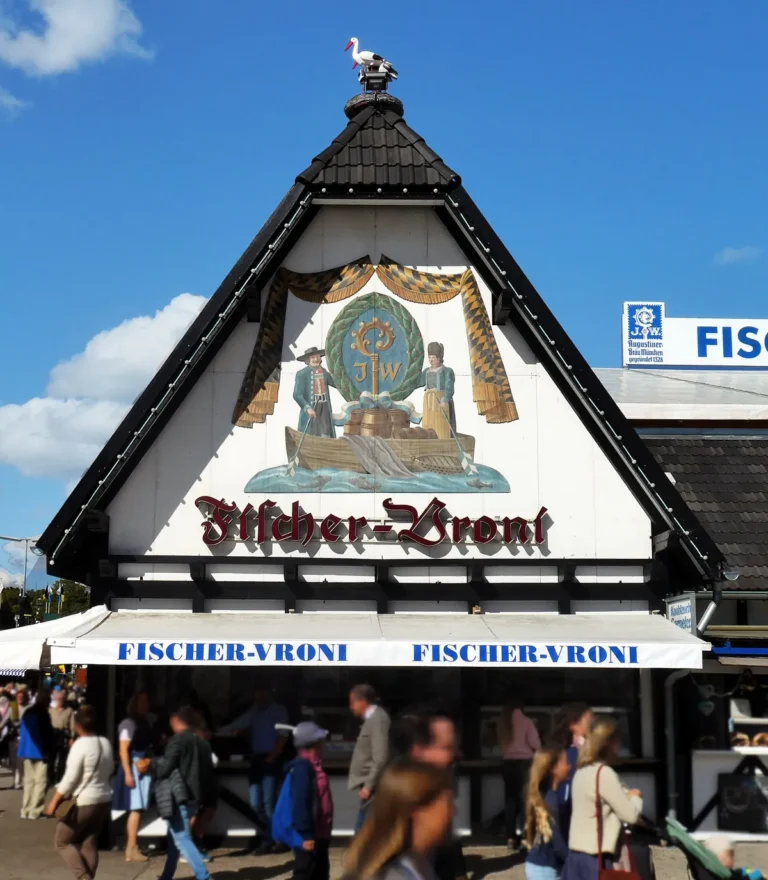
The Sterling Renaissance Festival is not a county fair, and it does not take place in Auburn. Auburn is Cayuga County’s seat, and a separate agricultural county fair belongs to that city; this festival is something else entirely. It is a commercial Renaissance festival whose fictional village, in the Town of Sterling in the county’s north, becomes Warwick, England, in 1585 for seven summer weekends a year.

The real address is 15385 Farden Road, Sterling, a wooded, fenced site of lanes, taverns and stages. Inside the gate there are no livestock barns, premium books or exhibition halls, because none of that machinery belongs to this event. Visitors find street theatre, jousting, music, comedy, artisan demonstrations and a great deal of food instead.
A Built Village That Wakes for Seven Weekends
The festival stages a small country town holding its fair day, set not far from London in its own telling. Costumed townsfolk, royalty and rogues work the lanes, and guests are pulled into their scenes. The paid acting company, the Wyldewood Players, carries much of that interaction, playing the Queen, her court and the villagers.
Canterbury Hall, just outside the front gate, houses the festival office and guest relations; the Remembrance Shop stands outside the gate too, and the Royal Rags Shoppe just inside rents costumes. The lanes hold the Rose and Crown Tavern, the Snickleway Pub and Sir Williams Pub, a Pork and Steak building and a chapel, and two first aid stations stand near the gate and at the foot of the High Road.
One honest complication runs through the festival’s own descriptions: its visitor pages describe a twelve-stage venue in a thirty-five acre interactive theatre, its artisan page a sixteen-stage venue, and another line puts the site at thirty-five-plus acres. Both versions stand.
For a useful comparison, see the Cattaraugus County New York Fair Festival for another county festival.
Quick Facts
| Point | What the festival’s own record shows |
| Event | Sterling Renaissance Festival, a commercial Renaissance festival |
| Host town | Sterling, in northern Cayuga County, on the Lake Ontario shore |
| County seat | Auburn, which does not host this festival |
| Grounds address | 15385 Farden Road, Sterling |
| Setting | The fictional village of Warwick, England, in 1585 |
| 2026 season | Saturdays and Sundays, July 4 to August 16, 2026, 10:00 in the morning until 7:00 in the evening, rain or shine |
| 2026 regular admission | Adults twelve and up, thirty-nine dollars and ninety-five cents; children four to eleven, twenty-one dollars and ninety-five cents; children three and under free |
| Included in admission | Parking and every entertainment show, including the tournament jousting |
| Not included | Food, drink, artisan goods, and rides and games at three to five dollars each |
| Camping | No public camping; a private campground serves participants only |
Fifty Seasons of Billing, and the Layers Beneath
State and festival coverage billed the 2026 season as the fiftieth anniversary. An anniversary number is billing, not a birth certificate, and no founding year is calculated from it here.
Separate from the billing, the festival’s own press material has published a since-1976 claim, in a 2016 release marking a fortieth anniversary and carrying a presenter’s credit for Empire Attractions, LLC. That credit belongs to that release; the festival’s current pages name no owner or operating company, so no present-day operator is asserted here. A 2015 season release named Doug Waterbury as the owner, describing new acts and investment in the grounds.
The longer ownership story survives in a history layer drawn from a 2008 newspaper report. It attributes the founding in 1976 to Dennis Ouellette Sr., records over thirty years of ownership by Gerald and Virginia Young, and reports Doug Waterbury bought the site in early 2008 in a reported two million dollar deal. A template website circulating different founder names is used for nothing here.
What to Expect
A Hundred Performances Before the Day Is Out
The festival’s themed-weekend pages promise over one hundred stage and street performances a day: comedy, daredevils, swordsmen, royalty, wenches, trials and dunks, pub sings and games.
The Grand Joust A’Plaisance
The festival calls the Grand Joust A’Plaisance its cornerstone, and its field anchors the grounds at the bottom of the High Road. The joust costs nothing extra: it sits inside the admission price, with every other show on the stages and in the streets.
Artisans, Food and the Paid Extras
Artisans are admitted through a jury process, and the festival’s own trade material counts ninety-five shops, their makers demonstrating as they sell; the same material puts annual attendance at approximately one hundred thousand patrons, a trade claim rather than an audited count. Food and drink are sold separately, running to steak-on-a-stake, turkey legs and tavern cooking, and rides and games sit outside the ticket at three to five dollars each. Food and drink inside are now cashless, by card, mobile payment or a festival e-card bought on site, while cash is kept for tickets, the shop outside the gate and select activities.
A Different Theme Every Weekend
Each of the seven weekends in 2026 carried its own theme, in the festival’s published order. The season opened with a Welcome Back weekend, then came Romance, built around a Renewal of Vows Ceremony at the Chapel for couples who reserve in advance; Ale Fest, celebrating brewing with imported and domestic beers on tap; Pirate Invasion, with a costume competition, roving pirate bands and a Pirate Revel at the Snickleway Pub; Highland Fling, with pipe bands, highland dancing and a Caber Toss and Stone Put; and Fantasy, Fairies and the Future, welcoming sprites, fairies, barbarians and time travellers with an Adult Costume Exhibition, before the Grande Finale closed the season.
The festival’s own themed page gives no date for the middle themes, and none is assigned here by counting weekends. Its social posts date the last two: Fantasy, Fairies and the Future on August 8 and 9, 2026, and the Grande Finale on August 15 and 16, when the gates closed for the season.
Planning Your Visit
The Shape of the Season
The 2026 season ran on Saturdays and Sundays only, from July 4 to August 16, gates open ten in the morning until seven in the evening, rain or shine, with no weekday hours. The festival’s own directions put the site about forty-five minutes north of Syracuse and one hour east of Rochester.
Tickets, Told by Their Year
Ticket figures here belong to 2026 and to the festival’s own ladder; older and newer figures circulate, and none may be swapped in. Regular pricing began on June 1, 2026: thirty-nine dollars and ninety-five cents for adults aged twelve and up, twenty-one dollars and ninety-five cents for children aged four to eleven, and children aged three and under free. A two-day pass cost sixty-nine dollars and ninety-five cents, sold only at the ticketing windows, and season passes cost two hundred twenty-nine dollars and ninety-five cents for adults and one hundred nineteen dollars and ninety-five cents for children. All tickets carry New York State tax and online purchases add fees, so totals quoted elsewhere can look higher than the gate ladder; those fee-included totals are not the festival’s prices.
Discounted tickets were offered from August 15 through May 31, 2026, but the festival’s pages state no amount. On opening weekend, every regular adult ticket came with one free child’s ticket, and a gate-only special opening price was advertised, its amount likewise never stated.
A Sample Saturday in Warwick
Reach Farden Road before the gates open at ten, buy tickets at the windows, and walk the main lane while the village wakes, pausing at the costume rental shop if anyone wants to dress up. Drift between street scenes and stage shows through the late morning, buy lunch early, and take a seat for the afternoon joust down the High Road, the day’s fixed point, then work back through the artisan shops while demonstrations still run. Leave the last hour for a pub sing near the gate, and head for the car at seven.
Sleeping Over, Honestly
The festival publishes no public campground, visitor pitches or recreational vehicle rates, and nothing in its record implies one. The site’s only campground is private, for the festival’s own participants, principally its artisans, offering tent and recreational vehicle pitches with water and electricity in limited quantity, at no published rate.
A Renaissance Village Is Not a County Fair
The quickest way to misunderstand this festival is to file it beside an agricultural county fair, which is judged: animals, crops and crafts are entered and awarded premiums to display a county’s farming year, while Sterling judges almost nothing its visitors bring. Its artisans are chosen by a jury committee and its performers are a paid company and hired acts, and its competitions, from costume exhibitions to the Caber Toss, are staged entertainment, not a record of anyone’s harvest.
One Sterling ticket buys every show on every stage and in every lane, joust included, while food, drink, goods, rides and games are each paid as you go. That is also why the season pass looms large: a fair is usually a once-a-year week, while this festival offers fourteen days across seven themed weekends, and a pass costing roughly six single days soon repays itself.
A Checklist Before You Set Out
- Pick your weekend by its theme first; the season holds only seven, each programming the village differently.
- Confirm dates and prices on the festival’s own pages first; every figure here belongs to 2026.
- Budget beyond the gate price: food, drink, goods, rides and games all cost extra inside.
- Carry a payment card or plan to buy the festival’s e-card on site; food and drink inside no longer take cash.
- Do not count on camping at the festival; its only campground serves participants, so book lodging nearby instead.
- Route for Sterling and Farden Road, not Auburn, the county seat.
- Leave the county fair out of your planning; it is a different event on its own separate calendar.
- Dress for a full day outdoors on a lakeshore site the festival calls generally cooler in summer.
Beyond the Festival Grounds
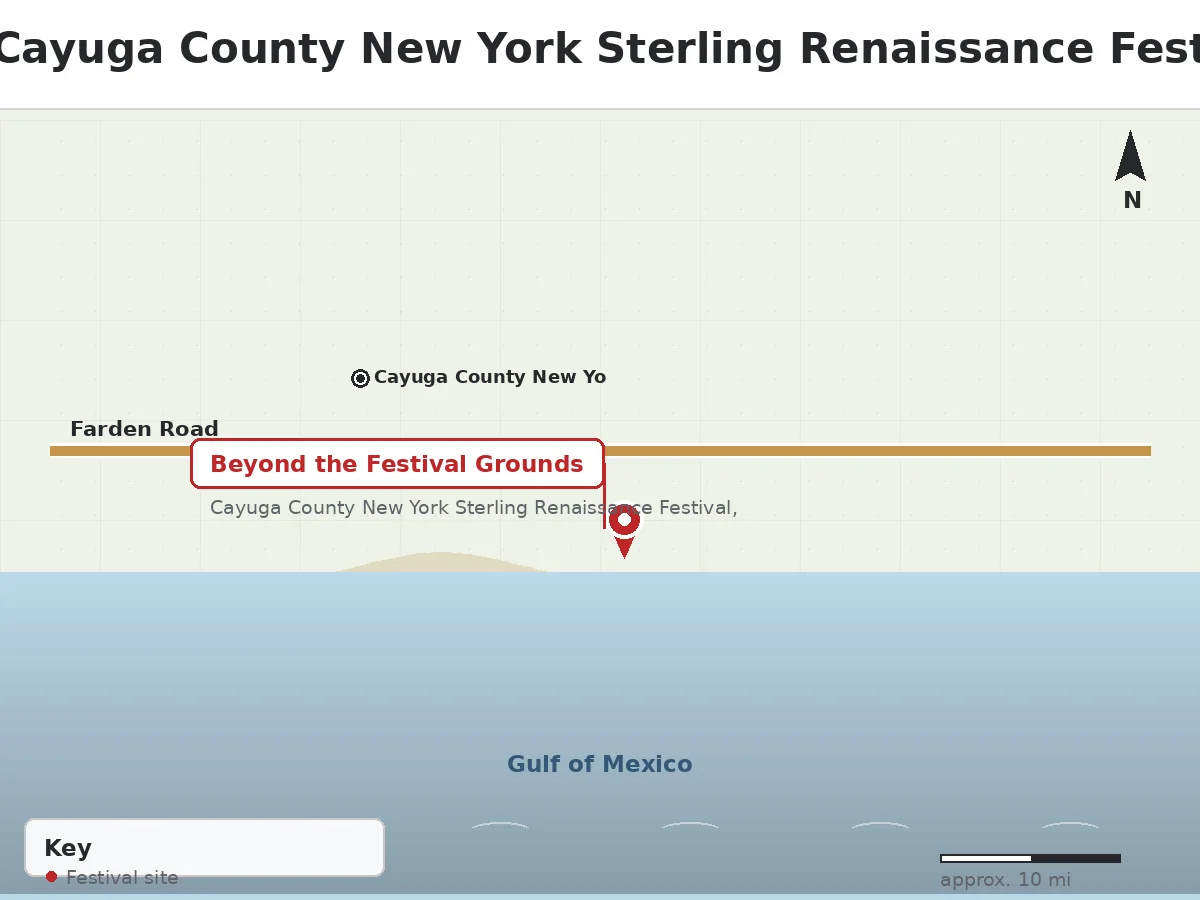
Sterling sits in Cayuga County’s rural north, near the Lake Ontario shoreline, and a festival weekend stretches naturally into the country around it. The lakeshore is the obvious companion piece, shaping the beaches, harbours and shoreline villages of the county’s north.
Inland, Auburn carries the county’s civic weight as seat and largest city, and makes a practical hotel base. The two places should not be blurred: Auburn keeps the courthouse and the county’s separate agricultural fair, while Sterling holds the Renaissance village.
Why a Fictional Village Matters to a Real County
A made-up English village might sound slight, but this festival is one of Cayuga County’s largest recurring draws, and its own trade figures speak of around one hundred thousand patrons a year moving through a small rural town. They arrive across seven weekends rather than in one surge, spreading spending on lodging, fuel, food and shops more steadily than a single fair week would.
Cayuga County keeps a farming calendar, fairs included, but none of that describes a built Elizabethan village where a paid company performs a town that never existed. The juried artisans, many returning year after year, form a seasonal community of makers whose work is demonstrated in public rather than merely sold, and the kept fiction has proved as durable as any fairground.
Frequently Asked Questions
Is the Sterling Renaissance Festival the Cayuga County Fair?
No, and the distinction is this article’s most useful fact. The county fair is a separate agricultural event elsewhere in the county, under its own organisers and calendar, and nothing about it appears here. This festival stages a fictional English village of 1585 in the Town of Sterling, sharing nothing with the fair but the county both sit in.
How much did admission cost in 2026, and what did it cover?
Under the festival’s own regular ladder, begun on June 1, 2026, adults aged twelve and up paid thirty-nine dollars and ninety-five cents, children aged four to eleven paid twenty-one dollars and ninety-five cents, and children three and under entered free. Two-day passes, sold only at the windows, cost sixty-nine dollars and ninety-five cents, and season passes were also sold. The ticket covered parking and every entertainment show, jousting included, while food, drink, goods, rides and games were extra.
When does the festival run, and what happens if it rains?
The 2026 season ran on Saturdays and Sundays only, from July 4 to August 16, ten in the morning until seven in the evening. The festival’s own answer on weather is short: it opens rain or shine, so a wet forecast is not a cancellation notice. With no weekday dates to move to, choosing between a themed weekend’s Saturday and Sunday by the forecast is the practical defence against a wet spell.
Can visitors camp at or near the festival grounds?
Not at the grounds themselves. The festival publishes no public camping, and the single campground in its own record is private, for participants only, chiefly the artisans who work the season, with tent pitches and a limited number of recreational vehicle pitches offering water and electricity. It publishes no rate and the public cannot book it, so visitors arrange rooms or pitches with the area’s ordinary lodging businesses instead.
What to Expect From the Next Cayuga County New York Sterling Renaissance Festival
How often is the Cayuga County New York Sterling Renaissance Festival held?
The festival is held once a year. Within its season it opens on Saturdays and Sundays only, across seven weekends in July and August, each themed differently, so a visit is a choice between seven versions of the same village.
When is the next Cayuga County New York Sterling Renaissance Festival?
The festival has billed its next season in its posts: Saturdays and Sundays from July 3 to August 15, 2027, in the same early-July to mid-August shape as before. Those dates are its own advance billing, printed as exactly that; its 2027 prices and themes are its own to publish, and nothing from the 2026 ladder carries forward as a 2027 price.
Will the dates change?
The pattern beneath the dates is steady across the documented seasons: weekends only, opening around the first Saturday of July and closing in mid-August, shifting a few days each year. The 2024 season ran from July 6 to August 18, the 2025 season from July 5 to August 17, and the 2026 season from July 4 to August 16, so change at the edges is normal. What does not change is the shape, seven summer weekends, Saturdays and Sundays, ten until seven, and the festival’s own announcements are the only authority for any given year.
Cayuga County keeps two summer institutions that could hardly be less alike: an agricultural fair belonging to its farming year, and a wooden village where 1585 is always just beginning. Meet this one on its own terms, in Sterling, on a weekend, with the joust included and dinner extra, and fifty billed seasons say it delivers.