Sumner County Kansas Watermelon Feed Festival
September in Oxford belongs to watermelon. On one Saturday each autumn, the shade trees of Napawalla Park fill with food stands, craft tables and children’s games, and everything builds toward one unpretentious moment in mid-afternoon, when the melons are cut and handed out free. The event behind this article’s title is a real and current Oxford tradition, though readers should know at the outset that no layer in the written record prints the county-prefixed name used above. Around Oxford the day is billed more simply, and it is those shorter published names that carry the documentation.
About the Feed
The fullest of the published forms is “Oxford Lions Club Watermelon Feed”, the version carried by a state food-festival layer. A festival-guide layer shortens that to “Oxford Watermelon Feed”, while the city of Oxford’s own newsletter bills the occasion as “Oxford’s seventy-eighth Annual Watermelon Feed”. A festival-listing layer is the only source read that goes further and appends the final word, printing “Oxford Lions Club Watermelon Feed Festival”. The Oxford entry in a reference layer treats the feed as the town’s standing attraction and lists it as “The Oxford Watermelon Feed”. These forms overlap without ever quite matching, and this article keeps them unmerged, because each belongs to a different layer of the record.
Oxford itself is a small town in the southern part of Sumner County, and it is not the county seat; that role belongs to Wellington, some distance to the north. The feed nevertheless draws its standing from its own ground. Almost everything happens in and around Napawalla Park, the town’s green gathering place; the one excursion beyond it is the parade, which a listing layer routes down North Sumner before the crowd settles back among the trees.
Two names stand behind the day, and the record keeps them distinct. The Oxford Lions Club is the organiser named inside the event’s own title in both the state food-festival layer and the festival-listing layer. The City of Oxford plays a different part: its newsletter promotes the occasion to residents, and the same municipal voice records city crews preparing Napawalla Park ahead of the crowds. The layers never fuse organiser and host town into a single credit, and neither does this account.
Quick Facts
| Item | Detail |
| Published name forms | Oxford Lions Club Watermelon Feed; Oxford Watermelon Feed |
| Host town | Oxford, in Sumner County, Kansas |
| County seat | Wellington, not Oxford |
| Main venue | Napawalla Park, Oxford |
| Parade route | Down North Sumner, per a listing layer |
| Organiser named in the title | The Oxford Lions Club |
| Documented edition | The twelfth of September, two thousand twenty-six |
| Billing carried by that edition | The seventy-eighth Annual, as printed by two layers |
| Usual placing | The first Saturday after Labor Day, per a reference layer |
| Centrepiece | Free watermelon, per the city’s own newsletter |
History
The history available for this event is honest but thin, and most of it hangs on a single number. Both the city newsletter and the state food-festival layer bill the edition of the twelfth of September, two thousand twenty-six, as the seventy-eighth Annual. That billing is repeated here exactly as the layers print it: as a billing, and nothing more. Beyond that figure, the written record leaves the feed’s first year unspoken. No layer read attaches a founding date to the gathering in words, and this article does not work one out by counting backwards from the billing, because arithmetic is not evidence.
For a useful comparison, see the Sumner County Kansas Chisholm Trail Festival for another county festival.
What the record does support is continuity of a quieter kind. A listing layer that shows no date describes the day in an established shape, with children’s games in the morning, two parades in the early afternoon and the serving of the melons at about half past two, the settled routine of an event repeated often enough to acquire fixed hours. The reference layer that lists the feed among Oxford’s attractions likewise treats it as a fixture rather than a novelty. Long habit, then, is documented; a dated beginning is not.
One separation matters to the history. Wellington’s Kansas Wheat Festival, the county seat’s big summer gathering, includes a watermelon feed among the elements of its own programme in a regional magazine layer. That serving of melons belongs to the Wheat Festival’s schedule. Oxford’s feed is a separate town event with its own name, its own park and its own billing, and the two are kept apart throughout this article.
What to Expect
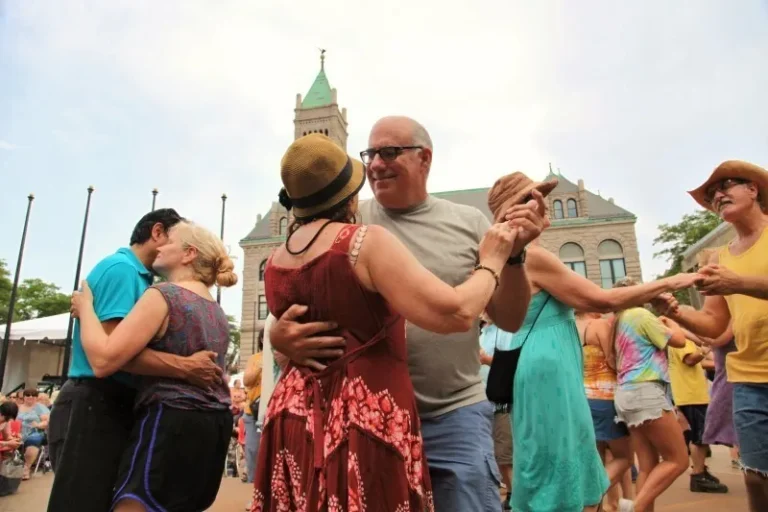
The morning of the documented two thousand twenty-six edition began on foot. A state food-festival layer starts the day with fun runs of two distances, a two-mile course and a 10K course, before the park fills. From there the same layer keeps activities running throughout the day: food stands, crafts, games, a parade and an outdoor dance to finish. The city newsletter’s own summary of the occasion is plainer and warmer, promising food, fun, vendors, music and free watermelon, and a city news layer adds one modern touch: the Wellington Humane Society provided free microchips at that year’s feed.
The older listing layer supplies the afternoon’s choreography. Children’s games open at Napawalla Park at ten in the morning. A children’s parade steps off at a quarter to two in the afternoon, the main parade follows at two down North Sumner, and the watermelon feed itself begins at about half past two, back in the park. The sequence gives the day a clear spine: the park belongs to the children first, the street takes its turn, and then everyone returns to the shade for the melons, which arrive only after the parades have had their moment.
Taken together, the programme is deliberately modest. There is no headline concert and no midway in these layers, just running shoes at one end of the day, handmade goods and food stands through the middle, dancing at the close, and sliced watermelon holding the centre. Visitors expecting a large fairground production will misjudge it; the feed’s pleasures are those of a town party long kept in the same shape.
Planning Your Visit
Timing is the first thing to settle, and the record offers two anchors that sit comfortably together. A reference layer places the feed on the first Saturday after Labor Day in September, while the dated edition documented for two thousand twenty-six fell on the twelfth of September, so checking the city’s announcements as autumn approaches is the sensible way to fix the day in a given year. Because nearly everything happens outdoors in one park, the visit organises itself: arrive in the morning for the runs and the children’s games, and hold the early afternoon free for the parades.
The admission picture needs care. The city newsletter states plainly that the watermelon is free, and that is the only firm statement about cost anywhere in the layers read. No layer read sets out a general gate price for the day, and this article takes no position on whether any other element carries a charge; food stands and craft tables, by their nature, sell what they display, but the record does not price them. Bring ordinary spending money for food and crafts, and treat the melons themselves as the town’s gift.
Practical comforts follow from the setting. Napawalla Park is the whole stage, so shade, a blanket or folding chairs and patience at the serving lines matter more than any elaborate plan. Families with small children get the fullest value from the morning games and the children’s parade, while anyone mainly coming for the feed itself can time their arrival for the main parade and stay through the first servings. The city layers print municipal office details for Oxford, but those belong to the town’s offices rather than to the event, and they are noted here by existence only.
A Sample Day at the Feed
A morning arrival puts you in the park as the fun runs set the day moving and the children’s games open at ten. The late morning belongs to browsing: craft tables, food stands and vendors spread through the park while music plays and the crowd thickens gradually. Lunch is whatever the stands are serving, eaten in the shade.
Early afternoon has a fixed rhythm worth planning around. The children’s parade goes at a quarter to two, the main parade follows at two along North Sumner, and the feed itself begins at about half past two, when the melons are cut in the park. Staying on into the evening rounds the day out with the outdoor dance recorded by the state food-festival layer, after which Oxford returns to its usual quiet.
How the Feed Compares
Watermelon festivals are a Kansas habit, and two others appear in the record only to be fenced out of this one. Clyde’s long-running watermelon festival belongs to Cloud County, and Potwin’s belongs to Butler County; each is a different town’s event in a different county, and neither supplies evidence for the Oxford feed. The closer comparison is Wellington’s Kansas Wheat Festival, a far larger county occasion whose programme, in a regional magazine layer, happens to include a watermelon feed of its own. That element sits inside another festival’s schedule. Oxford’s day is the reverse arrangement: the feed is not one attraction among many but the reason the town gathers at all, and everything else, from the fun runs to the dance, is arranged around it.
The name tangle is part of the comparison too. A researcher chasing this event through guide layers will meet at least four printed forms of its name, only one of which carries the word Festival, and none of which carries the county prefix used in this article’s title. That untidiness is itself a finding: small, locally run traditions often live in print under whatever name each listing chose, while the event in Napawalla Park stays constant underneath.
A Visitor’s Checklist
- Confirm the year’s date through the city’s announcements before travelling
- Arrive by ten in the morning for the children’s games in the park
- Bring a blanket or folding chairs for the shade at Napawalla Park
- Carry spending money for food stands and craft tables
- Keep the early afternoon open for both parades on North Sumner
- Be in the park by half past two for the serving of the melons
- Stay into the evening if the outdoor dance is on the programme
- Leave room for watermelon, which the town serves free
Beyond the Park
The feed is the documented attraction, though a trip to Oxford gains context from the town around it. The reference layer’s Oxford entry treats the feed as the community’s signature occasion, which tells a visitor something about scale: this is the day the town presents itself. Wellington, the county seat, lies within the same county and carries its own separate festival calendar, including the Wheat Festival discussed above, so a traveller based in the county can treat the two towns’ events as distinct stops rather than rivals. Nothing in the record turns the feed into a regional circuit; its charm is precisely that it stays one town’s day in one town’s park.
Why the Feed Matters
A watermelon feed is a simple idea with unusual staying power, and Oxford’s version shows why the form endures. The centrepiece costs the visitor nothing, is served in the open air, and arrives at a fixed hour the whole town can organise around, so the event works as a civic ritual as much as a festival. The seventy-eighth Annual billing, whatever its unrecorded starting point, signals a tradition that generations of residents have kept alive through the Lions Club’s organising and the city’s practical help, each in the separate roles the record assigns them. For Sumner County’s smaller towns, the feed also marks out Oxford’s own identity beside the county seat’s larger stage: Wellington has its wheat, and Oxford has its melons.
Frequently Asked Questions
Under which name do published listings carry the Oxford feed?
Search for the Oxford forms rather than the county-prefixed title. The state food-festival layer uses Oxford Lions Club Watermelon Feed, a festival-guide layer shortens it to Oxford Watermelon Feed, and only a festival-listing layer adds the word Festival to the end.
Why does the whole day revolve around one serving of fruit?
Because the feed itself is the occasion’s centrepiece and its namesake. The city newsletter’s summary leads with food, fun, vendors and music but lands on free watermelon, and the listing layer’s timetable holds the serving back until about half past two, after both parades, so the melons close the afternoon rather than open it.
What is there for children to do besides eat watermelon?
A good deal, on the listing layer’s account. Children’s games open the park programme at ten in the morning, a children’s parade steps off at a quarter to two in the afternoon ahead of the main parade, and the wider day adds crafts, games and music around those fixed points.
Does the seventy-eighth Annual billing reveal the founding year?
It does not, at least not in the layers read. The seventy-eighth Annual wording is a billing printed by the city newsletter and the state food-festival layer for the two thousand twenty-six edition, and neither layer states a year of founding in words, so none is claimed here.
What to Expect From the Next Sumner County Kansas Watermelon Feed Festival
How often is Sumner County Kansas Watermelon Feed Festival held?
The record presents the feed as an annual occasion. The two thousand twenty-six edition was billed as the seventy-eighth Annual, and a reference layer ties the gathering to a fixed point in the calendar, the first Saturday after Labor Day in September.
When is the next Sumner County Kansas Watermelon Feed Festival?
Working from the reference layer’s placing, the next edition would be expected on the first Saturday after Labor Day, in September following the documented twelfth of September, two thousand twenty-six. That is a projection from the published pattern rather than an announced date, so the city’s announcements remain the authority to check.
Will the dates change?
They could, in principle, because the September placing comes from a reference layer’s description of the custom rather than from any standing rule quoted in the record. The two thousand twenty-six date of the twelfth of September is the firmest point available, and future editions should be confirmed against the city’s current notices.
A Last Word
The Sumner County Kansas Watermelon Feed Festival, as the layers actually print it, is Oxford’s own Watermelon Feed: a Lions Club occasion in Napawalla Park, built from fun runs, parades, craft tables and an outdoor dance, and crowned in the middle of the afternoon by melons served free. Its documentation is solid on the day itself and silent on its beginnings, and both halves of that picture are worth keeping. Go for the parade, stay for the watermelon.