Orleans Parish Louisiana French Quarter Festival
Spring in Orleans Parish has a soundtrack and a menu, and for one long weekend the two arrive together. The Orleans Parish Louisiana French Quarter Festival spreads through the historic Quarter and along the Mississippi riverfront, where stages rise between Creole cottages and food booths steam with the cooking of a state that treats dinner as a birthright.
What sets it apart is the balance. There is no gate, no single headline arena, and no need to choose between hearing a brass band and eating a bowl of gumbo — the two are usually a block apart. This guide is written for people who plan their festival day around their next plate.
The French Quarter Festival Frame: Parish, Place, Practicalities
Before you map out a route between po-boy stands, it helps to know what kind of event you are walking into. The short version: a free, open-air, deeply local festival inside one of the most walkable neighborhoods in the United States.
| Town / place | French Quarter and Mississippi riverfront, Orleans Parish, Louisiana |
| Parish | Orleans Parish, Louisiana |
| Parish seat | New Orleans |
| Population | Louisiana’s most visited urban parish, and one of its most densely settled |
| Region | Southeast Louisiana, lower Mississippi River delta and Gulf Coast |
| Parish land area and founding | 349.85 square miles; Orleans Parish founded April 14, 1807 |
| Typical timing | A spring weekend, in most years during April |
| Admission | Free to enter; food and drink are sold by individual vendors |
| Setting and features | Open-air stages, street-side food booths, and riverfront views across the Quarter |
| Organizer | A Louisiana nonprofit devoted to the state’s music and culinary culture |
A Free Louisiana Feast Inside the Old Quarter
The French Quarter Festival is, at heart, a neighborhood party with a very large kitchen. Dozens of Louisiana restaurants set up along the streets and the river, serving scaled-down versions of the dishes they are known for: gumbo, jambalaya, crawfish, chargrilled oysters, muffulettas, pralines, and whatever the season is offering that week.
Admission is free, which shapes everything. Because there is no ticket booth, the crowd is a genuine mix of Orleans Parish residents, day-trippers from across the Gulf Coast, and visitors who happened to book a spring trip and stumbled into something much bigger than they expected. You pay only for what you eat and drink.
The music policy leans deliberately local. Lineups are built around Louisiana performers — brass bands, zydeco and Cajun outfits, jazz combos, gospel groups, funk and R&B acts — rather than touring headliners. That choice keeps the festival tethered to the place it celebrates, and it means the food and the sound come from the same cultural root system.
From a Colonial Grid to a Spring Ritual in Orleans Parish
The streets hosting the festival are older than the parish itself. The French Quarter’s tight grid was laid out during the French colonial period, rebuilt under Spanish administration after devastating fires, and later absorbed into the American city that grew upriver. Orleans Parish was formally founded on April 14, 1807, and the neighborhood at its center has been the region’s commercial and social heart ever since.
By the late twentieth century, that heart needed a jolt. Locals had drifted toward newer parts of the city, and the Quarter’s economy leaned heavily on tourism. The festival grew out of a push to bring residents back into the neighborhood — to give people who lived in Orleans Parish a reason to spend a spring weekend on their own streets, eating their own food and hearing their own musicians.
That founding instinct still shows. The event expanded from a modest neighborhood gathering into one of the largest free festivals in the region, adding riverfront stages, more restaurant vendors, and a broader musical program. But the original logic — locals first, tourists welcome — never really changed, and it is the reason the food still tastes like somebody’s family recipe rather than event catering.
What Fills the Streets During French Quarter Festival
Expect to walk, expect to queue at the most famous booths, and expect the crowd to be thickest in the late afternoon. The festival is spread out enough that you can always find breathing room, especially near the river and on the quieter residential blocks.
The Food: A Walking Menu of Louisiana Cooking
Food is the main event for most attendees, and the smart approach is to graze rather than commit. Portions are sized for sampling, which lets you move from a cup of turtle soup to a soft-shell crab po-boy to a plate of crawfish Monica without wrecking your afternoon. Prices are set by each vendor and are generally in the range you would expect from a casual restaurant, so bring cash and a card.
Seafood dominates, as it should in a city built on a river delta. Look for boiled crawfish in spring, oysters in several preparations, shrimp remoulade, and catfish. Creole and Cajun classics fill the rest of the menu: red beans, étouffée, boudin, andouille, and jambalaya. Dessert is its own circuit — beignets, bread pudding, pralines, snowballs once the heat sets in. Vegetarians will find options, but they are thinner than the seafood and meat lineup, so scout the booths before committing.
Stages, Corners, and an All-Louisiana Lineup
Music runs continuously on multiple stages, with smaller performances tucked into courtyards and along the river. The programming is a survey of Louisiana traditions: brass band funk, traditional jazz, gospel choirs, swamp pop, zydeco, Cajun fiddle, and contemporary local rock and soul.
Because the stages are close together, you can drift between sets without a plan. A useful rhythm is to pick one stage for a full set, then wander toward the river, where the crowds thin and the breeze picks up. Evening sets tend to draw the biggest audiences, so claim a spot early if a particular band matters to you.
Bringing Kids Into the Quarter
Families do well here, partly because the festival is free and partly because the Quarter is flat and compact. Strollers are manageable on most blocks but awkward in the densest food lines, so a carrier is often easier. Designated family areas with activities for younger children have been part of the event’s layout, and the riverfront walk is a reliable place to let kids burn off energy between sets.
The main caution is heat and hydration. Spring in southeast Louisiana can swing from mild to genuinely hot within a single afternoon, and shade is scarce on the riverfront. Bring water, hats, and sunscreen, and plan a mid-afternoon break indoors.
Planning Your Orleans Parish Festival Weekend
The Quarter is compact, but it is not easy to drive into. Plan your transportation before you plan your menu, because the two are connected — nobody enjoys a po-boy while circling for parking.
Getting to the French Quarter
Most out-of-town visitors fly into the New Orleans airport and take a taxi, rideshare, or shuttle to a hotel near the Quarter or the Central Business District. From there, walking is the default. If you are driving in from elsewhere in Orleans Parish or from a neighboring parish, consider parking once at your accommodation and leaving the car there for the weekend.
Where to Sleep in Orleans Parish
Hotels inside the Quarter put you steps from the stages but also inside the noise. Properties in the Central Business District, Warehouse District, and along Canal Street offer a quieter night and a short walk or streetcar ride to the action. Book well ahead for spring weekends; this is a popular travel season in the city even without the festival.
Parking and Getting Around Without a Car
Street parking near the Quarter is limited at the best of times and heavily restricted during the festival, with some blocks closed to vehicles entirely. Use a paid garage on the perimeter of the neighborhood if you must drive, and treat the car as a last resort. Streetcars, buses, bicycles, and your own two feet will get you everywhere you need to go.
What It Costs and What It Doesn’t
Entry is free. Your spending will be food, drinks, tips, and transportation. A realistic budget for a full festival day is whatever you would spend at two or three casual restaurant meals, plus drinks. Many vendors accept cards, but small bills speed up lines and help at stands with spotty connections.
Spring Weather in Southeast Louisiana
Expect warm, humid days, sudden afternoon showers, and the occasional cool morning. Dress in light layers, choose shoes you can walk miles in, and carry a compact rain jacket rather than an umbrella, which is awkward in a crowd. Afternoon thunderstorms usually pass quickly, and the festival continues around them.
A Sample Weekend of Eating and Listening
Friday afternoon. Arrive early, before the crowds settle in, and walk the riverfront to get your bearings. Start with something light and savory — a cup of gumbo or a shrimp remoulade — then catch a brass band on a river stage as the light goes gold. Finish the evening with a full plate of boiled crawfish and a stroll down Royal Street.
Saturday. Eat breakfast away from the festival footprint, then commit to a grazing route: one savory booth, one stage, one dessert, repeat. Mid-afternoon, retreat indoors for an hour of air conditioning. Return for the evening sets, when the biggest acts play and the food lines finally shorten.
Sunday. Go back for the dishes you regretted skipping. Sundays tend to feel slower and more local, with families out in force. Wrap up with a long walk through the residential blocks of the Quarter, then a final dessert and a last set before the stages go quiet.
How It Stacks Up Against Nearby Louisiana Festivals
The obvious comparison is the New Orleans Jazz & Heritage Festival, held later in the spring at the fairgrounds. Jazz Fest is larger, ticketed, and built around big-name headliners and a vast food area. The French Quarter Festival is the opposite approach: free, walkable, no fences, and rooted in the neighborhood rather than a field.
In Lafayette, Festival International de Louisiane brings a Francophone, internationally minded lineup to a downtown grid, with a similar free-and-walkable spirit but a distinctly Cajun and Creole accent. Closer to home, smaller Orleans Parish events and neighborhood festivals along Frenchmen Street and in Tremé offer the same local music and cooking on a much smaller scale — good options if you want the flavor without the crowds.
Festival-Day Checklist for the Quarter
| Comfortable walking shoes | You will cover several miles on uneven brick and slate sidewalks |
| Cash in small bills | Faster lines at busy food and drink booths |
| Refillable water bottle | Spring heat and humidity arrive quickly |
| Compact rain jacket | Afternoon showers are common; umbrellas are clumsy in crowds |
| Sunscreen and hat | Shade is scarce along the riverfront stages |
| Phone battery pack | Long days of photos, maps, and meetups drain batteries |
| A loose plan, not a schedule | The best plate is often the one you did not plan for |
Beyond the Booths: Eating Across Orleans Parish
The festival is a sampler, and the rest of Orleans Parish is the full album. Use the days around it to eat your way outward: Creole neighborhood restaurants in Tremé and the Seventh Ward, Vietnamese kitchens along the New Orleans East corridor, po-boy shops uptown, and the seafood houses that line the lake side of the parish.
Between meals, the parish rewards wandering. Magazine Street runs for miles of shops and cafes. City Park offers oak trees, lagoons, and space to recover from a food coma. The Garden District and Bywater reward an unhurried walk, and a ferry ride across the Mississippi turns an ordinary afternoon into something worth remembering.
What the Festival Returns to Orleans Parish
For a parish of 349.85 square miles with a tourism-driven economy, a free local festival is a statement. It puts Louisiana musicians on stages in their own city, pays restaurant owners and their staffs for a weekend of hard work, and gives residents a version of the Quarter that belongs to them rather than to visitors.
It also functions as a handoff. Younger cooks work booths alongside established kitchens; young brass players share bills with veterans. The result is a weekend that keeps a set of local traditions circulating through the people who will carry them next.
Where the Festival Sits in Orleans Parish
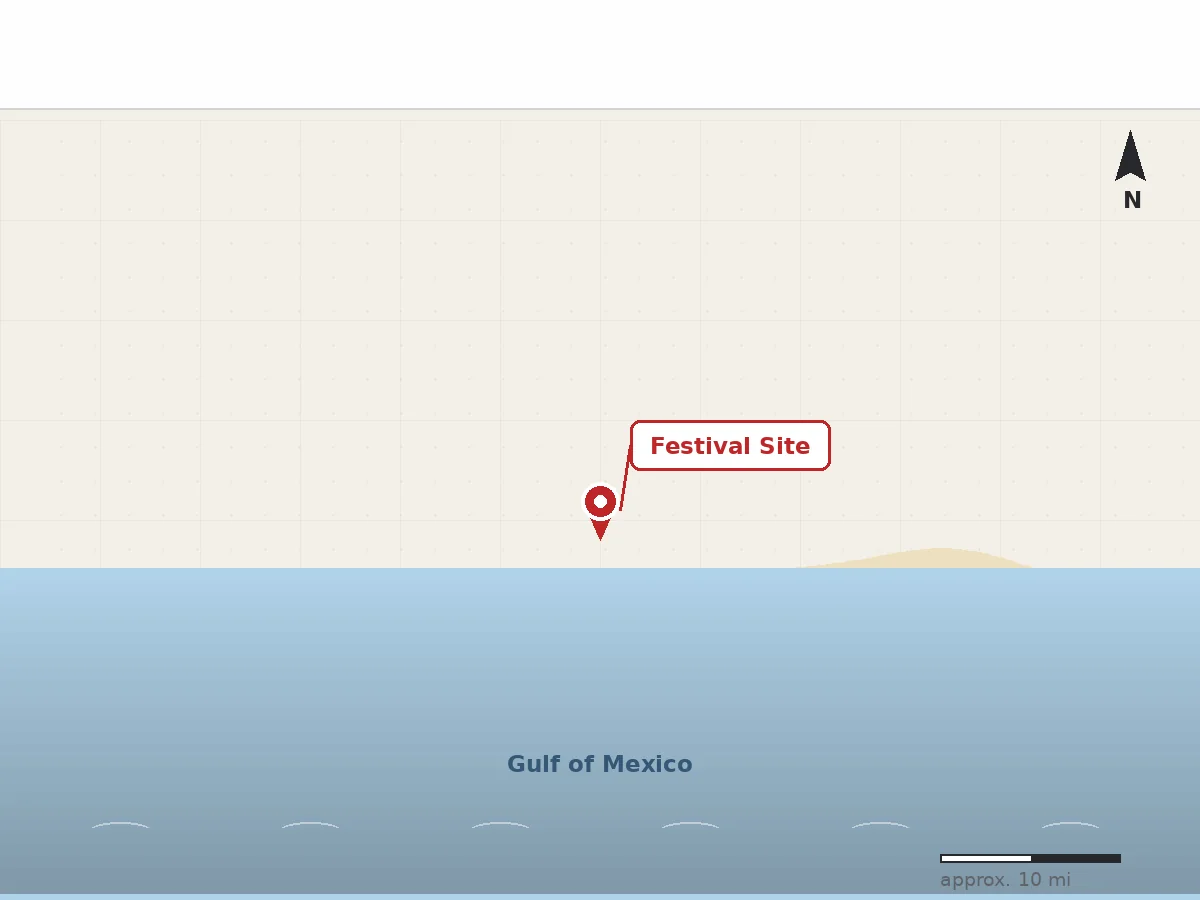
The festival unfolds across the French Quarter and the adjacent Mississippi riverfront in Orleans Parish, within easy walking distance of Canal Street and the Central Business District.
Practical Answers for First-Time Festival Goers
Is the French Quarter Festival really free?
Yes. There is no admission charge to enter the festival grounds or hear the music. You pay only for food, drinks, and merchandise from individual vendors, plus whatever you spend on travel and lodging. That structure is central to the event’s identity and to the mix of people it attracts.
How crowded does the Quarter get?
Busy, especially on weekend afternoons and evenings, but rarely overwhelming because the footprint is large and spread across many blocks. Mornings and the quieter residential streets stay comfortable. If a particular food booth has a long line, walk a block or two — you will usually find a similar dish with a shorter wait.
Where should I eat if I only have one day?
Skip the sit-down restaurants and graze. Pick four or five small dishes across different booths rather than one large meal, prioritizing whatever is in season — crawfish in spring, oysters year-round. Finish with a dessert and a coffee, then walk it off along the river.
What happens if it rains?
Showers are a normal part of spring in southeast Louisiana, and the festival generally continues through them. Most people duck into a nearby bar, restaurant, or hotel lobby until the worst passes, which usually takes less than an hour. Bring a light rain jacket and keep your plans flexible.
What’s Next for the French Quarter Festival
The festival’s future is tied to the same forces shaping the rest of Orleans Parish: the health of the restaurant industry, the cost of doing business in the Quarter, and the city’s ability to keep a historic neighborhood livable for the people who call it home. Growth, if it comes, will most likely show up in the music programming and the vendor roster rather than in ticket prices.
For visitors, the practical advice is unlikely to change. Come in spring, come hungry, stay within walking distance, and let the day unfold one plate and one set at a time. That formula has served the festival well for decades, and there is no sign of it being replaced.
Last updated: October 2026
Few festivals let you eat your way through a National Historic Landmark district with a brass band playing two blocks away, and even fewer let you do it without buying a ticket. That is the particular gift of the Orleans Parish Louisiana French Quarter Festival: a neighborhood opens its streets, its kitchens, and its musicians for a spring weekend, and everyone who shows up gets a seat at the table.