Mobile County Alabama Mardi Gras Festival
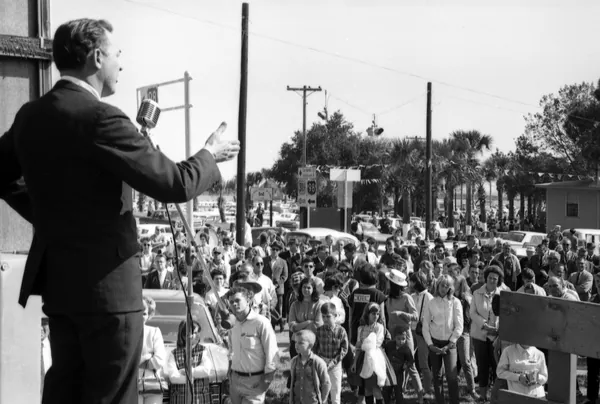
Most festivals fit inside a weekend. Mobile’s carnival refuses to. For weeks each winter, the streets of downtown Mobile fill with marching bands, masked riders and floats tossing gifts to the crowds, while across town the city’s mystic societies dress for formal balls few residents ever see from the inside. The whole season climbs toward a single day: Fat Tuesday, the last celebration before Ash Wednesday opens Lent. What the wider world often assumes began in New Orleans has a far older documented home here, in a port city that treats carnival not as a borrowed party but as an inheritance guarded for more than three centuries.
About the Festival
The celebration covered here is the one residents and the city’s visitor authority call Mobile Mardi Gras. It also appears in the record as Mardi Gras in Mobile and as the Mobile Carnival. The longer title at the top of this article is simply a catalogue label for the same event, not a name the celebration uses for itself.
Mobile Mardi Gras is a season rather than a single festival day. Across January and February, mystic societies parade through downtown on designated routes, royal courts are crowned, and invitation balls anchor the social calendar. Mobile, with a population of about 182,595 in the 2020 census, is both host city and seat of Mobile County, so the carnival unfolds in the county’s governmental as well as cultural centre.
No single organisation owns this event, and any account that names one organiser has simplified the story past accuracy. The Mobile Carnival Association, established in 1872, coordinates the season, its parades and its published schedule. Alongside it stands the Mobile Area Mardi Gras Association, the parallel African-American carnival organisation, whose founding year the record gives in two forms, 1938 and 1939, and which maintains its own royal court and events. Individual parades and balls belong to the mystic societies themselves, secretive social organisations whose members plan, fund and ride in their own processions.
Quick Facts
| Fact | Detail |
| Name used locally | Mobile Mardi Gras, also styled Mardi Gras in Mobile or Mobile Carnival |
| Host city | Mobile, in Mobile County, Alabama |
| County role | Mobile serves as the seat of Mobile County |
| Season shape | Builds through January and February and ends on Fat Tuesday |
| Fat Tuesday 2027 | February 9, 2027, in the visitor authority layer |
| 2027 season window | January 22 to February 9, 2027, in the visitor authority layer |
| Competing 2027 layer | A separate listing places parades on February 3 to 9, 2027 |
| Coordinating body | Mobile Carnival Association, established 1872 |
| Parallel organisation | Mobile Area Mardi Gras Association, founded 1938 or 1939 |
| Parade viewing | Free from public streets along the downtown routes |
History
Mobile’s claim rests on its own documented tradition. The city’s carnival history records that in 1703, when Mobile was the capital of French Louisiana, French soldiers and settlers at Fort Louis celebrated Mardi Gras there; the city’s account calls it, according to local records, the first Mardi Gras in the New World, and a named origin layer ties that 1703 celebration to Nicholas Langlois. That dating deserves honest framing: it rests on city and local-record layers, though the Encyclopedia of Alabama treats Mobile’s carnival past seriously enough to give it a dedicated entry. What is not in dispute is that Mobile’s observance predates the famous celebrations elsewhere on the Gulf Coast, which grew up later and separately.
For a useful comparison, see the Marshall County Alabama Feelin’ Groovy Festival for another county festival.
The modern character of the season was shaped in the nineteenth century by the mystic societies. The Cowbellion de Rakin Society, founded in 1830, is remembered as an early mystic organisation whose members paraded in costume. Striker’s Independent Society followed in 1842. These societies invented much of the template that still governs the season: secrecy, pageantry, themed processions and balls hidden behind invitation lists.
War interrupted the tradition, and revival gave Mobile its favourite folk hero. Joe Cain is credited in the record with bringing the parades back after the Civil War, in layers dated 1866 and 1867, leading a procession through the streets. The Order of Myths, founded in 1867, dates from that same moment and still parades. In 1872 the Mobile Carnival Association was established to coordinate the growing season. The Mobile Area Mardi Gras Association emerged in the late 1930s, founded in 1938 or 1939 depending on the layer, giving Black Mobile its own carnival organisation, court and celebrations within a segregated era.
The season’s continuity is real but not unbroken. The 2020 carnival ran its course before the COVID shutdown reached Alabama, yet the following year’s parades were cancelled because of the pandemic. Its full return underlined how deeply the calendar is woven into local identity.
What to Expect
Expect abundance. Dozens of parades roll across the season, each staged by a different mystic society with its own floats, costumes and court. Riders toss gifts to the crowds, and the throws in the record include beads, moon pies and other small items spectators cheerfully compete to catch. Families stake out spots along family viewing areas on the downtown routes, and the street atmosphere is famously more hometown than the carnival’s rowdier reputation elsewhere suggests.
Expect ceremony as well as noise. Royal courts are crowned with full pageantry, and coronations and formal balls proceed through the season behind the parade spectacle. Most balls remain affairs of invitation, arranged through the mystic societies, so visitors generally experience them as glittering arrivals and departures rather than events they can buy their way into.
The season’s emotional centre, for many locals, is Joe Cain Day, the Sunday before Fat Tuesday, when the Joe Cain Procession honours the man credited with reviving the parades after the Civil War. Fat Tuesday is the climax, a full day of major parades ending the season before Lent. The visitor authority promotes the season with a claim of nearly a million revelers across the carnival period; that figure is the authority’s own promotional claim rather than a counted attendance, but a crowded downtown corner at parade time explains the spirit of it.
Planning Your Visit
Decide which carnival you want before picking dates. A visitor chasing the biggest spectacle should aim for the final stretch, when the parade schedule thickens toward Fat Tuesday. Someone who prefers breathing room can come earlier in the build through January and February, when parades still deliver the full flavour with gentler crowds.
Ground your plans in the coordinating body’s published schedule, because the dating layers in circulation do not fully agree. For 2027, the visitor authority gives a season running from January 22 to February 9, with Fat Tuesday on February 9, while a separate listing layer puts the parades on February 3 to 9 and describes the wider carnival season as beginning in November. Check the current schedule before booking travel around either layer.

Budgeting holds one pleasant surprise: watching the parades from public streets costs nothing. The expense side of a trip is therefore the ordinary one of rooms, meals and transport, not admission. The balls run by invitation through the mystic societies, and no general ball ticket prices appear in the published record, so plan around the parades, courts and street life rather than expecting to purchase entry to a ball.
Finally, dress for a Gulf Coast winter that cannot make up its mind, and give the Joe Cain Procession its due: the Sunday before Fat Tuesday carries a meaning in Mobile that visitors underestimate.
A Sample Final Weekend
Arrive on Friday for an evening parade downtown, learning the rhythm of the routes around Government Street while the crowds are still warming up. Spend Saturday moving between daytime and evening parades, watching how different societies stage very different processions, and keep an eye out for court parties arriving at ball venues in formal dress.
Sunday belongs to Joe Cain Day: join the procession crowds honouring the revival hero, the most distinctly Mobile moment of the calendar. Monday offers a last chance to catch remaining parades and recover some sleep. Then give Tuesday, Fat Tuesday itself, everything you have left, because the season ends that night and Lent begins the next morning.
How Mobile’s Carnival Compares
Comparisons with New Orleans are unavoidable and usually lazy. The two carnivals are cousins, not copies, and Mobile’s side of the family is older: the city’s documented tradition reaches back to 1703, when Mobile was the capital of French Louisiana, and its celebrations developed on their own track long before the Louisiana carnival took its later famous shape. The honest approach is to keep each city’s record separate, as the sources themselves do.
The structure differs too. Mobile’s season is coordinated by the Mobile Carnival Association yet genuinely shared, with the Mobile Area Mardi Gras Association running its own court and events in parallel and dozens of mystic societies owning their individual parades and balls. The result feels less like a single produced spectacle and more like a whole city’s social fabric turning itself inside out for a few weeks, with free street parades on one side of the curtain and invitation-only formality on the other.
Planning Checklist
- Choose your stretch of the season, from the quieter build to the Fat Tuesday climax
- Confirm parade dates against the carnival association’s published schedule
- Treat the two 2027 dating layers as separate until the schedule settles them
- Book accommodation early for the final weekend, when demand peaks
- Plan to watch parades free from public streets and family viewing areas
- Do not count on buying ball tickets, since balls run by invitation
- Leave the Sunday before Fat Tuesday open for the Joe Cain Procession
- Pack layers for changeable Gulf Coast winter weather
Beyond the Festival
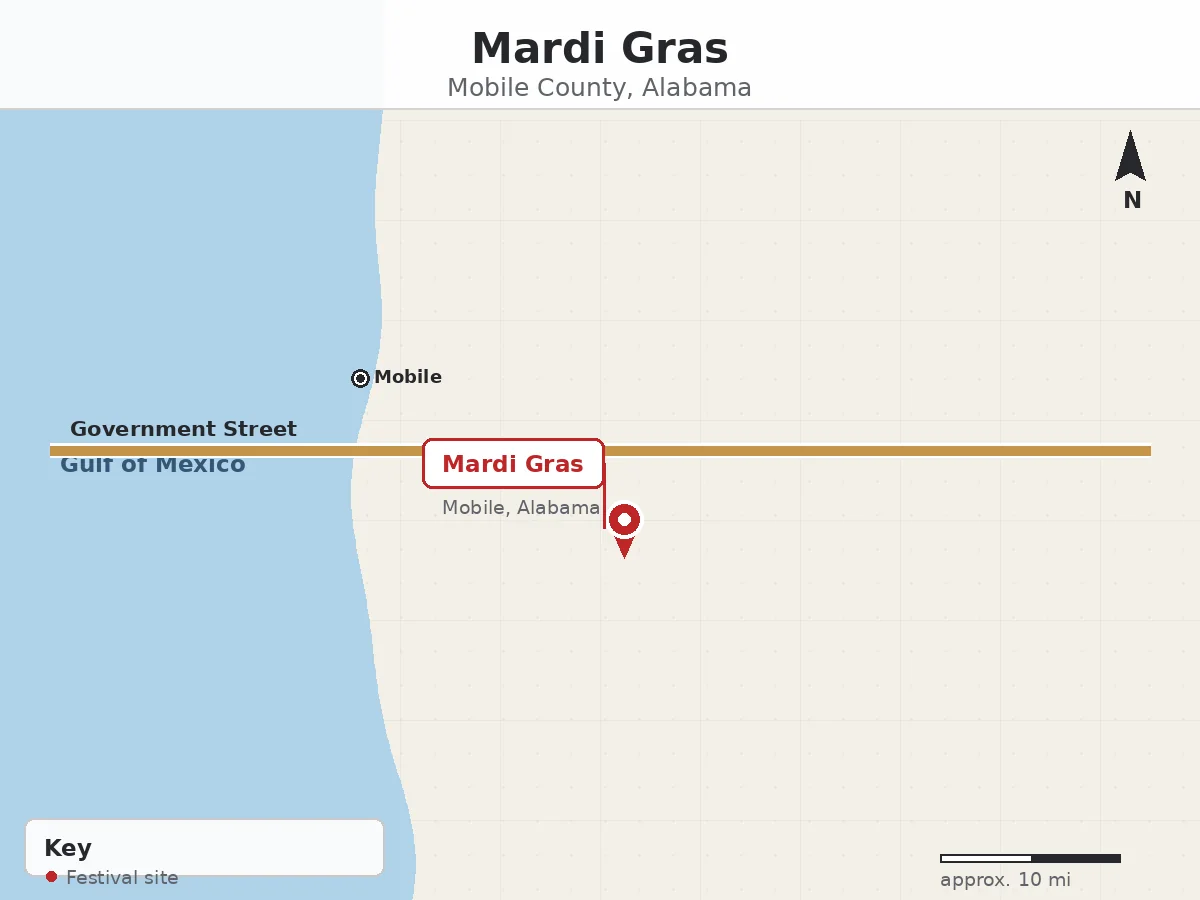
The carnival gives a visitor a reason to learn downtown Mobile properly. The parade routes thread through the historic centre, including Government Street, and the balls and court events draw on venues in the convention centre and civic centre area, so simply following the season teaches you the city’s geography. Between parades, that same downtown rewards slow attention on its own terms.
The city’s own carnival history and the Encyclopedia of Alabama’s dedicated entry reward an hour’s reading, and that homework transforms the trip: floats stop being random spectacle once you know a society was founded in 1842, or why a procession carries the name of a man who restarted the parades after a war.
Why Mobile Mardi Gras Matters
Few American cities can point to a living custom their own records trace across three centuries. Mobile’s carnival matters because it is simultaneously ancient by American standards and stubbornly local: founded, in the city’s telling, by French settlers in 1703, rebuilt by mystic societies in the 1830s and 1840s, revived by Joe Cain after the Civil War, and broadened by the parallel organisation that Black Mobile built for itself in the late 1930s. Each era left a layer the season still wears.
It matters, too, because the city keeps choosing it. A cancelled year in 2021 could have faded quietly into a smaller tradition; instead the season came back at full size. Carnival here is not an attraction staged for visitors. It is the city’s memory of itself, performed annually in the street.
Frequently Asked Questions
Why do people in Mobile say their Mardi Gras came first?
Because the city’s own carnival history dates the celebration to 1703, when Mobile was the capital of French Louisiana and, according to local records, French soldiers and settlers at Fort Louis held a Mardi Gras there. That claim rests on city and local-record layers rather than universal agreement, but the antiquity is taken seriously: the Encyclopedia of Alabama maintains a dedicated carnival history. The careful version of the boast is that Mobile’s documented observance predates the later celebrations that became more famous elsewhere.
Who actually organises the season, if there is no single organiser?
Coordination and ownership are different things here. The Mobile Carnival Association, established in 1872, coordinates the season, its parades and its published schedule. The Mobile Area Mardi Gras Association, founded in 1938 or 1939 depending on the layer of the record, runs a parallel organisation with its own royal court and events. The parades and balls themselves belong to individual mystic societies, which plan and fund their own processions, so the season is best understood as a federation rather than a production.
What is the Joe Cain Procession, and when does it happen?
It is the season’s tribute to Joe Cain, the figure credited with reviving Mobile’s parades after the Civil War in the 1866 and 1867 layers of the record. The procession is held on the Sunday before Fat Tuesday, a day locals call Joe Cain Day, and it carries a deliberately unpretentious, hometown character many residents rank above the grander parades.
Can a visitor get into one of the carnival balls?
Usually not by buying a ticket. The balls are staged by the mystic societies and run largely by invitation, and the verified record publishes no general ball ticket prices. Visitors experience the balls indirectly, through the pageantry of courts and arriving guests, while the parades themselves are open to everyone and free to watch from public streets.
What to Expect From the Next Mobile County Alabama Mardi Gras Festival
How often is Mobile County Alabama Mardi Gras Festival held?
Mobile’s carnival returns every year as a season rather than a single day, building through January and February and ending on Fat Tuesday. The rhythm survived the pandemic interruption in its own way: the 2020 season ran before the shutdown, the 2021 parades were cancelled, and the full calendar then resumed. Each year’s season is coordinated by the Mobile Carnival Association, which publishes the schedule worth following.
When is the next Mobile County Alabama Mardi Gras Festival?
The next season in the current record is the 2027 carnival, but its dates arrive in layers that should not be blended. The city’s visitor authority gives the season as January 22 to February 9, 2027, with Fat Tuesday falling on February 9, 2027. A separate listing layer places the parades on February 3 to 9, 2027 and describes the wider carnival season as beginning in November. The visitor authority’s window is the fuller sourced layer, yet the association’s published schedule remains the final word.
Will the dates change?
Yes, in the sense that carnival dates move every year, because Fat Tuesday is set by the church calendar rather than by a fixed date. The 2027 layers show how the season can be framed differently by different sources. What does not change is the shape: a build through the early weeks of the year, the Joe Cain Procession on the final Sunday, and Fat Tuesday as the hard stop before Lent.
When the floats finally roll away and the street sweepers move in, Mobile does not so much end its carnival as put it back in storage, courts, costumes, throws and all, until the calendar calls it out again. Few festivals anywhere carry their city’s whole biography in their baggage. This one carries Mobile’s, from a French garrison’s celebration in 1703 to a modern season that still belongs, unmistakably, to the people who parade it.