McCone County Montana Fair Festival
In mid-August, the McCone County Fair takes over the fairgrounds in Circle, and for a county of roughly seventeen hundred people, it is a remarkable piece of work. Under one short season, the fair gathers livestock shows, exhibit halls filled by FFA members, 4-H members and open class entrants, a two-night professional rodeo, a junior sale ring and a ranch rodeo to close the programme. Circle is the county seat, and the fair belongs to the whole of McCone County rather than to the town alone, drawing farm and ranch families down long gravel roads from every corner of the county. What makes it worth understanding is not scale, because it makes no claim to scale, but completeness: nearly every element a Montana county fair is supposed to contain is present here, in one of the least populated counties in the state.
A Full Fair in a Small County
The McCone County Fair is the county’s annual agricultural fair, held at the McCone County Fairgrounds in Circle. Its published identity is straightforward: a showcase of local FFA, 4-H and open class exhibits, with livestock showing at its centre and rodeo competition built into the same grounds and the same days. The fair runs through the McCone County Fair Board, working alongside the county’s 4-H Council and the McCone County office of Montana State University Extension, a partnership the Extension record names directly. Inside the fair sits its best-known single event, the McCone County Fair PRCA Rodeo, which is produced by its own named body, the McCone County Fair PRCA Rodeo Committee.
That structure explains the fair’s character. This is not a commercial carnival that happens to rent a fairground. It is a working county fair in the older sense, where the exhibits are the point, the sale is a genuine economic event for the young people who raised the animals, and the rodeo is the evening entertainment layered on top of a day’s serious judging. Families who exhibit here are often the same families who cook the food and sit on the board.
Quick Facts
| Detail | What the record shows |
| Event | McCone County Fair |
| Town | Circle, the McCone County seat |
| Grounds | McCone County Fairgrounds, Circle |
| Season | Mid-August each year |
| Organiser | McCone County Fair Board, with the county 4-H Council and Montana State University Extension McCone County |
| Rodeo | McCone County Fair PRCA Rodeo, run by its own rodeo committee, held inside the fair |
| Exhibits | FFA, 4-H and open class exhibits, with 4-H livestock shows |
| Signature closing event | Ranch Rodeo on the fair’s final day |
| Admission | No gate, pass or parking price is published in the fair-side record |
| County population | Roughly 1,700 people, among the smallest in Montana |
A History Told Without a Founding Year
Most county fairs arrive with a founding date attached, and many articles repeat that date as settled fact. The McCone County Fair’s own record does neither. No founding year and no edition number appear in the fair-side sources behind this article, so none is claimed here. What the record documents is a fair with a settled, recurring shape: the town’s fair page carries a schedule built around livestock shows, a stick horse rodeo for the youngest riders, two nights of professional rodeo, a Saturday sale and a closing ranch rodeo, and the state tourism listing describes the rodeo as held during the fair each year in August. A fair does not hold that shape together by accident.
The most concrete recent chapter in the fair’s story concerns its grounds. In March 2025, a fire destroyed the fairgrounds kitchen. For a small fair, a kitchen is not a minor building: it is where food is prepared for crowds and where much of the fair’s social life happens. The response, recorded by the county’s Extension office, was a coordinated rebuild: Extension worked alongside the Fair Board, the 4-H Council and the County Commissioners on a replacement, a new event center of eighty by one hundred fifty feet with a commercial kitchen, a conference room and accessible restrooms, built with community donations. A fairground that a county of seventeen hundred people rebuilds bigger than what burned is a fairground it intends to keep using.
For a useful comparison, see the Madison County Montana Fair Festival for another county festival.
What to Expect
Livestock Shows and the Exhibit Halls
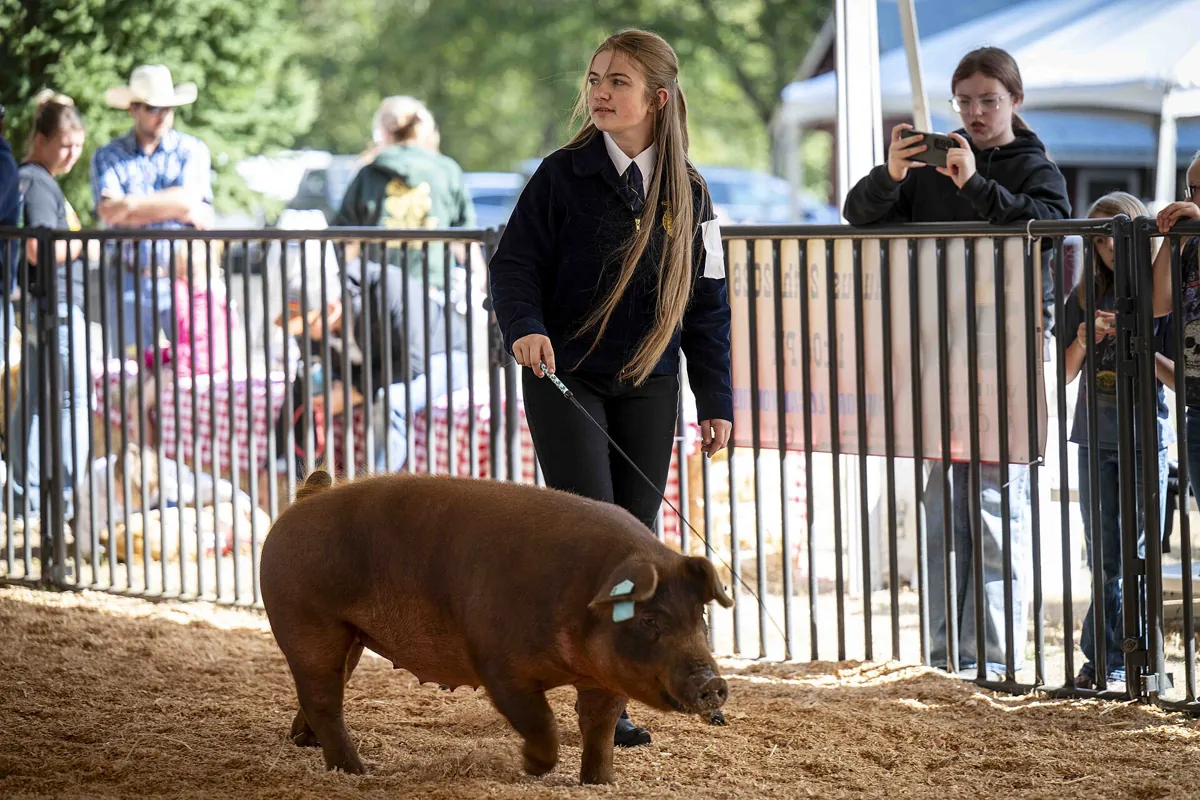
The daytime fair belongs to the exhibitors. Four-H livestock shows anchor the schedule, with young exhibitors presenting animals they have fed, fitted and handled across the season. Around the barns, the exhibit side carries the FFA, 4-H and open class entries the town’s fair page describes: the projects, produce and handwork through which a county displays what its households can raise, grow and make. Open class matters here, because it is the door through which any resident, not only enrolled youth, can put work in front of a judge.
Two Nights of Professional Rodeo
When the showing ends, the arena takes over. The McCone County Fair PRCA Rodeo runs across two nights inside the fair, and in the schedule the town publishes, each night opens with a Calcutta at half past six in the evening before the performance at half past seven. The broncs are locally raised J Bar J stock, a detail worth pausing on: the rough stock bucking under professional riders was raised in the same country the riders and the crowd come from. The rodeo is no rumour, either: the 2026 edition ran in Circle and its results, including the team roping, were reported in the rodeo trade press.
The Stick Horse Rodeo and the Ranch Rodeo
Two events give this fair its particular flavour. The Stick Horse Rodeo puts the smallest children into the arena on their stick horses, a piece of deliberate silliness that doubles as an introduction: the first time many McCone County children perform before a fair crowd. At the programme’s other end, the Ranch Rodeo closes the fair, its Calcutta at noon and the performance at one in the afternoon on the final day in the published schedule. A ranch rodeo tests working skills rather than arena specialities, ranch hands competing at tasks their ordinary weeks already demand, and as a closing event it returns the fair to the working culture it came from.
The Four-H Sale
The sale is the fair’s economic heart. In the schedule shape the town publishes, the 4-H Sale falls on Saturday morning at ten o’clock, when the market animals shown earlier in the fair are sold. For the young sellers, the cheque at the end of that ring is the return on months of feed bills and early mornings, and local businesses and families turn out to bid. Anyone who wants to know why a county this small sustains a fair this complete should stand at that rail for an hour.
Planning Your Visit
Timing Your Trip
Plan around mid-August, and treat any specific span of dates with care. The fair’s own published schedule in the record behind this article is an earlier edition, running across three days in the middle of the month; a state season table placed the county’s 4-H slot in mid-August as well, and the state tourism listing dated the fair’s 2026 rodeo to August 9. None of that amounts to a published span for the next fair, so confirm the current year’s dates close to the season before fixing travel. That is simply the level at which this fair publishes, and a traveller who checks ahead will have no trouble.
Admission, Parking and Camping
No gate price, season pass or parking charge appears anywhere in the fair-side record, and no rodeo ticket price was published there either. Two things follow: the fair has not been documented as free, and it has not been documented at any particular price. Ask locally before you go, and carry cash. Camping is in the same position: no fair-week camping offer, rule or rate appears in the record, so arrange any stay in advance rather than assume one exists. The state tourism listing carries an address on Mountain Highway 200 West in Circle for the fair’s rodeo; treat that as a listing address to navigate by, not as an address the fair itself has published.
Making the Most of a Small Fair
A fair of this size rewards a different rhythm from a big regional fair. Arrive early enough to walk the barns before the shows, when exhibitors are washing and settling animals and are usually glad to explain what a judge will look for. Eat what the grounds offer, because food at a fair like this is fundraising as much as catering. Stay for the evening rodeo rather than leaving after the sale, and if your days allow it, remain through the final afternoon, when the ranch rodeo gives the fair a working send-off most larger fairs cannot imitate.
A Sample Day at the Fair
Begin in the morning among the livestock barns, watching a 4-H show class work through its placings while the exhibitors are fresh and the animals calm. Late in the morning, move to the sale ring if it is sale day, and watch a market animal sell to neighbours who know exactly whose project it is. Take the middle of the day slowly: walk the open class exhibits, find lunch on the grounds, and watch the stick horse rodeo if it falls on your day. In the early evening, be near the arena in time for the Calcutta, which is its own small auction drama, then take a grandstand seat for the rodeo performance as the light goes.
How This Fair Compares
Set beside Montana’s big multi-county and state-level fairs, this fair is small in every measurable way, and it would be a mistake to read that as a deficiency. A large fair offers a carnival midway, headline concerts and days of programme no visitor can exhaust; this fair’s record contains none of those things, and this article adds none. What the small fair offers instead is density of acquaintance: the morning’s exhibitor may be serving lunch at noon and competing in the ranch rodeo on the last day. Circle also holds a separate town celebration, Town and Country Day, in September, and Brockway, elsewhere in the county, holds its Dairy Day Rodeo in July; both are their own events, and neither should be confused with the county fair.
Fair Checklist
- Confirm the current year’s dates before travelling, since the fair publishes at listing level rather than with a full advance schedule
- Carry cash for the gate and concessions, because no published price list exists to plan exact spending from
- Arrive in the morning for the livestock shows, before the day’s heat and the evening crowd
- Stay for at least one full professional rodeo night, Calcutta included
- Watch the 4-H Sale if your visit includes the Saturday, and consider registering to bid before it starts
- Keep the final afternoon free for the closing ranch rodeo
- Arrange lodging or camping in advance rather than assuming a fair-week camping offer exists
Beyond the Fairgrounds
Circle is a small county seat serving a wide ranching county, and a fair trip naturally extends into the town around it. The fairgrounds are part of the story now: visitors who know about the March 2025 kitchen fire will read the rebuilding effort, the planned event center with its commercial kitchen, conference room and accessible restrooms, as the county’s largest recent statement about its own future. Beyond the grounds, the county is Missouri River breaks country to the north and open grazing land in every direction, where the working skills celebrated in the ranch rodeo are not heritage performance but the ordinary economy. Give the drive out the same attention as the fair, because the distances are part of what the fair gathers people across.
Why This Fair Matters to McCone County
A county of about seventeen hundred people has no surplus of occasions on which it assembles in one place. The fair is one of them, and arguably the most complete: it gives its young people a judged standard to work toward all year, a public sale that converts their labour into real money, an arena in which local stock and local riders appear under professional sanction, and a set of grounds the county has rebuilt after disaster rather than abandon. When the ranch rodeo ends the fair each August, what closes is not just an event but the county’s annual demonstration, to itself, that it can still put on the whole show.
Frequently Asked Questions
Where is the McCone County Fair held?
The fair is held at the McCone County Fairgrounds in Circle, the county seat of McCone County, Montana, so the seat and the fair town are the same place.
In which part of the summer does the fair fall?
The fair is a mid-August event. Its rodeo is described in the state tourism listing as held during the fair each year in August, and published schedule records for the fair sit in the middle of the month, but no single span of dates is published as the standing fair span, so check the current year’s dates before travelling.
What does admission cost?
No admission price is published in the fair-side record, and the fair should not be assumed free on that account. No pass or parking price appears there either. Ask locally close to the fair, and carry cash.
What are the main events at the fair?
The documented programme is built from 4-H livestock shows, FFA, 4-H and open class exhibits, a stick horse rodeo, the two-night McCone County Fair PRCA Rodeo with locally raised J Bar J broncs, the 4-H Sale, and a ranch rodeo that closes the fair. No carnival, concert or demolition derby appears in the fair’s record.
What to Expect From the Next McCone County Montana Fair Festival
How often is the McCone County Montana Fair Festival held?
It returns every summer, once in each year, on the same fairgrounds in Circle and with the same broad shape of shows, sale and rodeo.
When is the next McCone County Montana Fair Festival?
The next fair falls in mid-August of the coming fair season. Because the fair’s organisers publish dates at listing level rather than as a long-settled span, the exact days for the next edition should be confirmed through the county’s local channels as the season approaches.
Will the dates change?
Small shifts within the mid-August window are entirely possible, since the published records for this fair show its programme arranged in the middle of the month rather than fixed to one permanent set of days. The season itself is the stable fact; the precise days are the part to verify each year.
Closing
The McCone County Fair asks little of a visitor: a drive to Circle in mid-August, a willingness to check the dates first, and a day given over to barns, exhibits and arena dust. What it gives back is one of Montana’s smallest counties running a complete county fair without borrowing anyone else’s scale — and, lately, rebuilding its fairgrounds kitchen into something larger than what the fire took. A fair worth the drive.