Madison County Montana Fair Festival
Every August, the Ruby Valley’s working week and its party week turn out to be the same week. In Twin Bridges, the Madison County Fair and Rodeo builds the way a ranch builds toward shipping day: quietly at first, with horse shows and exhibit judging, then louder until two rodeo nights, a livestock sale, a tractor pull and a parade have all had their turn. It is the county’s own fair, run by the county’s own fair board, in a town that is not the county seat — a distinction this article will keep making, because getting it wrong is the easiest mistake a visitor can make.
About the Fair: A County Event in a River Town
The event’s real published name is the Madison County Fair and Rodeo, and its home is the Madison County Fairgrounds at 2 Fairgrounds Loop in Twin Bridges. Twin Bridges sits where the Ruby River meets the Beaverhead, in the northern end of Madison County, and it hosts a fair that belongs to the whole county rather than to any single town. Sheridan, the county seat, lies some twelve miles south and does not host the fair; the fair office, the board and the grounds are all in Twin Bridges, and every visitor plan should start from that fact.
The organiser is the Madison County Fair Board, which appears in the county’s own records as the Fair Board for the Madison County Fair and Rodeo. Behind the board stand the supporting bodies a Montana county fair needs: the Madison County Fairgrounds Improvement Foundation, which raises grant support for the grounds, and the county’s 4-H and Livestock Sales committees. The fair the board produces is two fairs sharing one fence — a serious exhibition week wrapped inside a public celebration of rodeos, stages and contests.
Quick Facts
| Detail | What the record shows |
| Event name | Madison County Fair and Rodeo |
| Fair town | Twin Bridges, Montana |
| County seat | Sheridan, which does not host the fair |
| Grounds | Madison County Fairgrounds, 2 Fairgrounds Loop, Twin Bridges |
| Organiser | Madison County Fair Board |
| Season | Early August, with the public weight from Wednesday to Sunday |
| Rodeo | Two NRA rodeo nights, produced with Jacobs Livestock Rodeo |
| Sale | 4-H and FFA Market Animal Sale on the Saturday morning |
| Admission | No gate, pass or parking price published in the fair’s own record |
| Camping | 4-H camping with electric hookups appears in board business; no public camping terms published |
A History the Fair Lets Speak for Itself
Some fairs print a founding year on every poster; this one does not. No founding year and no edition number appear in the fair’s own published record, and this article will not invent either. What the record does show is a fair woven into the working calendar of an agricultural county, and the buildings tell the story in timber and tin: a Pavilion, the Jeffers Building, the Brown Building given over to open class exhibits, the Tin Building housing indoor exhibits and their interview judging, a dedicated 4-H Building, and the arena where young exhibitors present a year’s worth of feeding, fitting and training.
The fair’s continuity is visible in its machinery rather than in a date. A fair board meets through the spring planning the next edition, a fairgrounds manager keeps the place running between fairs, and an improvement foundation exists because the site is expected to keep serving the county. The board’s recent business has even included planning a new pavilion and event centre — an institution investing in its future rather than trading on a claimed past. When the 2026 parade took the theme “Branded in Freedom Since 1776”, it was borrowing the nation’s 250th year as a theme, not announcing the fair’s own birthday.
For a useful comparison, see the Lincoln County Montana Fair Festival for another county festival.
What to Expect
The Exhibition Week Underneath Everything
The fair’s spine is its show schedule. The documented 2026 pattern opened with pre-fair fixtures on the first weekend — a county horse show on the Saturday and an open youth rodeo on the Sunday — before fair week proper began on the Monday with the 4-H dog show and the llama and alpaca show. Tuesday belonged to the indoor side: exhibit check-in and interviews in the Tin Building, and the market animal weigh-in that sets up Saturday’s sale. From Wednesday the barns took over, with the sheep and goat shows, barrel racing, and the swine, poultry, rabbit and beef shows filling the days that followed. Open class exhibits filled the Brown Building, with pie and photography contests giving adults their own stage.
Two Nights of NRA Rodeo
The arena programme peaks on Thursday and Friday evenings, when the fair stages its two NRA rodeo performances at seven o’clock, with stock from Jacobs Livestock Rodeo. The documented 2026 bills wrapped the standard events in local colour: rookie saddle bronc and rookie bareback contests, wild cow milking, and on the Friday night an all girls’ stock saddle bronc riding contest. Saturday evening changed the flavour entirely with a ranch hand rodeo, where working skills rather than circuit polish decide the placings.
Sale Saturday
Saturday is the fair’s economic heart. The 4-H and FFA Market Animal Sale began at ten in the morning at the Grandstands Arena in the documented 2026 schedule, and it is the moment the whole exhibition week has been pointing at: animals raised by young handlers go across the block while local buyers bid the county’s support for its youth into real money. The day layered in a junior leader champion cake sale and a buyer appreciation barbecue, and the afternoon belonged to the Ruby Valley FFA tractor pull at four o’clock.
Stages, Games and the Midway Side
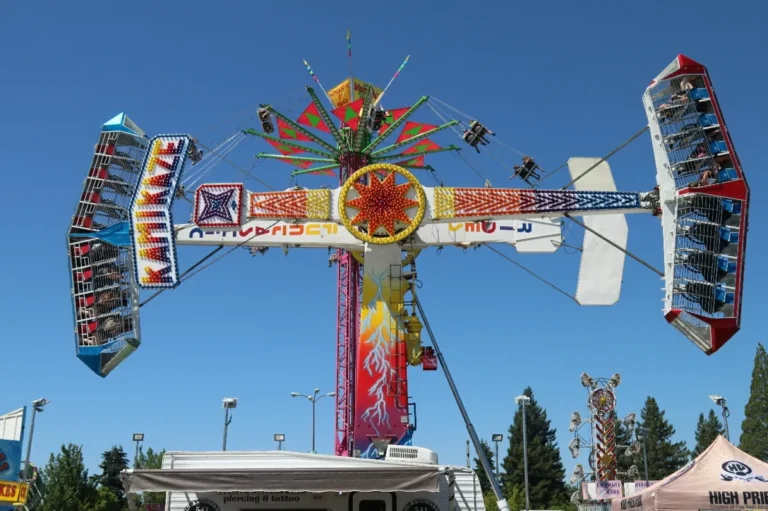
Between the barns and the arena, the fair keeps a lighter programme running. Bingo sessions sit in the Pavilion, inflatables fill an adventure zone area, and two stages — the Memorial Park Stage and the Beer Garden Stage — carry the entertainment bill. The documented 2026 lineup ranged across a ventriloquist, a chainsaw juggler, young fiddlers from Dillon, and regional bands; those names belong to that edition’s bill, and each new fair publishes its own. One price from that bill deserves a warning label: the adventure zone’s Thursday family day ticket, forty-five dollars for a family of four in 2026, buys inflatables time only. It is not, and never was, a gate price.
Planning Your Visit
Getting the Town Right
Navigation is the first planning task, because the county’s geography invites a wrong turn. The fair is in Twin Bridges, full stop: set the destination as the Madison County Fairgrounds on Fairgrounds Loop, and do not let the words “county seat” steer you twelve miles south to Sheridan. Sheridan is the seat of county government, but during fair week it is simply a neighbour. Twin Bridges is a small river town, so fuel and groceries are best arranged before the busiest evenings rather than assumed at midnight.
Admission: What Is Actually Known
Here the honest answer is a gap. No gate price, season pass or parking charge appears in the fair’s own published schedule or in any fair-side record behind this article, so this article prints none — and it does not call the fair free, because the record does not say that either. The fair board demonstrably sets admission terms for individual events in its own meetings, so ticketed elements may exist at the grounds even where no general ladder is published. Carry cash as well as cards, expect the possibility of charges at specific events, and treat any precise admission figure on a general listings site with suspicion until the fair itself confirms it.
Camping and Staying Over
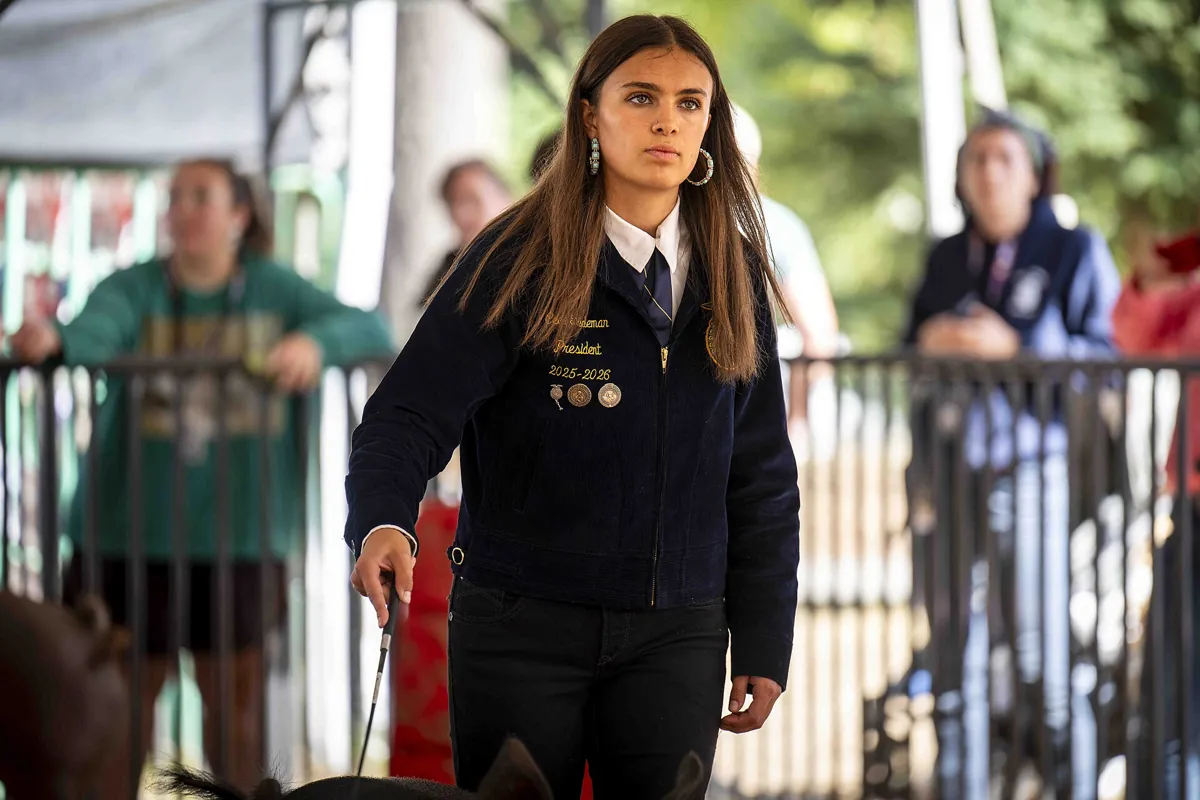
Camping needs the same honesty. The fair board’s own business includes a 4-H camping electricity fee, which establishes that young exhibitors camp on the grounds with electric hookups during the fair and that the board sets a fee for the power. What it does not establish is any public camping offer: no public rate or booking route appears in the fair’s published record, so none is promised here. Visitors outside the 4-H camping party should plan on lodging in Twin Bridges or the surrounding Ruby Valley towns, booked early, because fair week fills a small town’s beds quickly.
Timing Your Days
The week’s rhythm rewards choosing the right days. The documented shape puts the quiet, exhibitor-focused work early and concentrates the public spectacle from Wednesday onward. A visitor with one day should take Saturday, when the sale, the tractor pull and the ranch hand rodeo stack into a single long programme. A visitor with two evenings should take the Thursday and Friday rodeo nights and use the days between them for the exhibit buildings.
A Saturday at the Fair
A documented-shape Saturday starts early, because the sale waits for no one: be at the Grandstands Arena before ten for the market animal sale, and stay for the buyer appreciation barbecue that follows. The early afternoon belongs to the exhibit buildings — walk the Brown Building for open class and check the photography and apple pie contest results. By four o’clock, take a seat for the Ruby Valley FFA tractor pull, then let the evening build toward the ranch hand rodeo at seven, finishing with whatever is playing on the stages.
How This Fair Compares
Madison County’s fair belongs to the family of Montana county fairs that grow straight out of 4-H exhibition weeks, but its shape has its own signature. Where some Montana fairs put a carnival midway at the centre, Twin Bridges keeps its centre of gravity in the show ring and the sale ring, with inflatables and bingo as supporting colour. Where big regional fairs stack concerts across a long run, this fair compresses its arena strength into two sanctioned rodeo nights plus a ranch hand rodeo, and lets a tractor pull carry the Saturday afternoon. It also shares its name with fairs in a dozen other states — and none of their midways, parades or prices have anything to do with Twin Bridges.
Your Fair Checklist
- Set the destination as Twin Bridges, not the county seat of Sheridan
- Pick your days by the week’s build: shows early, rodeos Thursday and Friday, the sale on Saturday
- Carry cash alongside cards, since no published gate ladder settles what individual events charge
- Arrive before ten on Saturday morning if the market animal sale is on your list
- Book lodging early if you are not part of the 4-H camping party
- Walk the Brown Building and the Tin Building while judging results are fresh
- Keep Sunday morning free for the parade if your stay runs to the weekend’s end
Beyond the Fairgrounds
Twin Bridges earns its name at the confluence of rivers, and the country around the fairgrounds is storied ranch and fishing landscape. The Ruby Valley runs south through ranch country toward Sheridan, the county seat, a natural second stop for fuel, food and a look at how the county’s government town contrasts with its fair town. The Beaverhead and Ruby rivers draw anglers all summer, and fair week sits inside prime season, so a visitor can watch a market sale in the morning and stand in a trout stream the same day. The fairgrounds work year-round as the county’s gathering ground, well beyond one August week.
Why This Fair Matters to Madison County
A county fair in a ranching county is not decoration; it is infrastructure for the next generation. The market animal sale converts a year of feeding records, early mornings and show-ring practice into a cheque and a reputation, and the buyers in the seats are the county’s banks, businesses and ranch families bidding that future upward. The open class buildings do the same work for adults, keeping skills — baking, photography, needlework, preserving — publicly valued rather than privately fading. And for one week a year, the fairgrounds give a spread-out county a single address where everyone, from the seat in Sheridan to the far ranches, is expected at the same time.
Frequently Asked Questions
Where is the Madison County Fair actually held?
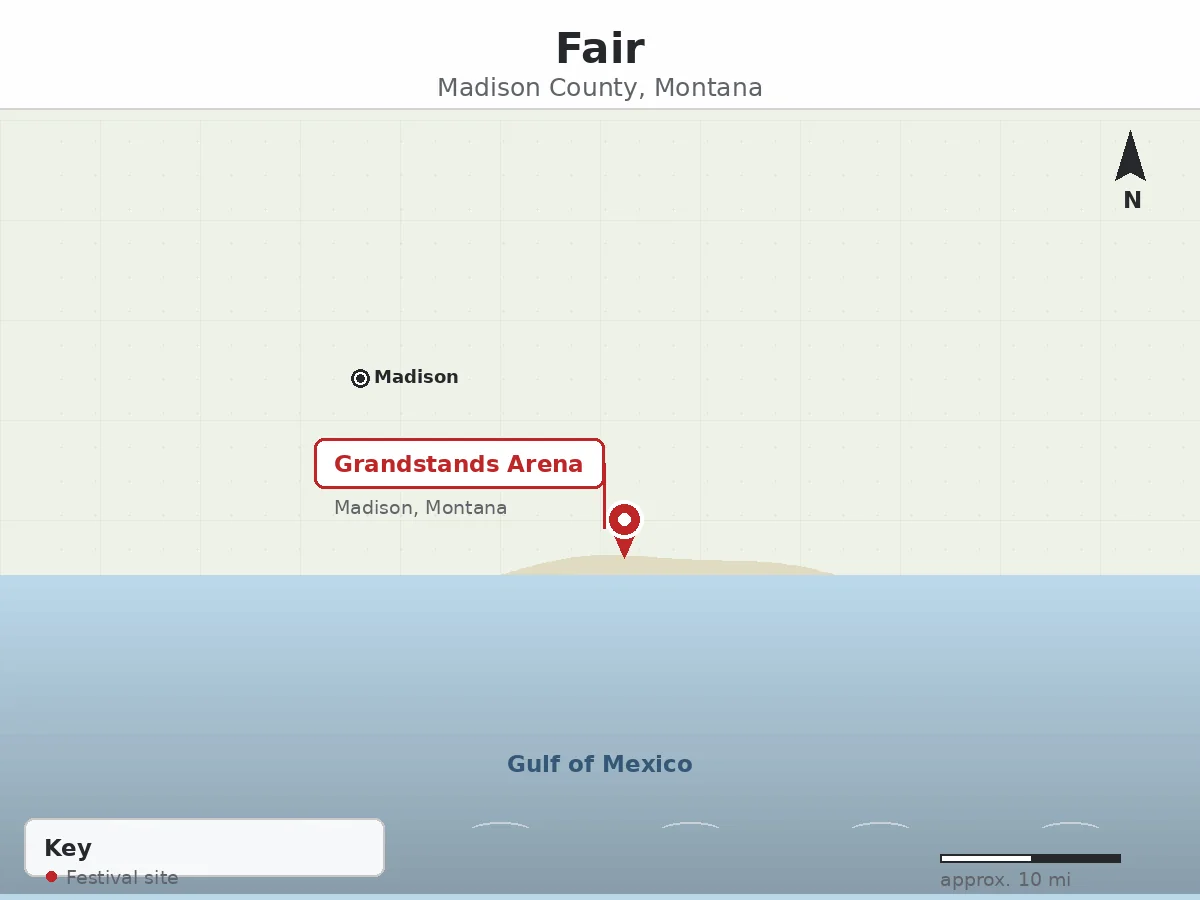
In Twin Bridges, at the Madison County Fairgrounds on Fairgrounds Loop. Twin Bridges is not the county seat — that is Sheridan, about twelve miles south — but the fairgrounds, the fair office and the fair board are all in Twin Bridges.
Which days carry the fair’s biggest events?
The documented pattern builds to two NRA rodeo performances on the Thursday and Friday evenings, then a Saturday that stacks the 4-H and FFA market animal sale in the morning, the Ruby Valley FFA tractor pull in the afternoon and a ranch hand rodeo in the evening, with a parade closing the fair on Sunday.
Has the fair published an admission price?
The fair’s own published record does not state a general admission, pass or parking price, so no figure is printed here, and the fair should not be assumed free. Individual events may carry their own charges set by the fair board; the one clearly documented 2026 price, a forty-five dollar family ticket, covered the inflatables area on its family day and was not a gate price.
Is camping at the grounds open to the general public?
The published record shows 4-H camping with electric hookups on the grounds during the fair, administered through the fair board, but it publishes no public camping offer or rate. Anyone outside the exhibitor camping arrangement should arrange lodging in Twin Bridges or nearby towns instead.
What to Expect From the Next Madison County Montana Fair Festival
How often is the Madison County Montana Fair Festival held?
It is an annual event. The Madison County Fair and Rodeo takes place once each year in early August, organised by the Madison County Fair Board at the fairgrounds in Twin Bridges.
When is the next Madison County Montana Fair Festival?
The next edition is expected in early August, following the fair’s established season, with the public programme weighted toward the Wednesday-to-Sunday stretch of fair week. The fair publishes its own schedule for each edition, and that schedule — not any earlier year’s — settles the exact days for the fixtures, rodeo nights, sale and parade.
Will the dates change?
The season is stable — early August is this fair’s fixed place in the Montana calendar — but the exact calendar days move as the calendar itself shifts, and the balance of fixtures within the week can change with each edition’s schedule. Checking the fair’s own schedule for the year of your visit is the reliable way to fix a rodeo night or the sale morning.
Closing
The Madison County Fair and Rodeo is best understood as the Ruby Valley showing its work: a week where young exhibitors, bakers and photographers, rodeo hands and tractor pullers all take the same stage in turn. Come to Twin Bridges — not the seat, and proudly not — pick the Saturday if you can only pick one day, and let the sale ring in the morning and the arena lights at night explain what this county values.
One Comment