Granite County Montana Fair Festival
Search for a Granite County fair and the trail runs out of the county. There is no fairgrounds waiting in Philipsburg, no county fair board meeting in a Granite County room, and no August weekend when the county seat fills with show stock. What Granite County has instead is a share — a genuine, papered, one-third share — in the Tri-County Fair, held each August at the Tri-County Fairgrounds in the town of Deer Lodge, across the line in Powell County. This article tells that fair from the Granite side of the fence: the county whose young exhibitors load their animals, point the truck up the Clark Fork valley, and compete on grounds their own county commission helps govern.
About the Fair: A Third of a Fair, Fully Owned
The Tri-County Fair belongs jointly to Deer Lodge, Powell and Granite counties, in the fairgrounds’ own words — its listing says the fair encompasses all three. Governance follows the same three-way split. The Tri-County Fair Board runs the event as a standing joint body, its minutes are kept with Powell County, and the Granite County Commission appoints the members who fill Granite’s seats. That appointment is live county business, not ceremony: at an April meeting the commission accepted the resignation of one of its fair board members and authorised advertising the vacancy, because an empty seat means the county’s voice goes missing from fair decisions.
For Granite County families, the fair is where a year of 4-H and FFA work gets judged. The county’s own Extension calendar is full of home-grown preparation — project days, foods events, livestock quality assurance, communications contests — but it pointedly contains no fair of its own. Every one of those projects is aimed, ultimately, at Deer Lodge. Even the arena honours the arrangement: local entries in the fair’s rodeo are reserved to residents of the three partner counties, so a Granite County rider competes in the local class as of right, not as a guest.
Quick Facts
| Item | Detail |
| Event | Tri-County Fair |
| Counties served | Deer Lodge, Powell and Granite, jointly |
| Organiser | Tri-County Fair Board, a three-county board |
| Granite County’s role | Appoints its own board members through the county commission |
| Fair town | Deer Lodge, in Powell County |
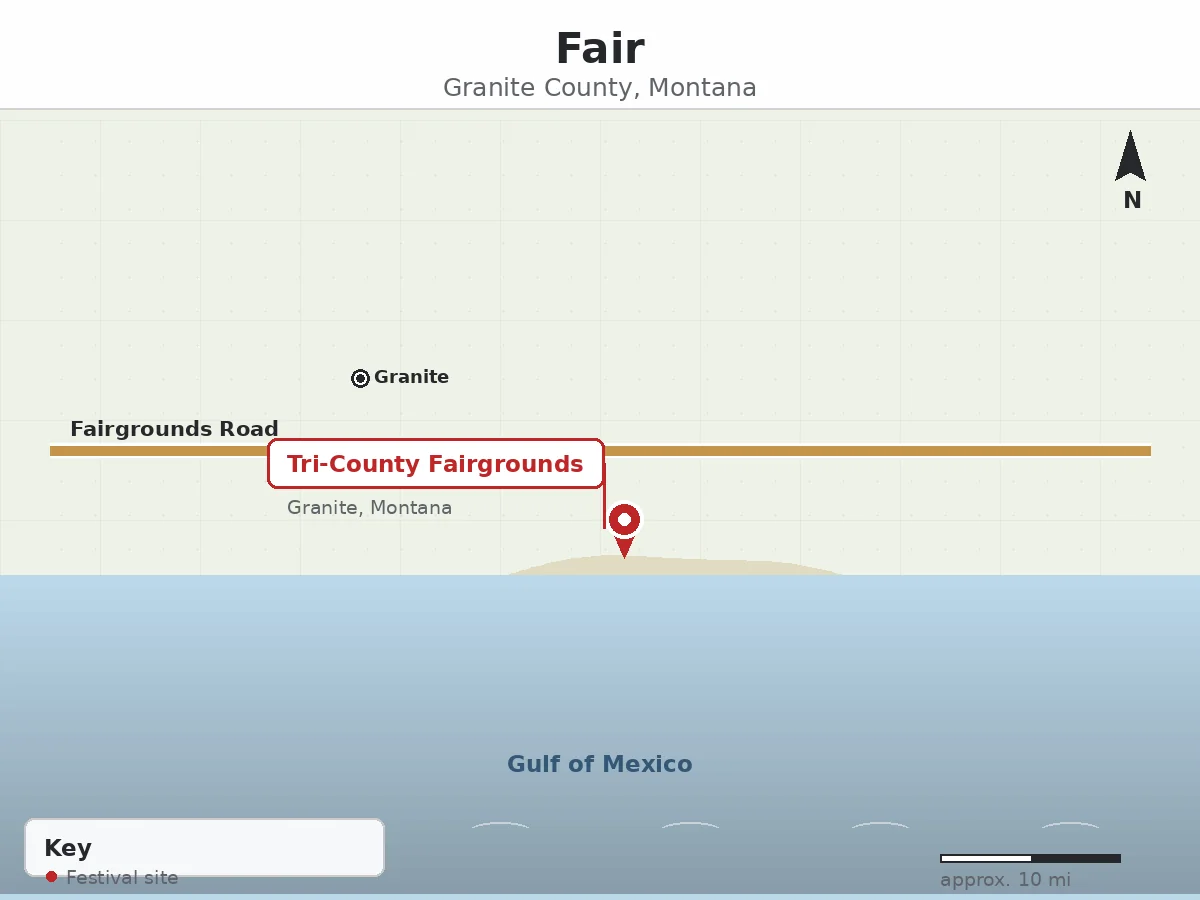
| Grounds | Tri-County Fairgrounds, 422 Fairgrounds Road, Deer Lodge |
| Granite County seat | Philipsburg — it does not host the fair |
| Season | Third week of August; the documented 2026 edition ran August 12–16 |
| Admission | No fair-side price was published in the record — see Planning |
| Camping | No fair camping offer was confirmed in the record |
A History Told in Board Seats
Most county fairs can point to a first year and argue about it afterwards. Granite County’s fair history is quieter and stranger: it is the history of a partnership, and partnerships rarely keep birthday cakes. Regional coverage of the 2026 edition billed the event the 85th Annual Tri-County Fair, and that number is worth handling carefully. It is a billing attached to one edition by outside coverage, not a founding certificate, and turning it into a start year would be arithmetic dressed up as history. This article declines to do that sum.
What the record does show is continuity of a different kind. The board exists, meets, keeps minutes and fills its seats county by county, year after year. Granite County’s own trace in that record is modest and telling — a resignation accepted, a vacancy advertised, a replacement sought — the ordinary paperwork of a small county keeping its third of a shared institution staffed. The fair’s endurance, seen from Philipsburg, is not a date on a banner. It is the fact that three counties still bother to govern one fair together rather than letting it lapse or splitting it into pieces none of them could sustain alone.
For a useful comparison, see the Glacier County Montana Fair Festival for another county festival.
What to Expect at the Tri-County Fair
The Show Rings Where Granite Stock Gets Judged
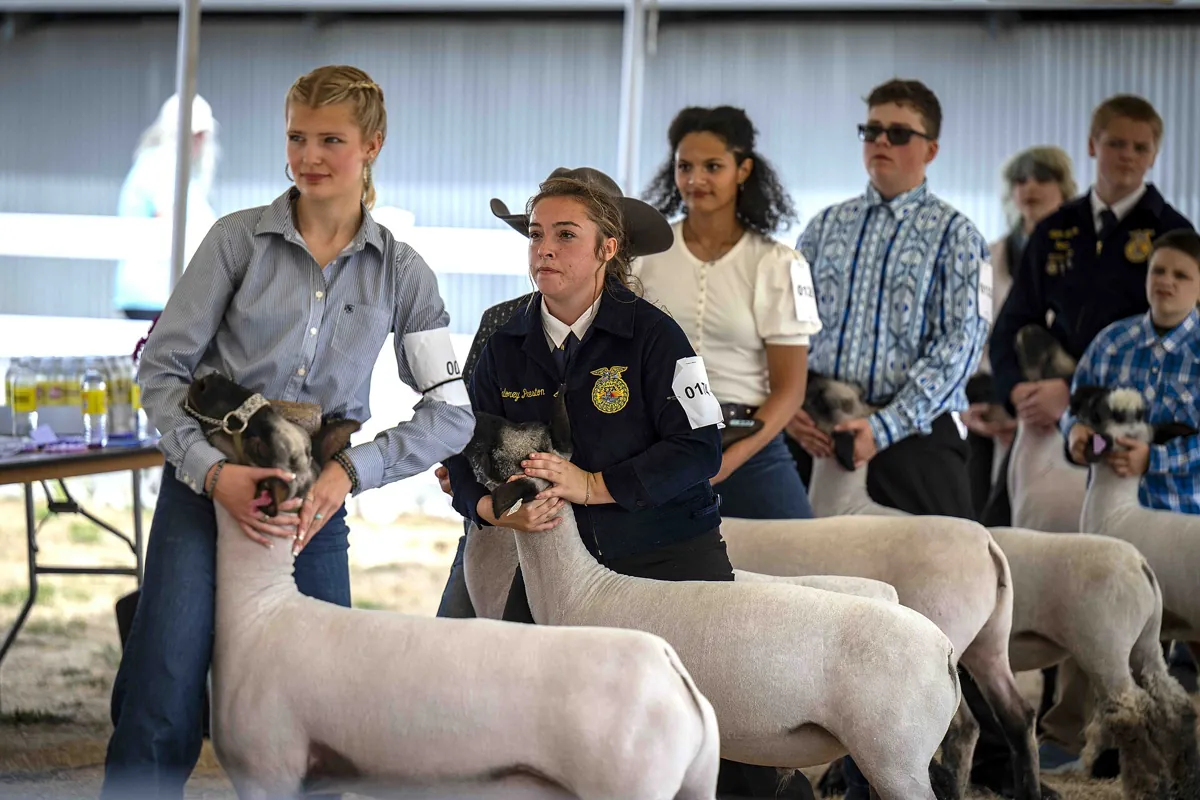
Livestock showing is the fair’s working core, and it is where Granite County’s year becomes visible. 4-H and FFA members from across the three counties bring cattle, sheep, swine and smaller stock into the rings, alongside open class entries that let adults compete outside the youth programmes. For a Granite exhibitor the week carries an extra edge: the animal in front of the judge may have been raised in a Philipsburg or Drummond pasture, but it is measured against the whole valley’s best, not just the home county’s.
Two Nights of Rodeo With a Local Class
The fair’s NRA rodeo runs two nights — in the documented 2026 edition, August 14 and 15 — under the name Tri County Fair Rodeo. The card mixes the standard roughstock and timed events: bareback and saddle bronc riding, bull riding, steer wrestling, tie-down roping, team roping, ladies’ breakaway and barrel racing, with junior bull riding and junior barrels for younger riders. Its most distinctive rule is the local entry restriction tying those classes to residents of Deer Lodge, Powell and Granite counties, which turns the arena into the one place where the partnership competes against itself.
Carnival Lights and a Ranch Rodeo
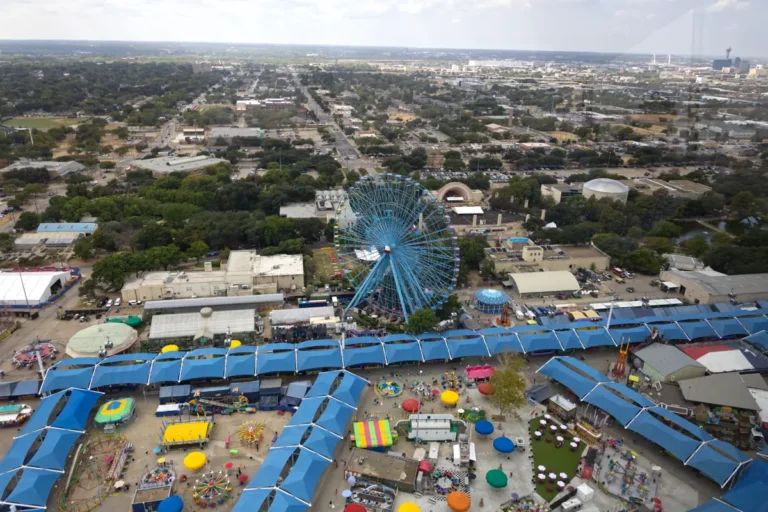
Between the barns and the arena, the fair keeps a carnival, named in the fairgrounds’ own description of the event. Coverage of the fair also carries a ranch rodeo, the working-hands counterpart to the professional card, where ranch crews rather than circuit riders supply the competition. Neither element should be oversold: the record documents their presence, not a ride list or a programme of side acts, and visitors should expect a country fair’s scale rather than a midway that never ends.
The Saturday Parade at Noon
Board minutes place a parade on the fair’s Saturday at noon, threading the celebration out of the grounds and into Deer Lodge’s streets. For Granite County visitors it is the week’s most public hour — the moment the three-county fair stops being barns and entry forms and becomes a procession anyone can watch from the kerb. Treat the noon timing as the board’s documented pattern rather than a promise printed for a future year.
Planning Your Visit From Granite County
The Drive Is Part of the Fair
Attending this fair means leaving the county, and planning should start from that fact. Philipsburg and Drummond families travel to Deer Lodge, where the fairgrounds stand at 422 Fairgrounds Road. Build the trip into the week rather than bolting it on: exhibitors hauling animals plan around show schedules, while day visitors can treat the run up the valley as part of the outing. There is no version of this fair that happens closer to home, and pretending otherwise only produces rushed mornings.
What Admission Will Cost
Honesty is the only accurate answer available: no fair-side admission price appears in the record behind this article. The fair is not described as free anywhere in that record either, and importing a gate price from some other county’s fair would be inventing a figure. Budget for the possibility of a charge, carry cash alongside cards as small fairs often run lean payment setups, and check the fair’s current channels before travelling if the gate price decides the trip.
Sleeping Over, Honestly Assessed
No fair camping offer was confirmed in the fetched record, so this article will not describe hookups, rates or a campground that may not exist as a fair product. Granite County visitors who want to stay across several days should arrange lodging in Deer Lodge or plan the return drive to Philipsburg or Drummond each night. Exhibitor families, in particular, should settle the question directly with the fair office before assuming animals and people can both stay on site.
A Sample Saturday for a Granite County Visitor
Start early enough that the drive never dictates the day, and reach the grounds while the morning still belongs to the barns. Walk the livestock rows first, finding the Granite County animals and the families behind them, because that home-county thread is the whole reason the trip makes sense. Give the open class exhibits their share of the morning, then take lunch at fair pace — unhurried, wherever the grounds offer it. Be in place before noon for the parade, the week’s most public hour. Spend the afternoon back among the exhibits and the carnival, and close the day with the rodeo if the visit falls on one of its two nights, watching the local classes for riders from your own side of the county line. The drive home after dark, with the fair behind you, is simply how this county’s fair has always ended.
How This Fair Compares
Against Montana’s single-county fairs, the contrast is structural. A fair like Fergus County’s Central Montana Fair answers to one county, sits in its seat and carries that county’s name on everything. Granite County’s arrangement trades that simplicity for scale: three counties pool exhibitors, board members and audience into one event none of them stages alone. The comparison with the state’s other Tri-County Fairs is a caution rather than a kinship — fairs in Missouri, Arkansas, North Dakota and Kansas share the name and nothing else, and their dates and prices have no bearing here. Closer to home, the grounds themselves host other annual events, a draft horse expo in September and a bull-riding event in June, but those are tenants of the fairgrounds, not parts of this fair.
Checklist for the Trip Over
- Confirm the current year’s fair dates before fixing leave or travel
- Check whether a gate charge applies this year, since none is published in the record
- Exhibitors: verify entry deadlines through the fair’s own entry channels well ahead of August
- Plan the Philipsburg or Drummond to Deer Lodge drive into each fair day
- Arrange lodging or a nightly return plan, as fair camping is unconfirmed
- Bring cash as well as cards for gate, food and small purchases
- Pack for August sun in an open fairground: hat, water and sunscreen
- Note the rodeo nights if seeing the local classes matters to you
Beyond the Fairgrounds
Deer Lodge, the host town, rewards the visitor who looks past the fair fence: it is Powell County’s seat, a ranching town with its own historic main street character, and the natural base for the fair week. The fairgrounds themselves stay busy outside August with tenant events, but those belong to other weekends and other organisers. Back home, Philipsburg offers Granite County’s own pleasures — a handsome mining-era main street, sapphire country in the surrounding hills, and the valley towns strung along the road toward Drummond — none of which includes a county fair, and none of which needs one to justify the visit. Anaconda, seat of the neighbouring consolidated Anaconda-Deer Lodge County, holds civic events of its own; they are a different county’s calendar and no part of this fair’s story.
What a Shared Fair Means for Granite County
A county of Granite’s size could easily have ended up with no fair at all, the way some rural counties watch theirs fade into memory. Instead it holds a third of one. That share keeps Granite’s young exhibitors inside a full-scale fair — real rings, real judges, a real rodeo with a class reserved for them — at a cost in effort rather than in infrastructure the county would struggle to fund alone. The commission’s quiet work of keeping its board seats filled is the unglamorous machinery that makes the arrangement real. The fair, in return, gives the county an August institution bigger than its population, and a reason for its families to measure their year’s work against the wider valley.
Frequently Asked Questions
Does Granite County hold a fair of its own in Philipsburg?
No. Nothing in the record places a county fair, a fairgrounds or a fair board of Granite County’s own in Philipsburg or anywhere else in the county. Granite County’s fair of record is the Tri-County Fair in Deer Lodge, which the county shares with Powell and Deer Lodge counties.
Who runs the fair that Granite County takes part in?
A joint body called the Tri-County Fair Board runs it, with membership drawn from the three partner counties. Granite County’s commission appoints the members who fill its seats, and the board’s minutes are hosted by Powell County.
Which week of August should Granite County visitors plan around?
The fairgrounds describe the fair as a third-week-of-August event, and regional coverage documented the 2026 edition across August 12–16, with the rodeo on August 14 and 15. Entry windows published for exhibitors run wider than the public days and should never be mistaken for the fair itself.
Is there a published gate price for the fair?
The record behind this article publishes no admission price, and the fair is not described as free in it either. Treat the gate as an open question, check the fair’s current information before travelling, and do not rely on prices quoted for any other fair.
What to Expect From the Next Granite County Montana Fair Festival
How often is the Granite County Montana Fair Festival held?
The Tri-County Fair that this title refers to is an annual event, returning each August to the fairgrounds in Deer Lodge. Granite County’s part in it — exhibitors in the rings and members on the board — renews with every edition.
When is the next Granite County Montana Fair Festival?
Expect the next edition in the third week of August, following the fairgrounds’ standing description of the fair’s place in the calendar. The 2026 edition’s documented span, August 12–16, shows the shape of the week; the coming year’s exact dates rest with the fair board’s own announcements.
Will the dates change?
Fair boards adjust calendars for weather, livestock schedules and the wider rodeo circuit, so movement of a day either way is always possible. The third week of August has the weight of the fairgrounds’ own description behind it, which makes it the sensible planning assumption until the board publishes otherwise.
For Granite County, the fair will never be the one down the road — it is the one up the valley, shared with two neighbours and governed in part by its own commissioners. That is not a lesser kind of county fair. It is the kind that lets a small county keep a big August.