Wake County North Carolina North Carolina State Fair Festival
For eleven days each October, the west side of Raleigh turns into a temporary city of livestock barns, exhibit halls, frying food and midway light. Despite the county name carried in the title above, the fair belongs to the whole state: it is the North Carolina State Fair, held in Wake County’s seat, run by a state department — no county fair.
The most recent documented edition ran October 15 to 25, 2026, and the department’s post-fair release put attendance at nine hundred ten thousand five hundred eighty-four. The year before, the fair ran October 16 to 26, 2025 and drew nine hundred forty-six thousand eight hundred eleven. Both stood at the State Fairgrounds, 4285 Trinity Road, home since 1928 and three hundred forty-four acres.
About the State Fair in Raleigh
The fair publishes under three name forms, recorded unmerged: North Carolina State Fair, the full form; N.C. State Fair, the organising department’s own preferred form; and NC State Fair, a secondary and web-address form. No Wake County prefixed form is its published name.
The organiser is the North Carolina Department of Agriculture and Consumer Services, the only organiser credit given here. Its 2025 and 2026 releases name Kent Yelverton as fair director, a role credit, and quote Commissioner Steve Troxler after the fair; neither man is a founder or personal organiser.
The midway provider, never the organiser, also stands in three forms unmerged: Powers Great American Amusements (the department’s 2026 release), Powers Great American Midway (the history page’s 2006 contract layer) and Powers Great American Midways (secondary layers). Sponsors stand around those credits only: Duke Energy (Military Appreciation Day), Smithfield Foods (Hunger Relief Day), the N.C. Farm Bureau (the 2026 country ham competitions), Tractor Supply Co. (the 2025 Farm Family of the Day) and Goodnight Brothers Country Ham.
For a useful comparison, see the Tyrrell County North Carolina Scuppernong River Festival for another county festival.
Quick Facts
| Item | Detail |
| Event | North Carolina State Fair, the state fair of North Carolina |
| Host town | Raleigh, county seat of Wake County and the state capital |
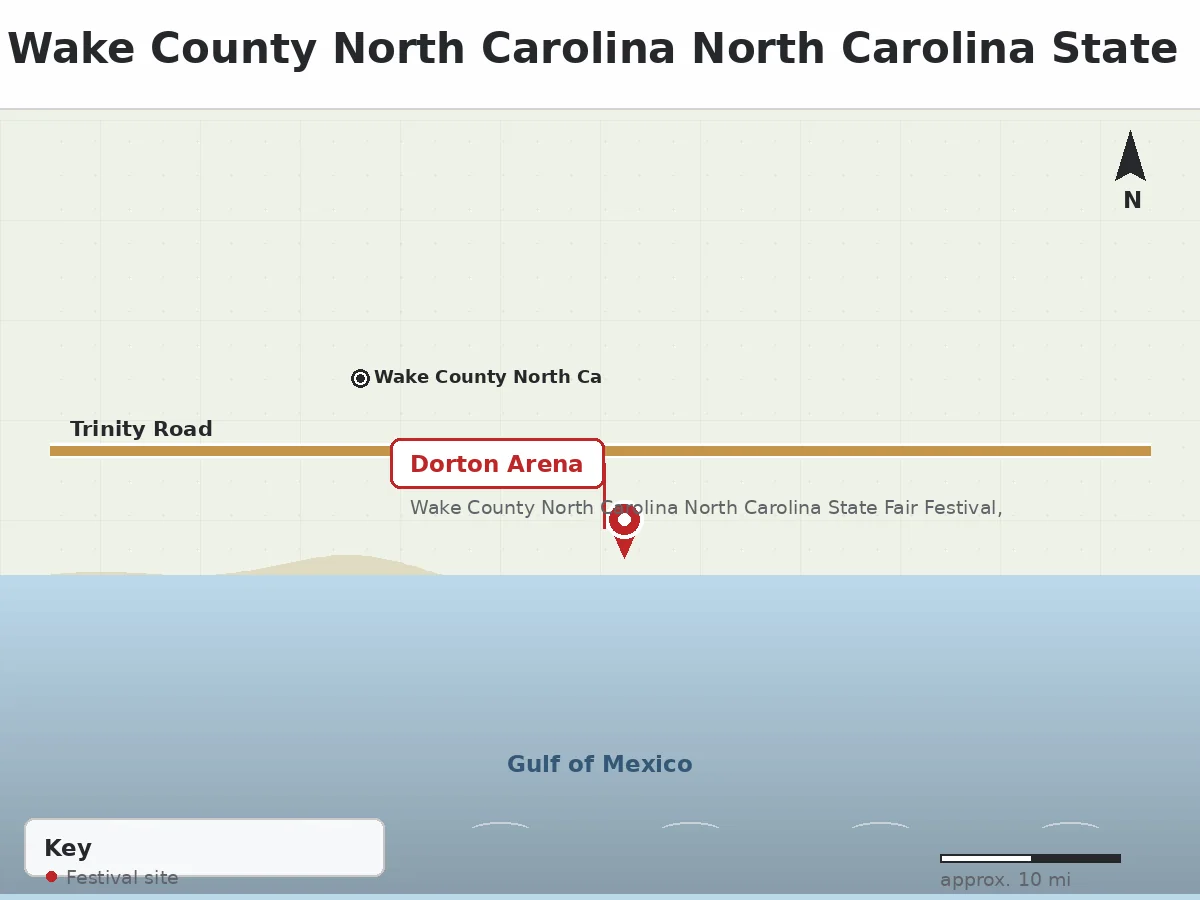
| Grounds | State Fairgrounds, 4285 Trinity Road, Raleigh, the fair’s site since 1928 |
| Size | Three hundred forty-four acres |
| Organiser | North Carolina Department of Agriculture and Consumer Services |
| Timing | Annual, eleven days in mid-October |
| Most recent documented edition | October 15 to 25, 2026, held |
| Advance admission, 2026 | Ten dollars for adults, five dollars for youth and seniors, under-fives free |
| Camping | The fairgrounds campground is closed to the public for the whole of October |
History
The documented first fair was held in Raleigh in October 1853, sponsored by the founding body the record names two ways — the State Agricultural Society in the department’s history, the North Carolina State Agricultural Society in a state marker account. It lasted four days, drew four thousand people on its largest day, and stood on a tract east of the Capitol around Hargett and Davie Streets, a site that is history only.
The run was never unbroken. No fair was held from 1861 through 1868, before a reopening in 1869. The Society disbanded in 1925, no fair was held in 1926 or 1927, and in 1928 the fair moved to its present west Raleigh site under the Department of Agriculture’s control. Two later control wordings stand unmerged: a 1933 commercial lease to George Hamid, and a 1937 layer in which W. Kerr Scott returned control to the department.
The fair closed during the Second World War and reopened in 1946. Its length grew by steps — six days from 1961, nine from 1969, ten from 1986, eleven from 2008 — and in 2020 it was cancelled for the pandemic, the first cancellation since the Second World War.
Its anniversaries refuse to line up: a 150th anniversary in 2003, a 150th fair in 2017, a 2024 history spanning one hundred fifty-six years, and a tourism billing of 2025 as the one hundred fifty-seventh year. Those counts cannot all hold, so no recent edition carries a number here. Attendance rests on the department’s figures alone — nine hundred ninety-eight thousand nine hundred twenty-six in 2024, nine hundred forty-six thousand eight hundred eleven in 2025, nine hundred ten thousand five hundred eighty-four in 2026 — and the all-time record, one million ninety-one thousand eight hundred eighty-seven, dates to 2010; a conflicting secondary table is set aside entire.
What to Expect
Buildings That Give the Grounds Their Shape
Dorton Arena began as the 1952 Livestock Pavilion and took the Dorton name in 1961. The Jim Graham and Governor Kerr Scott Buildings carry much of the exhibition load, the Holshouser Building houses the Village of Yesteryear, Heritage Circle gathers a pond and a Tobacco Barn, the Hunt Horse Complex serves the horse shows, and Kiddieland and Cotton Park hold the family end of the map. The newest fabric is the Midway Event Center, completed for 2026.
Institutions That Come Back Every Year
The Folk Festival was created in 1948 as a showcase for traditional North Carolina music and dance. The Village of Yesteryear opened in 1950 and still fills the Holshouser Building with heritage-craft demonstrators; Heritage Circle and the Field of Dreams agricultural exhibit each marked twenty years in 2024. The Flower and Garden Show, the livestock shows and the Junior Livestock Sale of Champions anchor the competitive side, fireworks close the nights, and the State Fair Flyer chairlift, introduced in 2016, was the fairgrounds’ first permanent ride.
The 2026 Edition, and Nothing but the 2026 Edition
Everything here belongs to 2026 alone. Behind Dorton Arena stood the America 250 Wheel, two hundred thirty feet tall with forty-five presidential-themed gondolas, billed in the department’s release as the largest portable observation wheel in the world; it replaced the SkyGazer and rode on a separate six-dollar ticket. The Powers midway added Twin Twister and Casino. Marc Dobson, the One-Man Band, played four shows daily, an Americana 250 Band Organ played, and a Patriotic Light Show ran nightly in Cotton Park, hourly from six in the evening until eleven. The country ham competitions returned after a twenty-seven-year break, over eighty new food items appeared, and the Village of Yesteryear turned seventy-five. The post-fair accounting recorded a record Junior Livestock Sale of Champions at two hundred thirty-four thousand dollars, over twenty-four thousand entries, and two hundred three thousand seven hundred eighty-three pounds of Hunger Relief Day food.
What Belongs to 2025
The 2025 edition keeps its own facts: the theme There’s No Time Like Fair Time, entries past twenty-seven thousand, a site-record pumpkin of two thousand two hundred forty-four and one-half pounds, and a Junior Livestock Sale of Champions at two hundred fourteen thousand eight hundred thirty dollars. Its Military Appreciation Day turned twenty, and its Hunger Relief Day gathered food for some one hundred fifty thousand meals. The wheel of the 2025 layer was the SkyGazer, and it is no part of the 2026 fair.
Planning Your Visit
Advance Tickets on the Department’s Own Terms
The only admission ladder the department itself publishes is the advance ladder, the same for 2025 and 2026: adults aged thirteen to sixty-four pay ten dollars, youth aged six to twelve five, senior adults five, children of five and under nothing, and groups of forty or more eight dollars for adults and four for youth. In 2026 the discount advance sale ran online through opening day and at Gate 9 and State Farmers Market windows from October 1 to 15, the market acting as a ticket outlet only, never a venue.
Gate Prices and Hours That Come From Guides
Gate money rests on guides alone. The consistent 2026 guide figures are thirteen dollars for adults, seven for youth, five for seniors and eight for military adults, gate only — never department-published prices. Free parking in designated areas is likewise a guides’ statement rather than a department guarantee. Guides also carry the hours — from noon on opening day, to half past eleven on Friday and Saturday nights, to eleven on other nights, admission gates closing at a quarter to ten — guide-layer hours, never a department timetable.
Special Days, Each With Its Own Rule
Senior Citizens’ Day, Tuesday, October 20, 2026, admitted those sixty-five and over without charge, on the guides’ layer. Military Appreciation Day, Wednesday, October 21, took its terms from the department’s own 2026 release: free admission for military and guard personnel, veterans included, plus three guests with identification, with a parade and the 440th Army Band in the day. Hunger Relief Day, Thursday, October 22, admitted each visitor bringing six non-perishable food items, on Wake County and secondary layers; College Day, on opening day, charged eight dollars with a student identification card, secondary layers only.
Two Ride Price Lists That Must Not Be Mixed
Ride money differs by year and the lists stay apart. For 2026, on the department’s own figures: eighteen ride tickets cost ten dollars, a one-day unlimited wristband thirty, the State Fair Flyer seven dollars one way or ten round trip, and the America 250 Wheel and Casey’s Big Slide six each, both outside the wristband. The online-only 2026 packages were all-in: Dizzy Pass thirty-eight dollars, Kegs and Cork seventeen, Sippin’ Spirits twenty-three, Flyer Package seventeen, Bright Lights and Buckles eighteen. For 2025: ride cards eleven dollars for eighteen tickets, wristbands thirty-one, the Flyer six one way and nine round trip, the SkyGazer six, Dizzy Pass thirty-nine, Kegs and Cork eighteen — 2025 money only.
The Campground That Closes for the Fair
The State Fairgrounds’ campground runs all year yet closes to the public for the whole of October, precisely when the fair runs. Outside October, the department’s campground page sets the terms: thirty-five dollars a night in 2025, forty-five for arrivals on or after January 1, 2026; stays of fourteen nights or fewer; full water, sewer and electrical hookups; and no tent camping at all. The page gives its own size two ways — one hundred full-hookup sites in its introduction, one hundred one in its policy list — so no single count is asserted here. Authorised vendors and show participants may arrange same-day camping inside the fence through the public safety team, for participants only; the campground’s Youth Center Drive address is never a fair gate, and no nearby private recreational vehicle park is a fair offer.
One Full Day at the Fair
Come in through the morning and give the first hours to the livestock barns while judging runs. Cross to the Holshouser Building before lunch for the Village of Yesteryear’s demonstrators, then eat your way across the year’s new food. Spend the afternoon between the exhibition halls and a Flyer ride, and stay as the light goes: the midway after dark, fireworks to close, and out by the Trinity Road gates.
How a State Fair Differs From a County Fair
A county fair is a community’s own production, raised by local hands for local exhibitors. This fair inverts the scale: its organiser is a state department rather than a county society, its grounds run to three hundred forty-four acres, its run lasts eleven days, and its entries arrive from across North Carolina — over twenty-four thousand of them in 2026 alone, a statewide institution that one county happens to host.
Fair Week Checklist
- Buy advance tickets on the department’s own ladder
- Aim for 4285 Trinity Road; treat other addresses with suspicion
- Pick a special day whose terms fit you, and bring its identification
- Keep the 2025 and 2026 ride prices in their own years when budgeting
- Leave the camper home in October; the fairgrounds campground shuts for the fair
- Ride the Flyer once in daylight and once after dark if the day allows
- End at least one evening with the fireworks before heading for the gates
- Confirm the year’s hours in a current guide
Beyond the Festival Grounds
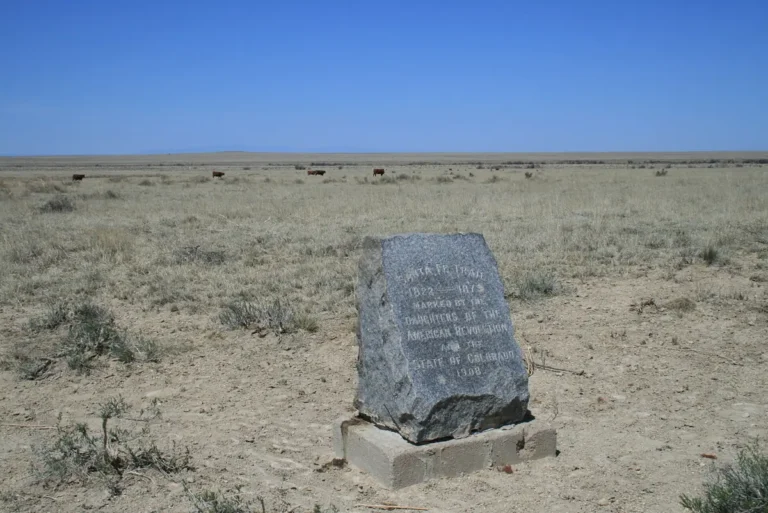
Raleigh carries a second identity alongside the fair: it is the state capital, its government core across the city from the fairgrounds. The ground where the 1853 fair stood, east of the Capitol around Hargett and Davie Streets, belongs to that downtown story and to history alone; it offers a marker’s worth of past, not a fairground.
Why the State Fair Matters to North Carolina
Tourism layers bill this fair as the state’s largest annual event; the department’s counts run above nine hundred thousand visitors in each of the last three documented years. For eleven days it is the state’s agricultural showroom: junior exhibitors sell championship livestock for sums that fund their next season, working craftspeople keep old skills in public view, and one day’s food collection — over two hundred thousand pounds of it in 2026 — turns a day out into meals for strangers. A fair that began with four thousand people on its biggest day in 1853 now measures itself in the high hundreds of thousands.
Frequently Asked Questions
Is this Wake County’s own county fair?
No. The October fair in Raleigh is the North Carolina State Fair, organised by the North Carolina Department of Agriculture and Consumer Services. Wake County hosts it, but no Wake County body organises it, and its exhibitors and visitors come from across the state.
How much should a visitor budget for admission?
On the advance ladder the department publishes: ten dollars for adults, five for youth, five for seniors, under-fives free, and group rates for forty or more. Guide gate figures run higher and rest on guides alone.
Are seniors admitted free?
Not in general. The ladders charge senior adults five dollars; free senior admission belongs only to Senior Citizens’ Day — Tuesday, October 20 in 2026, on the guides’ layer. The history pages’ old note that seniors are admitted free as a continuing policy is a stale layer.
Can fairgoers camp at the fairgrounds in October?
No. The fairgrounds campground closes to the public for the whole of October because of the fair, and tent camping is never permitted there. The only fair-time camping is a same-day arrangement for authorised vendors and show participants, not open to fairgoers.
What to Expect From the Next Wake County North Carolina North Carolina State Fair Festival
How often is Wake County North Carolina North Carolina State Fair Festival held?
A new edition comes round each year. It runs eleven days in mid-October on the State Fairgrounds in Raleigh, a shape held since 2008, broken only in 2020.
When is the next Wake County North Carolina North Carolina State Fair Festival?
No dates for a next edition appear in the governing record. The most recent documented edition, October 15 to 25, 2026, was held; watch for the organising department’s own announcement rather than assuming the same calendar days.
Will the dates change?
The calendar days move a little each year: October 16 to 26 in 2025 and October 15 to 25 in 2026, each an eleven-day mid-October run beginning on a Thursday. Expect the same window, not identical dates.
The fair ends as it has for generations: barns emptying, lights coming down over Trinity Road, and a state that has spent eleven days showing itself to itself heading home.