Dallas County Alabama Selma Rising Mural Festival
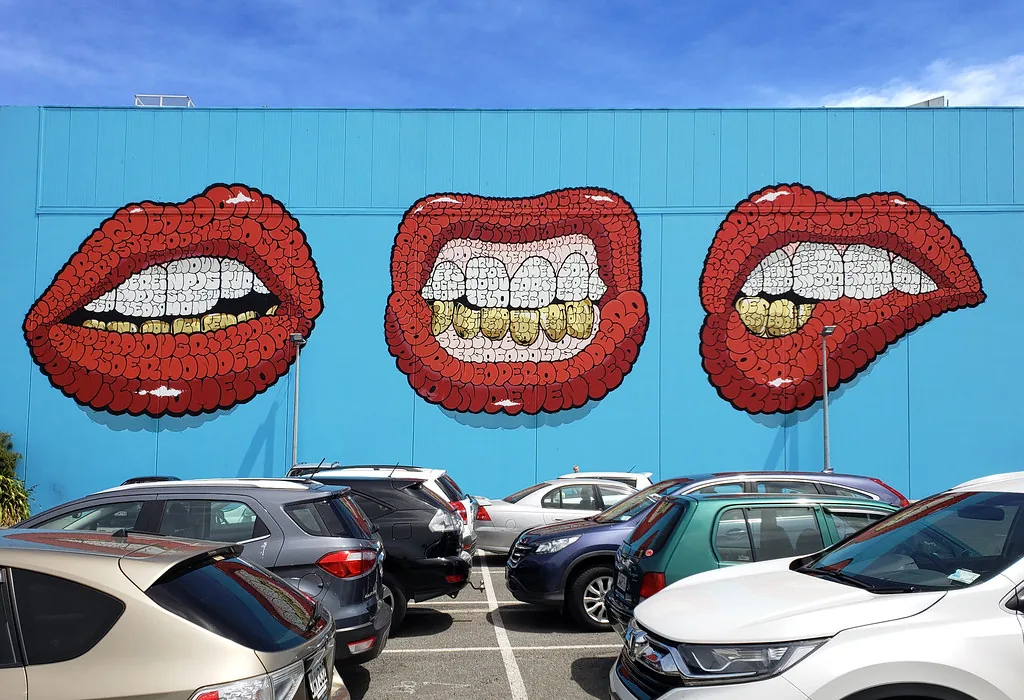
In Selma, a city with more than its share of history painted in complicated colors, a young festival has found a simple and hopeful idea: put a paintbrush in as many hands as possible and cover the town in murals. The Selma Rising Mural Festival does exactly that, turning a downtown park into an open-air studio where professional artists and complete beginners work side by side on canvases that will hang in every corner of the city.
The event is part of a deliberate effort to rebuild Selma’s cultural life through the arts, and it is organized by a local group dedicated to making art accessible to everyone. What makes it distinctive is its design: the finished murals do not stay in one place. They are created to be permanent installations, one for each of the city’s wards, so the benefit of a single day’s work is spread across the whole community.
| Festival name | Selma Rising Mural Festival |
| Location | Phoenix Park, Water Avenue, Selma, Dallas County, Alabama |
| Typical timing | A Saturday in mid-to-late October, 9 a.m.–5 p.m. |
| Organizer | Making Art Connections Across Selma (MACAS) |
| Format | Community mural painting day with guest artists |
| Admission | Free, all ages and abilities |
| Signature feature | Eight murals, one for each city ward, painted on moveable boards |
| Evening event | Jazz concert following the painting day |
About the Selma Rising Mural Festival
The Selma Rising Mural Festival is a one-day community art event held at Phoenix Park in downtown Selma each fall. Guest artists design and outline a series of large murals on moveable boards installed in the park, and the public is invited to pick up a brush and help fill them in. There is no fee and no experience requirement, and the event is explicitly open to all ages and skill levels.
The festival is produced by Making Art Connections Across Selma, known as MACAS, a nonprofit that has built a year-round program of art events in the city. The mural festival is the organization’s flagship visual-arts event, and in recent years it has grown to include eight guest artists creating eight murals, one for each of Selma’s municipal wards, plus a ninth mural created by young people in the group’s Youth Art Club. The event has also added food trucks and an evening jazz concert, turning a single painting day into a full festival. For contrast, the Dallas County Alabama Selma Cinema Festival takes a different approach to community art, filling four blocks of downtown Fort Payne with an arts and crafts market and live music each September.
How the Mural Festival Began
The festival grew out of MACAS’s broader mission to connect Selma residents with the arts. The organization launched a series of annual events, including a “free little art gallery” where neighbors could give and take small works, and the mural festival quickly became its most visible project. The first editions invited a handful of guest artists to paint in the downtown area, and the concept evolved into the ward-based format that defines the event today.
The idea behind the format is both practical and symbolic. By creating murals for each of the city’s eight wards, the festival ensures that every neighborhood receives a piece of public art, rather than concentrating the benefits downtown. The finished murals are displayed at Phoenix Park for about a year before being permanently installed in their respective wards, and the youth mural is placed at a location chosen by the young artists themselves. Recent editions have featured muralists from Columbus, Georgia, and other Southeastern cities, paired with local volunteers.
The Arts Scene in Dallas County
Dallas County, created in 1818 and anchored by Selma on the Alabama River, has a cultural history far richer than its size would suggest. Selma’s historic district is the largest in Alabama, and the city has long supported galleries, museums, and performing arts. In recent years, local nonprofits have worked to rebuild and broaden that scene, and the mural festival is one of the clearest expressions of that effort.
The county sits in the Black Belt, a region whose identity is bound up with the land and with the civil-rights movement. Selma’s role in that history gives its public art a particular resonance; murals in a city so closely associated with struggle carry a message about resilience and renewal. At the same time, the festival is not weighed down by history. It is a joyful, hands-on event that invites children, elders, and everyone in between to make something beautiful together, and it has been widely embraced by residents.
What to Expect at the Festival
Painting alongside the artists
The central activity is cooperative painting. Each guest artist designs a mural and transfers the outline onto a large board, then works with members of the public to complete it. Organizers emphasize that no artistic experience is necessary, and volunteers are guided through the process. Over the course of the day, the boards fill in with color, and the park becomes a shared studio.
Food trucks and live music
The festival grounds include food trucks, and the day closes with a jazz concert in the evening, headlined in recent years by regional performers. A mobile market has also been part of the event, connecting the art day to community health and food access. The combination of painting, food, and music gives visitors plenty of reasons to stay for several hours.
Youth art and school outreach
Through its Youth Art Club, MACAS gives young people a formal role in the festival. Students help create a dedicated mural, and the organization also brings guest artists into Selma city schools to paint mini-murals with students. In a recent year, the outreach was expected to reach many hundreds of children, making the festival a genuine educational program as well as a public event.
Planning Your Visit
Getting to Phoenix Park
Phoenix Park sits at 1207 Water Avenue in downtown Selma, a short distance from the Alabama River waterfront. Selma is reached mainly via U.S. Highway 80, about fifty miles west of Montgomery, with Alabama Highways 14 and 22 also serving the city. The park is close to other downtown landmarks, so it is easy to combine the festival with a walk through the historic district. Montgomery Regional Airport is the nearest commercial airport.
Where to stay
Selma has a limited but adequate selection of hotels and inns, and Montgomery, about an hour east, offers a much larger inventory. Because the festival is a single-day event with an evening concert, staying overnight in or near Selma lets you enjoy the full program without a late drive. Book early during festival weeks, as rooms fill quickly.
Parking and logistics
Downtown Selma is compact and walkable, with on-street parking near the park and surrounding blocks. Arriving near the 9 a.m. start gives you the best choice of parking and a chance to watch the murals take shape from the beginning. The park is a comfortable base for the day, with the concert in the same location in the evening.
Costs and what is provided
The festival is free to attend, and painting supplies are provided for participants. You pay only for food from the trucks and any purchases from vendors. Because the event is free and open to all ages and abilities, it is one of the most accessible cultural events in the county.
Weather and what to wear
Mid-to-late October in the Black Belt is usually mild, with warm afternoons and cooler evenings. Because participants may be painting outdoors, clothing that can get a little paint on it is a smart choice. A hat, sunscreen, and comfortable shoes are useful, and a light layer helps for the evening concert.
A Mural Festival Saturday
- Morning: arrive at Phoenix Park as the boards go up and meet the guest artists.
- Midday: pick up a brush and help fill in one of the murals.
- Afternoon: grab food from the trucks and watch the murals come together.
- Evening: stay for the jazz concert and see the finished murals on display.
Nearby Festivals to Compare
Selma’s calendar has plenty more to offer. The Bridge Crossing Jubilee in March commemorates the voting-rights marches, the Selma Pilgrimage opens historic homes in spring, and the Selma Cinema Festival brings independent film to downtown each March. In October, the Alabama Tale Tellin’ Festival celebrates the spoken word. Together these events give Dallas County a year-round identity as a hub for history, art, and community storytelling.
What to Bring
- Clothes that can handle a little paint.
- Sun protection for a day outdoors.
- Cash for food trucks and vendors.
- A light layer for the evening concert.
- A camera to capture the finished murals.
Beyond the Festival — Exploring Selma
While you are in town, Selma’s historic downtown is worth a slow walk. The Edmund Pettus Bridge, Sturdivant Hall, and the Old Depot Museum are all within a short drive of the park, and the National Voting Rights Museum and Brown Chapel A.M.E. Church add essential context to the city’s story. The riverfront along Water Avenue, where the mural festival is held, has its own restored nineteenth-century character.
Beyond the city, Dallas County opens into farmland and river bottom, with the sites of Alabama’s first capital at Cahaba to the south. The rural communities of Orrville and Marion Junction offer a quieter view of the Black Belt, and the Alabama River provides fishing and boating. It is a landscape that rewards curiosity and a willingness to take the back roads.
The Significance of the Festival
Public art can be decorative, but the Selma Rising Mural Festival treats it as something more: a way to distribute beauty and pride across a whole city. By designing the event around the wards, the organizers make sure that every neighborhood has a stake in the result, and by inviting amateurs to paint alongside professionals, they turn spectators into participants. The school outreach multiplies the effect, reaching hundreds of children with a message about their own creativity. In a city with a hard history, that is no small thing, and the festival has become one of the clearest signs of Selma’s cultural revival.
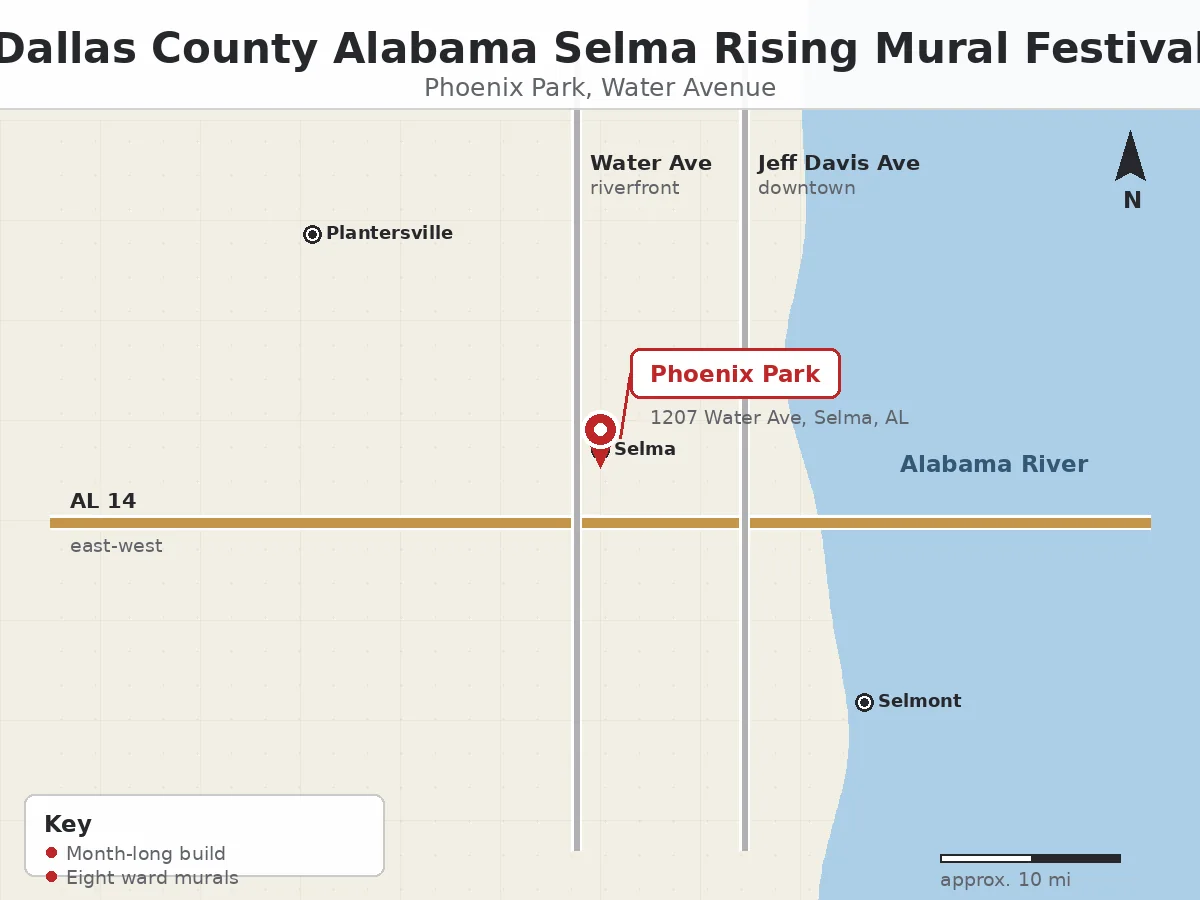
Festival Area Map
The festival takes place at Phoenix Park on Water Avenue in downtown Selma, Dallas County, close to the Alabama River waterfront.
Frequently Asked Questions
When is the Selma Rising Mural Festival?
The festival is held on a Saturday in mid-to-late October, typically from 9 a.m. to 5 p.m., with a jazz concert in the evening. Recent editions took place on October 18 and October 17 in successive years. Confirm the date with the organizer before you travel.
Is the mural festival free?
Yes. Admission is free, and painting supplies are provided. You pay only for food and any vendor purchases.
Do I need art experience to participate?
No. The festival is open to all ages and abilities, and organizers stress that no artistic experience is necessary. Guest artists guide participants through the painting.
Where is the festival held?
It is held at Phoenix Park at 1207 Water Avenue in downtown Selma, Dallas County, Alabama, near the Alabama River waterfront.
What happens to the murals after the festival?
The murals are displayed at Phoenix Park for about a year and then permanently installed in each of Selma’s eight wards. The youth-created mural is placed at a location chosen by the young artists.
Who organizes the festival?
The event is organized by Making Art Connections Across Selma, or MACAS, a local nonprofit that runs a year-round program of art events, including a youth art club.
Is the festival good for children?
Yes. It is designed to be family-friendly and welcomes all ages. Children can paint alongside adults, and the youth art club gives young participants a dedicated project.
What should I bring to the mural festival?
Wear clothes that can handle paint, bring sun protection, and carry cash for food trucks. A light layer is useful for the evening concert, and a camera is handy for capturing the finished work.
What to Expect From the Next Selma Rising Mural Festival
The Selma Rising Mural Festival is an annual event and has grown steadily across its first several editions, so visitors can expect it to return each fall in most years. The timing follows a Saturday in mid-to-late October, and the ward-based format of eight murals plus a youth mural has become its signature. Recent editions have added food trucks and an evening jazz concert, suggesting the event will continue to expand.
Because the date shifts slightly from year to year and the program continues to develop, confirm details with MACAS before planning travel. Lodging in Selma is limited, so visitors often stay in Montgomery. Arriving near the 9 a.m. start is the best way to park easily and to watch the murals take shape from the first brushstroke.
How often is the mural festival held?
It is an annual event, held each fall. A recent edition was the third in the series.
When is the next Selma Rising Mural Festival?
The next edition is expected on a Saturday in mid-to-late October, following the festival’s established pattern. Check with the organizer for the confirmed date.
Will the number of murals change?
The festival has settled on eight ward murals plus one youth mural, matching the city’s eight wards. That structure is likely to remain, though the roster of guest artists changes each year.
Last updated: October 2026
The Selma Rising Mural Festival is proof that a city does not need a large budget to make a large impression. Give people a wall, some paint, and a reason to show up, and the result is a day that changes how a place looks and how it feels about itself. If you are in the Black Belt in October, bring an old shirt and join in.