Evangeline Parish Louisiana Smoked Meat Festival
The smoke finds you before the music does. On a festival weekend in Ville Platte, it drifts over the rooftops, carrying the smell of oak and hickory and pork tended since dawn. The Louisiana Smoked Meat Festival, the event behind the sheet title above, is built around that smell and the craft it represents. Ville Platte calls itself the Smoked Meat Capital of the World, and the festival is the town’s chance to prove the claim in public, with cookers lined up and judges moving from tent to tent. The festival’s published name is the Louisiana Smoked Meat Festival, the form the layers read use most often. A French form also appears, Le Festival de la Viande Boucanee, translated in the layers as Smoked Meat Festival, and the shorter Smoked Meat Festival appears as well. The sheet title is the working title under which the event is filed.
About
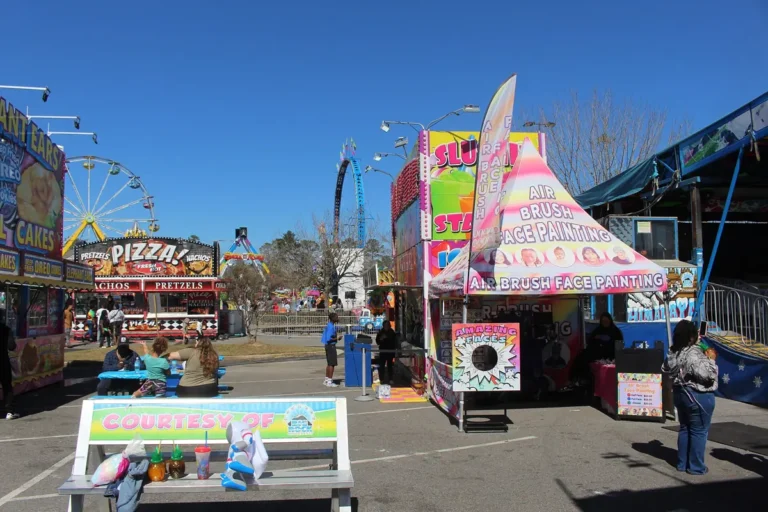
The Louisiana Smoked Meat Festival is a food and music festival held in Ville Platte, the parish seat of Evangeline Parish, Louisiana. The organiser is Viande Boucanee, Inc., which hosts the festival in conjunction with area corporate and private sponsors. The venue in the most fully documented edition, the twenty-sixth annual festival in May 2019, was the Ville Platte Civic Center and Pavilion, and earlier layers place it on festival grounds in Ville Platte. The centrepiece is the World Championship Smoked Meat Cook-off, with amateur and professional divisions in which cooks prepare dishes built around smoked meat. The range of entries is wide: sausage and tasso and pounce and bouree sit alongside deer and pig and rabbit and alligator, and the judges weigh flavour and texture and technique. Around the cook-off, the festival fills out into a full weekend. Live music plays each night, the opening ceremonies honour veterans and members of the military, and a beauty pageant adds a formal note. Meat markets and restaurants and businesses exhibit smoked meats for visitors to taste and buy. The atmosphere is closer to a parish reunion than to a commercial expo.
Quick Facts
| Detail | Information |
| Published name | Louisiana Smoked Meat Festival |
| Host town | Ville Platte, Louisiana |
| Parish seat | Ville Platte |
| Venue | Ville Platte Civic Center and Pavilion |
| Organiser | Viande Boucanee, Inc. |
| Best documented edition | Twenty-sixth annual, May 2019 |
| Centrepiece | World Championship Smoked Meat Cook-off |
| Cook-off divisions | Amateur and professional |
| Admission in 2019 | Five dollars |
| Town billing | Smoked Meat Capital of the World |
History
Ville Platte’s claim to the smoked meat crown rests on more than a slogan. The town bills itself as the Smoked Meat Capital of the World and was officially designated as such by the Louisiana Legislature. The layers read describe Ville Platte as a birthplace of the Afro-Creole zydeco tradition and of the Choctaw-Metis viande boucanee tradition. Those two threads run together through the festival: zydeco gives the weekend its music, and viande boucanee gives it its food, and both trace back to the same crossroads community. The festival’s history is told through annual billings rather than a founding story. The twenty-sixth annual edition was held in May 2019, and the layers record that billing as printed, without converting it into a founding year. A June edition in an earlier year is attested by a regional magazine layer, which describes the last weekend in June, with Friday evening music, Saturday noon opening ceremonies, and afternoon cook-off winners. A June twenty-seventh and twenty-eighth edition is attested by a university library-news layer, which records book signings at the festival on those dates. The record therefore shows an event that has shifted its calendar across the spring and early summer. Smoking meat was a practical craft before it was a competition, a way to keep pork and game through the warm months, and the Choctaw-Metis tradition carried that craft into the kitchens of Evangeline Parish.
What to Expect
A visit to the Louisiana Smoked Meat Festival is built around the cook-off. The competition grounds fill early, with cookers lit before sunrise while the judges make their rounds. The amateur and professional divisions run side by side, and visitors can watch cooks tend their fires and talk through their methods between rounds. The dishes range from the familiar to the unusual: sausage and tasso are the backbone of the competition, and pounce and bouree appear alongside deer and pig and rabbit and alligator, so a walk through the cook-off tours Louisiana game and farm meat alike. The World Championship title is the prize that matters, and the announcement of the winners in the afternoon is the moment the whole grounds pauses to listen. Music runs through the weekend alongside the cooking. Live music plays each night, and the opening ceremonies honour veterans and members of the military. The beauty pageant brings a different kind of stagecraft, and the meat markets and business exhibits let visitors buy what they have tasted. Vendors sell plates and sandwiches and samples through the day. The 2019 edition, the best documented in the layers read, charged five dollars for admission, with identification required and no ice chests, outside beverages or pets allowed. The grounds hold the whole event within a compact footprint, so a visitor can move from a tasting to a performance to a market stall without a long walk.
Planning Your Visit
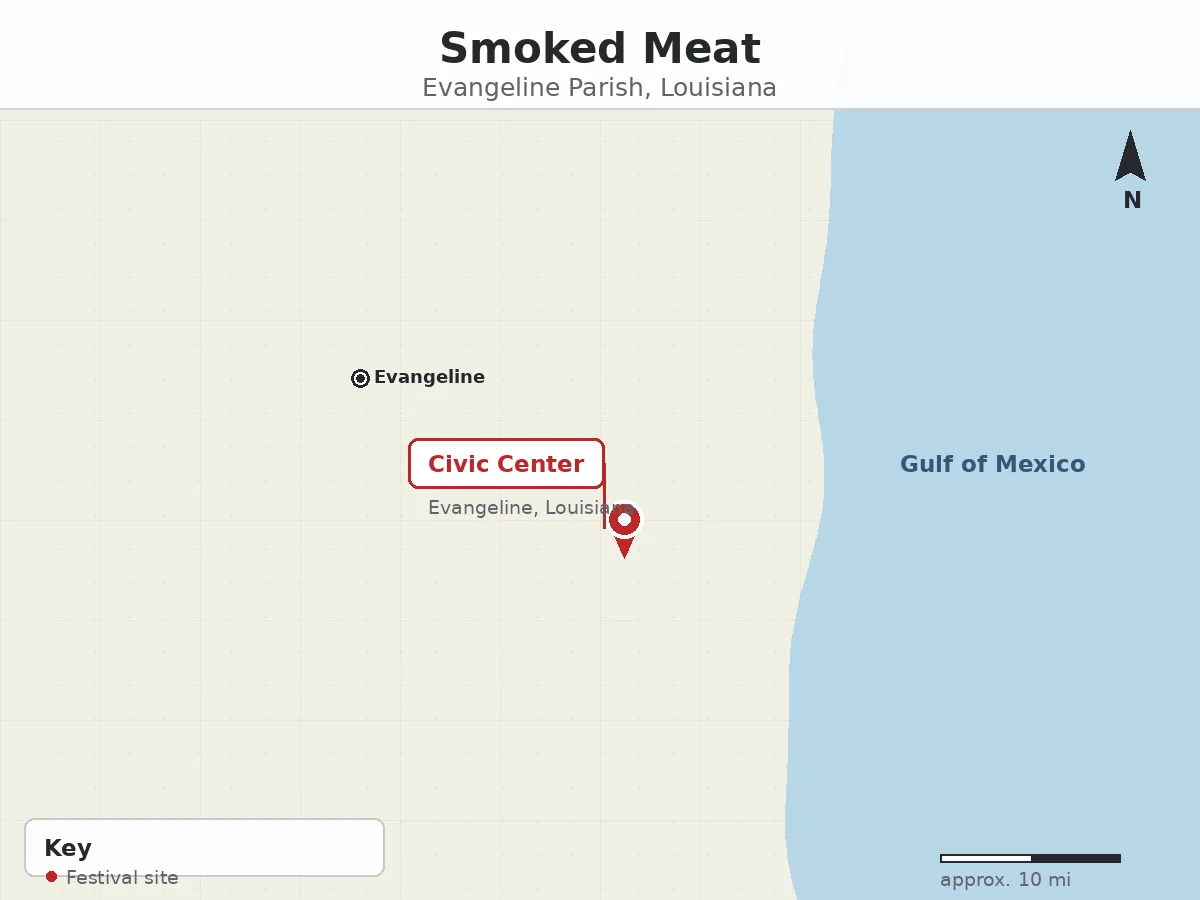
Ville Platte sits in the heart of Evangeline Parish in south-central Louisiana, and the festival’s late spring timing usually brings warm weather, so visitors should dress for heat and for an outdoor weekend. The Civic Center and Pavilion is the clearest landmark, and the 2019 edition used that site for the full programme. Earlier editions used festival grounds elsewhere in town, so confirm the current year’s site with the organisers before travelling. Admission is a question to settle before the trip, because the record does not carry a single price across the years. The 2019 edition charged five dollars, with identification required and no ice chests, outside beverages or pets allowed, but no other year’s gate price is documented, and this article takes no position on what admission costs in any other year. Cash and a card both help, since the markets and the vendors may take payment in different ways, and comfortable shoes matter most, since the day is spent on foot between the cookers and the stages. The festival’s calendar has moved between May and June, so the date is the detail most worth confirming. The twenty-sixth annual edition fell in May 2019, with the World Championship Smoked Meat Cook-off on the eighteenth of May, while an earlier edition fell on the last weekend in June and another on the twenty-seventh and twenty-eighth.
For a useful comparison, see the East Feliciana Parish Louisiana Pecan Ridge Bluegrass Festival for another county festival.
A Sample Itinerary
A good Saturday at the Louisiana Smoked Meat Festival starts with an early arrival, in time to catch the cook-off while the fires are still fresh and the smoke is at its thickest. Walk the rows of cookers first, while the cooks are tending their meat and happy to talk, and sample the sausage and tasso and the more unusual entries before the crowds thicken. Mid-morning suits a slow circuit of the meat markets and the business exhibits, where smoked-meat makers show off their goods and sell plates to take home. Lunch comes from the vendors, eaten outdoors where the music carries across the grounds. The afternoon is the time for the pageant and the market stalls, and for a second pass through the cook-off tents. The announcement of the cook-off winners is the moment to be near the main stage. As the afternoon turns to evening, the live music takes over, and visitors who stay get the fullest sense of the festival.
A Comparison
Ville Platte’s smoked meat festival belongs to a familiar Louisiana pattern, the single-food festival that turns a working local product into a weekend of music. Other parishes celebrate their own foods in the same spirit: a local organiser, a town-centre venue, a cook-off, vendors, and a stage. What sets the festival apart is the depth of the tradition behind it and the official recognition that tradition has earned. Few parish food festivals can point to a legislative designation of their town as the world capital of their food, and fewer still can trace their dish to a named cultural tradition that predates the festival itself by generations. The Louisiana Cotton Festival is held in the same town, and the Louisiana Swine Festival takes place in nearby Basile, but neither is the smoked meat festival, and the record keeps them firmly apart. The cotton festival celebrates a crop and the swine festival a different animal tradition, while the smoked meat festival celebrates a craft that turns meat of many kinds into a single shared product. The cook-off is the difference that matters most: a tasting festival lets visitors eat, but a championship lets them watch the craft being judged.

Checklist
- Confirm the festival dates and venue with the organisers before travelling, since the calendar has moved between May and June.
- Check the current admission arrangements, since only the 2019 price is documented.
- Bring identification, and leave ice chests, outside beverages and pets at home.
- Arrive early on Saturday to catch the cook-off while the fires are fresh.
- Carry both cash and a card for food and market stalls.
- Plan for warm late-spring weather.
- Stay for the afternoon announcement of the cook-off winners.
- Save time in the evening for the live music.
- Allow room in the car for smoked meats bought at the stalls.
- Remember that the Swine Festival in Basile and the Cotton Festival are different events.
Beyond the Festival
Ville Platte rewards visitors who look past the grounds. As the parish seat, it carries the parish’s shops and eating places and everyday services, and a festival weekend shows the town at its liveliest. The town’s place in the zydeco tradition is worth an afternoon of its own, since Ville Platte is described as a birthplace of the Afro-Creole zydeco tradition, and the festival music has its roots in the dance halls and house parties of the surrounding prairie. The countryside around Ville Platte is working farmland, and the festival’s smoked meats come from that landscape. Driving the parish roads in late spring puts the festival in its proper setting: the farms and small towns that supply the cook-off, and the kitchens where viande boucanee was a way of life long before it was a competition category.
Significance
The festival matters because it keeps a craft visible that could easily have faded into private kitchens. Smoking meat was once a necessity, a way to preserve pork and game through the warm months, and the Choctaw-Metis tradition carried that craft into the food culture of Evangeline Parish. A festival built around a championship cook-off gives that craft a public stage and a set of standards, and the two divisions keep the door open to both the home cook and the seasoned competitor. The result is a weekend that teaches as it feeds, showing visitors how a tradition is judged. The festival also matters to Ville Platte itself. The town’s designation as the Smoked Meat Capital of the World is official recognition, but a designation alone does not fill a festival grounds. The cook-off and the music and the pageant and the markets do that, and twenty-six annual editions by May 2019 show a community that has kept returning to the same idea year after year.
Frequently Asked Questions
What makes the cook-off the centrepiece of the festival?
The World Championship Smoked Meat Cook-off is the event the festival is built around, with amateur and professional divisions and entries spanning sausage, tasso, pounce, bouree, deer, pig, rabbit and alligator. The competition lets visitors watch the craft being judged, and the afternoon announcement of the winners is the moment the whole grounds gathers.
Why does the festival use a French name as well as an English one?
The French form, Le Festival de la Viande Boucanee, reflects the history of the food itself. Viande boucanee is the smoked meat of the Choctaw-Metis tradition, a craft that long predates the modern cooker. The English name is the form the layers read use most often, and the two names describe the same event.
Which other festival is most often confused with this one?
The Louisiana Cotton Festival is also held in Ville Platte, and the Louisiana Swine Festival takes place in nearby Basile, but neither is the smoked meat festival. The cotton festival celebrates a crop and the swine festival a different animal tradition, while the smoked meat festival celebrates the craft of smoking meat across many kinds of meat. Check the name and the dates before travelling.
What should a first-time visitor plan around?
The Ville Platte Civic Center and Pavilion hosted the twenty-sixth annual edition in May 2019, with the cook-off and the stages and the vendors all on the grounds, though earlier editions used grounds elsewhere in town. Arriving early on Saturday gives the best view of the cook-off, the afternoon brings the announcement of the winners, and the evening belongs to the live music. Confirm the current year’s venue and dates with the organisers.
What to Expect From the Next Evangeline Parish Louisiana Smoked Meat Festival
How often is Evangeline Parish Louisiana Smoked Meat Festival held?
The record shows annual billings, including the twenty-sixth annual edition in May 2019. The festival’s calendar has moved between May and June across the editions in the record, so the season is late spring to early summer rather than a single fixed weekend.
When is the next Evangeline Parish Louisiana Smoked Meat Festival?
The most recent edition documented here was the twenty-sixth annual festival in May 2019, with the World Championship Smoked Meat Cook-off on the eighteenth of May, and the record consulted for this article holds no word of a following edition. Visitors interested in a future edition should watch for announcements from Viande Boucanee, Inc.
Will the dates change?
Editions in the record sit in different months, with May holding the most recent documented gathering and June holding earlier ones. The twenty-sixth annual edition fell in May 2019, while an earlier edition fell on the last weekend in June and another on the twenty-seventh and twenty-eighth of June. That movement shows a festival whose season is late spring to early summer rather than a single fixed weekend, and any later edition could sit in either month.
The Louisiana Smoked Meat Festival comes back to the same idea every year: a town that smokes its meat with pride, a cook-off that judges the craft seriously, and a weekend of music and gathering. Traditions survive because people keep showing up to practise them, and in Evangeline Parish the practice smells of oak and hickory and lasts all weekend long.