Evangeline Parish Louisiana Cajun Music Festival
The dance floor at the Mamou Recreational Center fills early on a festival weekend, and it fills with people who learned the steps long before they learned to drive. Couples turn in time to the accordion, children weave between the dancers, and the fiddles carry the tune over the murmur of a room that knows every chorus. The Mamou Cajun Music Festival, the event filed under the sheet title above, has been bringing that room together for decades. The music here is the music of the parish itself, played by neighbours for neighbours, with visitors welcomed onto the floor. Mamou calls itself the Cajun Music Capital, and on a September weekend the claim is easy to believe.

About
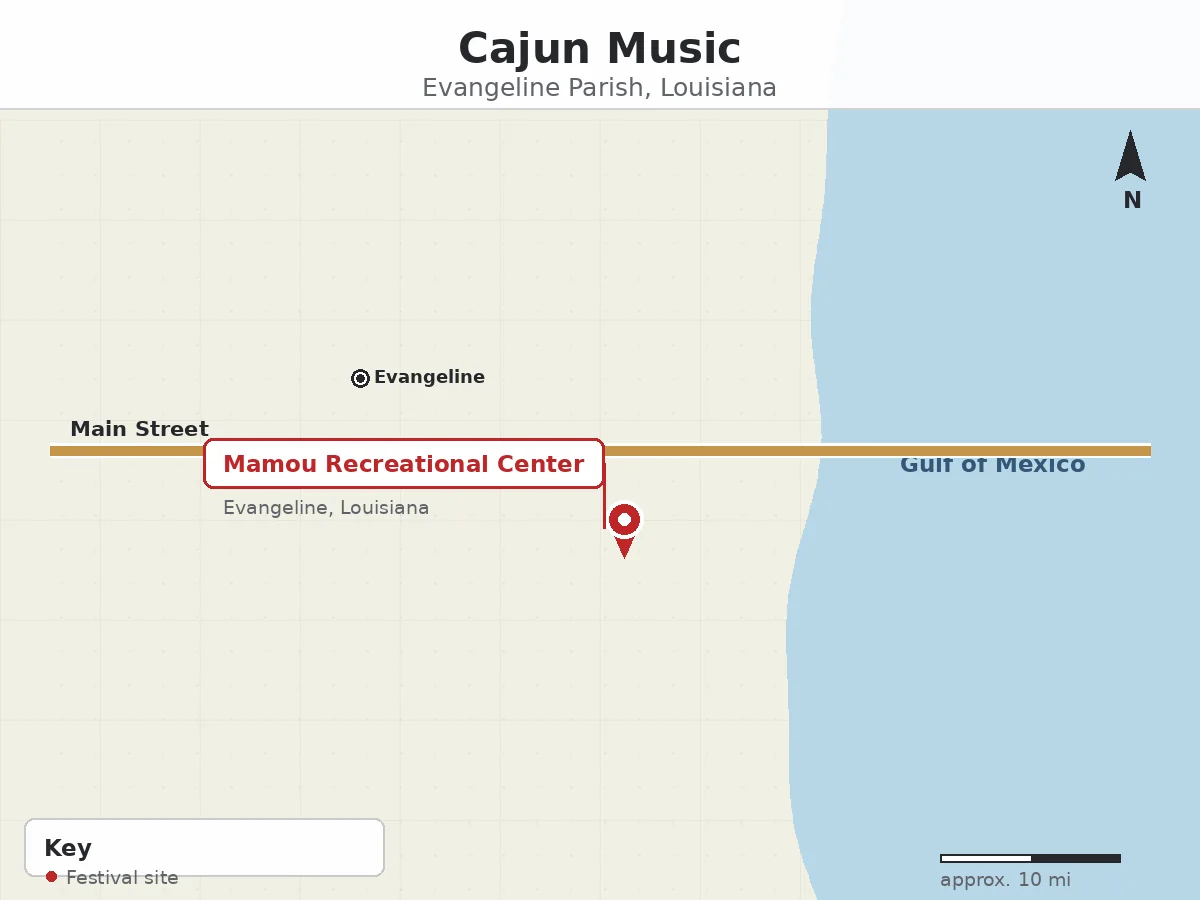
The Mamou Cajun Music Festival is a traditional Cajun music gathering held in Mamou, a small town in Evangeline Parish, Louisiana. Its published name is the Mamou Cajun Music Festival, and that is the name the record uses. The sheet title at the top of this article is the working title under which the event is filed, but the layers read print the event with the town name, so the body of this article uses the published name throughout. Mamou is not the parish seat. That distinction belongs to Ville Platte, the larger town to the south, while Mamou carries the musical reputation. The festival’s home is the Mamou Recreational Center, a complex on Main Street in Mamou that holds the dancing, the music, the food and the contests.
The organiser is the Mamou Cajun Music Festival organisation, a local body that has run the event for decades and gained non-profit status as a corporation on 11 February 1985. The festival’s purpose has stayed steady: it keeps Cajun music, dancing and food in front of the people who made them, gives younger players a stage beside older ones, and offers the town a weekend in which its culture is celebrated rather than explained. The 2026 edition honoured a highly celebrated, award-winning Cajun accordion player and singer.
Quick Facts
| Detail | Information |
| Published name | Mamou Cajun Music Festival |
| Host town | Mamou, Louisiana |
| Parish seat | Ville Platte, not Mamou |
| Venue | Mamou Recreational Center, Main Street |
| Organiser | Mamou Cajun Music Festival organisation |
| Non-profit status | 11 February 1985 |
| Latest edition | Fifty-third annual, 11–12 September 2026 |
| Admission | Ten dollars per day in 2025 layers |
| Music | Traditional Cajun, fiddle and accordion |
| Contests | Boudin-eating, arm wrestling and more |
History
The festival grew out of Mamou Cajun Day, a gathering of the early nineteen seventies that began when citizens of Mamou grew concerned that their culture was dying. The music, the language and the dances that had shaped the town were fading from daily life, and a group of townspeople decided to put them back in the middle of the town for a weekend. About twenty volunteers presented the first event, sponsored by the Mamou Area Jaycees, and the modest beginning carried a serious purpose. The gathering was not a show put on for outsiders. It was a town reminding itself of what it knew.
The group officially became the Mamou Cajun Music Festival in the early nineteen eighties, and it gained non-profit status as a corporation on 11 February 1985. The festival settled into the shape it still keeps: a weekend of music and dancing at the recreational center, with contests, a pageant, food and a crowd that spans the generations. The billings trace the run: the twenty-second annual edition fell on Friday and Saturday, the fourth and fifth of June 2004; the forty-fourth annual edition filled the fourth and fifth of September 2015 at the recreational center; the fifty-second annual edition came in September 2025; and the fifty-third annual edition ran on Friday and Saturday, the eleventh and twelfth of September 2026, with a published band schedule. The billings are recorded as printed, and this article draws no founding year from them.
For a useful comparison, see the Evangeline Parish Louisiana Smoked Meat Festival for another county festival.
The move from June to September across the documented editions is part of the story. The 2004 edition sat in early June, while the later editions gathered in September, and the festival’s recent rhythm belongs to the early autumn. Through those shifts the purpose never changed. Mamou had set out to keep its music alive, and the festival became the place where that work happened in public, year after year.
What to Expect
A visit to the Mamou Cajun Music Festival runs across two days at the recreational center, and the two days share a single character. Traditional Cajun music leads everything. Fiddles and accordions trade the melody, dancers fill the floor, and the room keeps a pace that suits every dancer. The programme also carries Cajun food, a pageant, and a run of contests that give the weekend its humour: boudin-eating, arm wrestling, beer drinking, nail driving, passe-partout sawing and the potato dance. The contests are part of the gathering’s texture, the moments when the crowd gathers around a table or a stage and cheers for a neighbour.
Visitors should expect a community-scale event rather than a sprawling fairground. The recreational center keeps everything within easy walking distance, and the pace suits families who want to listen, dance, eat and watch the contests without rushing. The music is the centre of the weekend, and the dancing is open to anyone willing to step onto the floor. The 2026 edition carried a published band schedule, and that year’s honoree was a highly celebrated, award-winning Cajun accordion player and singer. One events-guide layer wrongly places the festival in Saint Landry Parish; Mamou sits in Evangeline Parish, and the organiser’s own layers say so.
Planning Your Visit
Mamou sits in Evangeline Parish in south-central Louisiana, and the festival’s September timing usually brings warm early-autumn weather, though visitors should check conditions nearer the date and dress for a weekend that moves between an indoor hall and open grounds. The recreational center is a clear landmark and a practical base for the day. Arriving early on either day gives the best view of the floor before the dancing peaks, while the later hours suit visitors who want the music at its fullest.
Admission needs a careful note, because the layers read do not speak with one voice. Ten dollars per day is the figure in a regional magazine layer for the 2025 edition and in the organiser’s 2025 brochure layer, and this article fences that figure to those years. One events-guide layer prints “Admission is free” without a year, and this article records that line as printed in that layer, without treating it as the gate price. Visitors should confirm the current admission with the organisers before travelling. Comfortable shoes matter most, since the day is spent on foot between the dance floor, the food stalls and the contest areas, and dancers will want shoes that turn easily.
A Sample Itinerary
A good Friday at the Mamou Cajun Music Festival starts with an early arrival at the recreational center, in time for the first set. Listen to the opening music, watch the dancers settle into their rhythm, and take a slow circuit of the grounds to see the food stalls and the contest areas. Midday suits a plate of Cajun food eaten where the music carries across the room, and the afternoon suits the contests, with the boudin-eating and the arm wrestling drawing the liveliest crowds.
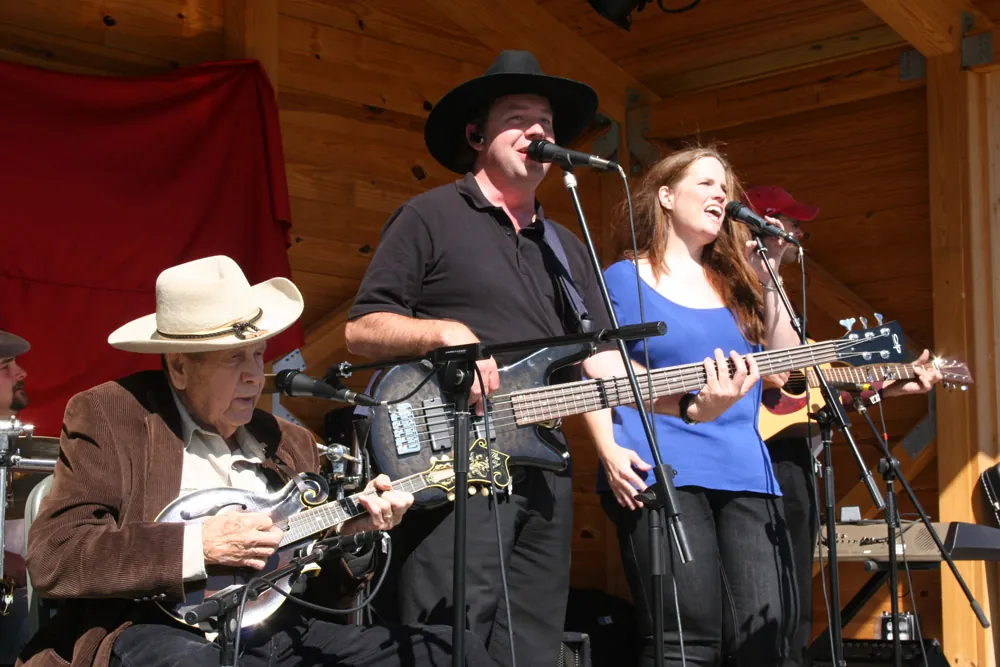
Saturday repeats the pattern with a fuller room. Arrive in time for the morning music, stay for the pageant, and spend the afternoon moving between the fiddle and accordion performances and the contests, including the nail driving, the passe-partout sawing and the potato dance. As the afternoon turns to evening, the crowd gathers again for the closing sets, with the dancing at its best. Visitors who come for one day only will still catch the heart of the festival, but the two-day shape rewards those who stay for both.
A Comparison
Mamou’s Cajun music festival belongs to a familiar Louisiana pattern, the town gathering that turns a local tradition into a weekend of music, food and dancing. Other parishes celebrate their own music in the same spirit: a local organisation, a town-centre venue, a dance floor, vendors and a stage. What sets the Mamou event apart is the depth of its roots in a single worry. The festival began because townspeople feared their culture was dying, and it has kept that rescue purpose at its centre ever since.
Mamou’s gathering is a town festival, not a regional fair, and its charm lies in that modesty. The recreational center holds the whole event within a short walk, the organisation is made of local volunteers, and the performers include community players alongside the celebrated names. Visitors looking for a vast midway or a multi-stage music festival will find a quieter weekend here. The festival honours a living culture at a scale where the community itself remains visible.
Checklist
- Confirm the festival dates and the current admission with the organisers before travelling, since the layers read give different figures.
- Arrive early on either day for the best view of the dance floor.
- Bring comfortable shoes that turn easily for dancing.
- Carry both cash and a card for food, vendors and contest entries.
- Plan for warm September weather and dress in layers for indoor and outdoor spaces.
- Keep younger children in view around the contest areas and the dance floor.
- Stay for the closing sets on Saturday evening.
- Remember that the parish seat is Ville Platte, a short drive south.
- Allow time to listen to both the fiddle and the accordion performances.
- Note the honoree’s performance.
Beyond the Festival
Mamou rewards visitors who look past the recreational center. As the town that bills itself as the Cajun Music Capital, it carries the parish’s musical life in its streets, its eating places and its everyday gatherings, and a festival weekend is a good moment to see the town at its liveliest. The parish seat at Ville Platte, a short drive south, offers a busier contrast, with its own civic centre and the Smoked Meat Festival that shares the parish calendar. The countryside around Mamou is working farmland and prairie, and driving the parish roads in September puts the festival in its proper setting.
Visitors with more time can explore the wider region of south-central Louisiana, where small towns each carry their own festivals and their own musical traditions. The Mamou festival fits naturally into such a trip, offering a weekend rooted in one place and one sound rather than a generic fairground experience. The gathering’s long run shows that the town still values what it set out to protect.
Significance
The Mamou Cajun Music Festival matters because it shows how a community can answer a fear with a party. The festival’s beginning, in the early nineteen seventies, came from a plain worry that Cajun culture was dying in the town that loved it best. About twenty volunteers, backed by the Mamou Area Jaycees, put the music and the dancing back in the middle of town, and the gathering that followed became the place where the culture was practised rather than mourned. Traditions do not survive on their own. They survive because people decide, again and again, that they are worth the work.
The festival also matters because it keeps the music in the hands of the people who play it. The dance floor is open, the contests are for neighbours, and each year’s honoree is a musician the community already knows. Cajun music is not an abstract symbol here. It is a sound that fills kitchens, halls and porches across the parish, and a festival that honours the music honours the life behind it.
Frequently Asked Questions
Why does Mamou call itself the Cajun Music Capital?
Mamou carries the billing in an events-guide layer, and the festival is the clearest reason for it. The town built a gathering around Cajun music when its people feared the culture was fading, and the festival has kept that music at the centre of town life for decades. The title is a boast, but the weekend backs it up.
What do the festival contests actually involve?
The contests mix food, strength and skill: boudin-eating, arm wrestling, beer drinking, nail driving, passe-partout sawing and the potato dance. They run beside the music rather than apart from it, and they draw the liveliest crowds of the weekend. Visitors can watch or join in where the rules allow, and the humour of the contests is part of what makes the gathering feel like a town party.
How should a visitor read the different admission figures in the record?
Ten dollars per day is the figure in a regional magazine layer for the 2025 edition and in the organiser’s 2025 brochure layer, so this article fences it to those years. One events-guide layer prints “Admission is free” without a year, and this article records that line as printed in that layer rather than treating it as the gate price. Confirm the current admission with the organisers before travelling.
What makes the September timing matter for a first visit?
The documented editions moved from June in 2004 to September in 2015, 2025 and 2026, and the festival’s recent rhythm belongs to the early autumn. A September visit brings warm weather, a full two-day programme and the year’s honoree on stage, with the dancing at its best in the evening. Arriving early gives the best view of the floor before the room fills.
What to Expect From the Next Evangeline Parish Louisiana Cajun Music Festival
How often is Evangeline Parish Louisiana Cajun Music Festival held?
The billings in the record run year by year across the documented editions, from the twenty-second annual edition in 2004 through the fifty-third annual edition in 2026, with the forty-fourth annual edition in 2015 and the fifty-second annual edition in 2025 in between. That run shows a gathering that returns each year.
When is the next Evangeline Parish Louisiana Cajun Music Festival?
The most recent edition documented here was held on Friday and Saturday, the eleventh and twelfth of September 2026, at the Mamou Recreational Center, with a published band schedule. No date past that edition appears in the material read, so a traveller interested in a future edition should watch for the organiser’s own announcement.
Will the dates change?
The month itself has shifted once in the record. The 2004 edition sat in early June, while the 2015, 2025 and 2026 editions gathered in September. The recent pattern is September, and the 2026 edition fell on the eleventh and twelfth of that month, but any later edition could sit on a different September weekend. The two-day shape has stayed constant, even when the exact days have moved.
The Mamou Cajun Music Festival began with a worry and answered it with a weekend, and the town has been keeping that answer ever since. A dance floor, a fiddle, an accordion and a room full of neighbours fill the recreational center, and the music that once seemed to be fading carries the weekend instead. Traditions that survive do so because the people who love them decide to play them aloud.