Erie County New York Fair Festival
Two warnings belong at the front of any guide to this fair. First, it does not take place in Buffalo, even though Buffalo is the county seat and the city its coverage is filed under; the fair left Buffalo in 1868 and has been held in Hamburg ever since. Second, it is not the only Erie County Fair running in August — Pennsylvania has one at Wattsburg and Ohio has one at Sandusky, both entirely separate events. The fair described here is New York’s: twelve mid-August days on a 275-acre fairgrounds in Hamburg, run by a private agricultural society.
About a Private Society’s Fair
The Erie County Fair is produced by the Erie County Agricultural Society, a private not-for-profit membership corporation that calls itself the oldest civic organisation in Western New York. It is not a county-government event: the Society states plainly that it receives no funding from New York State or from the County of Erie, and its mission is connecting communities through agriculture, education and entertainment. Cornell Cooperative Extension of Erie County works around the fair on 4-H and youth livestock machinery, but as a programme partner only — the Society alone produces the fair.
The scale is the honest first impression. The Fairgrounds cover 275 acres with 112 permanent buildings and parking for 15,000 vehicles. For 2026 the Society billed the event as its 186th edition and ran it under the theme Stars, Stripes and Summer Nights. Its own 2026 figures counted nearly 1,500 animals, more than 9,800 competitive exhibits, over 117 demonstrations and 282 hours of live music.
Quick Facts
| Item | Detail |
| Event | Erie County Fair |
| Fairgrounds | The Fairgrounds, 5600 McKinley Parkway, Hamburg, New York |
| Fair town | Hamburg, about twelve miles south of the county seat |
| County seat | Buffalo, which does not host the fair |
| Organiser | Erie County Agricultural Society, a private not-for-profit membership corporation |
| 2026 run | Wednesday August 12 to Sunday August 23, billed as the 186th fair |
| Daily hours | Gates and buildings 11:00 a.m. to 10:00 p.m.; midway noon to 11:00 p.m. |
| Admission, 2026 | Fifteen dollars in advance, nineteen dollars during the fair, children twelve and under free with an adult |
| Parking | Free in Fairgrounds lots |
| Camping | Participants’ recreational vehicle lot only; no public campground |
A Society Older Than the County It Serves
The Society’s own history begins in 1819, when it was established as the Niagara County Horticultural Society; it held its first fair in 1820 in Buffalo, and when Niagara County divided in 1821 the society divided with it. That first effort faded. The Society’s account says it was reborn in 1841 and has held an annual fair every year since, with two exceptions: 1943, lost to the Second World War, and 2020, lost to the pandemic. Those dates — a society established in 1819, a first fair in 1820 and an unbroken run from 1841 — are separate claims, never to be compressed into one founding year.
Through the 1850s and 1860s the fair rotated among Aurora, Lancaster, East Hamburg in what is now Orchard Park, West Seneca and Springville. In 1868 the Society moved it to Hamburg — by one vote, the fair’s own blog recounts — and it has never left; the Society bought the land in 1880 and 1881 at one hundred dollars an acre, and a twelve-acre site grew into today’s 275 acres. The Octagon Building of 1885 remains the oldest structure on the grounds. Its standing claims are carried as its billing: largest county fair in the country for the first time in 1970 with 600,960 attending, currently the nation’s third largest, and a paid attendance record of 1,238,456 set in 2019.
For a useful comparison, see the Dutchess County New York Fair Festival for another county festival.
What to Expect
A Midway That Arrives by Train
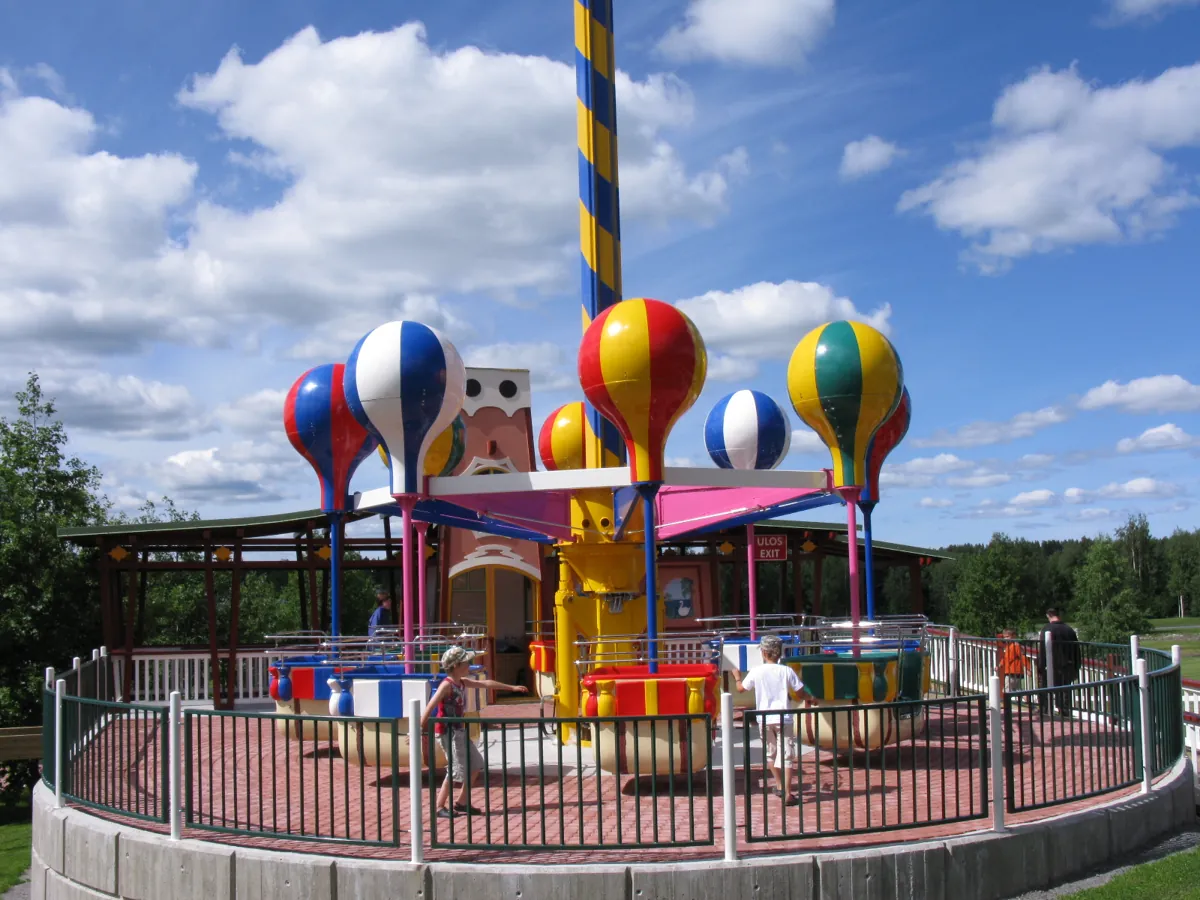
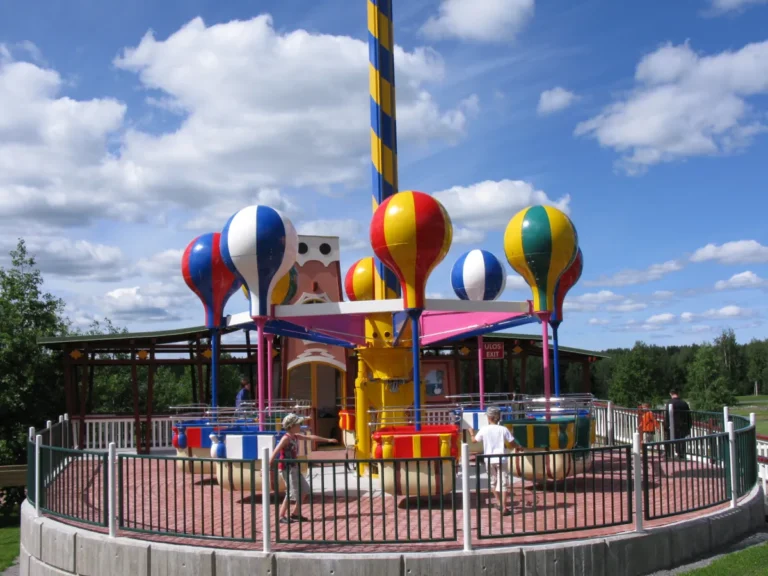
The James E. Strates Shows midway is the fair’s mechanical heart, with approximately seventy rides and one hundred games. Strates has played this fair since 1924 — billed by the fair as the longest continuous run of any carnival midway in the United States — and still arrives by railroad. Ride money is separate from the gate, so budget the two as different purchases unless a ride offer says otherwise.
Barns, Exhibits and a Ward for Newborn Calves
The agricultural core matches the midway in size: livestock barns, competitive departments absorbing thousands of exhibits, and the Agriculture Discovery Center anchoring the educational side. Its best-known room is the Moo-ternity Ward, where calves are born during the fair; new in 2026 was a digital calf-naming kiosk there, backed by text alerts when a birth is under way.
Twelve Nights at the Grandstand
The grandstand mixed two kinds of nights in 2026. Included with gate admission were Marshall Charloff and the Purple Xperience tribute on Wednesday August 12, the Marshall Tucker Band on Thursday August 13, That Arena Rock Show on Monday August 17 and Gary Lewis and The Playboys on Thursday August 20. Separately ticketed were the Happy Together Tour, Joe Nichols with Phil Vassar and Mark Wills, Max McNown with Waylon Wyatt, a combined Blues Traveler, Gin Blossoms and Spin Doctors night, and Jeff Foxworthy. The closing weekend turned mechanical: Monster Truck Smash on Friday August 21, the Ultimate Night of Destruction on Saturday August 22 and a two-show Demolition Derby on Sunday August 23. Advance grandstand tickets include admission on the show day.
Free Entertainment Around the Grounds
Admission also carried a daily grounds programme in 2026: the Sea Lion Splash, the Xtreme Strongman Show, Fritzy Brothers’ One Man Circus and the Strolling Boombox, all included with the gate. A UH-60 Black Hawk stood on display in the Military Corridor near Gate 4, the Erie County Fair Pepsi All-Star Band held an alumni performance on the Avenue of Flags on Saturday August 15, and stages at Slade Park and along the Avenue of Flags anchored smaller shows.
Planning Your Visit
Buying the Gate at Its Lowest
The fair deliberately lowered its prices for 2026 and published the ladder clearly. Adults aged thirteen and over paid fifteen dollars in the advance window, online only from July 7 to August 7, and nineteen dollars from August 8 through the fair. A new early bird price charged sixteen dollars for tickets bought and redeemed at the gate between 11:00 a.m. and 1:00 p.m. Children twelve and under entered free, provided an adult of twenty-one or older accompanied them. A Society membership at one hundred dollars bundles a twelve-day pass, an annual-meeting vote, a Winter Ball ticket and early grandstand access; group rates step down on advance orders of twenty-five tickets or more. No 2025 dollar ladder was published in the fair’s own materials — only percentage comparisons — so earlier prices cannot honestly be reconstructed.
The Calendar of Free and Discount Days
Choosing your day is the biggest saving available. Opening Day, Wednesday August 12, gave free admission for a donation of four or more canned food items per person, benefiting FeedMore WNY. Firefighters Day on Friday August 14 admitted firefighters and auxiliary members free with identification, plus a ten-dollar voucher for food, drink or rides; Veterans Day on Sunday August 16 did the same for veterans, active military and auxiliary members. Senior Discount Day on Tuesday August 18 charged twelve dollars at sixty-two and over, gate purchase only, and Double The Fun Day on August 19 sold two tickets for thirty dollars. August 13 was also Sensory Day, with lights, music and announcements minimised until 2:00 p.m. Ride deals ran alongside: every Strates ride cost two dollars that Thursday, a Sunday matinee wristband cost thirty dollars from noon to 5:00 p.m. on August 16 and 23, advance weekday wristbands cost thirty-five dollars, and a shareable 120-credit card cost fifty dollars.
Gates, Cards and Coolers
Two practical rules catch visitors out. The gates accept only credit and debit cards — no cash sales — though reverse cash machines at Gates 1 and 4 convert cash to a card on site. Parking is free in Fairgrounds lots, with Lot 4, off South Park, and Lot 5, off Clark Street, named as the best accessible options.
A Sample Saturday in Hamburg
Start at the 11:00 a.m. opening and walk the livestock barns while the aisles are quiet. Give the late morning to the Agriculture Discovery Center and the Moo-ternity Ward. Catch an included grounds show at midday, then let the midway take the early afternoon, when lines run shorter. Circle back through the exhibit buildings, take an early supper, and settle in good time for the grandstand show. Finish with a walk down the lit midway before its 11:00 p.m. close.
Sleeping Over Belongs to Participants
There is no public campground at this fair and no tent or tourist camping in its materials. What exists is a participants’ recreational vehicle lot under a strict rulebook in the fair’s 2026 manual: spaces prepaid before arrival, a fifteen-day permit window running August 10 to August 24, 2026, ten feet between units, no open flames, a five-mile-per-hour limit and quiet hours from 11:00 p.m. to 7:00 a.m. The manual publishes rules but no rate, so no 2026 permit price can honestly be quoted. Livestock exhibitors stay under separate department rules, only while their animals are on the grounds. Other visitors should book lodging in Hamburg or Buffalo.
One Name, Three Erie County Fairs
The namesakes are this fair’s standing hazard. The Erie County Fair at Wattsburg, in Erie County, Pennsylvania, runs its own season at its own grounds under its own society; the Erie County Fair at Sandusky, in Erie County, Ohio, occupies the same August weeks under its own published terms. Neither event’s dates, prices or programme belong to Hamburg, and the New York State Fair at Syracuse — opening days after Hamburg closes — shares nothing with it either. This fair’s reliable identifiers are the town, the parkway address and the Society’s name; any fact arriving without them deserves a second check.
A Checklist for Fair Week
- Buy adult tickets inside the advance window if your dates are fixed; it is online only.
- Pick your day against the discount calendar before paying full price.
- Bring a payment card, because the gates take no cash at all.
- Keep children twelve and under beside an adult over twenty-one, as free entry requires.
- Treat rides as a separate budget, and hunt the two-dollar day or a Sunday matinee wristband.
- Book a hotel rather than expecting a campsite; the vehicle lot is for participants.
- Check any fact that names Wattsburg, Sandusky or Buffalo as the location before trusting it.
Beyond the Fairgrounds
The grounds work all year. Buffalo Raceway and the Hamburg Gaming operation sit on the Fairgrounds as co-tenants, and the Event Center and show spaces host rentals across the calendar — all the grounds’ separate life, none of it fair programme, and the raceway’s presence is no promise of harness racing during fair week. Hamburg itself repays a wander, and Buffalo’s museums and waterfront wait twelve miles north for a quieter day mid-trip.
Why This Fair Matters to Its Region
A twelve-day fair of this size is Western New York’s annual meeting place. For farm families it is the year’s biggest showroom, where a season of feeding and fitting is judged in public and young exhibitors learn their craft before large crowds. For the Society it is the working expression of an organisation that predates the county itself, still membership-run and self-funded after two centuries. For everyone else it is a fixed fortnight when city and countryside share the same grounds and grandstand — a civic arrangement rarer than it sounds.
Frequently Asked Questions
Is the Erie County Fair actually held in Buffalo?
No. Buffalo is the county seat and hosted the earliest editions, up to 1851, but the fair moved to Hamburg in 1868 and has remained there ever since. The grounds are The Fairgrounds at 5600 McKinley Parkway in Hamburg, twelve miles south of Buffalo; listings placing the modern fair in Buffalo are filing it under the media market, not the map.
What did admission cost in 2026, and was anything free?
Adults paid fifteen dollars in advance or nineteen dollars during the fair, with a sixteen-dollar early bird price before 1:00 p.m.; children twelve and under were free when accompanied by an adult of twenty-one or older, and parking was free. The fair also stacked free and discount days through the run — canned-food entry on opening day, free entry for firefighters and veterans on their named days, a senior day and a two-for-thirty day. Rides were never part of the gate.
Is camping open to ordinary visitors at this fair?
Only participants camp here. The fair runs a prepaid recreational vehicle lot for people involved in the fair, under rules covering separation, flames, speed and quiet hours, and its 2026 manual prints no price for a permit. Livestock exhibitors stay under their own department rules while their animals are on the grounds. Everyone else should plan the fair as a day trip from lodging.
How is this fair different from the other Erie County Fairs?
Wattsburg’s fair in Pennsylvania and Sandusky’s fair in Ohio are genuine events carrying the same name, run by different societies in different states in the same season. Their dates, gates and grounds have nothing to do with Hamburg. The New York fair is identified by its Hamburg grounds, its Agricultural Society and its twelve-day August run; a price or date that cannot be tied to those belongs to one of the others.
What to Expect From the Next Erie County New York Fair Festival
How often is the Erie County New York Fair Festival held?
One edition is staged each year. The Society has produced the fair annually since 1841 with only two missed years — 1943 and 2020 — and the modern event runs twelve days each August, from a Wednesday to the following Sunday.
When is the next Erie County New York Fair Festival?
The fair publishes future dates years ahead, and its announced billing for the next edition is Wednesday August 11 to Sunday August 22, 2027, again at The Fairgrounds in Hamburg. Hours, prices and programme are set fresh for each edition, so confirm those on the fair’s pages as the season approaches.
Will the dates change?
The shape is among the steadiest in New York’s fair calendar: twelve days from a Wednesday in mid-August, with future spans published several years out and the 2027 billing following the same pattern. The exact start date drifts by a day or two as the calendar turns, and weather can rearrange a single day, but the season and structure have held for generations.
What lasts after the midway lights go down is the habit of return: exhibitors measuring a year against one August week, families bringing children to grounds their grandparents showed them, and a society older than its county still opening the same Hamburg gates. Buy the gate early, and give the barns as much time as the rides — that balance is what this fair has offered, in the same place, since 1868.



One Comment