Leavenworth County Kansas Buffalo Bill Wild West and Military History Festival
Downtown Leavenworth handed its main street to a blend of frontier pageantry and present day soldiering on the last Saturday of June in two thousand twenty six, when the Buffalo Bill Wild West and Military History Festival filled the blocks around Cherokee Street. The name alone carries the whole idea. Half of it reaches back to the travelling Wild West shows that once made Buffalo Bill a household figure, and half of it belongs to the working Army town that Leavenworth remains. A vintage warbird crossed over the rooftops at noon, uniformed dog teams worked in view of the crowd, and riders from the post hunt stood staged among the displays. For a city that has grown up in the shadow of a major Army post, the pairing feels less strange than it might sound on paper. What follows sets out what the published record genuinely documents: one richly described edition, the society behind it, and the gaps that surround it.
About the Festival
The published record carries the festival under two name forms, and this article keeps them apart rather than blending them. An Army news layer, reporting the Fort Leavenworth post newspaper’s account of the day, spells the name out in full as the Buffalo Bill Wild West and Military History Festival, and the organiser’s own festival page, linked from that account, uses the same spelled out form. The county visitors guidebook prints the name with an ampersand instead, as the Buffalo Bill Wild West & Military History Festival. Neither layer adds the county prefix the sheet title carries, and no other variant appears in the material read.
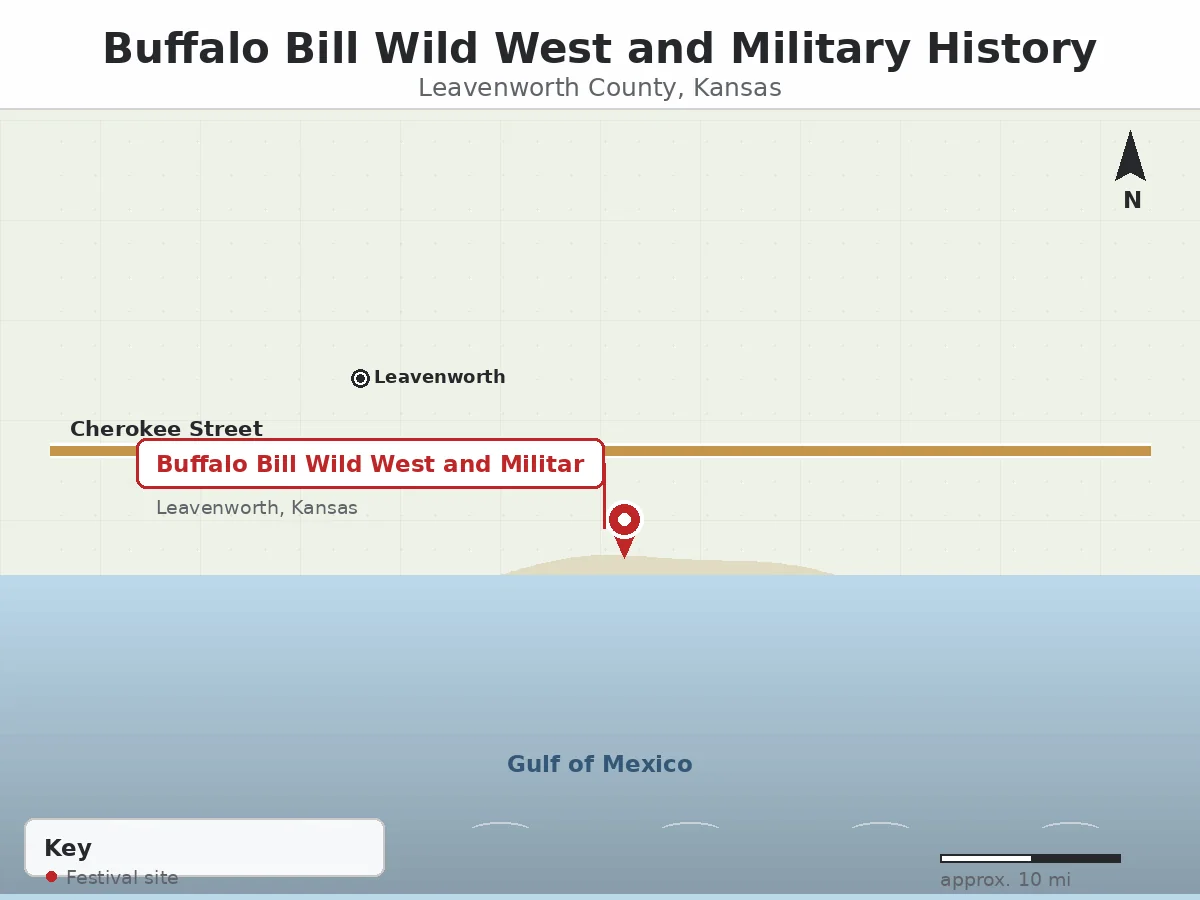
Leavenworth is the county seat of Leavenworth County, and the festival belongs to the city rather than to the neighbouring post. Its ground is downtown, spread over Cherokee Street and the surrounding area. The Leavenworth County Historical Society stands behind the event: the Army account names two co-organizers, identifies one as being of the society, and sends readers to the society’s site for festival information. Only one edition appears anywhere in the record, the gathering held on Saturday the twenty seventh of June in two thousand twenty six, so everything described here is fenced to that single day and to the layers that covered it.
Quick Facts
| Item | Detail |
| Published name, spelled out | Buffalo Bill Wild West and Military History Festival |
| Guidebook name form | Buffalo Bill Wild West & Military History Festival |
| Host city | Leavenworth |
| County seat status | Leavenworth is the seat of Leavenworth County |
| Setting | Downtown streets over Cherokee Street |
| Documented edition | Saturday the twenty seventh of June, two thousand twenty six |
| Organiser identified | Leavenworth County Historical Society |
| Signature moment | A World War II Boeing Stearman flyover at noon |
| Military participation | Fort Leavenworth elements across two days |
| Admission terms | None stated in any layer read |
History
This festival arrives in the record without a past. None of the layers read offers a founding year, a numbered billing, or any account of earlier gatherings under this name, and this article will not manufacture one. The guidebook folds the day into its listing of the city’s June events, the festival guide layer gives the same June date, and the Army news layer, published on the twelfth of June in two thousand twenty six, previews the occasion a fortnight ahead.
What can honestly be said is narrower and still interesting. The Buffalo Bill half of the name is a theme the organisers printed into the title itself, a nod toward the Wild West show tradition, rather than a documented link between the historical showman and this Kansas street. The military half needs no such caution, because the participation described below came from a real post with real units. Readers should treat the twenty twenty six gathering as the first documented edition in the layers read, not as proof that nothing happened before it, and not as the start of a counted series. Where a festival’s paperwork begins is often later than the festival itself, and here the paperwork is all anyone has.
For a useful comparison, see the Leavenworth County Kansas Independence Days Festival for another county festival.
What to Expect
The documented programme reads like two festivals sharing one street, and the Army layer is the source for nearly all of it. The set piece came at noon on the Saturday, when a World War II Boeing Stearman biplane, flown in from Sherman Army Airfield at Fort Leavenworth, made several passes over Cherokee Street above the crowd. Around that aerial moment, the post’s contribution filled the ground across two days, the Friday and the Saturday, even though the guidebook frames the festival itself as a single day. Both spans stand in the record side by side, unmerged, and visitors should notice which framing a given account uses.
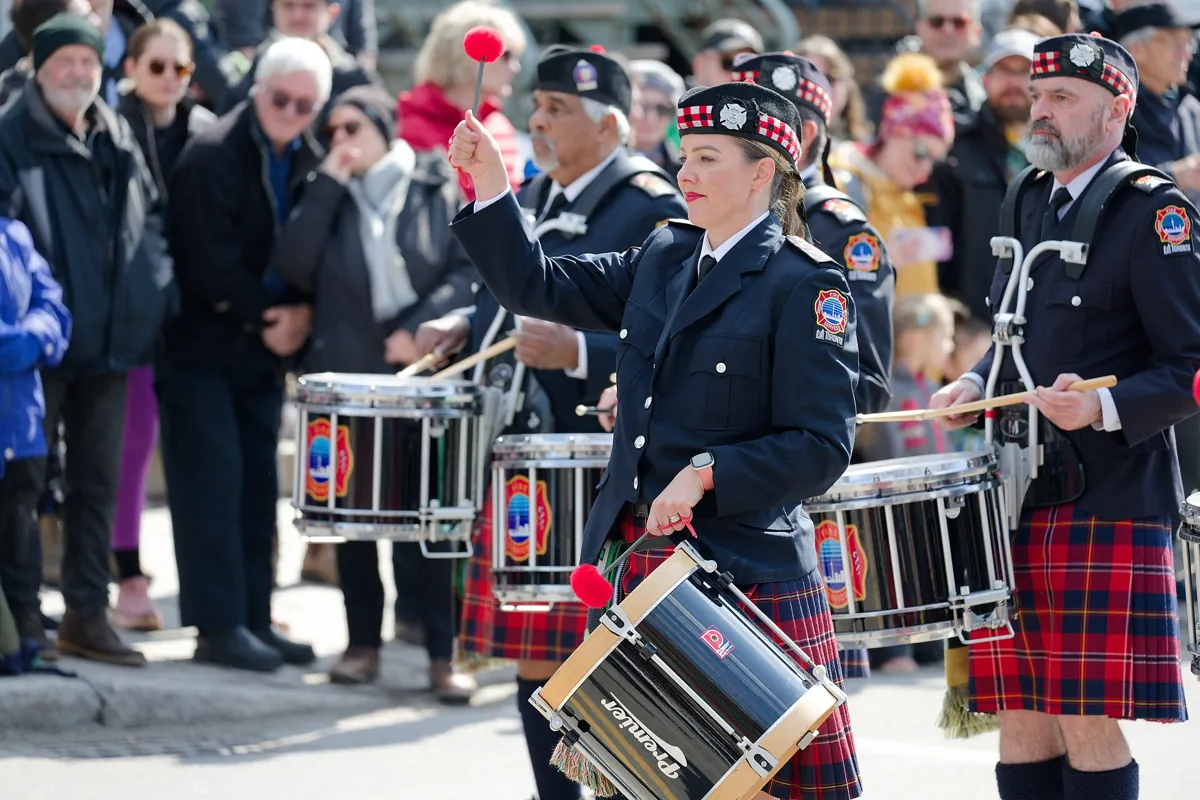
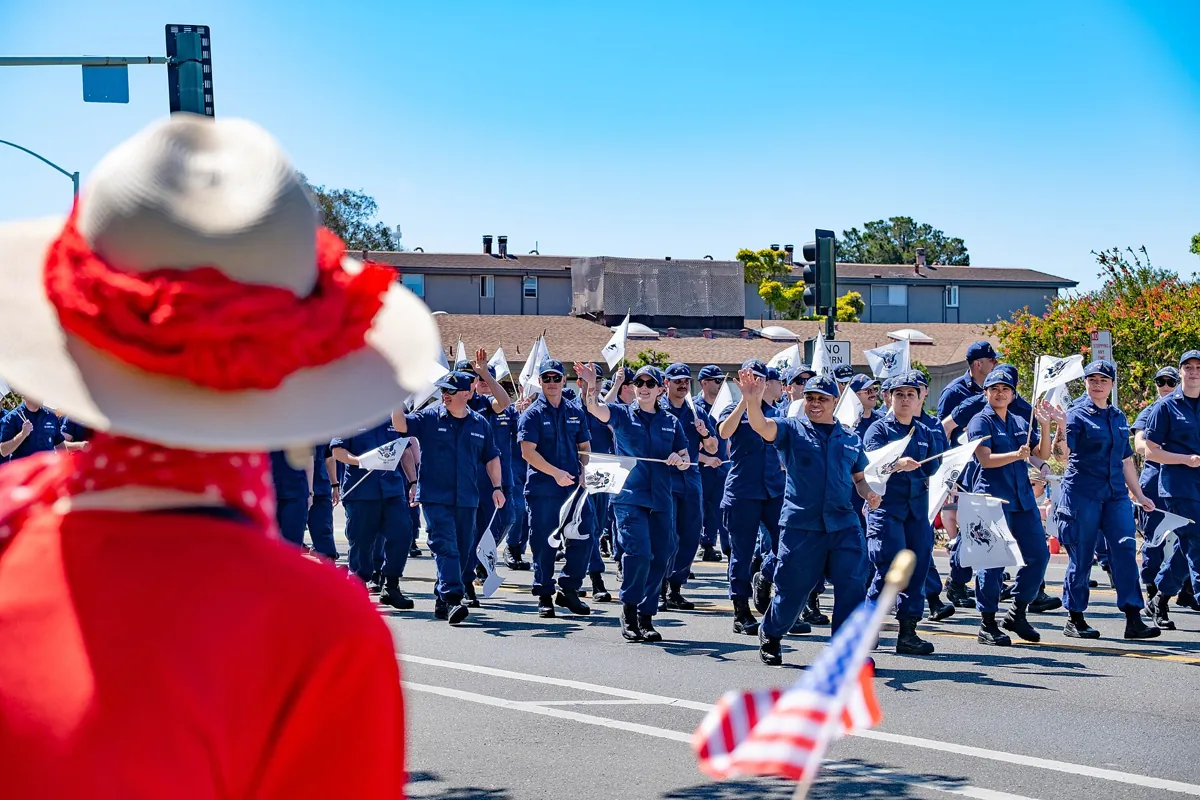
On the pavement, military working dog teams gave demonstrations, a high school Junior ROTC colour guard and rifle team performed, and riders with the Fort Leavenworth Hunt were staged within the festival area. The 35th Infantry Division Band played a concert, and military vehicles stood on display for close inspection. Taken together, the elements lean far more toward a living military exhibition than toward a Wild West reenactment: apart from the hunt riders and the name overhead, the documented content is the modern Army showing its working life to the town outside its gates. Anyone picturing trick roping or a frontier battle should recalibrate, because no layer read describes anything of that kind taking place on Cherokee Street.
Planning Your Visit
The one firm anchor for planning is the date the record gives: Saturday the twenty seventh of June in downtown Leavenworth. Because the Army account describes post participation beginning on the Friday, a visitor who can spare two days in the city covers both framings of the event, while a visitor with only the Saturday still catches the flyover, which the record fixes at noon. Arriving downtown before midday is the obvious way to hold a good spot along Cherokee Street for the passes overhead.
Practical detail beyond that is thin, and honesty requires saying so. The layers read carry no admission terms in either direction, no parking guidance, and no schedule of hours for the festival day itself, so none of that is guessed at here. The Army account points readers to the Leavenworth County Historical Society’s own site for festival information, which makes the society the natural first port of call before travelling. The county visitors guidebook prints a telephone number on its events pages, and that number exists for readers of the guidebook even though it is not reproduced here. Treat this section as a frame, not a timetable: date, street, noon flyover, and the society to confirm the rest.
A Sample Day at the Festival
A morning arrival downtown gives time to walk the festival ground along Cherokee Street before the crowds thicken, taking in the military vehicles on display while there is still room to circle them. Late morning suits the working dog demonstrations and a first look at the hunt riders staged in the festival area, with the Junior ROTC colour guard and rifle team slotted into the same unhurried circuit.
Midday belongs to the sky. Hold a place with a clear view upward before noon, because the Boeing Stearman makes its several passes over Cherokee Street on the stroke of the hour, and the moment is the one fixed point in the documented day. The afternoon can then carry the 35th Infantry Division Band concert and a second, slower pass through the displays, catching details missed in the morning. Anyone staying across both days can shift some of the ground programme to the Friday, when the post’s participation was already under way, and keep the Saturday for the flyover and the fullest crowds.
How It Compares
Comparison clarifies what this festival is by separating it from two neighbours it is easily confused with. The first is the Army post itself. Fort Leavenworth runs its own events on its own ground, and those belong to the fort; the participation described here counts as part of the downtown festival precisely because the Army’s own account presents it that way, as soldiers and post organisations coming into the city rather than the city being invited onto the post. The direction of travel matters, and it runs from the gates toward Cherokee Street.
The second confusion lies farther away. Other places stage their own Buffalo Bill events, Cody in Wyoming among them, and those are different towns’ celebrations with their own records; nothing from them is borrowed here, and nothing from Leavenworth’s day should be credited to them. Set against an ordinary county festival, meanwhile, this one is unusual in leaning on a neighbouring military installation for the bulk of its programme, and in having a county historical society, rather than a fair board or a chamber, identified at its head. Its single documented edition also makes it far less charted than the long running annuals elsewhere in this series.
A Checklist for the Day
- Reach downtown Leavenworth early enough to walk Cherokee Street before the noon flyover
- Pick a viewing spot with open sky well before the Stearman is due overhead
- Carry water and sun protection suited to a late June day in Kansas
- Give the working dog demonstrations room to work when the teams come through
- Save time after the flyover for the band concert and the vehicle displays
- Check the historical society’s own site before travelling for any late changes
- Keep the Friday in mind, since post participation began a day earlier
- Photograph the hunt riders and the colour guard from a respectful distance
- Leave the street ends clear where vehicles and animals need to move
- Treat admission or parking details found elsewhere as unconfirmed until the society states them
Beyond the Festival
A trip built around the festival can stretch naturally into the rest of what the record shows nearby. The flyover’s departure point, Sherman Army Airfield at Fort Leavenworth, is a reminder that the post beside the city is a working installation with its own calendar, kept separate from the festival in these pages but worth a traveller’s awareness when moving around the area. The county visitors guidebook that lists the festival among the city’s June events is itself a useful companion, since its pages gather the season’s other offerings too.
The historical society behind the festival is the other thread worth following. An organisation that co-organizes a street festival with an Army post is plainly active in the county’s public life beyond a single June Saturday, and its own site, the destination the Army account recommends, is the sensible place to learn what else it presents through the year. Nothing more specific is claimed here, because the layers read document the society’s festival role and no more.
Why the Festival Matters
A county historical society exists to keep a place’s past in front of its people, and this festival is that mission performed outdoors. The name summons the Wild West shows that once toured the country from the plains outward, while the programme grounds the day in the military institution that has shaped Leavenworth’s life for generations. Putting the two on one street lets a single event speak to both halves of the county’s identity, the frontier inheritance and the garrison present, without needing to pretend that either half is a costume.
There is also a quieter significance in who showed up. Working dog teams, school cadets, hunt riders and an Army band are not hired entertainment; they are the post and the town presenting themselves to each other in public, on civilian ground, at a society’s invitation. For a first documented edition, that breadth of participation suggests the festival drew on deep local relationships from the start. Whether a second edition follows is something only the society can say.
Frequently Asked Questions
Which of the two printed name forms is the right one?
Both forms stand in the record without reconciliation. The Army news layer and the organiser’s own festival page spell the name out as the Buffalo Bill Wild West and Military History Festival, while the county visitors guidebook prints Buffalo Bill Wild West & Military History Festival with an ampersand. This article uses each form where its own layer is being described.
What actually flew over Cherokee Street, and when?
A World War II Boeing Stearman, staged from Sherman Army Airfield at Fort Leavenworth, made several passes over Cherokee Street at noon on Saturday the twenty seventh of June in two thousand twenty six. That timing comes from the Army news layer, which documented the edition in the greatest depth of any source read.
Was the festival a one day or a two day event?
The record gives both framings and settles neither. The county visitors guidebook presents a single festival day on the twenty seventh of June, while the Army account describes Fort Leavenworth participation running across the twenty sixth and the twenty seventh. The downtown festival day is the Saturday; the post’s involvement began the day before.
Who organised the festival?
The Leavenworth County Historical Society is the organiser the record identifies. The Army layer names two co-organizers, describes one as being of the society, and directs readers to the society’s own site for festival information. The individual names printed there are left in that layer rather than carried into this article.
What to Expect From the Next Leavenworth County Kansas Buffalo Bill Wild West and Military History Festival
How often is Leavenworth County Kansas Buffalo Bill Wild West and Military History Festival held?
Only one edition appears in the layers read, the gathering of June two thousand twenty six, and no layer states a cycle or a promise of repetition. Until the historical society publishes a pattern, the honest answer is that the frequency is undocumented rather than established.
When is the next Leavenworth County Kansas Buffalo Bill Wild West and Military History Festival?
The layers read carry no announcement of a further edition, and no date for one should be assumed from the twenty twenty six gathering alone. The society’s own site is where the Army account sends readers, and it remains the place where any future date would surface first.
Will the dates change?
With a single documented edition fixed to the last Saturday of June in two thousand twenty six, there is no established date to change from. Any future edition would take whatever date its organisers set, and readers should treat the June timing as a description of one year rather than a rule.
Closing
The Buffalo Bill Wild West and Military History Festival enters this series as a single, vividly documented day: a biplane over Cherokee Street at noon, dog teams and cadets on the pavement, hunt riders staged among Army vehicles, and a county historical society holding it all together. The record around that day is thin, and this article has kept it that way on purpose, separating the fort’s own affairs from the city’s festival, leaving the two printed name forms unmerged, and declining to invent a founding that no layer supplies. What the record does support is worth having exactly as it stands.