Champaign County Illinois Audiofeed Music Festival
Urbana’s summer calendar has a fixture that was born out of another festival’s ending. The event published as Audiofeed Festival — printed on its own site’s footer as AudioFeed Festival, and in news and press layers as Audiofeed Music Festival — has spent every documented edition of its life on one ground: the Champaign County Fairgrounds in Urbana, the seat of Champaign County. It gathers in the part of the year that runs into the Fourth of July, filling the fairgrounds with stages, bands and a community its own mission line describes in nine words. What it has never done, in any layer read, is play anywhere else: the town sometimes attached to its origin story, Bushnell, belongs to the predecessor that inspired it, not to Audiofeed itself.
About Audiofeed
Audiofeed is a multi-day music festival produced through its own site and staged at the Champaign County Fairgrounds, whose address form on the organiser’s pages carries North Coler Avenue without the article needing a number. The name appears in three printed forms across the layers — Audiofeed Festival on the organiser’s pages, AudioFeed Festival in that same site’s footer, and Audiofeed Music Festival in news and press coverage — and all three name the same event, so they are recorded here side by side rather than settled into one. The festival’s stated mission, printed in its own layer, is “Cultivating a cross-ideology community around Jesus and music,” and that sentence explains the shape of the gathering better than any genre label: the programming is music first, but the community around it is the point the organisers keep returning to. Urbana is not incidental to that design. The fairgrounds sit in the county seat, and the festival has treated them as a permanent home rather than a stop on a circuit. The record the festival leaves is largely its own — organiser pages, press releases and local coverage gathered around them — which is why its claims are labelled throughout this article by the layer that carries them, and why a figure printed by the organiser is never quietly promoted into an independently established fact.
Quick Facts
| Item | Record |
| Published name | Audiofeed Festival; also printed as AudioFeed Festival and Audiofeed Music Festival |
| Host community | Urbana, the seat of Champaign County |
| Grounds | Champaign County Fairgrounds, reached by North Coler Avenue |
| First edition | Two thousand and thirteen, assembled within three months of planning |
| Founder | Jim Eisenmenger |
| Usual place in the year | The week and weekend leading into the Fourth of July |
| Billing carried in 2022 | Ninth annual, as that year’s press release printed it |
| Stages named for 2022 | Five, including the Radon and Black Sheep main stages |
| Tickets | Sold through the festival’s own site; no organiser-published price was captured in the layers read |
| Attendance | No figure is published in any layer read |
History
The founding is told in two layers that agree with each other. Founder Jim Eisenmenger recounts that after Cornerstone announced its 2012 festival would be its last, a handful of longtime Cornerstone attendees pulled together the first Audiofeed in 2013 with only three months of planning. The organiser’s own site tells the same beginning from its side: “Since our founding in 2013, we’ve hosted over 1000 bands” — over one thousand bands, a cumulative programme count the organiser claims for its whole history, and a figure about programming rather than about crowds. Press and founder layers bill Audiofeed the “spiritual successor” to Cornerstone, and that phrase is a billing, recorded here as a billing: it describes inheritance of spirit, not a transfer of site, dates or scale. Cornerstone was held at Bushnell, Illinois, a different town in a different county, and none of its history belongs to this festival beyond the inspiration its attendees carried away.
The fairgrounds tenure began immediately. A blog layer from 2014 already describes that year as the “second year at the Champaign County Fairgrounds,” and the layers for 2018 and for every year from 2022 through 2026 place the festival on the same ground. No layer read moves Audiofeed itself to another town at any point. The only move in the record is a date move that never reached a stage: the 2021 edition was pushed in planning from early July to September, then cancelled outright during the Delta surge, and the 2020 edition had already been cancelled in the pandemic — both cancellations as the founder states them. The 2022 edition carried a “9th Annual” billing in its press release, printed here as a billing and never converted into anything else. After that 2022 edition, the founding leadership team stepped down and a new team took over for 2023, a handover the festival’s own announcement layer records as stated, distinct from the founding record rather than a continuation of it.
The editions since the handover give the recent record its shape: 1 to 4 July 2023, 4 to 7 July 2024, 3 to 6 July 2025 and 2 to 5 July 2026, every one of them placed at the Urbana fairgrounds by the news and listing layers. For 2026, a music-press layer expected about ninety to one hundred artists — a programme expectation printed ahead of that edition, and once again a number describing the bill rather than the crowd the bill might draw.
For a useful comparison, see the Champaign County Illinois CU Pride Fest Festival for another county festival.
What to Expect
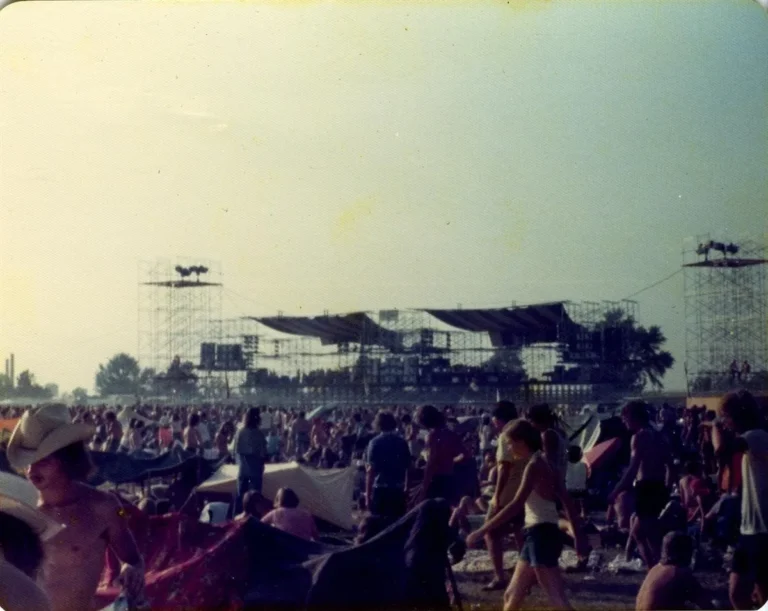
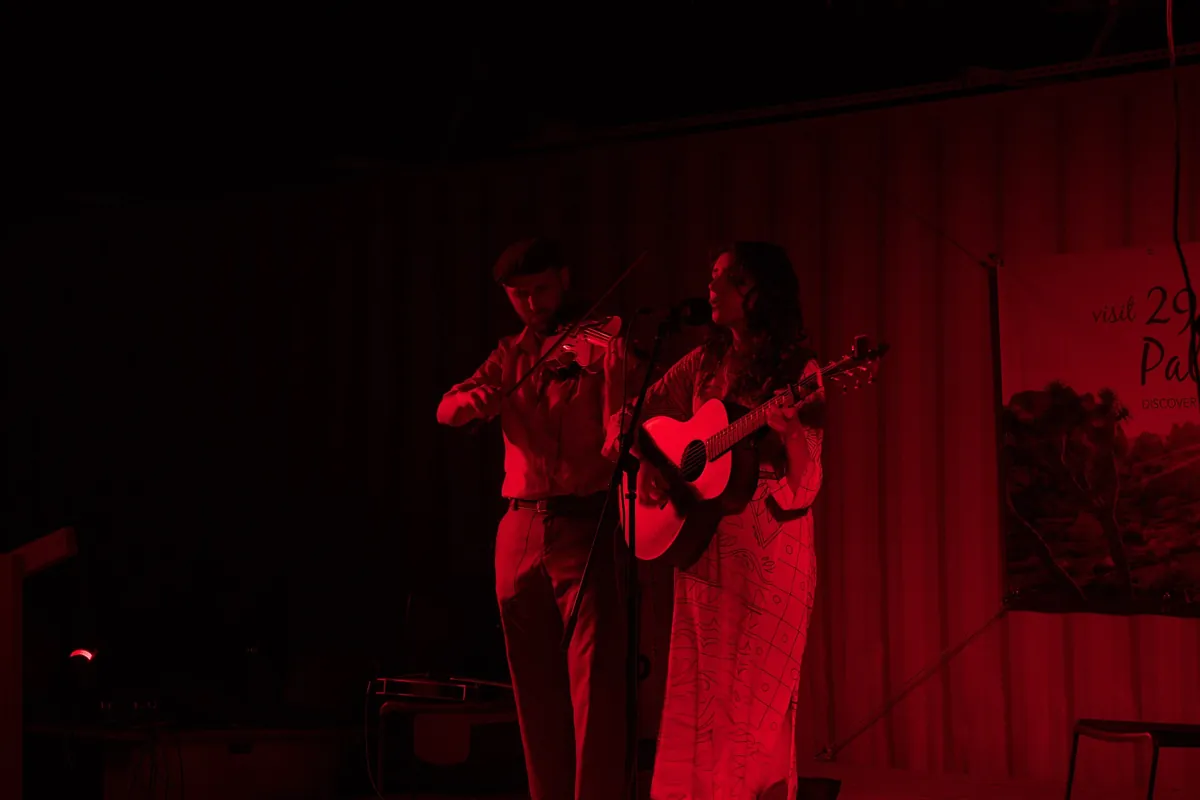
A documented Audiofeed edition is a fairgrounds full of simultaneous music. The fullest stage picture in the record comes from 2022, when about seventy-five acts played across five stages: the Radon and Black Sheep main stages, the Sanctuary Stage, the Burningtown Stage and the Front Porch, with the main stage having moved outdoors that year. The 2018 edition, running 5 to 7 July with early access on 4 July, carried about one hundred forty bands. Those counts describe programming, and the record is careful — as this article is — never to read them as crowd sizes. Around the stages, the mission’s wording does real work: the gathering is built as a cross-ideology community around Jesus and music, so the fairgrounds hold a meeting place as much as a concert ground, with days structured around sets running from late morning into the night across the several stages. Early access and early entry days appear in the documented editions, stretching the weekend at both ends for those who come for the whole run. The week itself leans toward the holiday: because the run typically occupies the week and weekend leading into the Fourth of July, the closing sets land on the edge of the national celebration, and the gathering takes on the character of that week — long light, high summer, and a programme paced like a countdown.
Planning Your Visit
The fairgrounds are the whole geography of this festival: every documented edition sits at the Champaign County Fairgrounds in Urbana, reached by North Coler Avenue, and no second site, satellite stage ground or alternate town enters the record. Tickets are sold through the festival’s own site — that much the organiser layer states plainly. What the layers read do not contain is an organiser-published price: no ticket figure from the festival itself was captured, so none is printed here, and any price a visitor needs has to come from the festival’s own current pages rather than from this article. Editions typically run over the week and weekend leading into the Fourth of July, which places the festival in high summer on open fairground ground; the documented editions run three or four days, with early entry or early access on the day before the main run in both 2018 and 2022. Because two editions in the record were cancelled and one was moved in planning before its cancellation, the dates of a coming edition are worth confirming against the organiser’s current page, which already looks ahead to 2027 dates at Urbana. The documented editions also share a shape worth planning around: a run of three or four days on one ground, so a visitor’s whole festival unfolds inside a single site, and the five stages named in the 2022 record show how much of each day can be spent moving between simultaneous sets rather than travelling anywhere at all.
A Sample Itinerary From the 2022 Edition
The 2022 edition, framed here exactly as its press layer documents it, shows the festival’s working shape. Early entry fell on 30 June, ahead of the main run from 1 to 3 July. A first day built on that shape starts at the main stages — the Radon and the Black Sheep — where the headline weight of the roughly seventy-five acts sat, with the main stage newly outdoors that year. Midday belongs to the smaller rooms of the ground: the Sanctuary Stage and the Burningtown Stage, whose names alone mark the spread of the programming, and the Front Porch, the fifth named stage, suits the unhurried middle of the day. The second day repeats the circuit with a different slice of the bill, since five stages running in parallel mean no two visitors hear the same festival. The final day, 3 July, closes the run before the Fourth of July holiday the whole week had been leaning toward. This itinerary is a reconstruction from one documented edition, not a promise about any other year’s layout.
Audiofeed and Cornerstone
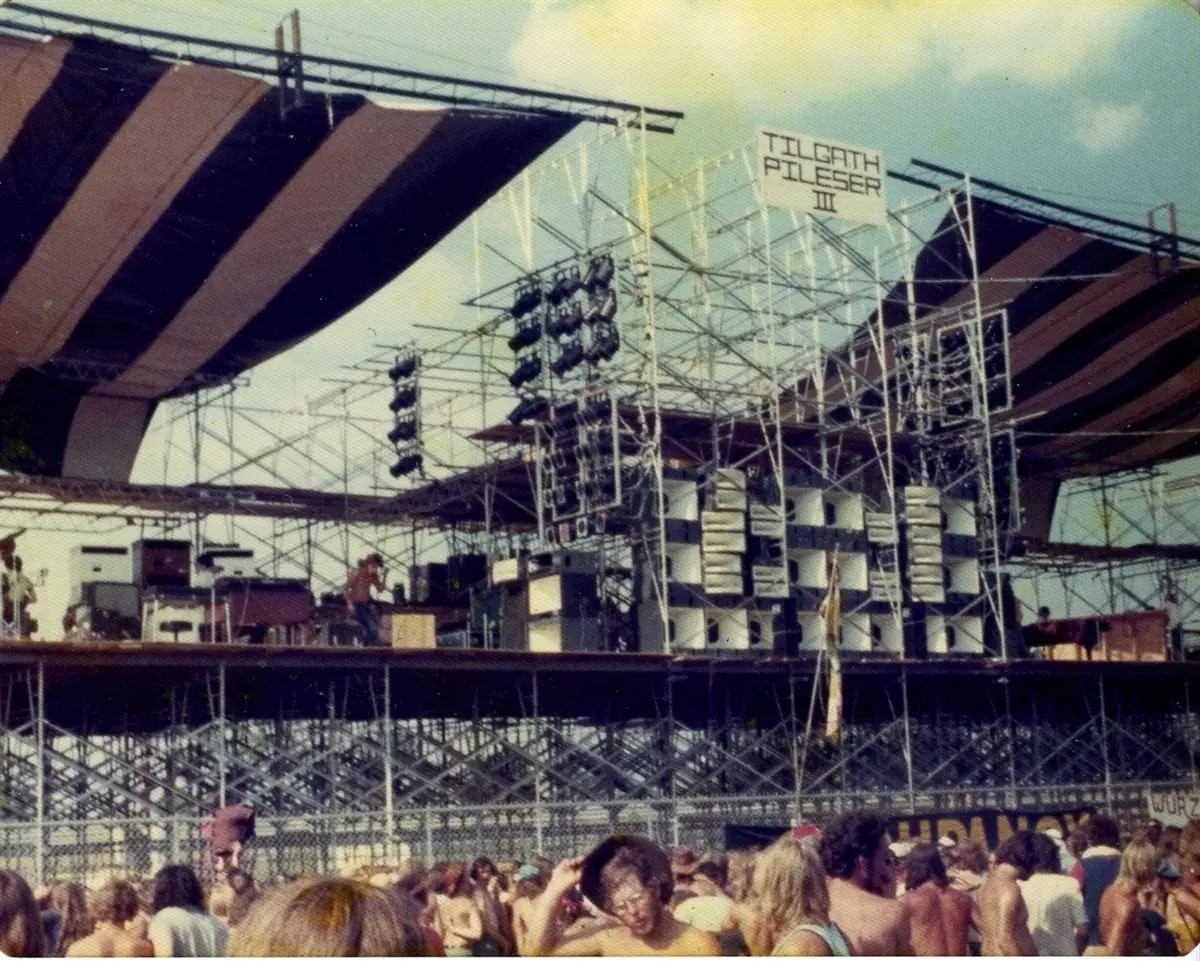
The comparison this festival invites is with its own predecessor, and the record keeps the two firmly apart. Cornerstone was held at Bushnell, in a different county; Audiofeed has only ever been documented at the Champaign County Fairgrounds in Urbana. Cornerstone’s ending was announced for 2012; Audiofeed’s beginning came in 2013, raised in three months by a handful of Cornerstone’s longtime attendees. The press billing of “spiritual successor” captures the relationship honestly — a community and a musical outlook carried forward — while the facts underneath it describe a new event: a different town, a different ground, a different organisation, and a history that starts with its own first edition rather than borrowing its predecessor’s years. Anything belonging to Cornerstone — its dates, its site, its scale — stays with Cornerstone.
Checklist
- Confirm the coming edition’s dates on the festival’s own site, since the record includes cancellations and one planning-stage date move.
- Buy tickets through the festival’s own site, the only sales route the organiser layer names.
- Note that no organiser-published ticket price appears in the layers read, so check the current figure at the source.
- Plan around five named stages if a coming edition follows the documented 2022 layout.
- Allow for early entry or early access, which both the 2018 and 2022 editions offered before the main run.
- Treat band and act counts as programme size, never as an indication of crowd size.
- Keep the fairgrounds in Urbana as the destination; Bushnell belongs to the predecessor’s history, not to this festival.
Beyond the Fairgrounds
The brief record around the festival is mostly the festival’s own layers, and what lies beyond them is context rather than programme: Urbana itself, the county seat, hosting its fairgrounds event in the week the whole county turns toward the Fourth of July. The organiser’s current page already looks ahead to 2027 dates at Urbana, which is the strongest statement the record makes about the festival’s future address — the same ground, in the same town, in the same part of the summer. The Cornerstone story reaches beyond the fairgrounds in another direction, toward Bushnell, but that is a road into the festival’s past, and this article walks it only to mark where the predecessor’s record ends and Audiofeed’s begins.
Why This Festival Matters
Audiofeed’s significance sits in the speed and stubbornness of its making. A festival that learned its predecessor would end in 2012 was itself standing on a fairground by 2013, built in three months by attendees who refused to let the community dissolve. It then stayed put: one ground, one town, one stretch of the summer, through a pandemic that cost it two editions and a leadership change that replaced its founding team after 2022 — and it was still publishing editions through 2026, with the organiser looking ahead to 2027. The organiser’s claim of over one thousand bands hosted since the founding is, whatever else it is, a measure of how much programming that stubbornness has carried. Few festivals document so clearly the difference between inheriting a spirit and inheriting a site, and Audiofeed’s record — every edition in Urbana, none anywhere else — is the proof of its own billing done properly.
Frequently Asked Questions
Who started Audiofeed, and what prompted it?
Founder Jim Eisenmenger recounts that a handful of longtime Cornerstone attendees pulled together the first Audiofeed in 2013, with only three months of planning, after Cornerstone announced its 2012 festival would be its last.
Has Audiofeed ever been staged anywhere besides Urbana?
No layer read places it anywhere else. Every documented edition sits at the Champaign County Fairgrounds in Urbana; Bushnell was Cornerstone’s town, not Audiofeed’s.
Why did the festival miss 2020 and 2021?
The founder states that the 2020 edition was cancelled in the pandemic, and that the 2021 edition, first pushed from early July to September in planning, was cancelled outright during the Delta surge.
Where can ticket prices be checked?
Tickets are sold through the festival’s own site, but no organiser-published price was captured in the layers read, so the current figure has to be taken from that site directly.
What to Expect From the Next Champaign County Illinois Audiofeed Music Festival
How often is Champaign County Illinois Audiofeed Music Festival held?
Its documented editions gather in the week and weekend leading into the Fourth of July, a rhythm the record shows in 2018 and again across 2022 to 2026, interrupted only by the two pandemic-era cancellations.
When is the next Champaign County Illinois Audiofeed Music Festival?
The 2026 edition runs 2 to 5 July at the Urbana fairgrounds, and the organiser’s current page already looks ahead to 2027 dates at Urbana, in the same early-July position the festival typically holds.
Will the dates change?
They have before, in planning at least: the 2021 edition was moved from early July to September before being cancelled, so the early-July pattern is the festival’s habit rather than a guarantee, and the organiser’s page is the place to confirm.
Closing Note
Audiofeed began as an answer to an ending, and its record since — one fairground, one county seat, a community reassembled every early July — reads as the answer holding. The layers leave honest gaps, above all the ticket price no organiser page in the record states, and this article has left those gaps open rather than filling them. What is documented is enough: a festival built in three months in 2013 that is still, thirteen summers on, exactly where it started. That consistency — of place, of season, and of a purpose the organisers state in a single mission line — is what the next edition will be measured against when those 2027 dates at Urbana arrive.