Banks County Georgia Homer Labor Day Festival
Labor Day in Banks County tends to look the same way it has for generations: lawn chairs unfolded in the shade, a cooler sweating beside a truck tailgate, and somebody’s grandmother holding down the same corner she claims every single year. The Banks County Georgia Homer Labor Day Festival is the reason all of that converges on Homer, the county seat, over the long weekend that closes out summer.
Banks County counted 18,035 residents at the 2020 census, spread across 234 square miles of northeast Georgia. On Labor Day weekend, a healthy slice of that population — plus the ones who moved away and drove back — ends up in downtown Homer, where the festival turns a quiet county seat into the busiest few blocks in the county.
Homer Labor Day Weekend: The Basics in One Table
| Town | Homer, Georgia |
| County | Banks County (county seat: Homer) |
| County population | 18,035 (2020 census) |
| Region | Northeast Georgia |
| Land area | 234 square miles |
| Typical timing | Labor Day weekend, generally Saturday through Monday |
| Admission | Typically free to walk the grounds; vendors sell food and goods |
| Setting | Downtown Homer, around the courthouse square |
| Signature features | Food booths, craft and community vendors, live local music, family activities |
| Organizer | Volunteer community organizers and local civic groups |
What the Homer Labor Day Festival Is, in Plain Terms
Every small-town festival claims to be for everybody. Homer’s version actually behaves that way. The event unfolds in the heart of downtown Homer, the seat of Banks County, and it runs on the rhythms of a place where most people know the person handing them a plate of barbecue and the person standing behind them in line.
“We come for the food and stay until somebody makes us leave,” one longtime Homer resident put it — and that is not far off how the weekend works. Families arrive early, claim a stretch of shade, and treat the festival as a rolling reunion rather than a scheduled event. High school classes find each other. Church congregations set up together. Grandparents point out where a store used to be.
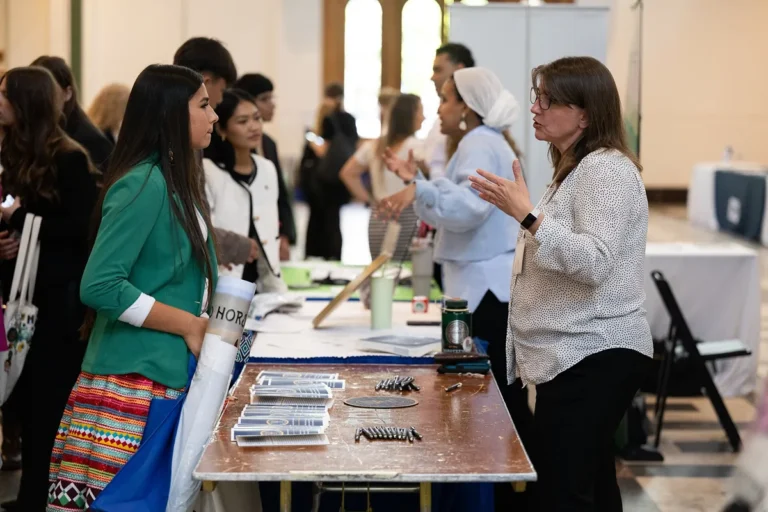
The format is familiar to anyone who has spent time in rural northeast Georgia: vendors along the street, community and church organizations selling plates and baked goods, a sound system carrying live music and announcements across the square, and kids running between the booths while their parents catch up with someone they have not seen since this time last year. Admission is typically free — you pay for what you eat and what you carry home.
What makes it distinct is the scale. Banks County is not a big place, and Homer is not a big town, so the festival feels less like an attraction and more like the county briefly occupying its own front yard. People who left for jobs in Atlanta, Athens, or Gainesville use Labor Day as the excuse to come back, and the crowd reflects that mix: locals, returnees, and a growing number of visitors from outside the county who heard about the food.
How Labor Day Took Hold in Homer and Banks County
Labor Day was created to honor working people, and in rural Georgia counties it has always carried a second job: homecoming. In places like Homer, the first Monday in September traditionally marked the last long breath before the school year settled in and harvest work picked up, which made it a natural moment to gather.
The holiday’s early observances in small county seats were modest affairs — church dinners, a few speeches, ballgames in an open field, families visiting from out of town. Over the decades, that informal pattern hardened into something more organized in Homer. Booths appeared. Someone brought a trailer and a sound system. Civic groups realized that a festival could raise money and raise spirits at the same time.
The county’s geography helped. Homer sits along the US-441 corridor in the middle of Banks County, with the I-85 commercial strip clipping the western edge of the county. As that corridor grew, so did the number of people who could reach Homer in a short drive — and the festival picked up visitors who had no family connection to the county at all, just a taste for a Saturday that felt like something.
Ask around and you will hear the same story in different versions: the year the rain held off, the year the line for barbecue wrapped past the bank, the year a band from a neighboring town played so long nobody wanted to go home. Nobody in Homer seems to agree on the exact details, and that is part of the charm. The festival has never been a corporate production with a press kit. It has been a habit — a thing the county does because the county has always done it.
What has changed is who shows up. Older residents describe a time when the crowd was almost entirely local. Now there are license plates from Hall, Jackson, Habersham, and beyond, and vendors who plan their late-summer circuit around Homer. The festival grew without ever being redesigned, which is exactly what people here say they like about it.
A Homer Labor Day Saturday, Hour by Hour
If you want to understand the festival, do not read a schedule. Watch what the people who live here do. Their habits tell you everything about how the day is meant to go.
Food Booths and Church-Stand Cooking in Downtown Homer
“You eat your way through it,” a Banks County school employee laughed when asked how she spends the day. “That’s the whole plan.” Food is the engine of the festival. Expect the Southern festival canon — smoked and grilled meats, plates loaded with sides, fried things, homemade desserts, and sweet tea in quantities that would alarm a nutritionist. Church groups and civic organizations often run stands, which means the cooking carries a reputation with it: nobody wants to be the group whose banana pudding is remembered for the wrong reason.
Locals tend to eat early. By mid-morning, the early crowd has already claimed its plates and found shade, and the lines at the most popular stands start stretching. If you have a specific booth in mind, ask a local which one to hit first — they will have an opinion, and it will be strong.
Music, Announcements, and the Sound of the Square
Live entertainment typically anchors the afternoon, with local and regional acts — country, gospel, bluegrass, and the occasional cover band that gets everybody moving. Between sets, the sound system becomes a community bulletin board: drawings, thank-yous, lost children reunited with parents, and the names of people who need to come claim something.
“You can hear the whole town from the square,” one Homer resident said. “If you’re at the house and you hear the music start, you know it’s time to walk down.” That is how a lot of people arrive — on foot, drawn by volume.
Family Activities for Kids, Grandparents, and Everyone Between
Families are the festival’s center of gravity. Children’s activities, games, and vendor booths aimed squarely at kids keep the younger crowd occupied while parents and grandparents work the social circuit. Strollers and wagons are common, and so are folding chairs set up by people who intend to stay put for hours.
“We bring the chairs, we bring the kids, we see everybody we know,” one grandmother said. “Then we go home and do it again the next day.” Repeat visits across the weekend are normal rather than exceptional — the festival is less a one-day event than a three-day mood.
What Labor Day Means on the Homer Courthouse Square
In a county of 18,035 people, a festival is not just entertainment. It is infrastructure. Homer’s Labor Day weekend is where the county checks in on itself — where the volunteer fire department, the churches, the schools, the businesses, and the families that have been here for generations all occupy the same few acres at the same time.
For people who moved away, it functions as a return ticket. “I don’t live here anymore, but I’m here every Labor Day,” is a sentence you will hear more than once. For kids, it is the weekend that defines what late summer feels like. For the county’s older residents, it is a chance to be seen and to see, which matters more than any single vendor or band.
There is also a practical side. Money spent at booths and stands often flows back into local organizations, fundraisers, and community projects. The festival is fun, but it is also how a small county funds some of the things it cares about — one plate at a time.
Planning the Trip: Homer, Banks County, and the Labor Day Weekend
Homer is easy to reach and easy to underestimate. A little planning keeps the weekend relaxed.
Getting to Homer from Atlanta, Athens, and Gainesville
Homer sits along the US-441 corridor in the center of Banks County, with the I-85 commercial strip along the county’s western edge. Drivers coming from the Atlanta area generally work their way northeast toward the interstate corridor and then cut over on state routes into the county. From Athens and Gainesville, the drive is shorter and mostly rural — two-lane roads, farmland, and the occasional tractor.
Traffic on Labor Day weekend is rarely brutal, but it is concentrated. The last stretch into downtown Homer can back up as people arrive mid-morning and again as the afternoon entertainment starts. Give yourself extra time and do not count on a fast exit.
Where to Stay in and Around Banks County
Homer itself is a small town, and lodging options are limited, so most out-of-town visitors stay in the surrounding area. The I-85 corridor on the western side of Banks County has the closest concentration of interstate hotels, and there are additional options in nearby communities in Hall, Jackson, Habersham, and Stephens counties. Athens and Gainesville are both reasonable bases if you want a bigger selection and do not mind a longer morning drive.
Book early. Labor Day is a travel weekend across the region, and the nearest rooms fill up first.
Parking Near Downtown Homer
Parking around a small-town square is a shared exercise in patience. Street parking near downtown is the most convenient and the first to go, with overflow in nearby lots and along side streets. Volunteers and local officials typically direct traffic, so follow their signals rather than your own instincts about where a gap looks big enough.
Arrive before mid-morning for the best chance at a close spot. If you are staying nearby, walking in is the smartest option — you skip the parking puzzle entirely and get the full effect of approaching the square as the music starts.
Admission, Cash, and What Things Cost
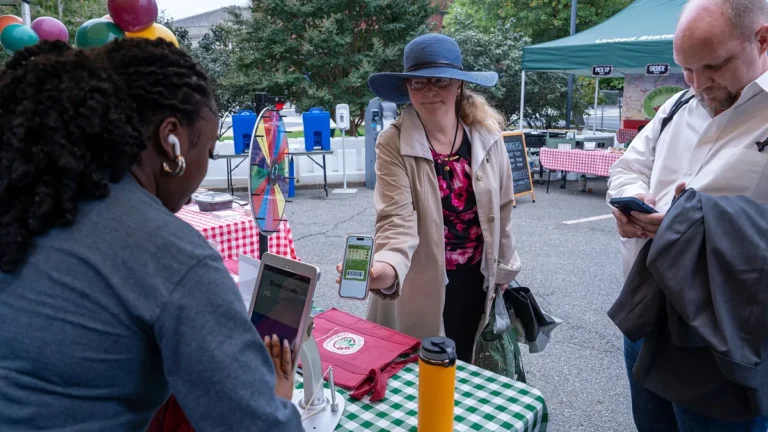
Admission to the festival is typically free, which means the cost of the day is whatever you decide to eat, drink, and buy. Bring cash. Many vendors and community groups run simple setups, and while card readers are increasingly common at larger festivals, cash remains the fastest and most reliable way to pay at a booth staffed by volunteers.
Small bills help. So does a rough budget — it is easy to lose track of how many plates you have bought when the line moves fast and the smell is persuasive.
Northeast Georgia Weather for Labor Day Weekend
Late summer in northeast Georgia means heat and humidity. Afternoon temperatures often push into the upper 80s, and the sun on an open square is unforgiving. Pop-up thunderstorms are a real possibility on any given afternoon, usually building and passing within an hour or two.
Dress for it: light clothing, a hat, sunscreen, and a refillable water bottle. A compact rain jacket or umbrella is worth carrying, and a light folding chair earns its place in the trunk. Comfortable shoes matter more than most people expect — you will stand and walk far more than you plan to.
A Sample Labor Day Weekend Around Homer
Saturday morning. Arrive in downtown Homer before the biggest crowds and walk the vendor line once without buying anything. This is your reconnaissance pass. Note which stands have the longest lines and which church groups are selling what.
Saturday midday. Eat. Find shade. Sit down. Let the social circuit come to you — in Homer, it will. If you are a first-timer, this is when you will meet six people who want to know where you are from.
Saturday afternoon. Catch the live music, browse the craft and community booths, and let the kids work through the activities. Leave before the final rush if you want an easy exit.
Sunday. Sleep in, then drive the county. The rural roads of Banks County are pleasant and unhurried, and the I-85 corridor on the western side gives you a contrast between the county’s quiet center and its busiest commercial edge.
Monday. Come back to the festival for a shorter visit — a plate, a lap around the square, a few goodbyes. Labor Day Monday has a slower, softer feel, and it is the best time to actually talk to people instead of just passing them.
Homer Versus Commerce, Clarkesville, and Other Nearby Towns
If you are deciding how to spend Labor Day weekend in this corner of Georgia, it helps to know what each nearby option offers. They are different flavors of the same region.
Commerce and the Banks Crossing area. Just west of Homer along the I-85 corridor, Commerce is the county’s commercial neighbor — outlet shopping, chain restaurants, and interstate convenience. It is where you go for hotel rooms and errands, not for a courthouse-square atmosphere. Pairing a Homer festival day with a Commerce shopping stop is an easy combination.
Clarkesville. The seat of Habersham County, north of Banks, has a walkable downtown square and a mountain-adjacent feel. Its festival calendar leans into that setting, and the drive up from Homer takes you into noticeably hillier country. If Homer feels like a working county seat, Clarkesville feels like a mountain town that happens to have a square.
Gainesville and Athens. Both are bigger, busier, and closer to a full weekend of restaurants, music venues, and hotels. Neither will give you the specific pleasure of a county gathering where half the crowd is related to the other half, but both work well as a base if you want options after the booths close.
The honest comparison: Homer’s Labor Day is the most local of the bunch. It is the one where you are most likely to be asked whose people you belong to, and least likely to be treated like a tourist.
A First-Timer’s Checklist for the Homer Labor Day Festival
Bring cash in small bills. Bring a folding chair if you plan to stay more than an hour. Bring water, sunscreen, and a hat — the square gets hot by early afternoon.
Wear comfortable shoes and light clothing. Pack a compact rain layer for afternoon storms. Charge your phone, but expect to be talking more than scrolling.
Arrive before mid-morning for parking. Follow volunteer directions rather than improvising. Keep an eye on kids near the busiest food lines, and agree on a meeting spot in case your group splits.
Greet people. In Homer, standing quietly at the edge of the crowd is the only way to have a bad time. Ask what is worth eating. Ask who has the best booth. You will get answers, and probably a plate.
Beyond the Festival: Banks County When the Booths Come Down
Banks County is 234 square miles of northeast Georgia, and the festival occupies only a few blocks of it. The rest is worth a slow drive. Rural roads roll past farmland, small churches, and the kind of scenery that rewards going ten miles under the speed limit.
The I-85 corridor along the county’s western edge is a different world — outlet shopping, fuel stops, and the commercial traffic that keeps this part of the state moving. Between that edge and Homer in the center, you get both versions of the county in a single afternoon.
History-minded visitors will find the county seat itself interesting: Homer has been the seat of Banks County since the county’s organization, and the downtown retains the compact, courthouse-centered layout typical of Georgia county seats. Northeast Georgia’s larger draws — the mountains to the north, Athens to the southeast, Lake Lanier country to the west — are all within reach for a longer weekend.
Where Homer Sits on the Northeast Georgia Map
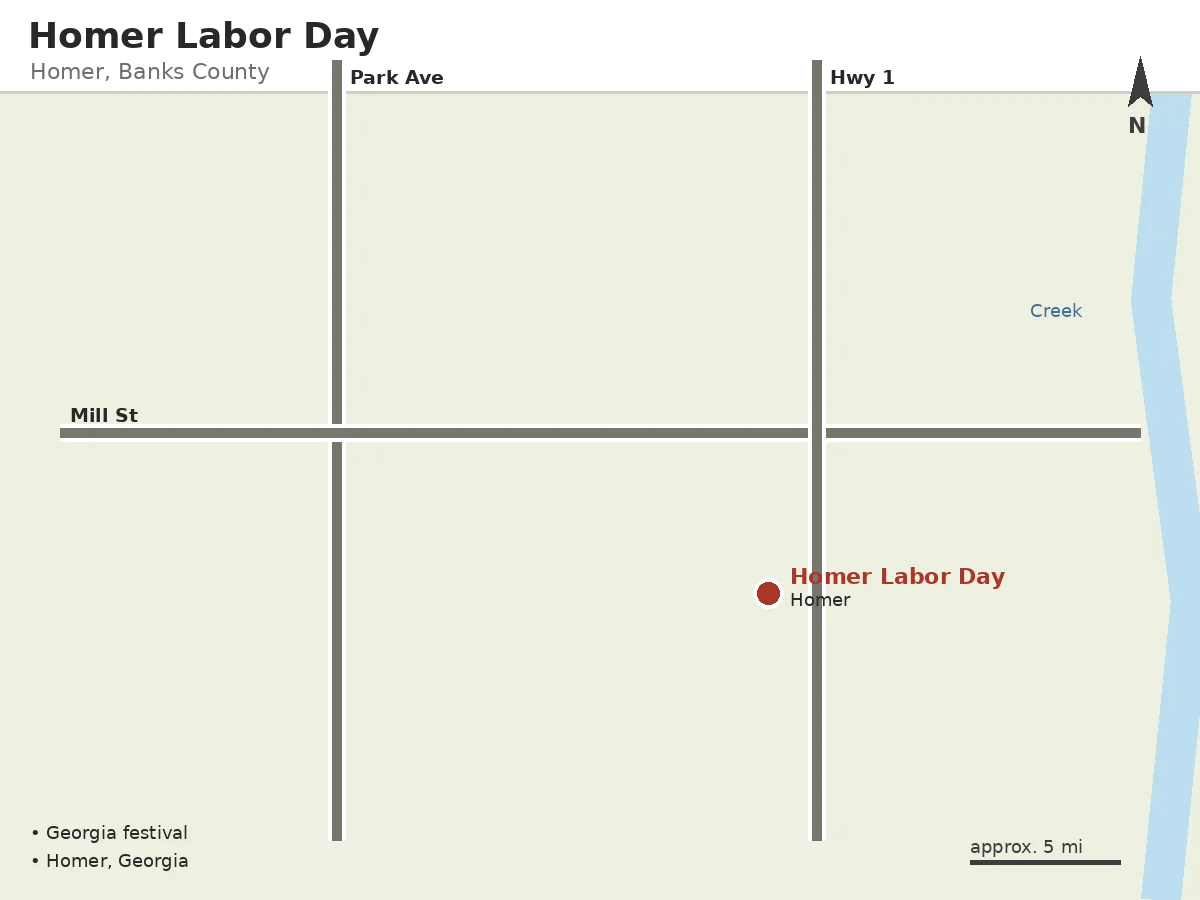
Homer is the county seat of Banks County in northeast Georgia, positioned along the US-441 corridor near the center of the county.
Homer Labor Day Questions Visitors Ask Before They Drive Up
When is the festival held?
It runs over Labor Day weekend, which means the Saturday, Sunday, and Monday surrounding the first Monday in September. Specific hours vary from year to year, so check local listings and community announcements before you go.
Is admission free?
Admission is typically free to walk the grounds. You pay for food, drinks, crafts, and anything else you buy from vendors, and proceeds from many booths support local organizations.
Where should I park in Homer?
Street parking near downtown fills up first, with overflow along side streets and in nearby lots. Volunteers usually direct traffic. Arriving before mid-morning gives you the best shot at a convenient spot, and walking in is a good option if you are staying close by.
Is it a good event for young children?
Yes. Families are central to the weekend, with children’s activities, games, and plenty of food that kids will actually eat. Strollers and wagons are common, though the crowd gets dense near the busiest booths.
Can I bring my dog?
Leashed, well-behaved dogs are generally fine at outdoor community festivals, but rules can change and food areas may have restrictions. Check posted signage or ask an organizer when you arrive.
What happens if it rains?
Late-summer showers in northeast Georgia often pass quickly, and the festival generally carries on through them. Severe weather can shift or pause activities, so keep an eye on the forecast and on local announcements.
Do I have to be from Banks County to enjoy it?
Not at all. Visitors from across northeast Georgia and beyond come for the food and the atmosphere. Expect to be welcomed, and expect to be asked where you are from — that is part of the experience.
What else is there to do nearby?
Plenty. The I-85 corridor on the county’s western side offers shopping and dining, and nearby towns in Hall, Jackson, Habersham, and Stephens counties each have their own downtowns. Athens and Gainesville are both within a reasonable drive for a longer weekend.
What Future Labor Days in Homer Might Look Like
The festival’s future will be shaped by the same forces shaping Banks County: growth along the interstate corridor, new families moving into the area, and the pull of bigger cities on the young people who grew up here. Each of those forces changes who shows up on the square.
What seems unlikely to change is the format. Homer’s Labor Day works because it is simple — food, music, neighbors, and a square that has hosted the same ritual for generations. Every year, organizers face the same practical questions about vendors, parking, and safety, and every year the answer tends to be incremental rather than dramatic.
The likeliest evolution is a slow one: more visitors from outside the county, more vendors wanting a spot, and continued pressure on parking and shade. If the festival can absorb that without losing the thing that makes it feel like a family reunion, it will keep working.
For now, the safest prediction is the one locals make every year: come Labor Day, Homer will be full, the food lines will be long, and somebody will be saving a seat for somebody else.
Last updated: October 2026
If you go, go early, bring cash, and plan to stay longer than you intended. The Banks County Georgia Homer Labor Day Festival is not a spectacle you check off a list — it is a county holding its annual reunion in the middle of its own downtown, and the door is open to anyone willing to pull up a chair.
One Comment