Cumberland County Maine Deaf Film Festival
Portland keeps a particular kind of weekend on its calendar, one where the screen does the talking and the room answers in movement. The Maine Deaf Film Festival, known in shorthand as MDFF, gathers films made by Deaf filmmakers on the Portland campus of the University of Southern Maine. It is billed as the longest-running university student-led Deaf film festival in the United States.
Visitors come for the films and stay for the panels, the lobby conversations between screenings, and the sense of a community that treats cinema as its own language. The most recent dated edition ran across two days, with an evening opening on Friday and a full day on Saturday,.
About
The Maine Deaf Film Festival is the published name of the event, and the sheet title that heads this article is never printed exactly in the layers read. Every poster, listing and programme the research found uses the published name, and visitors looking for the event in Portland will find it under MDFF. The festival takes place in Portland, which is the county seat of Cumberland County, on the Portland campus of the University of Southern Maine.
Two organiser name forms appear in the layers, and they are carried here unmerged: the USM Department of Linguistics and the USM ASL Club, ASL standing for American Sign Language. The department lends the academic home, while the student club supplies the leadership behind the longest-running billing. Together they present films by Deaf filmmakers, with panels alongside the screenings. The most recent dated edition ran in its twenty-second year, on November 6 and 7, 2026, with Friday hours from four-thirty to eight-thirty in the evening and Saturday hours from ten in the morning to seven-thirty in the evening. Its opening film was Crab Theory, made by a Deaf filmmaker, and the same edition paired a second Deaf-produced film with a panel discussion. A tenth annual edition ran April 11 to 14, 2012, and a Saturday edition on May 22, 2004, showed more than forty international films.
Quick Facts
| Detail | Information |
| Published name | Maine Deaf Film Festival, known as MDFF |
| Sheet title | Cumberland County Maine Deaf Film Festival, never printed exactly |
| Host town | Portland, county seat of Cumberland County |
| Venue | University of Southern Maine Portland campus |
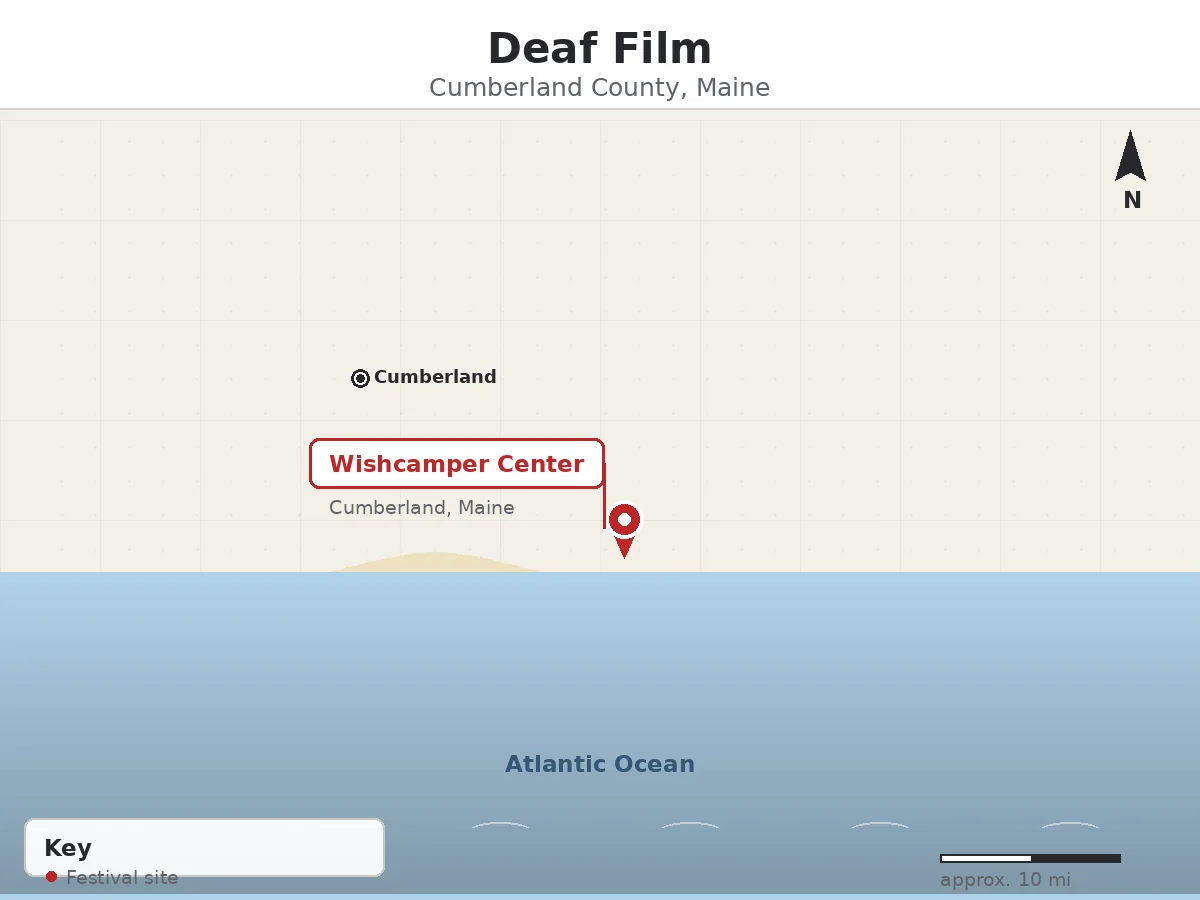
| Recent screening hall | Wishcamper Center, in the recent layer |
| Earlier screening halls | Payson Smith Hall in 2012; Science Building in 2004 |
| Organisers | USM Department of Linguistics; USM ASL Club |
| Billing | Longest-running university student-led Deaf film festival in the United States |
| Most recent dated edition | Twenty-second year, November 6 to 7, 2026 |
| Programme | Films by Deaf filmmakers, with panels |
History
The history of the Maine Deaf Film Festival is written in dated editions rather than in a single founding story, because no founding year is stated in the layers read. The earliest dated edition the research found took place on Saturday, May 22, 2004, on the University of Southern Maine Portland campus, with screenings in the Science Building. That day ran in two sessions, from one to five in the afternoon and from six to ten in the evening, and it showed more than forty international films. Admission was ten dollars per session, or fifteen dollars for both sessions in advance, a figure fenced to the layer that records it and stated here in words.
For a useful comparison, see the Cumberland County Maine Bowdoin International Music Festival for another county festival.
Eight years later, the festival reached its tenth annual edition, running April 11 to 14, 2012, with screenings in Payson Smith Hall on the same Portland campus. The most recent dated edition ran in the festival’s twenty-second year, on November 6 and 7, 2026, with screenings in the Wishcamper Center. The opening film that year was Crab Theory, by a Deaf filmmaker, and the edition also included a second Deaf-produced film together with a panel.
The twenty-second year billing in 2026 and the tenth annual billing in 2012 are both recorded exactly as printed, and they are not combined into a founding year, because the layers never state one. What the three dated editions show, taken together, is continuity: a student-led festival that began no later than 2004, that kept its home on the Portland campus through three different screening halls, and that kept its focus on films by Deaf filmmakers.
What to Expect
A weekend at the Maine Deaf Film Festival is built around watching films and talking about them, in that order. The screenings are the centre of the event, and the programme in the layers is described plainly: films by Deaf filmmakers, with panels alongside. The 2026 edition opened on Friday evening with Crab Theory, a film by a Deaf filmmaker, and continued on Saturday with a longer day of screenings, including a second Deaf-produced film and a panel discussion. The 2004 edition showed more than forty international films across two sessions in a single Saturday,.
Visitors should expect a university setting rather than a commercial cinema: the screenings take place in campus halls, the audience includes students, faculty, members of the Deaf community and visitors from beyond Portland, and the atmosphere is closer to a campus arts weekend than to a red-carpet premiere. Panels give the audience a chance to hear from filmmakers and to ask questions. Admission terms differ by layer and year: the recent layer records free entry for USM students with identification, while the 2004 layer records ten dollars per session or fifteen dollars for both sessions in advance.
Planning Your Visit
Portland is the county seat of Cumberland County and the largest city in Maine, so a festival weekend there is easy to build around. The screenings take place on the University of Southern Maine Portland campus, and the hall changes with the edition: the Wishcamper Center in the recent layer, Payson Smith Hall in 2012, and the Science Building in 2004. Check the edition you plan to attend for its hall, because the campus holds more than one screening space. Friday screenings in 2026 began at four-thirty and ran to eight-thirty in the evening, while Saturday ran from ten in the morning to seven-thirty in the evening.
USM students with identification entered free under the recent layer, and the 2004 layer priced sessions at ten dollars each or fifteen dollars for both in advance; for any other year, confirm the admission terms before travelling, because the layers do not state one figure for all editions. Portland in November is cold, so bring a warm coat for the walk between the campus and the Old Port, and allow time for parking near the university. If you use American Sign Language, you will find yourself among fluent signers; if you do not, the films and panels are still made to be followed, and the festival’s whole premise is that Deaf cinema speaks to every audience.

Sample Itinerary
A two-day visit built around the 2026 edition gives the fullest picture of the festival. Arrive in Portland on Friday afternoon and make your way to the University of Southern Maine Portland campus in time for the four-thirty start. Find the Wishcamper Center, settle in, and watch the opening film, Crab Theory. Stay for the evening session, which runs to eight-thirty, and use the time between screenings to meet other audience members and to look over the programme for Saturday. After the Friday session, head downtown for dinner in the Old Port.
On Saturday morning, return to campus for the ten o’clock start and plan to stay through the day, which runs to seven-thirty in the evening. Take in the second Deaf-produced film and the panel discussion,. If you have only one day, choose Saturday, which carries the longer programme and the panel. If you have only an evening, choose Friday, when the opening film sets the tone for the whole weekend.
Comparison
The Maine Deaf Film Festival stands apart from most film festivals in Maine because its programme is defined by who makes the films, not by where they were shot or what genre they belong to. A general film festival in Portland might show documentaries, features and shorts from many countries and many kinds of filmmakers, and judge them on craft alone. MDFF starts from a different premise: every film in its programme is by a Deaf filmmaker, and the festival exists to give those filmmakers a screen, an audience and a panel.
The festival also differs from a Deaf cultural gathering that has no film programme, because the screenings are the core of the weekend rather than a side event. Compared with the large multi-day festivals that fill Portland’s calendar, MDFF is smaller and more concentrated: two days in its most recent dated edition, against the four-day run of its tenth annual edition in 2012 and the single-day, two-session shape of 2004. Its venues are campus halls rather than downtown theatres, which keeps the event close to the university community that leads it.
Checklist
- Confirm the screening hall for the edition you plan to attend, since each hall belongs to a different year.
- Arrive before the four-thirty Friday start for the opening film, or before ten on Saturday for the full day.
- Bring student identification if you are a USM student, since the recent layer records free entry for USM students with identification.
- Check the admission terms for the edition you attend, because the layers fence different figures to different years.
- Bring a warm coat for November in Portland, and allow extra time for parking near the campus.
- Stay for the panels, which are part of the programme alongside the screenings.
- Bring questions for the filmmakers, who are the heart of the festival.
- Plan a meal downtown in the Old Port between sessions or after the Saturday programme ends.
- Leave time to talk with members of the USM ASL Club, who lead the event.
- Keep the published name in mind when searching: Maine Deaf Film Festival, or MDFF.
Beyond the Festival
Portland rewards a visitor who stays past the last screening, and the city around the University of Southern Maine campus gives a festival weekend plenty of room to breathe. The Old Port, with its brick streets and working waterfront, sits a short distance from campus and offers restaurants, coffee shops and bookshops that stay lively into the evening, which makes it a natural place to end a Friday after the eight-thirty finish. The Portland Museum of Art and the Eastern Promenade give a Saturday visitor somewhere to walk between sessions.
Cumberland County beyond Portland holds its own draws, from the coastal towns of the Casco Bay shore to the inland villages that dot the county, and a visitor with an extra day can drive the coast or take a ferry to one of the bay islands. The festival itself is a university event, so the campus neighbourhood also matters: the streets around the University of Southern Maine hold cafes and small shops where students gather, and the ASL Club’s presence on campus means the festival’s community is part of the university’s daily life rather than a visiting show.
Why It Matters
The Maine Deaf Film Festival matters because it gives Deaf filmmakers a screen that belongs to them, in a city and on a campus where students lead the work. A film festival can be many things: a market, a showcase, a party. This one is a platform, and its billing as the longest-running university student-led Deaf film festival in the United States points to why that platform has lasted. Student leadership means the festival renews itself with each class of students, and the USM ASL Club keeps the event rooted in the language and culture it celebrates.
The dated editions in the record show that this combination has held across decades, from more than forty international films in a single Saturday in 2004, through a tenth annual edition in 2012, to a twenty-second year in 2026 with an opening film by a Deaf filmmaker and a panel beside it. That span matters for the filmmakers most of all, because a festival that returns year after year gives new work a reliable audience. It matters for the audience too, because the panels and the lobby conversations turn watching into learning.
Frequently Asked Questions
What sets this festival apart from other film events in Portland?
The programme is the difference. Every film shown is by a Deaf filmmaker, and students lead the festival through the USM ASL Club, with the USM Department of Linguistics behind it. Panels sit alongside the screenings, so visitors hear directly from the filmmakers whose work they have just watched.
Do I need to know American Sign Language to enjoy the screenings?
No. The films are made to be watched by any audience, and the festival’s premise is that Deaf cinema speaks to hearing viewers as well as to Deaf viewers. Knowing American Sign Language will deepen the panels and the lobby conversations, but it is not required.
Which building on campus hosts the screenings?
The hall depends on the edition: the Wishcamper Center in the recent layer, Payson Smith Hall in 2012, and the Science Building in 2004, all on the University of Southern Maine Portland campus. Confirm the hall for the edition you plan to attend before you travel.
Can I come for just one day of the weekend?
Yes. The 2026 edition ran Friday evening from four-thirty to eight-thirty and Saturday from ten in the morning to seven-thirty in the evening. Friday carries the opening film, while Saturday carries the longer programme and the panel.
What to Expect From the Next Cumberland County Maine Deaf Film Festival
How often is Cumberland County Maine Deaf Film Festival held?
The layers document dated editions in 2004, 2012 and 2026, with the 2012 edition billed as the tenth annual and the 2026 edition billed as its twenty-second year, which shows a festival that returns repeatedly rather than a one-off gathering.
When is the next Cumberland County Maine Deaf Film Festival?
The most recent dated edition in the layers read ran November 6 and 7, 2026. A later edition is not dated in the layers read, so watch for the next announcement from the organisers rather than assume a date.
Will the dates change?
The dated editions in the record fall in different months: May in 2004, April in 2012 and November in 2026, so the festival has not kept one fixed weekend across its history. Any future edition should be confirmed against the organisers’ announcement for that year.
Portland’s Maine Deaf Film Festival is a small event with a long memory, showing films by Deaf filmmakers on the University of Southern Maine Portland campus since at least 2004. Come for the opening film, stay for the panel, and leave with a wider sense of what Deaf filmmakers are making.