Cape May County New Jersey 4-H Fair Festival
Cape May County ends New Jersey in a string of beach resorts, and a visitor could be forgiven for assuming everything on its July calendar happens on a boardwalk. This fair does not. The Cape May County 4-H Fair belongs to Cape May Court House, the county seat in the middle of the peninsula, and it is a working youth fair rather than a shore attraction: three mid-July days when 4-H members bring their animals and showmanship behind the county zoo, and neighbours come to watch. It shares nothing with the resort festivals of Wildwood or the City of Cape May at the peninsula’s tip, and its grounds sit nowhere near a beach. Walking through its gate costs nothing at all. The money decisions here are small and specific — which parking lot to choose, how many ride tickets to buy, and whether to join the chicken line before it sells out.
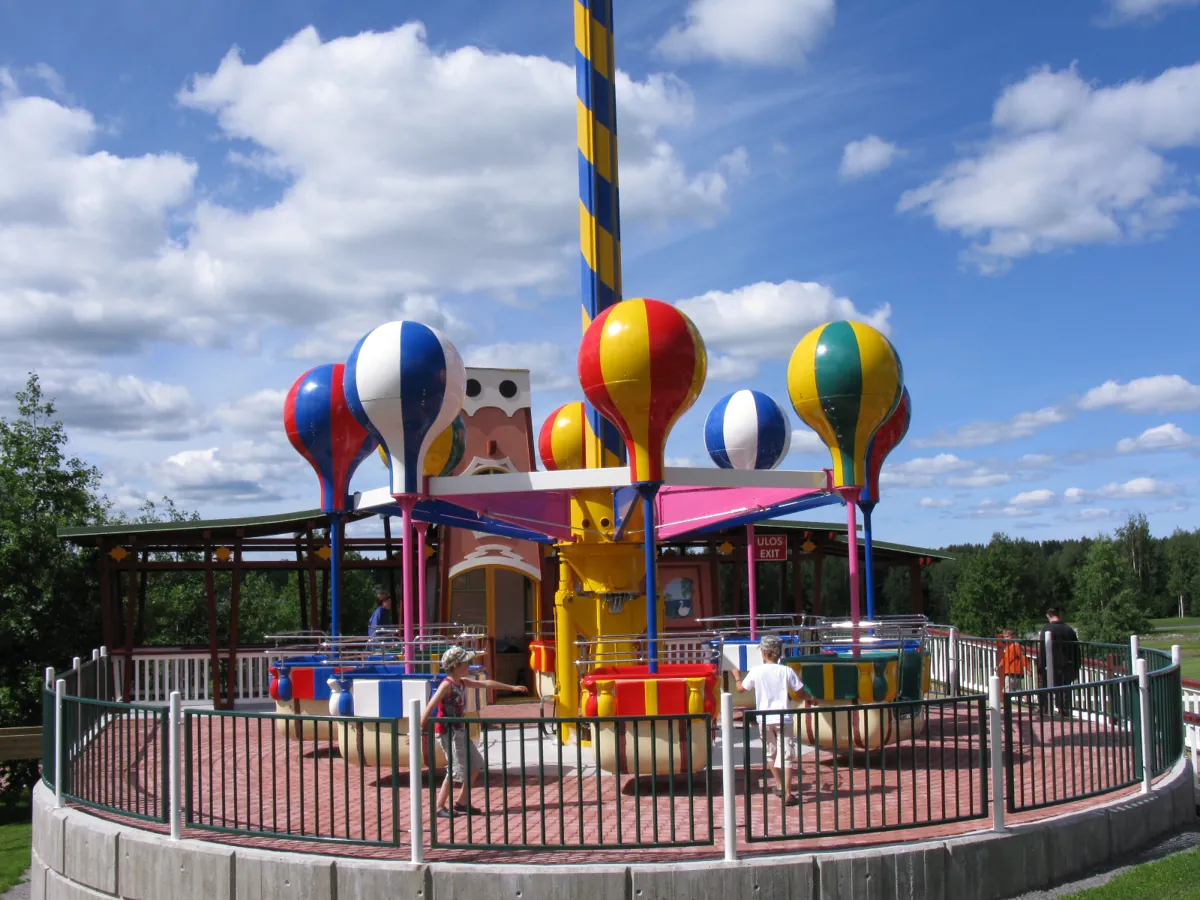
About the Fair: Three Bodies, One Set of Grounds
Three organisations touch this fair, and the record keeps each in its own place. The Cape May County 4-H Foundation Inc. is the nonprofit that supplies the grounds and buildings supporting 4-H activities, and it is the Foundation that holds the annual fair each July; its fair contracts are approved by the 4-H Foundation Fair Committee and its chairperson, in consultation with 4-H staff. Rutgers Cooperative Extension of Cape May County runs the 4-H Youth Development Program the fair exists to showcase, and Extension’s account describes an event planned and operated by volunteers, 4-H members, their parents and their friends. A third body, the Cape May County Board of Agriculture, appears in exactly one role: it hosts the fair’s annual chicken barbecue — a sponsor of one tradition, never the fair’s organiser, and neither is Extension alone. The grounds are the Cape May County 4-H Fairgrounds, at 355 Court House–South Dennis Road in Cape May Court House, within Middle Township, with the Lockwood 4-H Youth Center and the Coover Pavilion on the site.
Quick Facts
| Item | Detail |
| Published name | Cape May County 4-H Fair |
| County | Cape May County, New Jersey |
| Fair town | Cape May Court House |
| County seat | Cape May Court House (the seat hosts the fair) |
| Grounds | Cape May County 4-H Fairgrounds, 355 Court House–South Dennis Road, behind the county Park and Zoo |
| Held by | Cape May County 4-H Foundation Inc., showcasing the Rutgers Cooperative Extension 4-H programme |
| Season | Mid-July, Thursday to Saturday (July 16–18 in 2026) |
| Public hours in 2026 | Thursday 3–10 p.m.; Friday and Saturday 10 a.m.–10 p.m. |
| Admission | Free |
| Parking | Premium college lot at ten dollars per car in 2026; the Park and Zoo lot free, with free shuttles |
A Long-Running Fair With No Birthday in Print
Most county fairs arrive with a founding year attached, and many arrive with two competing ones. This fair’s record, unusually, offers none at all: no source in its own documentation states a first edition, and no edition number is published, so this article asserts neither a founding year nor an anniversary count. What the record does carry is billing — an older Extension layer describes the event as one of New Jersey’s oldest fairs. That phrase is printed here as billing, exactly as published, not as a documented origin. The fair’s history is instead written in the ages of its traditions: its chicken barbecue is billed at over six decades, a measure of the dinner’s life rather than a date for the fair. The honest history is that the fair is old, locally rooted, and undated — its paperwork prefers barns and schedules to birthdays.
What to Expect
Livestock Rings and the Thursday-Night Auction
The animal programme is the fair’s spine, and it starts before the public gates open: exhibitors begin with lamb and hog showmanship on the Wednesday. Thursday brings rabbit and cavy judging, Friday belongs to poultry and waterfowl, and Saturday closes with the goat show and the Horse and Livestock Round Robin, where top showmen test themselves across species. The public side opens Thursday afternoon with a parade and ceremonies at four o’clock, and Thursday evening holds the commercial climax: the 4-H livestock auction at the Coover Pavilion, starting at half past six, alongside the hog and lamb market auction — for many exhibitors, the moment a year of feeding and fitting converts into a buyer’s bid.
Horses, a Drill Team and a Saturday of Ceremonies
Horse shows stretch across four days, from Thursday’s showmanship and halter classes through a Sunday games show that runs after the public fair has closed, as fair-week machinery rather than a fourth public day. The Moonlight Riders Mounted 4-H Drill Team performs as the mounted spectacle, riding in formation at dusk. Saturday layers ceremony onto showing: the pet show opens the day at ten, open to the household animals that never see a breed ring, and at two the Flag Plaza hosts the flag retirement ceremony, billed in 2026 as the ninth annual running of that observance — an ordinal belonging to the ceremony alone, and an hour that gives the fair a civic centre of gravity no midway can supply.
For a useful comparison, see the Burlington County New Jersey Farm Fair Festival for another county festival.
The Midway, the Discovery Area and the Music
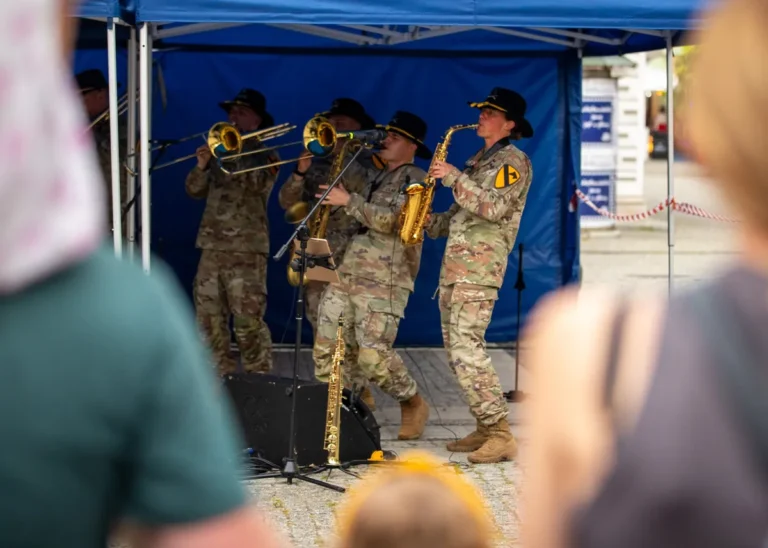
The midway is supplied by Johnson Brothers Amusements, the name the fair’s highlights publish; the fair’s schedule bills the same operation as Johnson’s Fun Factory Rides and Amusements, and the two forms are left as published rather than fused into one. Beside the rides stand a mechanical bull and the Children’s Discovery Area for younger children. A herpetology show brings reptiles into the programme, and live music runs across the days — in 2026 the published acts included Three of a Kind, the Party Wave Band and the John Walters Brass Sextet, names belonging to that edition rather than to any permanent lineup.
The Chicken Bar-B-Que Line
Every fair has one food line that organises the evening, and here it belongs to the Cape May County Board of Agriculture. Its annual Chicken Bar-B-Que is billed as a tradition of over six decades, and it behaves like one: tickets went on sale at half past four each night in 2026, the line opened at five, and service ran until the chicken was gone. The price in 2026 was twenty-three dollars. That year, for the first time, the cooking was catered by Lucky Bones Backwater Grille of Cape May — a change of caterer, not of host, because the barbecue remains the Board of Agriculture’s tradition whoever works the pits.
Planning Your Visit
Two Lots, Two Very Different Prices
Admission is free, so the first real decision is parking. In 2026 the Atlantic Cape Community College lot, next door to the grounds, charged ten dollars per car as the premium option, buying the shortest walk. Across the street, the Park and Zoo lot parked fairgoers for nothing, with free air-conditioned Fare Free shuttles carrying them to the fair. Families counting costs can attend for the price of fuel alone; visitors who value a short walk on a hot evening can pay for it knowingly.
Ride Tickets Are Machinery, Not Admission
Because the gate is free, the midway’s price list must never be mistaken for an admission ladder. In 2026, individual ride tickets cost one dollar and fifty cents, with bundles of twenty for twenty-two dollars, forty-five for forty dollars and sixty for fifty dollars. Discounted wristbands, at twenty-five dollars, were offered in two windows — Thursday from five to ten in the evening and Saturday from noon to four. Those figures belong to that edition’s midway and will be repriced, but their role never changes: they are the cost of the rides, added on top of a free fair, and a family that skips the midway can watch every ring and ceremony for nothing beyond parking and food.
A Sample Saturday at the Fair
Drive in mid-morning and take the free zoo lot, riding the shuttle over before the grounds fill. Start at the goat show, then cross to the pet show at ten. Let children spend an hour in the Discovery Area before lunch, and buy ride wristbands inside the discounted Saturday window opening at noon. At two, be at the Flag Plaza for the retirement ceremony — the fair’s most distinctive hour. Spend the late afternoon on the Round Robin showmanship, then join the barbecue line: tickets from half past four, dinner from five, before the chicken runs out. Stay for the evening music and the drill team under lights, and leave at the ten o’clock close.
Sleeping Over: Lodging, Not Camping
No fair camping appears anywhere in this fair’s record, and none should be expected or implied — the grounds are a day-and-evening site, not a campground. Visitors staying over are in shore country in peak season, where the practical advice is unglamorous: book rooms early and expect July rates. The ten o’clock closing is built for people driving home or back to lodgings the same night.
How This Fair Differs From a Shore Festival
A shore festival sells a town to its visitors; this fair shows a county to itself. The resort events are built around boardwalks, beaches and paying crowds, while the 4-H fair is built around a show ring, with exhibitors drawn from the county’s own clubs and the audience from their families and neighbours. The economics differ just as sharply: a commercial fair typically charges at the gate, while here the gate is free, the parking can be free, and spending is entirely à la carte. Even its calendar is agricultural rather than touristic: mid-July is when the animals and projects are ready, not when the beaches are full.
A Visitor’s Checklist
- Use the Park and Zoo lot for free parking, and ride the free air-conditioned shuttle to the gate.
- Carry cash or a card for the premium college lot, priced at ten dollars per car in 2026, if the shortest walk matters more.
- Buy ride wristbands inside the discounted windows if your party plans serious midway time.
- Be at the barbecue ticket table by half past four, because the chicken sells out nightly.
- Catch the flag retirement ceremony at two on Saturday, the fair’s signature civic moment.
- Give the Thursday-evening livestock auction an hour even if you are not bidding; it is the fair’s commercial heart.
- Book any overnight stay early, since the fair offers no camping and July rooms across the county go fast.
Beyond the Fairgrounds
The fair’s closest neighbour is the Cape May County Park and Zoo, directly behind the fairgrounds and across from the free parking lot — an easy pairing with a fair day. Cape May Court House itself is a working county seat rather than a resort, with the courthouse and the everyday services of Middle Township around it. The shore is a separate trip, not part of the fair: the beaches of the resort towns and the Victorian streets of the City of Cape May reward their own day, unconnected to anything on the fairgrounds. Visitors often combine the two across a weekend — a fair day inland, a beach day after — and the arrangement works precisely because the two experiences stay distinct.
Why a Seat-Town Youth Fair Matters to This County
Cape May County’s public image is made at its edges, in resort towns most of the state could name. The 4-H fair is one of the few institutions that belongs to the county’s middle — to the townships where year-round residents live and farm. A fair run by volunteers, on grounds held by a foundation, with a free gate and a chicken dinner hosted by the county’s farmers, is civic infrastructure disguised as a weekend: it gives young people a stage that is earned rather than bought, and everyone else a reason to drive inland in July and remember that the peninsula has a centre as well as a shoreline.
Frequently Asked Questions
Is the fair held in the City of Cape May?
No. Despite the county’s name, the fair sits at Cape May Court House, the county seat in Middle Township, behind the county Park and Zoo. The City of Cape May is the resort at the peninsula’s southern tip, and its own events are entirely separate from the fair.
What does a day at the fair actually cost?
Entry costs nothing, and parking can cost nothing too from the Park and Zoo lot and its free shuttle; the premium college lot charged ten dollars per car in 2026. Beyond that, spending is optional and itemised — ride tickets or a wristband for the midway, and twenty-three dollars a head for the chicken barbecue in 2026.
Who is in charge of the fair?
No single body does everything. The Cape May County 4-H Foundation Inc. holds the fair and supplies the grounds and buildings, Rutgers Cooperative Extension of Cape May County runs the 4-H programme being showcased, and the event itself is planned and operated by volunteers, members and families. The Board of Agriculture’s role is limited to the chicken barbecue.
How do we make sure of getting the chicken dinner?
Treat the barbecue as limited seating without seats. In 2026 tickets were sold from half past four at the barbecue ticket table, the serving line opened at five, and the chicken was served until it was gone. Arrive when sales open rather than when you feel hungry, and eat early.
What to Expect From the Next Cape May County New Jersey 4-H Fair Festival
How often is the Cape May County New Jersey 4-H Fair Festival held?
The fair is an annual event, held once each year in mid-July. Its public shape in recent documentation is a compact three days, Thursday through Saturday, with exhibitor activity beginning ahead of the opening.
When is the next Cape May County New Jersey 4-H Fair Festival?
The next edition is expected in mid-July of the coming year, following the fair’s established Thursday-to-Saturday pattern. The fair publishes its confirmed dates and hours ahead of the season, and those announcements are the place to fix a calendar.
Will the dates change?
Within the July window, yes, they can shift. The fair’s anchor is mid-July rather than a fixed weekend, so the exact Thursday-to-Saturday span is set edition by edition and should be confirmed against the fair’s own announcement. The season has been stable, and a wholesale move out of July would be the surprise, not a shift of a few days within it.
The Cape May County 4-H Fair asks very little of its visitors — no ticket, a choice of parking lots, and a willingness to be at a ticket table by half past four. In return it offers the least commercial fair in the county’s calendar: young exhibitors at the centre, a flag honoured at two o’clock, a chicken line at five, and a drill team riding into the dark. For a county famous for selling its shoreline, its seat town keeps one July weekend that is deliberately its own.