Burlington County New Jersey Farm Fair Festival
For five days each late July, the Burlington County Fairgrounds on Jacksonville-Jobstown Road in Columbus fill with livestock trailers, exhibit tents, ride lights and the particular smell of lemonade stands and barn shavings. The event is the Burlington County Farm Fair, and it begins with a surprise for anyone raised on ticketed county fairs: there is no ticket at all. The fair’s own guidance for its 2026 edition states the position plainly — admission is free. What visitors pay for instead is parking, wristbands, food and one separately ticketed rodeo, and understanding that split is the key to the whole fair.
Columbus, the village where the fairgrounds sit, is not the county seat. Mount Holly holds that role for Burlington County, and it does not host this fair. The fairgrounds lie in Springfield Township at Columbus, a village of Mansfield Township, and the fair belongs to the nonprofit association that runs it rather than to any county department.
The Association Behind the Grounds
The Burlington County Farm Fair is organised each year by the nonprofit Burlington County Farm Fair Association, Incorporated. Within that body, a Board of Trustees serves as the policy authority, and a named Farm Fair Manager handles the event’s running. Burlington County government partners with the association in support of the fair, a supporting role the county’s own coverage describes carefully; the county is a backer and the preserver of the land, never the organiser.
The relationship between fair and county is written into the ground itself. The county preserved the fairgrounds property in 2004, and in the county’s 2026 coverage that year marked the fifteenth year the fair had been held at these fairgrounds in Springfield — a patient story of an old fair settling, comparatively recently, into a permanent modern home.
Burlington County Farm Fair at a Glance
| Event | Burlington County Farm Fair |
| County | Burlington County, New Jersey |
| Fair town | Columbus, at the Burlington County Fairgrounds |
| County seat | Mount Holly, which does not host the fair |
| Grounds | Burlington County Fairgrounds, Jacksonville-Jobstown Road, Columbus, in Springfield Township |
| Organiser | Burlington County Farm Fair Association, Incorporated |
| Season | Five days, Tuesday to Saturday, in late July |
| Public hours | Tuesday to Friday, 2:00 p.m. to 10:00 p.m.; Saturday, noon to 10:00 p.m. |
| Admission | Free, in the fair’s own published words |
| Parking | Twenty dollars cash per vehicle at the fairgrounds lot; other options below |
A Fair Older Than Its Fairgrounds
The fair’s long life is easiest to see in a piece of billing that must be handled with care. County coverage of the 2026 edition celebrated the fair’s eightieth anniversary, and the state’s tourism record carried the same celebration. That anniversary is the fair’s own billing for that year, repeated here exactly as billing; it is not a licence to subtract eighty from the calendar and announce a founding year, and no founding year is asserted anywhere in this article. In 2026, the fair publicly marked eighty years — that is the whole of the claim.
For a useful comparison, see the Bergen County New Jersey 4-H Fair Festival for another county festival.
What the record does document firmly is the grounds’ timeline. The county preserved the property in 2004, and by 2026 the fair had been held at the Springfield fairgrounds for fifteen years, which proves the fair is considerably older than its current home. Where it lived before Columbus is outside the documented record used here, and rather than invent a first home, its history is best told as its custodians tell it: an agricultural fair of long standing, carried by a volunteer nonprofit, that found preserved farmland to root itself in and then stayed. That continuity explains the fair’s structure, too — farming stays in its title and its daily schedule while the rides, pageant and rodeo grow around the barns.
What to Expect
Livestock, 4-H Benches and the Home Arts Tent
Agriculture opens the fair each day, in some cases literally before the public does. Livestock shows and 4-H exhibits and competitions anchor the programme, and the fair notes that some events begin before the public opening hours, so arriving at opening time still means finding the barns in full motion, with judged animals and youthful handlers at work.
Beside the barns, the home arts tent carries the indoor half of the agricultural idea: handcrafted gifts, recipes and garden exhibits, the produce and preserving of a county summer judged and set out for neighbours to study. Together, barns and tent give the fair its centre of gravity — a showplace for what Burlington County households grow, raise, bake and make, with everything louder arranged around that core.
The Midway After Four
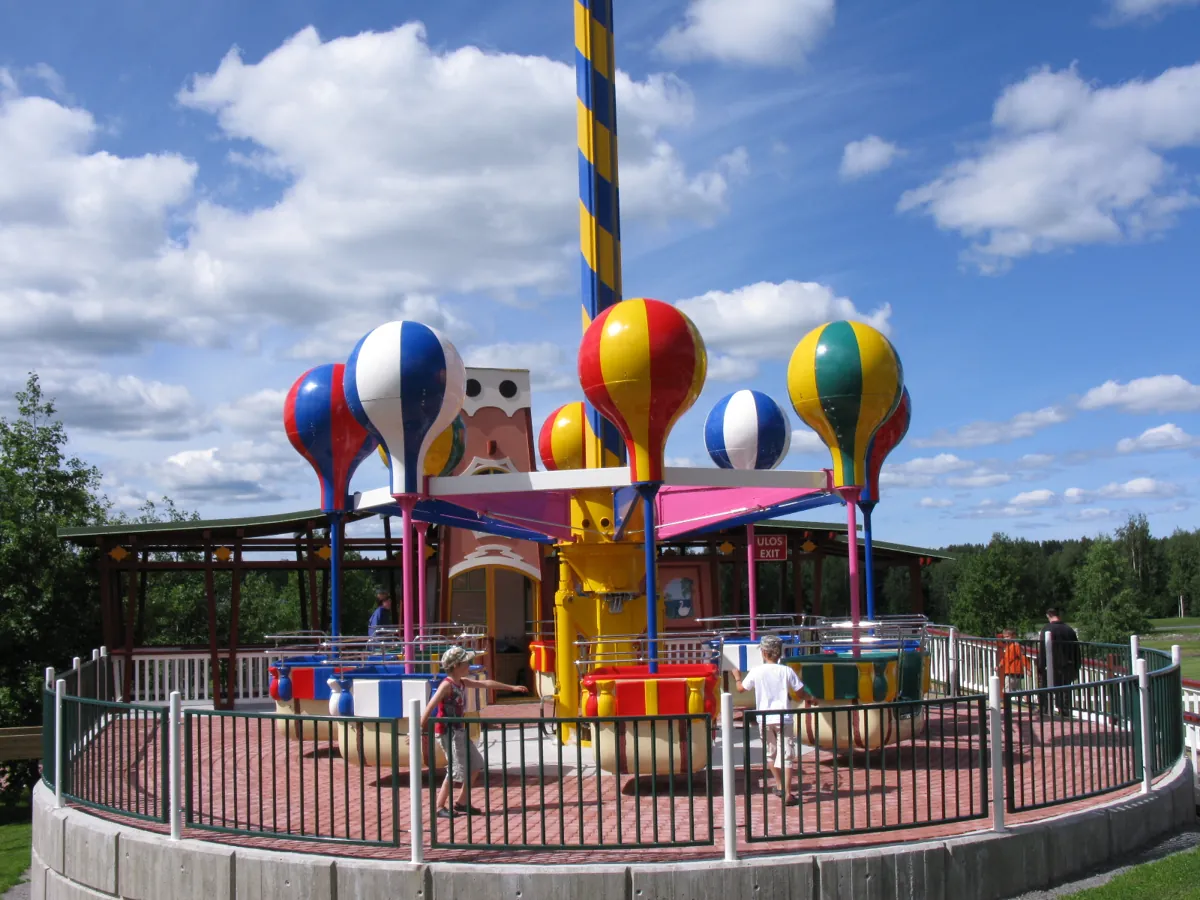
The rides keep a later clock than the livestock. Majestic Midways operates the midway, and its rides open daily at four in the afternoon, which gives each fair day two distinct moods: an afternoon of animals, exhibits and food in daylight, then a lit-up evening fair once the rides start turning.
Ride money is its own layer, separate from the free gate. The fair’s own guidance publishes wristband specials by time of day: thirty dollars during the early-evening window from four to six, and thirty-five dollars from six to ten at night. The pattern rewards riders who arrive as the midway opens, and it is worth planning around, because the wristband is where a ride-heavy family’s budget actually goes.
Two Rodeo Nights, Ticketed Apart
The fair’s loudest nights belong to the Farm Fair Championship Rodeo, staged on two nights of the 2026 edition, Thursday and Friday, with gates at six in the evening and the action at seven. One state listing gives the rodeo a slightly different name and dates; the fair’s own published guidance governs here. Under that guidance the rodeo is a separately ticketed event standing apart from the fair around it.
Two consequences follow, and both catch visitors out. First, a rodeo ticket buys the rodeo only: it does not include parking, so a driving rodeo fan pays the vehicle charge on top. Second, the rodeo grounds have their own rule about dogs, covered below. Treat the rodeo as a show you add to a fair day rather than as part of the free admission, because in every practical sense it is its own event wearing the fair’s dates.
Pageant, Kids Day and the Saturday Pet Show
The fair’s gentler programme fills the rest of the week. The Farm Fair Queen pageant, run through the fair’s own application process, gives the event its crowned ambassador in the county-fair tradition. An opening-night fireworks display appears in the fair-guide layer for the edition. A designated Kids Day brings pretend-to-be-a-farmer activities for young children, and a public pet show on Saturday invites household animals into the judging spirit that otherwise belongs to livestock. Pony rides and fresh lemonade do the rest of the family work.
Planning Your Visit
The Money Question: Free Gate, Paid Parking
Admission being free does not make the day free, and the fair is unusually transparent about where the money sits. In the county’s 2026 layer, parking at the fairgrounds lot costs twenty dollars cash per vehicle, so a carload should have the bill ready rather than assume a card reader. Around that main lot sit cheaper routes. The Columbus Farmers Market lot on Route 206 charges fifteen dollars per vehicle and connects to the fair by a free shuttle; that market is a separate, famous neighbour lending its lot, never a part of the fair itself. Service members showing military identification park for ten dollars, and a multi-day pass costs thirty dollars.
Ride wristbands and food then layer on top. A family that parks at the market lot and rides in the early wristband window can hold the day together modestly; one that parks at the gate, rides all evening and adds rodeo tickets is buying a bigger day. The free gate makes the cheaper version possible.
A Saturday at the Farm Fair
Saturday runs longest, from noon to ten, and it suits a full visit. Arrive near the noon opening and start in the livestock barns while the animals and their young handlers are fresh, then walk the home arts tent. Take lunch from the fair food stands — the fresh lemonade is the signature refreshment — and be in place for the public pet show. When the midway opens at four, move to the rides with an early-window wristband in mind, pausing for pony rides if small children are along. Finish with one last circuit of the barns before the ten o’clock close.
A weekday version simply starts at two instead of noon. On Thursday or Friday, keep the same order but save the evening: the rodeo gates open at six on those nights, so a late-afternoon arrival, an early wristband hour and then a separately ticketed rodeo seat makes the fullest night the fair offers.
Dogs, Smoke and the Daily Rhythm
The fair’s rules are few, specific and worth knowing before the car is packed. Dogs are welcome on the grounds on a leash, which makes this one of the more dog-friendly fairs in the region, but dogs are barred from the rodeo area, so a rodeo night needs a different plan for the family dog. There is no smoking and no alcohol anywhere on the grounds. No camping is offered or published in the fair’s record, so overnight stays belong in the surrounding towns.
The rhythm point bears repeating: public hours begin at two on weekdays and noon on Saturday, and the rides begin at four every day. A visitor who arrives at eleven on a Wednesday will find a closed gate and a working barn crew, not a fair in session.
Paying at the Lot Instead of the Gate
Most county fairs collect their money at a gate and treat parking as an afterthought. Burlington inverts the model. The fair’s own explanation credits its free admission to generous sponsors, exhibitors, vendors and community supporters, so its costs are underwritten by the people who exhibit, sell and sponsor there, while the public’s contribution is gathered mainly through parking and ride wristbands. The comparison that matters is between two days at this one fair: the same grounds can be a genuinely free afternoon of barns and exhibits, or a fully loaded evening of wristbands and rodeo seats, and the visitor chooses which.
Your Farm Fair Checklist
- Bring cash for parking; the fairgrounds lot charges twenty dollars per vehicle in cash.
- Consider the Columbus Farmers Market lot at fifteen dollars per vehicle, with a free shuttle to the fair.
- Service members should carry military identification for the ten-dollar parking rate; repeat visitors should price the thirty-dollar multi-day pass.
- Time ride wristbands to the early window, thirty dollars from four to six, before the thirty-five-dollar evening rate.
- Buy rodeo plans separately: Thursday and Friday nights, gates at six, and a rodeo ticket does not include parking.
- Bring the dog on a leash if you like, but leave the dog out of any rodeo-night plan.
- Pack no cigarettes or alcohol; both are barred everywhere on the grounds.
- Arrive at the published opening, two in the afternoon on weekdays and noon on Saturday, not before.
Beyond the Fairgrounds
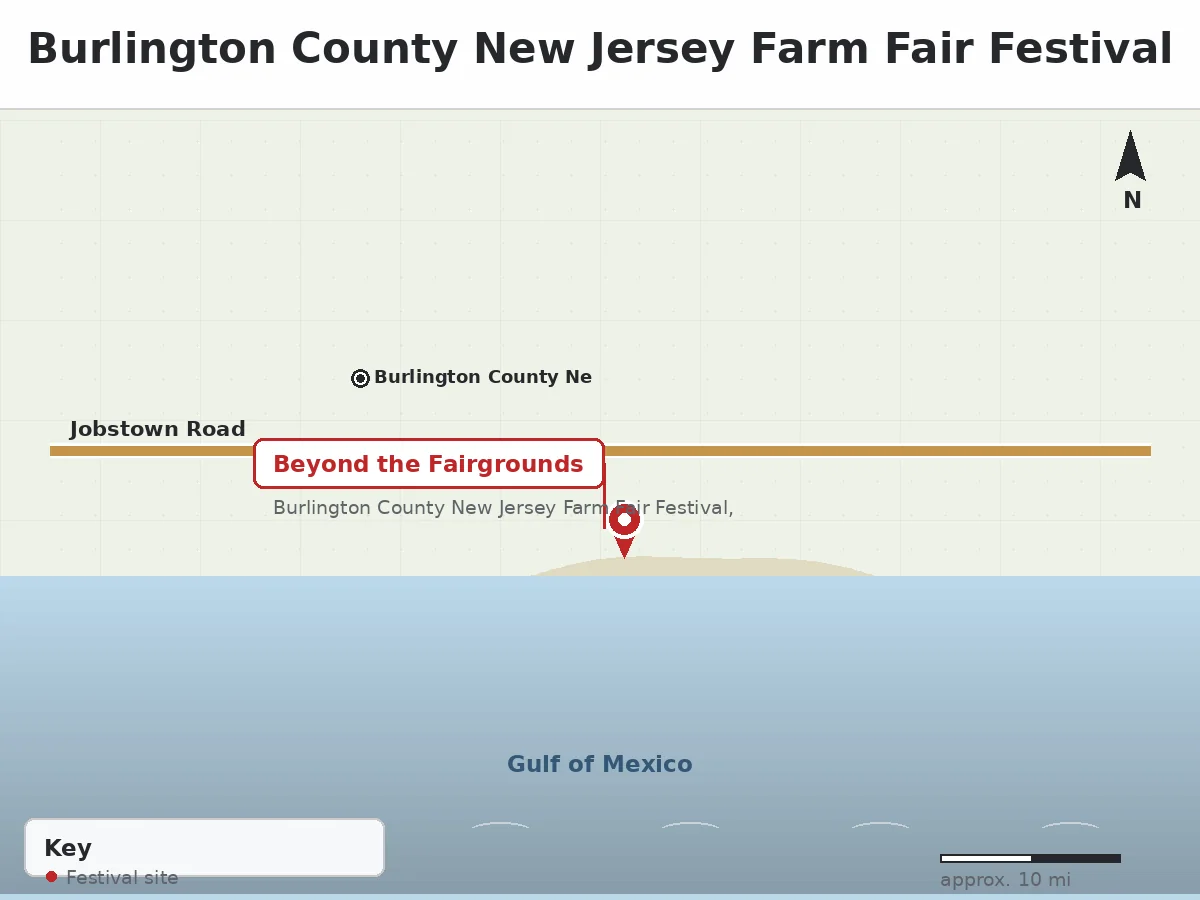
The fairgrounds sit in Columbus, a village of Mansfield Township, with Springfield Township wrapped around the same preserved farmland. The landscape beyond the fence is the exhibit’s larger frame: working agricultural country the county chose to preserve rather than develop, of which the fairgrounds property is one protected piece. A drive through the township roads before the gates open gives the barns their proper context.
Mount Holly, the county seat, makes the natural companion trip. It holds the county’s civic business rather than its fair, and pairing a morning in the seat with an afternoon at Columbus draws the county’s two halves together — government in one town, agriculture in another.
Why This Fair Carries the County’s Name
Burlington is one of New Jersey’s large, varied counties, and a fair that keeps its gate free is a deliberate kind of ambassador. The association’s model lets a family that has never shown an animal walk the same barns as the county’s 4-H families without a turnstile between them, and lets sponsors and exhibitors carry the cost of that openness. Add the queen pageant, the championship rodeo and eighty years of billing, and the fair becomes the county’s agricultural self-portrait: competitive, volunteer-run and open to anyone who can reach the parking lot.
Frequently Asked Questions
Is admission to the Burlington County Farm Fair really free?
Yes, in the fair’s own published words. The fair states that there is no admission fee to enter, crediting its sponsors, exhibitors, vendors and community supporters. The costs of a visit sit elsewhere: parking, ride wristbands, food, and tickets for the separately staged rodeo.
What will I actually pay to park?
The county’s 2026 layer prices the fairgrounds lot at twenty dollars cash per vehicle. The Columbus Farmers Market lot charges fifteen dollars per vehicle with a free shuttle, service members with military identification pay ten dollars, and a multi-day pass costs thirty dollars. The market lot belongs to a separate neighbouring market; it is parking only.
Is the rodeo included in the fair?
No. The Farm Fair Championship Rodeo is a separately ticketed event held on Thursday and Friday nights of the fair, with gates at six and the performance at seven. Its ticket does not include parking either, so rodeo visitors should budget for the vehicle charge as well.
Can I bring my dog to the fairgrounds?
Yes, on a leash, and the fair publishes that welcome plainly. The single exception is the rodeo area, where dogs are barred, so anyone planning a rodeo night should leave the dog at home.
What to Expect From the Next Burlington County New Jersey Farm Fair Festival
How often is the Burlington County New Jersey Farm Fair Festival held?
The Burlington County Farm Fair is an annual event, held once each year across five days in late July. Its recent editions have kept that Tuesday-to-Saturday shape at the Columbus fairgrounds.
When is the next Burlington County New Jersey Farm Fair Festival?
The next edition is expected in late July of the coming year, following the fair’s established annual pattern at the Burlington County Fairgrounds in Columbus. The association publishes each edition’s dates and daily programme as the season approaches, and those announcements, rather than any older listing, are the ones to plan around.
Will the dates change?
The week itself can shift. The fair has held its late-July position and its five-day shape in recent editions, but the association sets each year’s calendar itself, so a move of a week in either direction is always possible. Checking the fair’s own announcement for the year of your visit is the reliable habit.
For a fair that charges nothing at the gate, the Burlington County Farm Fair gives back a full agricultural week: judged barns, a home arts tent, a four o’clock midway, two rodeo nights and a Saturday pet show, all on preserved farmland in Columbus. Bring cash for the car, a leash if the dog is coming, and an afternoon that can stretch into evening.