Schuyler County Missouri Fair Festival
Anyone who drives to Lancaster expecting a midway will not find one, and this page will not pretend otherwise. The living event behind this title is the Schuyler County Junior Livestock Show, a summer exhibition where the county’s 4-H and FFA members present animals they have raised and fitted through the year. There is no documented carnival or gate price; the modern record for Schuyler County is the thinnest in this corner of Missouri. What survives here is something narrower and more personal than a fairground spectacle: a show ring where the exhibitors are children and teenagers, the audience is mostly families and neighbours, and everything rests on months of early-morning feeding that nobody applauds.
That honesty is the point of what follows. Schuyler County once held full county fairs, but those gatherings belong to the nineteenth century and are treated below as history, not as a promise about the present. The modern show deserves to be described at its true size rather than dressed in borrowed colour. Readers planning a trip will find the gaps stated plainly: the show’s public days are not published, no grounds address is given, and admission is nowhere priced in the sources behind this article. What can be described with confidence is the format itself, the town that hosts it, and the long local habit of gathering around livestock.
The Fair, Carried by Its Youngest Exhibitors
The event of record styles itself the Schuyler County Junior Livestock Show, and it is carried on the show’s own online entry portal, which lists a 2026 edition. A junior livestock show is an exhibition with the age limits left in: the animals belong to young exhibitors enrolled in youth programmes, and each one represents a project that began long before show week. Feeding records, daily care and long practice at presenting an animal are the real substance of the event; the judging makes that private work public for a day or two.
Lancaster is both the fair town and the county seat, which simplifies a question that complicates many counties. A separate thread in the record deserves care rather than blending: a registered nonprofit organisation in Lancaster carries the name Schuyler County Community Fair, a reminder that the fair idea still has, on paper, an institutional home in the county. That name is not the name on the show’s entry portal; the two forms are kept apart here exactly as the record keeps them. Nothing in the paperwork shows that name running a modern general fair.
Ten Rows, Plainly Stated
| Item | What the record shows |
| Event of record | Schuyler County Junior Livestock Show |
| Fair town | Lancaster |
| County seat | Lancaster, the same town |
| Setting | A small agricultural county in north-east Missouri, below the Iowa line |
| Season | Summer |
| Exhibitors | 4-H and FFA youth showing project livestock |
| Programme | Livestock exhibition and judging; no midway or grandstand programme is documented |
| 2026 entry window | June 3 to July 26, 2026, on the entry platform; a platform window, not a published public run |
| Admission | Not published; no gate price appears in any source behind this article |
| Grounds address | Not published; Lancaster is as precise as the record gets |
The Fairs Lancaster Knew in the Nineteenth Century
Schuyler County’s fair story begins early and ends before the nineteenth century did. County history records that the Schuyler County Agricultural and Mechanical Society was incorporated in 1859 and staged a first fair that autumn in Lancaster. The Civil War interrupted the run, and the society’s fairs are recorded as ending with a last one in 1867. No line of descent runs from it to anything showing animals in Lancaster today.
For a useful comparison, see the Saline County Missouri Fair Festival for another county festival.
A second organisation tried again in the following decade. A successor body, the Schuyler County Agricultural and Mechanical Association, bought fifty-five acres in the suburbs of Lancaster and held fairs there from about 1873 until the association dissolved in 1881. A premium list printed in the Lancaster Excelsior in October 1875 survives from that second era, advertising a third annual fair under yet another styling, the Schuyler County Agricultural and Stock Company. Premium lists were the fair books of their day, setting out classes and prizes for livestock, produce and handwork. After 1881 the documented trail stops. The modern junior show is not presented here as the continuation of either body, because the record does not say that; it is a youth event standing in a town where fairs, for a while, mattered.
Around the Show Ring
Animals Before Audiences
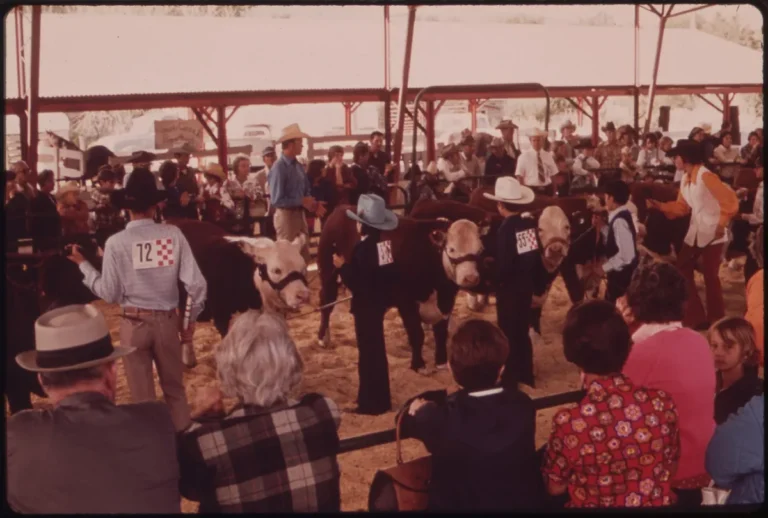
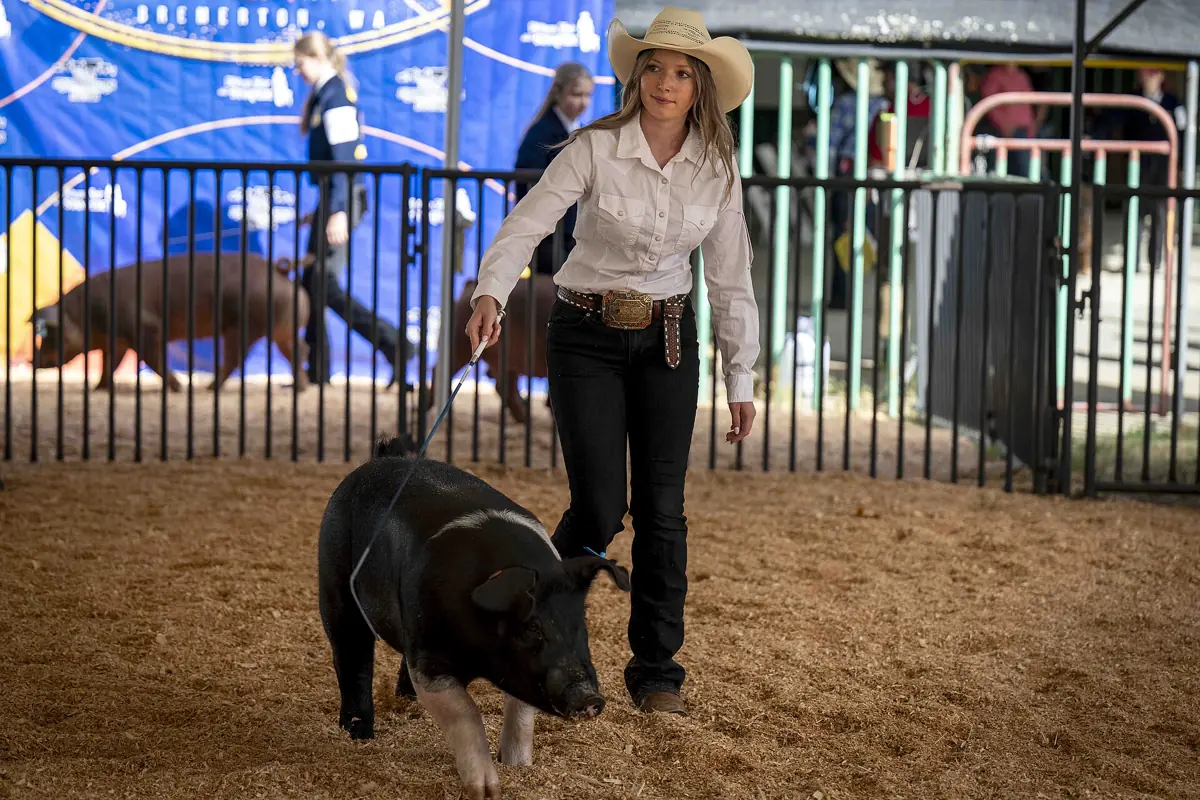
A junior show turns the usual fairground order inside out. At a general fair the livestock barns sit at the edge of the entertainment; here they are the entertainment. The standard cast of a junior show fills the pens: beef cattle, dairy animals, market hogs driven with boards and patience, sheep blocked and trimmed, goats, and the small cages of poultry and rabbits younger members often start with. Each species brings its own choreography, and a visitor who walks the lines will see an animal look ordinary at dawn and immaculate by class time, because the fitting between is half the contest.
How a Junior Class Is Won
Judging at a junior show runs on two tracks at once. The animal is placed against the standard for its breed and class, and the exhibitor is placed separately in showmanship, where the judge watches how a young handler presents the animal and recovers when it plants its feet and refuses the script. Showmanship is the contest families talk about on the drive home, because it rewards the year of work rather than the luck of a good calf crop. Whether any sale follows the judging is among the details the record does not settle; ask locally rather than assume a larger fair’s programme.
The People Holding the Lead Ropes
Parents and grandparents haul trailers, hold spare halters and run the wash rack; club leaders and agriculture teachers move between pens settling nerves; the youngest exhibitors are watched over by teenagers who were in the same position three summers earlier. Spectators without a family stake are welcome, but they are guests at a working event rather than customers at an attraction.
Planning a Visit to Lancaster
The Days Are the Reader’s to Confirm
The single most important planning fact is a negative one. The show’s entry platform carried the 2026 edition with a window running from June 3 to July 26, and that span is the platform’s entry and show window, not a set of confirmed spectator days. The actual public days are not published in the sources behind this article. Confirm dates and the day’s running order through local channels — youth programme contacts, the school agriculture department, or word in town — before building a trip around them. Summer is the season to hold in mind; anything more precise must come from the show.
Reaching a Small County Seat
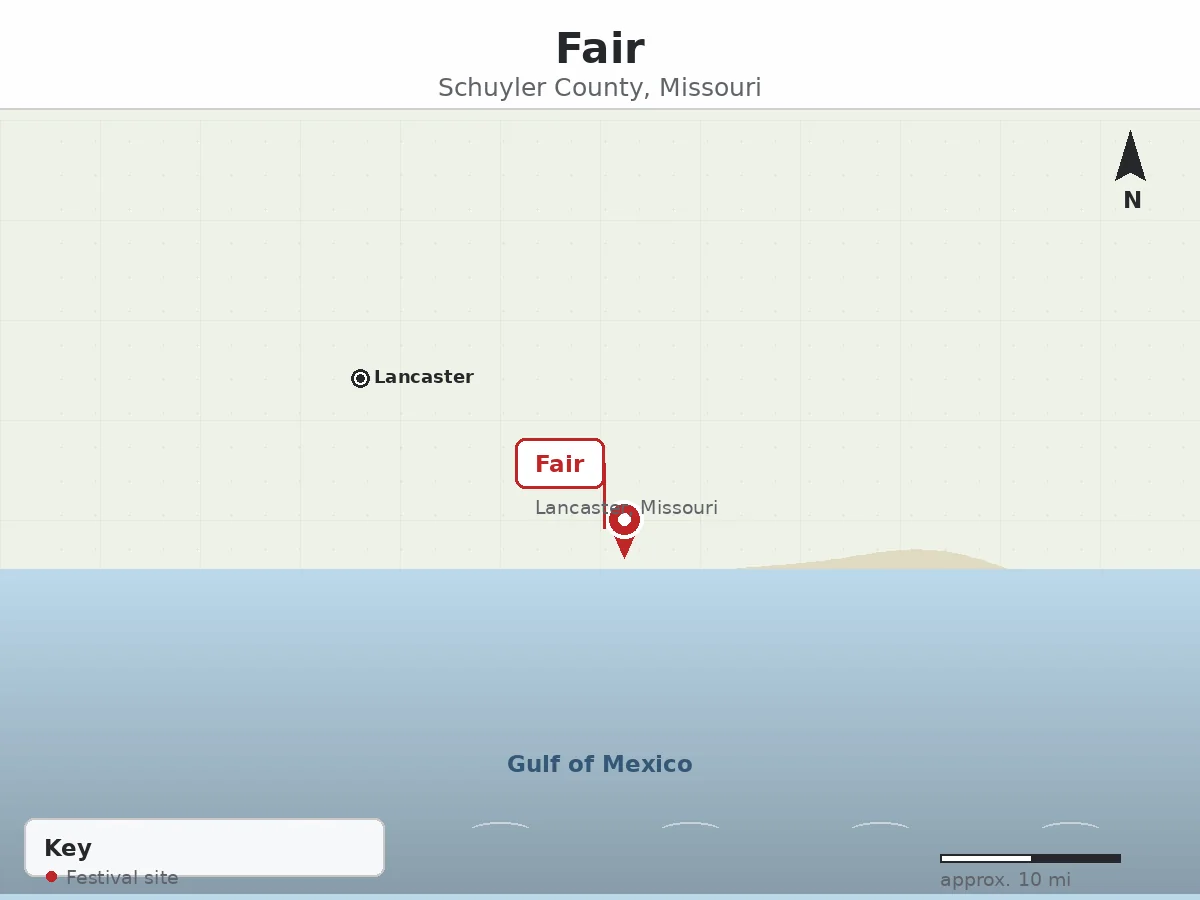
Lancaster sits in the northern tier of Missouri counties, a short distance below the Iowa line, in a landscape of farms and timbered creeks. It is a compact county seat, where the courthouse square anchors the town and most errands can be done on foot. Road journeys from Memphis to the east and Kirksville to the south are the natural approaches, drives where fuel, food and a charged phone are worth sorting before setting out, because services thin quickly between towns. No street address for the show grounds is published; the practical method is the old one: head for Lancaster, and ask.
Money Matters the Record Leaves Blank
No admission price, season pass or parking charge appears in any source behind this article, and the event is not described here as free, because that is not stated either. Junior shows commonly run without a gated fair’s ticketing apparatus, but common practice is not evidence, and the honest entry in a budget is a question mark. Carry small cash for food, drink and the small purchases of a small town, and treat anything beyond that as unconfirmed. Camping is nowhere offered or priced in the record, and anyone hoping to stay in a trailer should arrange it separately.
If Someone You Know Is Showing
Exhibitor families plan on a different calendar from spectators. Entries run through the show’s own online portal, health paperwork for animals must travel with them, and the working day starts with feeding and washing long before the first class. Spectators coming to support one exhibitor should learn that child’s class times on the day itself and arrive early; judging runs at the speed of animals rather than clocks.
A Workable Shape for a Show Day
Because no public running order is published, the day below is a shape to lay over the posted schedule once it is confirmed, not a timetable promised by anyone. Arrive in the morning, when the barns are busiest and the fitting work is still visible, and walk the pens early. Give the late morning to the ring and at least one full class, including a showmanship class if the day offers one. Break at midday into Lancaster for lunch and a turn around the courthouse square while the barns rest. Return for the afternoon classes, when championships are usually decided and the ringside crowd is at its most knowledgeable, and stay for the handshakes and photographs. Then let the exhibitors load out, and take the rural drive home in the evening light.
Measured Against the Fair Lancaster Used to Hold
The comparison this county invites is with its own past. The Lancaster fairs of the 1870s were general exhibitions: premium lists that reached across livestock, field crops, produce and domestic handwork, staged on fifty-five acres bought for the purpose. The modern junior show keeps one department of that broad canvas — the livestock — and hands it to the youngest farmers in the county. Everything else on the old premium list has no modern counterpart. The present event is narrower than what Lancaster once mounted, but concentrated on the strand of the old fair a farming county most needs passed on: the raising and judging of good animals by the people who will raise them next.
The Night-Before List
- Confirm the show’s public days and running order through local contacts; no dates are published in advance.
- Charge a phone and download directions; coverage is thin on northern-tier roads.
- Carry small cash for food and town purchases; no card payment or gate arrangement is documented.
- Pack sun protection, water and shoes that can handle barn aisles and gravel.
- Bring a light layer for the drive home, even in high summer.
- If you are supporting an exhibitor, learn their class and barn on arrival.
- Leave the dog at home; working livestock and strange dogs are a poor mixture.
- Plan fuel stops around the larger towns on the route, not on arrival in Lancaster.
Lancaster and the Country Around It
Lancaster rewards a slower look beyond the barns. It is a small town in the old pattern, built around its courthouse square, with the everyday businesses of a farming community. The land around it is the point: rolling north Missouri farmland, pasture and corn ground, timber along the creeks, and a sky that feels larger than the towns beneath it. Queen City and the county’s other small communities share the same agricultural rhythm, and the Iowa line lies a short drive north. None of this is packaged tourism; the county offers a working landscape and a quiet seat, best taken at driving pace with the windows down.
What the Junior Show Means to Schuyler County
In a county this small, institutions survive only if somebody’s family keeps choosing them. The junior livestock show matters because it is where agricultural skill passes down: a nine-year-old with a rabbit pen is inside the same system that will judge her cattle a decade later, and the adults on the wash rack were themselves placed in showmanship classes. The nineteenth-century societies needed fifty-five acres, a premium list and a printing press to make the county’s farming visible; the modern show does the same work with an entry portal and a ring. That continuity is one of spirit rather than of organisation, and the distinction matters. A county whose fair survives as a youth livestock show has kept the part of the fair that teaches somebody something.
Frequently Asked Questions
Is there a full county fair in Schuyler County?
No general county fair is documented. There is no carnival, midway, grandstand programme or gate in the record. The living event is the Schuyler County Junior Livestock Show in Lancaster, a youth livestock exhibition. The county did hold full fairs in the nineteenth century, under societies dissolved by 1881, a history separate from the modern show.
Where in Lancaster is the junior livestock show held?
The show is held in Lancaster, the county seat; no fairgrounds street address is published in the sources behind this article, and none is invented here. Confirm the grounds locally before travelling.
When does the junior livestock show take place?
The show is a summer event. Its entry platform carried the 2026 edition with a window from June 3 to July 26, 2026, but that span is the platform’s entry and show window, not a published public run, and the actual spectator days are not stated. Confirm the days through local channels before travelling.
What does admission to the show cost?
No admission price is published anywhere in the sources behind this article, and the show is not described here as free, because that is not stated either. The record contains no gate, pass or parking charge. Budget for food and town spending, and confirm entry arrangements locally.
What to Expect From the Next Schuyler County Missouri Fair Festival
How often is the Schuyler County Missouri Fair Festival held?
The junior livestock show behind this title is an annual summer event, carried on its own entry portal each year. Its rhythm follows the youth livestock calendar: projects run through the school year and come to the ring in summer.
When is the next Schuyler County Missouri Fair Festival?
The next edition is expected the following summer, in Lancaster. The 2026 entry window on the show’s platform ran from June 3 to July 26, and public days within any future window will need the same local confirmation, because no spectator schedule is published in the sources behind this article.
Will the dates change?
They can. Nothing in the record fixes the show to a permanent week, and the platform window should not be read as fixed from year to year. The habit to build is checking the show’s entry portal and local announcements each spring, and confirming public days before travelling.
A Small Record, Honestly Kept
Schuyler County asks more honesty of a writer than most counties in Missouri, because so little of its record can be padded without lying. What stands is enough: a county seat that once printed premium lists and bought fairgrounds, a fair organisation whose name survives on a register, and a summer show where county children lead animals into a ring to be judged. Travellers who come expecting that, and only that, will find a day that knows exactly what it is.