Wibaux County Montana Fair Festival
Drive east across Montana far enough and the road runs out of state. Wibaux sits hard against the North Dakota line, a small county seat presiding over a county of roughly a thousand people, and once a year, at the end of August, that whole county turns itself into a fair. The Wibaux County Fair runs four days at the Wibaux County Fairgrounds, on the weekend the county’s own Extension service describes as the fourth weekend in August, packing a night show, a sanctioned rodeo, a downtown parade, a livestock sale and a demolition derby into a programme sized for a town where everybody already knows everybody. The fair’s home-grown billing calls it “the little fair with big fun,” a phrase kept in its proper place here: the fair’s slogan for itself, carried as billing rather than as a judgement.
What follows is written to the fair’s real scale. This is no regional expo with a midway the length of a runway. It is a county fair in the oldest sense, where the exhibits were raised within a few miles of the grounds and the Sunday parade rolls down the main street of the only incorporated town the county has.
A Whole County of a Thousand, Putting On a Fair
The event’s published name is the Wibaux County Fair. It is organised by the Wibaux County Fair Board, which publishes the fair book under its own name, working with MSU Extension Wibaux County. No separate association or hired manager appears in the fair’s record: in a county this size, the board, the Extension office and the exhibitors are largely the same community wearing different hats across the year.
The setting explains the fair’s character. County programme highlights counted roughly a thousand residents spread across some 890 square miles of Wibaux County, figures offered here strictly as county context and never as a fair statistic. A fair drawing on a population that small cannot survive as a spectator product alone. It works because the county participates in it: families exhibit, neighbours judge, businesses feed people, and the stands fill with the same names that appear in the premium book.
The fairgrounds work all year, hosting community events well beyond fair week, and the county’s highlights note a new set of covered grandstands added in recent years, an investment that tells its own story about a small county intending to keep its fair. The state line adds one more ingredient. The fair book’s judges and exhibitors come from both Montana and North Dakota, with families crossing from towns such as Sentinel Butte and Amidon. They are people at Montana’s fair, welcomed across a line on the map; nothing about their presence turns this into anybody else’s event.
For a useful comparison, see the Wheatland County Montana Fair Festival for another county festival.
Quick Facts
| Detail | What the record shows |
| Published name | Wibaux County Fair |
| Fair town | Wibaux, the county seat and the county’s only incorporated town |
| Venue | Wibaux County Fairgrounds in Wibaux; no street address is published for the grounds |
| Run by | Wibaux County Fair Board, working with MSU Extension Wibaux County |
| Season | Late August, on the fourth weekend of the month, across four days |
| Documented 2026 window | August 20 to 23 in the entry record for that year |
| Weekend anchors | A night show on Friday, a rodeo on Saturday evening, then a parade, livestock sale and demolition derby on Sunday |
| Exhibits | 4-H and open class indoor exhibits, livestock exhibits and a horse show |
| Admission | A gate is charged in the fair board’s own book; no current amount is published anywhere |
| Camping | No fair-week camping offer is published in the fair’s record |
A History Told Through Its Paper Trail
Ask when this fair began and the honest answer is that the fetched record does not say. No founding year and no edition number is published in the fair-side sources behind this article, so none is printed here. A history built on a guessed birthday would be worse than the one the paperwork can support.
That paperwork has its own interest. The fair board’s fair book survives in the record in an older edition, the 2016 book, whose schedule ran from Wednesday, August 24 to Sunday, August 28 of that year. Read as evidence of shape rather than of current dates, it shows a fair already fully formed a decade ago: a horse show, indoor judging and a livestock weigh-in in its departments, a gate charged from four in the afternoon on the Friday of that edition, and a sponsored “Chicken Dinner for a Dollar” that belonged to that year alone. None of that edition’s dates or prices carries forward.
The trail continues in plainer documents. The county’s 2018 programme highlights describe the fairgrounds as a working community venue and record the new covered grandstands. A statewide 4-H fair listing placed Wibaux at August 22 to 25 in 2024, fenced to that year, and the entry record for 2026 lists the fair across August 20 to 23. Across a decade of paper, the constant is the position on the calendar: the fourth weekend in August, claimed by the fair’s own description as its standing place. Continuity, rather than a birthday, is what the evidence supports.
What to Expect at the Fairgrounds
Friday Night Opens the Weekend
The fair’s standing programme gives Friday evening to a night show, the weekend’s first gathering once exhibits are in place and the grounds have filled. Friday is when the fair shifts from preparation to performance: the barns are bedded, the indoor exhibits are judged or waiting on their ribbons, and the town comes out after supper to see what the year produced.
Saturday Belongs to the Rodeo
Saturday evening is rodeo night. The fair’s programme names an NRA, NWRA and NRCA Rodeo under the lights, sanctioned competition rather than a local exhibition, and in a county where ranch work is the ordinary economy, the arena is the weekend’s serious sporting stage. Daytime Saturday belongs to the grounds: livestock in the barns, food vendors doing steady business, and the smaller attractions working the crowd between events.
Sunday Runs Parade, Sale and Derby in Sequence
Sunday is the fair’s fullest day, and its order matters. A parade runs through downtown Wibaux first, taking the fair off the grounds and down the main street of the county seat. Back at the fairgrounds, the annual 4-H and FFA Livestock Sale gives young exhibitors their payday, the financial summit of a year’s feeding and fitting. The sale is held before the final act: a Demolition Derby and Bump-N-Run on Sunday afternoon, the weekend closing in noise and bent metal once the serious business is done.

The Quieter Attractions Carry Their Own Weight
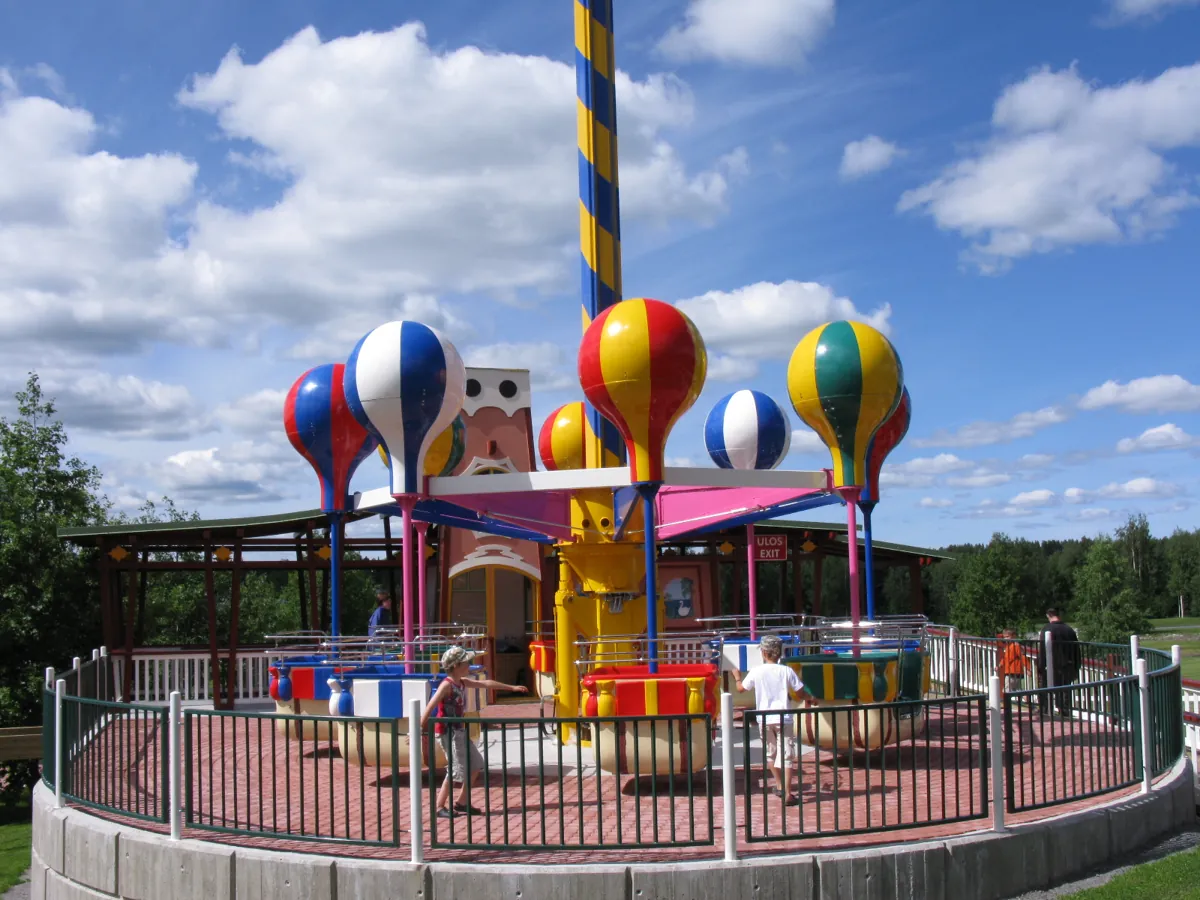
Between the anchors, the standing programme lists the texture of a small fair done properly: a climbing wall and inflatable games for children, a stick horse rodeo for the smallest riders, and food vendors anchored by the fair’s signature bargain, a “barbeque for a buck.” That dollar barbecue is a food item with a name, nothing more; it says nothing about the price of getting in.
Planning Your Visit
Aim for the Fourth Weekend in August
The fair’s own standing description fixes its place as the fourth weekend in August, a four-day run in late summer. The entry record for 2026 placed it from August 20 to 23, and an earlier statewide listing put a past edition a few days later in the same part of the month, so treat the weekend as the anchor and the exact dates as something each edition settles for itself. Anyone travelling a distance should confirm the current year’s dates before setting out.
The Gate Question, Answered Honestly
The fair board’s own book records admission being charged at the gate, so plan on paying to get in. What the record does not publish, anywhere, is the amount. No current gate, grandstand or parking price appears in the fair’s own sources, and no figure from food items or old editions can stand in for one. Carry cash and take the exact figure from the fair itself when it publishes one. What this fair is not, on any evidence available, is a free one.
Staying Over Without a Published Camping Offer
No fair-week camping offer appears in the fair’s record, so do not plan a trip around a fairgrounds campsite that may not exist. Wibaux is a small town and its beds are few; visitors who need a room should arrange it well ahead of fair weekend. The grounds carry no published street address either, though in a county seat of this size that is a smaller problem than it sounds: the fairgrounds are a known local landmark, and anyone in town can point you the last few blocks.
A Weekend Run at Fair Speed
Arrive Friday in time to walk the grounds before the evening programme: see the indoor exhibits while the halls are quiet, read the names on the livestock pens, and settle in for the night show as the light goes. Spend Saturday morning between the barns and the exhibit building, let children burn energy on the climbing wall and inflatables, eat from the vendors at midday, and be in the covered grandstands early for the rodeo. Give Sunday its full shape rather than picking at it: the downtown parade, the livestock sale as the weekend’s emotional and financial peak, and the demolition derby to finish.
Small County Fair, Weighed Fairly
Set beside a large state-scale fair, Wibaux trades spectacle for density of acquaintance. A big fair offers headline concerts, acres of machinery and a midway that takes an hour to cross; a visitor can attend for three days and remain anonymous. The Wibaux fair offers the opposite bargain. Its whole programme fits inside a long weekend, its champions are the neighbours’ children, and a stranger who stays for the sale will be recognised by Sunday. Neither model is the better fair in the abstract. But for understanding what a county fair was originally for — a county showing itself its own work, once a year, in one place — the little fair on the state line is the purer example, and its smallness is the substance rather than the limitation.
The Wibaux Fair Checklist
- Confirm the current year’s exact dates before travelling, working from the fourth weekend in August as the standing anchor.
- Bring cash for the gate, since admission is charged and no price is published in advance.
- Sort exhibit entries through the county Extension office and the fair’s entry route well before fair week.
- Arrange somewhere to sleep early, because no fair-week camping is published and the town’s rooms are few.
- Keep Friday evening free for the night show rather than treating Friday as a travel day.
- Be in the grandstands in good time on Saturday for the rodeo.
- Stay for the full Sunday sequence of parade, livestock sale and demolition derby, in that order.
- Pack for late-August plains weather, with hot afternoons and cooler evenings on the same day.
Beyond the Fairgrounds
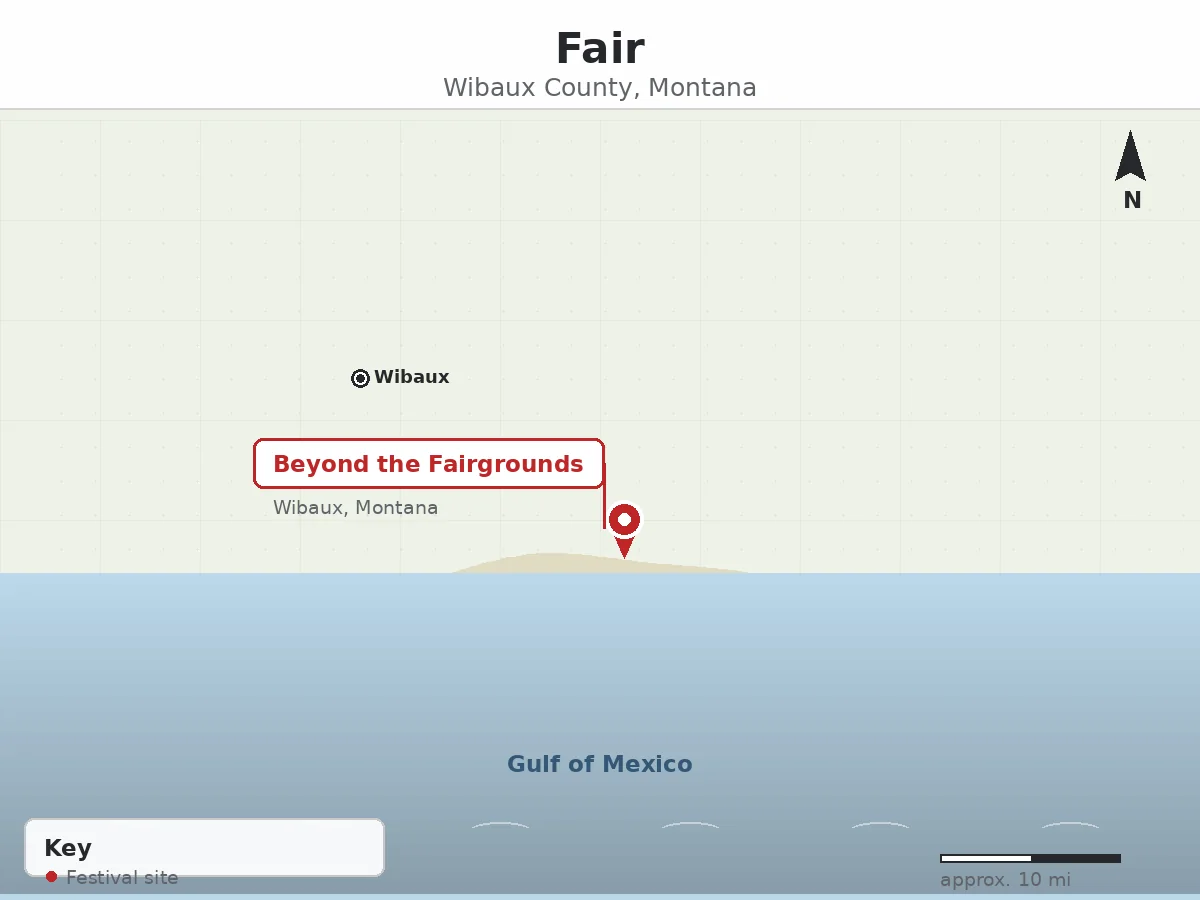
The fair’s own Sunday parade makes the case that its grounds are only half its venue: for one morning the event moves downtown and the whole of Wibaux becomes the fair. Outside fair week, the fairgrounds keep working as the county’s gathering place, hosting community events through the year under the same covered grandstands. The town repays an unhurried hour on foot, a compact county seat where the fair’s exhibitors, judges and officials are also the people behind the counters. And the state line is never abstract here: North Dakota begins minutes from the grounds, and the cross-border families show that community follows ranch roads rather than survey lines, even though the fair itself is firmly and only Montana’s.
Why a Fair This Small Matters
A county of about a thousand people does not have to stage a four-day fair. It has to choose to, every year, through a fair board, an Extension office, sponsors for dollar dinners and buyers at a youth livestock sale. The sale converts applause into income for young producers, and the exhibits convert a year of ordinary work into something the whole county stops to look at. Held together across generations, the fair becomes one of the few occasions when the county appears in public as a single community, joined on its own ground by friends from across the state line.
Frequently Asked Questions
Is the fair actually held in the town of Wibaux itself?
Yes. The fair takes place at the Wibaux County Fairgrounds in Wibaux, which is both the county seat and the only incorporated town in the county, so there is no second venue or host town to confuse it with.
Does the fair charge admission, and how much is it?
Admission is charged at the gate in the fair board’s own book, so the fair should not be described as free. No current amount is published in the fair’s own record, which means any exact price quoted in advance would be a guess; take the figure from the fair itself for the year you attend.
Is camping offered at the fairgrounds for fair week?
No fair-week camping offer is published in the fair’s record, so camping on the grounds cannot be promised. Visitors needing to stay over should arrange accommodation ahead of the weekend rather than arriving with a trailer and a hope.
Do North Dakota families take part in a Montana fair?
They do, as participants rather than as hosts. The fair book’s world includes judges and exhibitors from North Dakota towns such as Sentinel Butte and Amidon, drawn by the short distance across the state line, but the event they are attending is the Wibaux County Fair in Montana, run by its Montana fair board.
What to Expect From the Next Wibaux County Montana Fair Festival
How often is the Wibaux County Montana Fair Festival held?
It returns every year. Its standing description places it on the fourth weekend in August, running across four days at the fairgrounds in Wibaux.
When is the next Wibaux County Montana Fair Festival?
The next edition follows the same standing pattern, falling on the fourth weekend of August at the Wibaux County Fairgrounds. The 2026 entry record listed that year’s fair from August 20 to 23, and later editions settle their exact dates in their own records closer to the time.
Will the dates change?
The weekend itself is the stable part: the fair’s own description claims the fourth weekend in August as its standing place. The precise four days can shift by a few days between editions, as past listings show, so the safe habit is to expect late August and confirm the exact dates for the year in question.
The Little Fair, On Its Own Terms
Judged by acreage or attendance, this is one of Montana’s smallest county fairs. Judged by what a county fair is meant to do, it is complete: exhibits and livestock judged, a rodeo under lights, a parade down main street, a sale that pays its young exhibitors, and a demolition derby to send everyone home. A county of a thousand people builds all of that, every August, on the edge of the state — small county, full weekend, nothing missing.