Bath County Kentucky Salt Lick Hometown Festival
Salt Lick is a small community in Bath County, Kentucky, and on Saturday, the twenty-sixth of September, two thousand twenty-six, its Main Street hosted the Salt Lick Hometown Festival. The event survives in the record through two local newspaper layers: a report of city council proceedings from March of that year, which fixed the date and the hours, and an advertisement printed in the issue of the twenty-third of September, which laid out the day’s programme three days before it happened. Between those two layers, a clear picture emerges of a single-day street festival built around a judged car show, live music, food trucks and craft stalls. What the record does not supply matters just as much: no organiser is named, no founding year is given, and no general admission price is printed anywhere. This article keeps strictly to what those layers document.

About
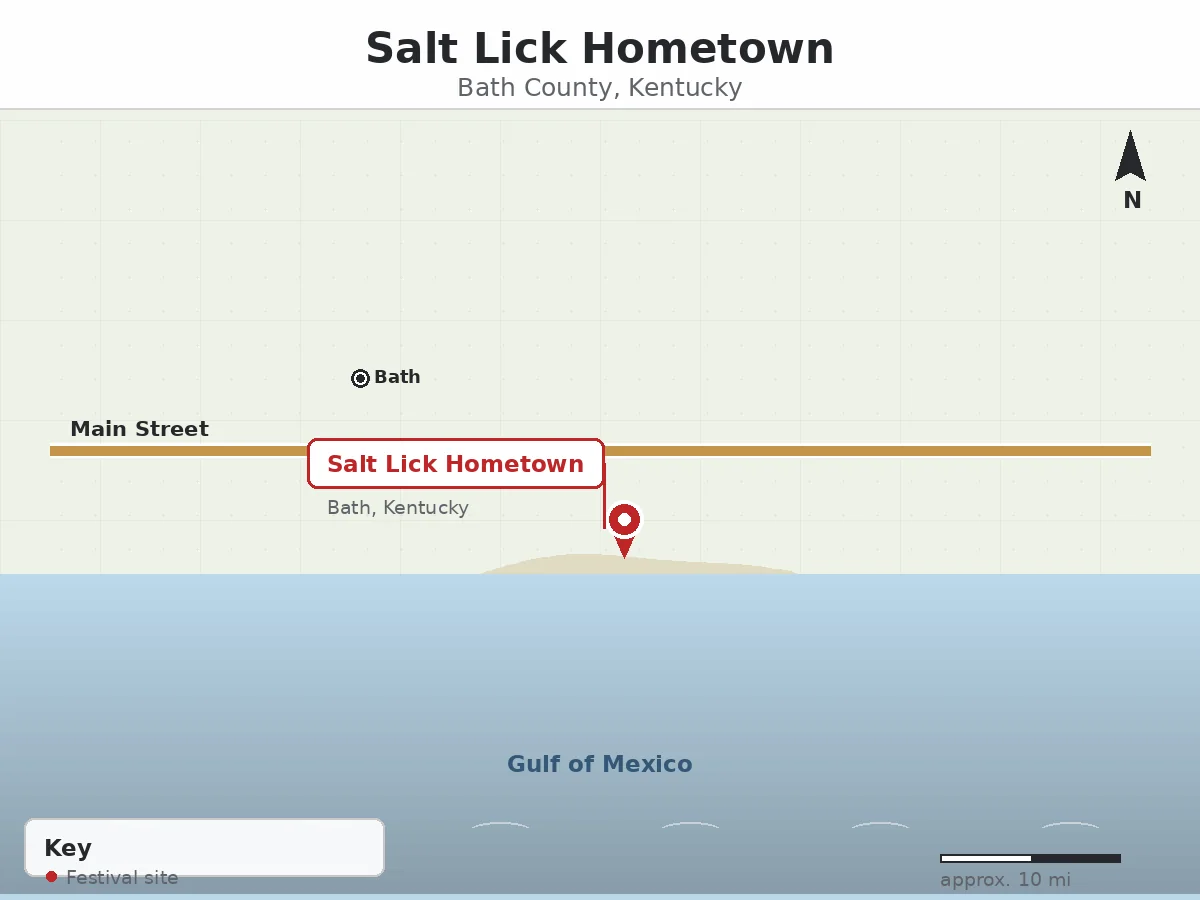
The published name needs no untangling. Both newspaper layers print the event as the Salt Lick Hometown Festival, word for word, so the title under which the day was advertised in Bath County is the title this article carries. Salt Lick sits in Kentucky’s Bath County, in the eastern part of the state. It is not the county seat: a statewide newspaper layer identifies Owingsville as the seat of Bath County, and Salt Lick’s celebration is a hometown occasion rather than a county-government production. The setting, as the advertisement layer prints it, is Main Street in Salt Lick, which means the festival occupied the community’s central street rather than a fairground or a park. One point deserves care. The report of Salt Lick city council proceedings records the council discussing the festival’s scheduled date and hours in March two thousand twenty-six. Discussion in a council meeting is not the same thing as organisation, and the layers read name no organising body, committee or individual behind the event. Accordingly, this article attributes the festival to no one and simply reports the day as the two newspaper layers documented it. It is worth adding that the two layers agree wherever they overlap. The council report’s date and hours match the occasion the advertisement later promoted, and the advertisement’s programme sits comfortably inside those hours, so the record, though modest, is internally consistent.
Quick Facts
| Detail | What the record shows |
| Published name | Salt Lick Hometown Festival |
| Host community | Salt Lick, in Bath County, Kentucky |
| County seat | Owingsville; Salt Lick does not hold that role |
| Setting | Main Street, Salt Lick |
| Documented edition | Saturday, the twenty-sixth of September, two thousand twenty-six |
| Festival hours | Ten in the morning until five in the afternoon |
| Car show hours | Eleven in the morning until three in the afternoon, with trophies for winners |
| Programme | Live music, food trucks, craft vendors, children’s activities, a silent auction and a split-the-pot drawing |
| Gate admission | No general price, and no statement that entry is free, appears in the layers read |
| Car entry charge | Fifteen dollars to register a car, a competitor fee rather than gate admission |
History
Anyone hoping for a founding story will have to wait for a fuller record. Nothing in the layers consulted gives a first edition, an anniversary count or a year in which this festival began, and this article will not invent one. The documented trail opens in March two thousand twenty-six, when the council-proceedings report recorded the date and hours already scheduled for that September. By the twenty-third of September, an advertisement in the local newspaper set out the complete programme, which shows the event moving from a line in the council’s business to a promoted public occasion inside the same year. Salt Lick had hosted other gatherings before then: a local newspaper layer records a separately named Spice and Sounds Music and Food Festival held in the town in May two thousand twenty-four. That event carries a different name and a different billing, and nothing connects it to the Hometown Festival as a predecessor, so its date cannot be borrowed to give this festival a longer past. The honest summary is short: one edition is documented in detail, and whatever earlier history the festival may have sits outside the published layers read here.
What to Expect
The advertisement printed three days before the festival is the best guide to the day itself. The centrepiece was a car show running from eleven in the morning until three in the afternoon, with trophies awarded to winning entries, so polished vehicles lined the street for the middle four hours of the festival. Around the cars, the advertisement lists live music, food trucks serving the crowd, and craft vendors selling their work. Children’s activities gave families something aimed at younger visitors, while a silent auction and a split-the-pot drawing added two participatory draws that ran alongside the stalls. The festival hours bracket all of this between ten in the morning and five in the afternoon, a seven-hour span on a single Saturday. Just as notable is what the advertisement does not say: it prints no stage timetable, no list of performers, no vendor count and no parking directions. Visitors picturing the day should imagine a compact Main Street gathering whose shape is known in outline — cars, music, food, crafts and games of chance — rather than a large fair with published schedules for every hour. The children’s activities deserve a word of their own, because their presence in the advertisement signals that the day was pitched at whole families rather than at car enthusiasts alone. Likewise, a silent auction rewards patience, since bids can be revisited as the afternoon unfolds, and a split-the-pot drawing gives nearly every attendee a small stake in the outcome. None of these elements requires the visitor to plan around a timetable; they reward wandering, lingering and returning to a stall or a car as the mood takes you.
Planning Your Visit
Because only one edition is documented, sensible planning rests on the particulars of that single day rather than on promises about future ones. The documented edition fell on Saturday, the twenty-sixth of September, two thousand twenty-six, and ran from ten in the morning until five in the afternoon, so a visitor arriving near the opening hour could see everything the programme offered without rushing. Anyone keen on the car show should aim to be on Main Street before eleven, when the show opened, and stay past three if they want to learn which entries took the trophies. Car owners thinking of entering should note the one firm charge in the record: registration cost fifteen dollars, and pre-registration was handled through the branches of a local bank, whose name this article does not reproduce. That fee buys a place in the show; it is not a ticket for spectators. On general admission the record is silent in both directions — no layer states a gate price, and none states that entry is free — so visitors should carry some cash for food trucks, auction bids and the drawing, and treat any entry arrangement as something to confirm locally nearer the day. The two thousand twenty-six experience also teaches a timing lesson about information itself: the fullest published account of the programme appeared only three days before the event, so anyone watching for a future edition should expect firm details late and treat earlier silence as normal rather than as a sign of cancellation.
For a useful comparison, see the Bath County Kentucky KY Meat Shower Festival for another county festival.
A Sample Day at the Festival
A relaxed arrival around ten in the morning puts a visitor on Main Street as the festival opens, with time to walk the craft stalls before the street fills. Late morning belongs to the car show, which opens at eleven; an hour spent among the entries, talking with owners, carries the day comfortably toward midday. Lunch from one of the food trucks keeps the visit on the street, and the early afternoon can alternate between the remaining cars, the live music and a bid or two in the silent auction. Buying into the split-the-pot drawing fits naturally into the same stretch of the afternoon. By three, the car show closes and attention turns to the trophies and to whichever entries the judges picked out. The final two hours, until the five o’clock close, suit a slower second pass along the vendors and a last look at the street before the festival winds down.
How It Compares
Two nearby names are worth separating from this one. The Spice and Sounds Music and Food Festival, documented in Salt Lick in May two thousand twenty-four, shares the town but not the name, the season or the billing: its title promises music and food, whereas the Hometown Festival’s programme is anchored by a judged car show. The Salt Festival at Big Bone Lick, meanwhile, belongs to Boone County, a different county altogether, and the resemblance is only a shared word. Within its own day, the Hometown Festival’s structure is distinctive in a quieter way: a four-hour car show nested inside a seven-hour street festival, with the auction and the drawing giving spectators something to enter themselves rather than only watch. Many small-town celebrations spread their attractions across a whole weekend; the documented Salt Lick edition compressed everything into one Saturday, which made the day easy to take in whole but left no second chance for anyone who missed it.

A Visitor Checklist
- Arrive near ten in the morning to catch the full span of the day.
- Be on Main Street before eleven if the car show is your main draw.
- Bring cash for food trucks, the silent auction and the split-the-pot drawing.
- Car entrants should set aside fifteen dollars for registration.
- Ask locally about pre-registration at the bank branches the advertisement named.
- Do not assume entry is either free or ticketed; the record settles neither.
- Stay past three in the afternoon to hear the car show trophy results.
- Leave time before the five o’clock close for a final pass along the craft stalls.
Beyond the Festival Day
A trip to Salt Lick for the festival can extend naturally into the rest of Bath County. Owingsville, the county seat, is the county’s administrative centre and the obvious second stop for a traveller wanting to see more of the area than one street in one small town. The county’s rural roads, small communities and everyday Appalachian foothill scenery reward unhurried driving, and a festival Saturday pairs well with a slower Sunday spent exploring them. Travellers should simply keep clear in their minds which events belong to which place: the gatherings documented in Owingsville and elsewhere in the county are their own occasions, not extensions of Salt Lick’s day, and the Hometown Festival’s record covers Main Street alone.
Why the Festival Matters
For a community of Salt Lick’s size, a festival that closes the day around its own Main Street carries weight beyond its programme. The documented edition shows the town’s council giving the date and hours time in its proceedings months ahead, a local newspaper carrying the full advertisement, car owners paying to enter a judged show, and vendors, musicians and food trucks all drawing on the same seven hours. Even the smaller elements — trophies for winning cars, an auction, a split-the-pot drawing — point to a day built for participation by residents rather than spectacle staged for outsiders. The record also preserves something fragile: without those two newspaper layers, a one-day event in a small town could easily vanish from view entirely. Their survival means the festival’s shape, date and character remain checkable facts rather than recollections, and that matters for anyone who studies how small Kentucky communities celebrate themselves.
Frequently Asked Questions
Which sources document the Salt Lick Hometown Festival?
Two local newspaper layers carry the record: a report of city council proceedings from March two thousand twenty-six, which gives the date and hours, and an advertisement in the issue of the twenty-third of September two thousand twenty-six, which gives the programme. No organiser publication or official festival site appears in the layers read.
What happens during the car show, and when does it run?
The show runs from eleven in the morning until three in the afternoon, inside the wider festival day. Owners register their cars for fifteen dollars, with pre-registration arranged through branches of a local bank, and trophies go to the winning entries once judging is done.
Does the record say anything about a founding year?
It does not. Neither newspaper layer prints a first edition, an anniversary number or a starting year, and the separately named Salt Lick event documented in two thousand twenty-four is a different festival, so no earlier date can honestly be attached to this one.
Is Salt Lick the county seat of Bath County?
No. A statewide newspaper layer identifies Owingsville as the seat of Bath County. Salt Lick hosts the festival as one of the county’s smaller communities, and the council discussion recorded in the proceedings report was the Salt Lick city council’s own business.
What to Expect From the Next Bath County Kentucky Salt Lick Hometown Festival
How often is Bath County Kentucky Salt Lick Hometown Festival held?
The layers read document a single edition, held on one Saturday in late September two thousand twenty-six, and they print no statement about how frequently the festival recurs. Readers should treat the rhythm of the event as unconfirmed until a further edition is published with its own date.
When is the next Bath County Kentucky Salt Lick Hometown Festival?
No following date appears in the layers consulted. The only scheduling trail available is the pattern of two thousand twenty-six itself, when the council discussed the date in March and the programme was advertised the week of the event, so watching local announcements through late summer would be the practical way to catch any new date.
Will the dates change?
There is no earlier documented date to compare against, so change cannot be measured yet. The twenty-sixth of September two thousand twenty-six stands as the sole fixed point; if a future edition moves to a different Saturday, that will be a fact established by its own announcement rather than by anything in the present record.
Final Word
The Salt Lick Hometown Festival, as documented, is a modest and appealing thing: one Saturday, one street, a car show at its centre and a town turning out for itself. This article has kept the account inside the two newspaper layers that preserve the day, naming what they confirm — the date, the hours, the programme and the single printed fee — and leaving open what they do not, from the organiser’s identity to the festival’s age. If further editions are documented in years to come, the record will grow; until then, the twenty-sixth of September, two thousand twenty-six remains the day on which Salt Lick’s hometown celebration can be seen most clearly.