Bullitt County Kentucky COLORFEST at Bernheim Festival
Autumn in Bullitt County brings a familiar invitation. Woods redden, mornings sharpen, and families watch for the gathering that has marked this season for a generation. That gathering is ColorFest, staged at Bernheim Forest and Arboretum in Clermont, with activity centred around its Visitor Center. Honesty about the name belongs right at the front. The organiser publishes the event simply as ColorFest, one blended word with a capital letter midway. No layer examined prints the expanded title standing at the head of this article. That longer form is a filing label for this series, while ColorFest is the name any searcher should carry.
Rich documentation makes the event easy to describe despite that naming gap. It is a ticketed fundraiser built around fall colour, outdoor play, and close contact with nature. The documented edition runs from the seventh to the eighth of November in two thousand twenty six, opening at ten in the morning and closing at four in the afternoon on both days. The organiser bills the weekend as the thirtieth ColorFest and the final one, while a regional newspaper layer dated the ninth of October in two thousand twenty six confirms the thirtieth event will be the last, discontinued to make way for new programming ahead of the one hundredth anniversary of Bernheim.
About
ColorFest belongs to Clermont, a Bullitt County community separate from the county seat, which reference layers place at Shepherdsville. Anyone picturing a courthouse square celebration should swap that image for a forest clearing. Bernheim Forest and Arboretum hosts the weekend on its own ground, gathering everything around the Visitor Center, where arrivals orient themselves before drifting into the trees. The host appears in print under two forms, Bernheim Forest and Arboretum and Bernheim Arboretum and Research Forest, and both are left standing here exactly as printed.
Running the weekend as a fundraiser shapes its character throughout. Ticket money supports the institution that tends the woods, rather than paying a travelling show that rents a field and moves on. Families come for slides and music, yet the headline attraction remains the arboretum itself at peak colour, and that home ground feeling separates ColorFest from any midway pitched on borrowed land.
Quick Facts
| Item | Detail |
| Published name | ColorFest |
| Host community | Clermont, Bullitt County, Kentucky |
| County seat | Shepherdsville |
| Venue | Bernheim Forest and Arboretum, around its Visitor Center |
| Organiser | Bernheim Forest and Arboretum, also printed Bernheim Arboretum and Research Forest |
| Documented dates | Seventh to eighth of November, two thousand twenty six |
| Daily hours | Ten in the morning to four in the afternoon |
| Billing | Thirtieth ColorFest, and the final one |
| Admission, that edition | Thirty dollars per vehicle, every guest at the member rate |
| Purpose | Ticketed fundraiser for the host |
History
Longevity here comes straight from the organiser mouth. Its pages state that attendees have enjoyed the festival since nineteen ninety six, and the same source calls ColorFest the longest running festival at Bernheim. Both statements stand in this article as the organiser printed claim about itself. A host recounting three decades of its own tradition is a credible witness, and nothing in the wider record contradicts the broad outline.
For a useful comparison, see the Bullitt County Kentucky Mount Washington Spring Festival for another county festival.
The newspaper layer writes the closing chapter. Reporting on the ninth of October in two thousand twenty six, it confirms the approaching weekend as the thirtieth ColorFest and the last, explaining that discontinuation clears room for new programming as Bernheim approaches its one hundredth anniversary. Joined together, the layers draw a complete arc. A fall gathering begins in the middle of the nineteen nineties, becomes the host longest running festival, and finishes with a thirtieth edition designated as the finale by its own organiser. Ending at full strength, in peak colour, lets the tradition bow out deliberately instead of dwindling through weaker copies of itself.
What to Expect
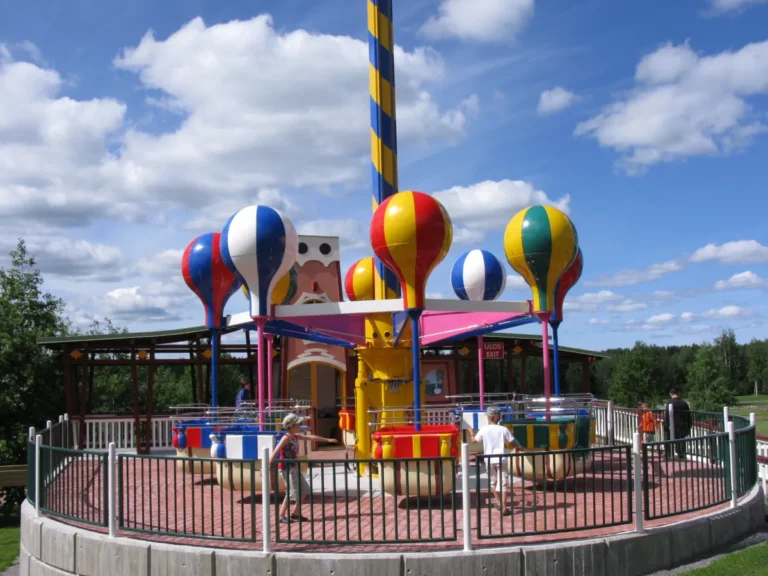
Colour leads the experience before any single attraction does. Paths between activities run beneath turning canopy in an arboretum and forest, so even a walk to buy lunch becomes part of the spectacle. Around the Visitor Center, motion takes over. Giant slides anchor the play programme, delivering the fast repeated thrill children organise their whole day around. Nearby, a mud pie kitchen rewards the opposite tempo, slow and gloriously messy, where younger visitors mix, mould, and serve imaginary feasts concocted from the forest floor.
Pumpkin rolling converts the emblem of autumn into a race, with children chasing and cheering their entries. Threaded among the amusements, hands on nature activities keep the host mission visible, inviting visitors to handle, examine, and question the living landscape instead of merely admiring it from a path. A visiting travelling exhibit from a state history museum widens the weekend further, carrying Kentucky heritage into the woods for guests to explore between outdoor pursuits. The record presents that museum presence only in general terms, so this account keeps the same honest level of detail.
Feeding and entertaining the crowd completes the picture. Food trucks work both days, removing any need to leave the grounds hungry. Arts and craft vendors display handmade goods suited equally to early holiday shopping or one keepsake of the final edition. Live music threads through the programme, giving tired walkers a seat, a soundtrack, and a reason to linger beneath the trees.
Planning Your Visit
Two days, identical in shape, define the documented edition. Hours run from ten in the morning until four in the afternoon on Saturday the seventh of November and again on Sunday the eighth of November in two thousand twenty six. Six hours daily is generous without being sprawling, though arriving near opening still improves everything, especially for families determined to cover the slides, the mud pie kitchen, and the travelling exhibit without rushing any of them.
Admission planning could hardly be simpler for the final edition, because charging falls on the vehicle instead of the person. The organiser and the regional newspaper layer both print thirty dollars per vehicle for two thousand twenty six, described as a carload, with every guest charged the member rate that year. A car carrying grandparents and grandchildren therefore costs exactly what a lone driver pays, rewarding shared arrivals handsomely. Emphasis matters here, since those terms are recorded for the two thousand twenty six edition alone. No layer states the arrangements for other years, and earlier prices should never be assumed to match.
Dress and packing should follow the woodland setting. November weather in Kentucky turns chilly without asking permission, so layered clothing and sturdy footwear beat festival finery every time. Ground near the play areas softens quickly, particularly beside a mud pie kitchen performing its duty, and children fare best in clothes nobody will mourn. Carry water, leave room for food truck lunches, and keep payment handy for craft stalls. For directions, the organiser publishes its Clermont street address on its own pages, and navigation details belong to that source alone.
A Sample Day at the Festival
Opening time arrival lets the Visitor Center introduce the grounds calmly. Begin with one slow circuit, noting where vendors cluster, where musicians will set up, and where the travelling exhibit waits, all before a child spots the giant slides and cheerfully rewrites the schedule. Then surrender to the slides early. Energy burned before midday settles the remaining hours, and the busiest play features reward whoever reaches them ahead of the gathering crowd.
Late morning belongs to the mud pie kitchen and pumpkin rolling, two pastimes built for unhurried participation and excellent adult spectating. Lunch from the food trucks follows naturally, ideally eaten within earshot of live music, turning the middle of the day into rest without leaving the atmosphere. Refreshed, the afternoon suits quieter pursuits. Give the hands on nature activities and the state history museum travelling exhibit that stretch, when attention recovers and low light angles beautifully through the trees. Finish with a walk taken purely for colour before the four in the afternoon close.
How This Festival Compares
Kentucky fall festivals usually follow recognisable frames, a harvest crop, a courthouse square, a parade route, or a fairground midway. ColorFest departs from every one of those templates because its ground is a working arboretum and research forest, and its host is the very institution that owns and studies that ground. The festival never visits its landscape. It belongs there, and the landscape at peak colour acts as a co host no rented midway could ever reproduce.
Money draws another contrast. Per vehicle admission, levelled at the member rate for every guest during the final edition, differs sharply from per person gate charges familiar at county fairs. Large families and multigenerational groups feel that difference as a deciding factor, not a footnote. Fundraising purpose adds a third distinction, since spending at ColorFest supports the forest hosting it, making attendance a small act of patronage toward conservation and learning rather than a simple purchase of entertainment from an outside promoter.
Even its ending breaks the usual pattern. Festivals commonly shrink quietly and vanish from calendars, leaving loyal visitors unsure whether a final edition ever happened. ColorFest announced its conclusion beforehand, numbered its thirtieth running as its last, and explained the reasoning openly.
Your Festival Checklist
- Layered clothing ready for a cool November woodland day
- Sturdy closed shoes prepared for soft or muddy ground
- Spare clothes for children bound for the mud pie kitchen
- Group gathered into as few vehicles as possible
- Thirty dollars set aside for per vehicle admission in two thousand twenty six
- Payment ready for food trucks and craft vendors
- Water bottles packed for walks between activities
- Camera charged for peak autumn colour
- Time protected for the travelling exhibit and nature activities
- Directions taken from the organiser published Clermont address
Beyond the Festival Grounds
Clermont alone does not exhaust a farewell weekend. Shepherdsville, carrying the civic business of Bullitt County as its seat, offers a counterpoint of courthouse and commerce against Bernheim woodland quiet, and seeing both communities in one trip gives a fair measure of how the county balances town and wild ground. The forest itself also outlasts any festival footprint. Bernheim draws visitors across the whole year for its collections, woodland, and changing seasons, in months when no slide or food truck stands anywhere in sight.
Discovering the place through ColorFest often works as an introduction rather than a complete acquaintance. Returning on an ordinary weekend, walking the same ground slowly, can become the lasting gift of one autumn visit.
Why This Gathering Matters
Slides and pumpkin games might seem light material for significance, yet ColorFest earns the word on several levels. Within Bullitt County it gave Clermont a recurring autumn fixture and drew visitors toward a corner of the county defined by forest instead of government or commerce. Within Bernheim it stood, by the institution own account, as the longest running festival, a thread of continuity running from nineteen ninety six almost to the one hundredth anniversary. Few community events accompany their host across such a span.
Family memory supplies the most intimate level. Thirty editions turn a festival into a measuring stick for growing up, and adults who once cooked mud pies could return leading children of their own beneath the same turning trees. Announcing the final edition converted that quiet continuity into something consciously treasured, and the farewell framing allowed generations of attendees a proper goodbye. The closure method itself offers a lesson, since tying the decision to future programming rather than decline presents an honest template for retiring beloved events.
Frequently Asked Questions
What name does the organiser actually use for this gathering?
The organiser publishes the event simply as ColorFest, a single blended word with its capital letter partway through. The longer title heading this article is an expanded filing form belonging to this series, and no source in the record prints it. Searchers after details, tickets, or directions should therefore look under ColorFest, the only name the host itself uses.
Which part of the Bernheim grounds hosts the activity?
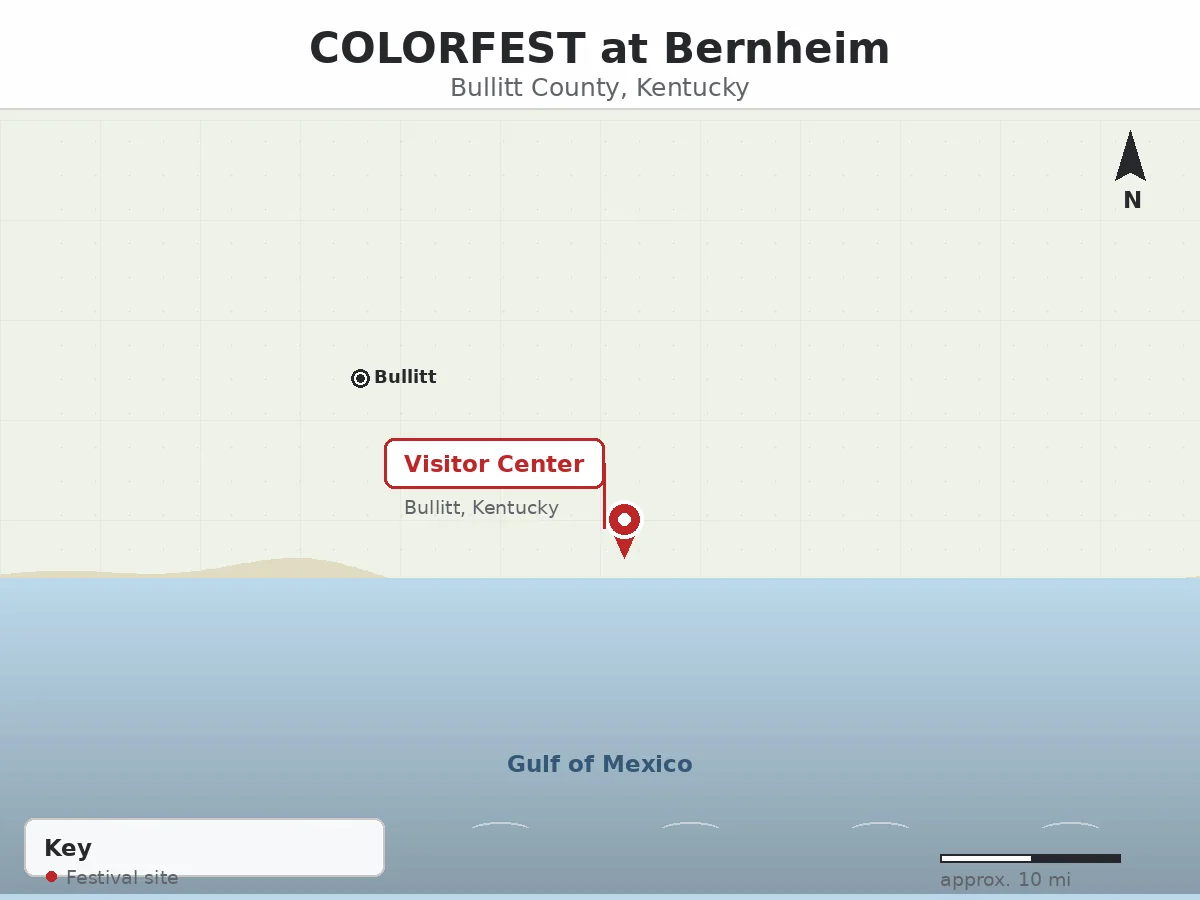
Everything gathers at Bernheim Forest and Arboretum around its Visitor Center, in Clermont, Bullitt County. Slides, vendors, music, and nature activities arrange themselves around that hub. Clermont hosts the festival, while Shepherdsville serves as county seat, so the celebration ground and the seat of county government occupy different communities within the same county.
How is entry charged for the final edition?
Entry falls on the vehicle rather than the visitor during two thousand twenty six. The organiser and a regional newspaper layer both print thirty dollars per vehicle, a carload arrangement, with every guest charged the member rate that year. Those terms belong specifically to the final edition of a ticketed fundraiser supporting the host, and they are not presented here as the terms of any earlier year.
Why is the November gathering described as the last one?
The host states it directly. Organiser pages bill the seventh to the eighth of November weekend in two thousand twenty six as the thirtieth ColorFest and the final one, while regional reporting from the ninth of October that year confirms discontinuation to make way for new programming ahead of the one hundredth anniversary of Bernheim. Deliberate farewell, not rumour or pause, is the correct description.
What to Expect From the Next Bullitt County Kentucky COLORFEST at Bernheim Festival
How often is Bullitt County Kentucky COLORFEST at Bernheim Festival held?
The record portrays a recurring autumn tradition, enjoyed since nineteen ninety six in the organiser own words and reaching its thirtieth edition in two thousand twenty six. That long sequence belongs firmly to history now. The organiser designates the two thousand twenty six running as the final one, closing the recurring pattern instead of extending it into another year.
When is the next Bullitt County Kentucky COLORFEST at Bernheim Festival?
No next edition exists anywhere in the evidence examined. The gathering of the seventh to the eighth of November in two thousand twenty six is billed by its own organiser as the thirtieth and the last, and regional reporting agrees the festival is discontinued. No successor date has been announced, and honesty requires an empty calendar rather than an invented weekend.
Will the dates change?
No future dates exist that could move. The final edition stands fixed in the record on the seventh to the eighth of November in two thousand twenty six, running from ten in the morning to four in the afternoon on each day. What altered was not the timing of a coming festival but whether any coming festival would exist at all, as Bernheim turns toward new programming before its one hundredth anniversary.
Closing Thoughts
ColorFest ends its story outdoors and in colour, exactly where it lived. A Clermont forest hosted a fall weekend families folded into their year across three decades, then announced the ending plainly and offered everyone a final chance to attend. Slides, mud pies, rolling pumpkins, music, crafts, and a visiting history exhibit filled the farewell programme, yet the enduring headline hung overhead, in canopy turning gold and red above the Visitor Center. Bullitt County keeps the forest itself, walkable in every autumn still to come, long after the last slide is packed away.