Vigo County Indiana Blues at the Crossroads Festival
On two September weekends preserved in print, downtown Terre Haute turned the crossing of Seventh Street and Wabash Avenue into an open-air blues room. The Blues at the Crossroads Festival took its name from that very ground, the intersection long billed as the historic Crossroads of America, and spread its music across two outdoor stages, with further sets tucked inside the Verve nightclub nearby. A local newspaper layer and a university student-media layer together document editions in twenty twenty-one and twenty twenty-two, complete with lineups, start times and ticket prices for each year. Those two editions are richly described, yet the trail of dated coverage stops at twenty twenty-two, and no source consulted for this article says the event has been discontinued, so the honest portrait rests on the documented record alone.
About
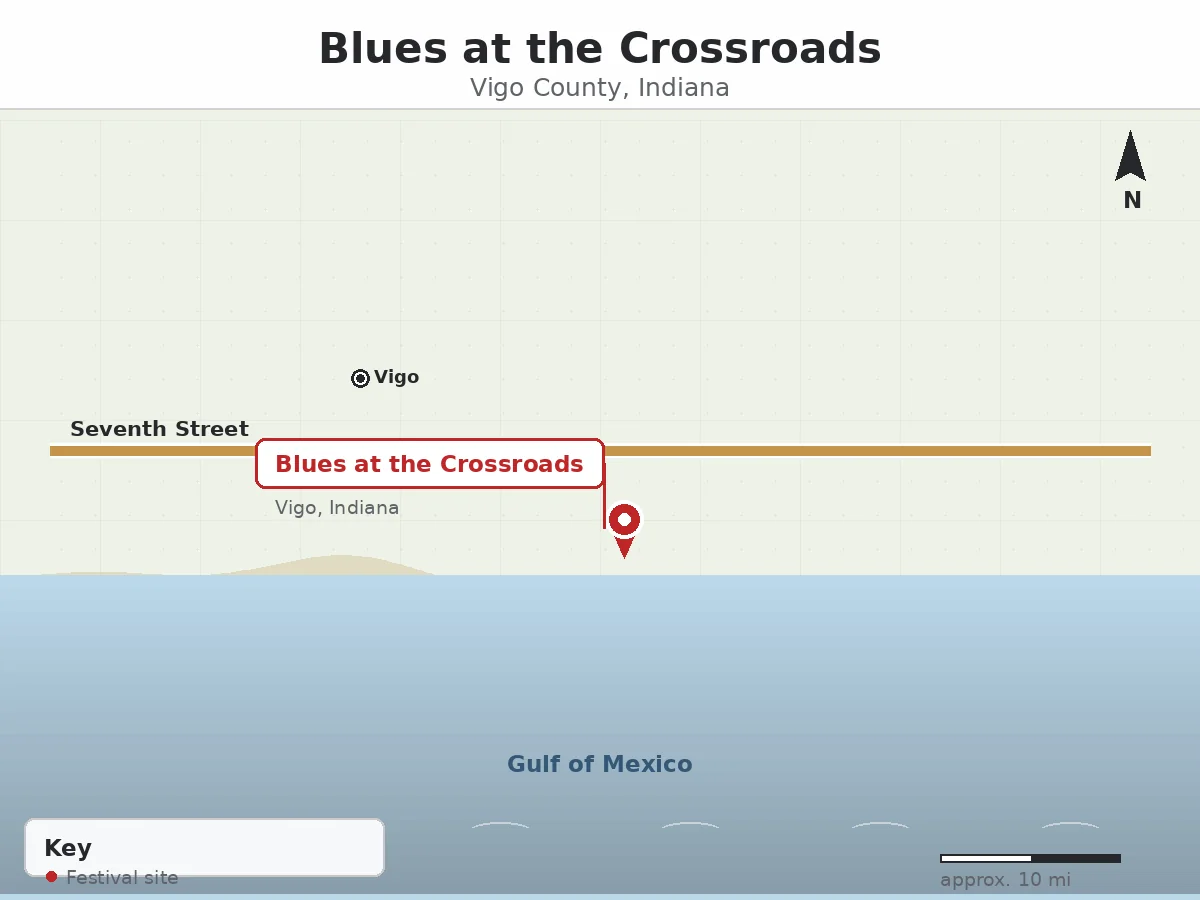
The festival belongs to Terre Haute, the county seat of Vigo County in Indiana, and more precisely to one celebrated downtown crossing. Seventh Street meets Wabash Avenue at the corner known as the Crossroads of America, and the newspaper account of the twenty twenty-two edition places the outdoor stages at that intersection, with additional performances indoors at the Verve nightclub. The layers that print the long form Blues at the Crossroads Festival also shorten it to Blues at the Crossroads, and both renderings refer to the same September gathering.
Who stands behind it depends on which layer you read, and the attributions are best left standing side by side rather than blended into one. The newspaper names the festival’s founder as Connie Wrin. The university student-media layer, writing about the twenty twenty-one edition, states that the festival is sponsored and run by the Verve Night Club. A nonprofit-registry aggregator, meanwhile, lists an organising corporation called Blues At The Crossroads Festival Inc in Terre Haute. Each account is reported here in the place its own source put it, because the layers never merge their claims into a single organiser story.
The two editions that carry full descriptions both belong to September, a Friday and a Saturday apiece, which is why the festival reads in the record as an early-autumn fixture of the downtown calendar rather than a midsummer fair.
Quick Facts
| Item | Detail |
| Published name | Blues at the Crossroads Festival |
| Shortened form | Blues at the Crossroads |
| Host town | Terre Haute, Indiana |
| County seat | Terre Haute is the county seat of Vigo County |
| Venue | The crossing of Seventh Street and Wabash Avenue in downtown Terre Haute, with further acts inside the Verve nightclub |
| Documented editions | The tenth and eleventh of September, twenty twenty-one, and the ninth and tenth of September, twenty twenty-two |
| Stages in twenty twenty-two | Two outdoor stages plus the nightclub room, carrying twenty-two bands in all |
| Founder | Connie Wrin, as named in the local newspaper layer |
| Record after twenty twenty-two | No dated edition appears in the layers read, and no discontinuation is announced |
History
The local newspaper states the festival’s arc plainly: it has run as an annual event since it was inaugurated in two thousand one, interrupted only in twenty twenty, when coronavirus shut it down. The university student-media layer tells the same story from a slightly different angle, calling twenty twenty-one the twentieth year of the festival since it started in two thousand one. Founder Connie Wrin, quoted in the newspaper, put the scale of the undertaking in money terms, saying that it costs well over one hundred thousand dollars to stage the show.
For a useful comparison, see the Vermillion County Indiana Little Italy Festival for another county festival.
Billing language in listing copy describes the twenty twenty-two edition as the twenty-second annual. That is a piece of billing, recorded here as billing only. This article does not try to square that number with the two thousand one inauguration the newspaper reports, because the layers themselves never reconcile the two figures, and quietly choosing one would invent a certainty the sources do not offer.
The years after twenty twenty-two fall quiet in print. Nothing consulted for this article describes a dated edition from twenty twenty-three onward, and nothing announces a farewell either. A nonprofit-registry aggregator entry lists the organising corporation with zero revenue in twenty twenty-four, but that is an uncorroborated aggregator claim, worth noting only as the kind of faint trace the festival leaves behind in its undocumented years.
What to Expect
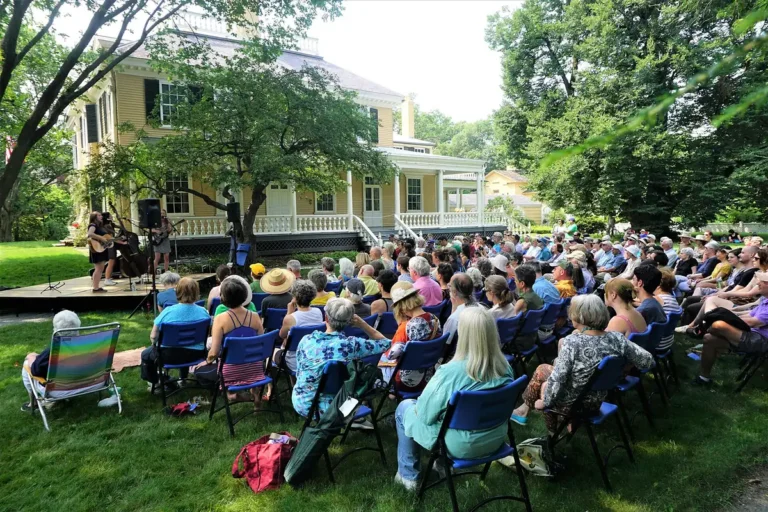
Two outdoor stages anchored the twenty twenty-two edition at the downtown crossing, and the Verve nightclub added an indoor room, so twenty-two bands in all moved between open-air sets and club sets across the Friday and Saturday. Music began at five in the evening on the Friday and at four in the evening on the Saturday, according to the newspaper preview published on the eighth of September, twenty twenty-two. The headline slot on Saturday belonged to the Reverend Peyton’s Big Damn Band, set for ten in the evening.
A year earlier the bill had a similar centre of gravity. The student-media layer placed performers from that same band’s circle, Max Allen and Russ Green among them, on the Saturday main stage in twenty twenty-one, while the Friday of that edition brought the Tommy Kelly Band, Jennie DeVoe and Mike Milligan and Steam Shovel to the stages. Food and family space filled the ground between sets in twenty twenty-two: the newspaper describes local restaurants providing the food, a twenty-one-and-over alcohol area, and an expanded kid-zone where children could try the Terre Haute Symphony Orchestra’s instruments for themselves. Listing copy derived from the organiser adds a dedicated kid stage to that same edition’s layout.
Planning Your Visit
Both documented editions landed on a Friday and a Saturday in September, and both sat at the same downtown crossing, so the shape of a visit stays consistent even though the record is short. In twenty twenty-two the music started at five in the evening on Friday and at four in the evening on Saturday, a pattern that suits a trip built around evenings rather than full days. The stages stood where Seventh Street crosses Wabash Avenue, with the Verve nightclub hosting the indoor portion of the programme.
Ticket figures belong strictly to the years that printed them. For twenty twenty-one, the student-media layer gives twenty dollars for adults, with children aged sixteen and younger admitted free of charge. For twenty twenty-two, the newspaper lists general admission at twenty dollars per day bought in advance and twenty-five dollars per day at the gate, with VIP tickets at one hundred twenty dollars. Those numbers describe the documented prices of their own Septembers, not a promise about any later edition.
That caution matters because the published trail ends with the twenty twenty-two edition. Anyone measuring a trip against this festival’s history should know that no dated edition after that September appears in the layers read for this article, so current arrangements, if any exist at all, sit outside the documented record and cannot be described from it.
Sample Itinerary
A Friday in the mould of twenty twenty-two could begin at the crossing shortly before five in the evening, when the first of the day’s bands took the outdoor stages at Seventh Street and Wabash Avenue. The early sets allow the easiest wandering, drifting between the two open-air stages while local restaurants serve the evening’s food around the site and the indoor room at the Verve offers a change of scene.
Saturday in that same edition opened an hour earlier, at four in the evening, leaving a longer afternoon for the family side of the grounds. The newspaper’s description of the expanded kid-zone, where children could handle the Terre Haute Symphony Orchestra’s instruments, fits naturally into those daylight hours, along with the kid stage that organiser-derived listing copy mentions for that year. For adults, the twenty-one-and-over alcohol area the newspaper noted in that edition gave the afternoon a separate gathering spot of its own.
The evening then builds toward the headliner. In twenty twenty-two the Reverend Peyton’s Big Damn Band held the ten o’clock Saturday slot, the latest named set in the newspaper’s account. Sets inside the Verve nightclub ran alongside the outdoor programme, giving the weekend a second, smaller room to fold into the night once the headline set on the main stage had finished.
How It Compares
The name travels further than the festival does. A concert event in Roanoke, Virginia, bills itself as Blues at the Crossroads II, and despite the near-identical title it is an unrelated production, with no connection to the Terre Haute gathering documented here.
Closer to home, Terre Haute also lends the name to the Blues at the Crossroads Half Marathon. That road race is a companion event sharing the festival’s branding and its hometown, yet it is a run through the streets rather than a weekend of bands, and it should not be confused with the festival itself when the two appear side by side in listings.
Checklist
- Pick between the Friday evening start and the longer Saturday afternoon, using the twenty twenty-two times as the documented pattern
- Budget from the year-specific prices: twenty dollars in advance or twenty-five dollars at the gate per day in twenty twenty-two
- Remember that the twenty twenty-one terms admitted children aged sixteen and younger free of charge
- Leave time for the kid-zone, where young visitors could try the Terre Haute Symphony Orchestra’s instruments
- Plan to move between the two outdoor stages and the Verve nightclub room across the evening
- Stay through to ten in the evening on Saturday for the headliner slot the newspaper documented
- Confirm the festival’s current status before travelling, since the documented record ends in twenty twenty-two
Beyond the Festival
Terre Haute itself supplies the context that makes the festival’s name land. The crossing at its heart carries the historic billing Crossroads of America, and the festival staged its music directly on that celebrated corner rather than near it. The Verve nightclub, which hosted the indoor sets and, in the student-media layer’s words, sponsored and ran the twenty twenty-one edition, anchors the event in the city’s own nightlife instead of any travelling production. Even the family programming reached into local institutions, since the instruments children could try in the kid-zone belonged to the Terre Haute Symphony Orchestra.
Why It Matters
A blues festival planted on a famous street corner does something a fairground show cannot: it folds the music into the identity of the place itself. On the newspaper’s account, the event ran annually from its two thousand one inauguration, the coronavirus year aside, which made it a fixture of Terre Haute Septembers across two decades. The documented editions show real reach for a locally run production: twenty-two bands in a single weekend in twenty twenty-two, and staging costs its founder put at well over one hundred thousand dollars. Its staging also braided together institutions that rarely share a bill: a nightclub hosting sets indoors, a symphony orchestra lending its instruments to children, and local restaurants feeding the crowd between stages.
The record also shows how a festival can fade from view without formally ending. No farewell announcement appears in the layers consulted, yet no dated edition after twenty twenty-two appears either, which leaves the Blues at the Crossroads Festival suspended between its documented past and an undocumented present. What print preserves, two Septembers of lineups, prices and start times at the Crossroads of America, remains the solid ground on which its story stands.
Frequently Asked Questions
Why does the festival carry the Crossroads name?
The name comes straight from the ground it occupies. The festival’s documented editions centred on the intersection of Seventh Street and Wabash Avenue in downtown Terre Haute, the crossing the layers identify as the historic Crossroads of America. The headline stages stood at that corner, so the billing describes the venue as much as it brands the music.
Who performed at the documented editions?
The twenty twenty-two edition carried twenty-two bands across two outdoor stages and the Verve nightclub, with the Reverend Peyton’s Big Damn Band in the Saturday headliner slot at ten in the evening. In twenty twenty-one, the Friday bill included the Tommy Kelly Band, Jennie DeVoe and Mike Milligan and Steam Shovel, while the Saturday main stage featured performers from the Big Damn Band’s circle, such as Max Allen and Russ Green.
Who organises the festival, according to the published layers?
The layers give three separate answers, and they are not merged here. The newspaper names Connie Wrin as the festival’s founder. The university student-media layer states that the twenty twenty-one edition was sponsored and run by the Verve Night Club. A nonprofit-registry aggregator lists an organising corporation called Blues At The Crossroads Festival Inc in Terre Haute.
Has the festival run every year since it began?
The newspaper describes it as an annual event inaugurated in two thousand one, with a single break in twenty twenty, when coronavirus shut it down. Listing copy billed the twenty twenty-two edition as the twenty-second annual, a billing recorded here without reconciling it against the inauguration year. Editions after twenty twenty-two are simply not documented in the layers read for this article.
What to Expect From the Next Vigo County Indiana Blues at the Crossroads Festival
How often is Vigo County Indiana Blues at the Crossroads Festival held?
The newspaper’s history describes an annual event, inaugurated in two thousand one and interrupted only in twenty twenty. Both editions documented in detail, twenty twenty-one and twenty twenty-two, occupied a single Friday and Saturday each. Nothing in the layers read confirms that the annual rhythm continued beyond twenty twenty-two.
When is the next Vigo County Indiana Blues at the Crossroads Festival?
The documented record cannot supply a date. The most recent edition described with dates, times and prices is the twenty twenty-two gathering of the ninth and tenth of September, and no layer read for this article announces a later edition or publishes dates for one.
Will the dates change?
Both documented editions fell on the second Friday and Saturday of September: the tenth and eleventh in twenty twenty-one, the ninth and tenth in twenty twenty-two. That consistency is the whole of what the record shows. Whether any future edition would keep the same slot lies beyond the documented evidence, and this article does not guess at it.
A Final Word
The Blues at the Crossroads Festival survives in print as two vivid Septembers: twenty-two bands around a famous corner, children trying orchestra instruments between sets, and a hometown headliner closing the Saturday night. Until newer coverage appears, that documented record is the festival’s truest portrait, and it is a strong one.