Tippecanoe County Indiana Feast of the Hunter’s Moon Festival
The autumn gathering on the banks of the Wabash River carries a name that rewards careful reading. Every credible source consulted for this article prints it as the Feast of the Hunters’ Moon, with the possessive held in its plural form, and not one of those sources tacks the word Festival onto the end. Anyone searching for a feast belonging to a single hunter will draw a blank in the organiser’s own pages, in a university newspaper’s coverage, and in a state newspaper’s account alike. What the record holds instead is a large living-history weekend: a re-creation of the fall rendezvous where French traders and Native American peoples met at a fur-trading outpost, rebuilt for two days each year under the Tippecanoe County Historical Association.
The edition documented most fully here is the fifty-ninth, which the organiser’s own participant application places on Saturday and Sunday, the twenty-fourth and twenty-fifth of October, twenty twenty-six. Its grounds lie four miles southwest of West Lafayette, at the river’s edge, where the outpost once stood.
For two days the outpost comes back to life at full scale. Stages carry music and dance, demonstrators work in period clothing at period crafts, and the whole portrayal is aimed at the years when this riverbank served as a meeting ground for trade between French posts and Native American peoples.
About the Feast
The Tippecanoe County Historical Association presents the event and describes itself as the parent organisation of the Feast. Its setting is Fort Ouiatenon, which the organiser calls the first fortified European outpost in what is now Indiana; news layers give the grounds a slightly longer name, Fort Ouiatenon Historic Park. The portrayal reaches back to the annual fall gathering of French and Native Americans at that fur-trading post during the mid seventeen-hundreds, across the span from seventeen seventeen to seventeen ninety-one.
Geography deserves one clarification. West Lafayette hosts the grounds, yet it is not the county seat of Tippecanoe County; Lafayette holds that role. The scale, by contrast, needs no correction. Coverage of the twenty twenty-six edition in a university newspaper describes an eighty-three-acre festival and reports that thousands of attendees came through over its Saturday and Sunday, while a preview in the same paper speaks of more than eighty acres and of an event welcoming over forty thousand visitors.
For a useful comparison, see the Tippecanoe County Indiana Germanfest Festival for another county festival.
The modern event’s paper trail is unusually complete. The organiser’s own site and its participant application carry the billing and the dates, a university newspaper supplies previews, attendance reporting, hours, and prices, and a state newspaper adds its own account of the name and the gathering, so the main lines of the record agree across independent layers.
Quick Facts
| Point | Detail |
| Published name | Feast of the Hunters’ Moon |
| Organiser | Tippecanoe County Historical Association |
| Venue | Fort Ouiatenon, named Fort Ouiatenon Historic Park in news layers |
| Setting | Four miles southwest of West Lafayette, on the banks of the Wabash River |
| County seat | Lafayette; West Lafayette does not hold that role |
| Period re-created | Seventeen seventeen to seventeen ninety-one |
| Documented edition | The fifty-ninth Feast, held Saturday and Sunday, the twenty-fourth and twenty-fifth of October, twenty twenty-six |
| Hours in twenty twenty-six | Nine in the morning to five in the afternoon on Saturday, nine to four on Sunday |
| Admission in twenty twenty-six | Fifteen dollars online, seventeen dollars at the gate, twenty-five dollars for a full weekend pass, as reported by a university newspaper |
History
Two histories run through this event, and the sources keep them apart. The older one belongs to the outpost itself: a fortified French trading post on the Wabash, where each fall French traders and Native American peoples gathered to exchange goods, and whose story the re-creation covers from seventeen seventeen to seventeen ninety-one. The organiser’s description of Fort Ouiatenon as the first fortified European outpost in present-day Indiana explains why this particular ground, rather than any convenient field, carries the portrayal.
The fall timing was the point of the original gathering. The portrayal presents the rendezvous as the outpost’s annual autumn meeting, the season when the year’s trade could be gathered in one place and conducted face to face, which is why the modern event keeps its own place in the autumn calendar rather than drifting to high summer.
The younger history belongs to the modern festival, and the layers tell it in spans rather than dates. A university newspaper states that the historical association has offered the event for almost six decades, and that twenty twenty-six stood as its fifty-ninth year. The organiser’s homepage, for its part, also speaks of a fifty-eighth celebration, wording that belongs to an earlier edition and is left standing here exactly as printed. Anyone hoping for a tidy first-edition year will search these sources in vain: none of them pins a calendar year to the very first modern Feast, so this article adopts none, and the fifty-ninth billing is never converted into an origin date.
What to Expect
Five stages carry continuous programming through the weekend, so the grounds rarely sit quiet. French and Native American music and dance anchor the bills, fife and drum corps perform in period style, and military drills and demonstrations put the garrison side of outpost life on display. Around the stages, presenters work at period crafts, wear period clothing, play period games, and serve period food, filling the eighty-odd acres with a working sketch of the seventeen-hundreds.
Children get a programme of their own, built around doing rather than watching. The documented hands-on offerings include a trade blanket, costume try-on, candle-dipping, storytelling, bead bracelet making, cross-cut sawing, and axe throwing. For the twenty twenty-six edition alone, a university newspaper records a special guest: the United States Army Old Guard Fife and Drum Corps, invited in honour of the two hundred fiftieth anniversary of American independence. That appearance belongs to that year’s layers and is not presented here as a standing feature.
Planning Your Visit
The fullest picture comes from the twenty twenty-six edition, billed in the organiser’s participant application as the fifty-ninth annual Feast and dated to Saturday and Sunday, the twenty-fourth and twenty-fifth of October. A university newspaper gives that weekend’s hours as nine in the morning to five in the afternoon on the Saturday, and nine to four on the Sunday. Admission, as the same paper reports it, cost fifteen dollars bought online and seventeen dollars at the gate on the day, with a full weekend pass at twenty-five dollars.

One distinction in the sources is worth keeping straight. The organiser states that the stage programming itself runs continuously and is free; the charge reported by the news layer is grounds admission, the price of walking onto the site at all. A festival-directory page that describes entry as free in every respect, parking included, conflicts with both the organiser’s dated application and the news layer’s prices, and its claims are set aside here as unreliable.
The arithmetic rewards the committed. Two separate days at the seventeen-dollar gate price would come to thirty-four dollars, against twenty-five for the full weekend pass, and even the fifteen-dollar online ticket beats the gate for a single day, so the pass suits anyone intending to see both the Saturday breadth and the shorter Sunday.
Timing needs a flexible traveller. A news layer notes that the twenty twenty-six dates fell later in October than usual, because the Feast is arranged around the Purdue University home football schedule. Anyone planning a future trip should therefore treat the late-October placement as a habit rather than a promise, and should confirm the year’s dates with the organiser before booking around them. The grounds themselves sit four miles southwest of West Lafayette, on the banks of the Wabash River.
A Sample Itinerary
A Saturday arrival at the nine o’clock opening gives the fullest run of the grounds. The morning suits a slow circuit of the five stages, taking in French and Native American music and dance as the bills rotate, before the military drills and demonstrations claim the middle of the day. Children can work through the trade blanket, costume try-on, and candle-dipping while adults browse the period crafts and clothing.
Period food carries the day into the afternoon, when the fife and drum corps performances and the cross-cut sawing reward a second lap. A Sunday return, on the shorter nine-to-four span, leaves room for whatever the first day missed: the storytelling and bead bracelet making, the axe throwing, and a final pass along the riverbank before the grounds close. Families who saved part of the children’s list for the second day will find it easier to finish at a Sunday pace, and weekend pass holders will already hold their entry in hand.
A Separate Gathering in Lebanon
Colonial Market Days, held in Lebanon in Boone County, is the nearest comparison the record offers, and it is a comparison of neighbours rather than twins. It is a separate living-history event on its own ground, under its own organisation, and its only documented connection to the Feast is practical: the two events coordinated their twenty twenty-six dates with each other. Nothing in the layers merges them, shares their programmes, or treats one as an outpost of the other, so a visitor choosing between them is choosing between two distinct weekends in two different counties.
Checklist
- Confirm the year’s dates with the organiser before travelling, since placement shifts around the university football schedule.
- Weigh the full weekend pass against single-day gate prices; the twenty twenty-six figures put the pass at twenty-five dollars.
- Remember that the online ticket, fifteen dollars in twenty twenty-six, undercut the seventeen-dollar gate price.
- Give the five stages a full Saturday; programming runs continuously and bills rotate.
- Bring children early to the hands-on ground, where the trade blanket, candle-dipping, and costume try-on wait.
- Keep the free stage programming and the paid grounds admission separate in your budget; the charge is for entry to the site.
- Leave time for the demonstrations, from military drills to cross-cut sawing and axe throwing.
- Linger by the Wabash at day’s end; the riverbank is the ground the whole portrayal grew from.
Beyond the Grounds
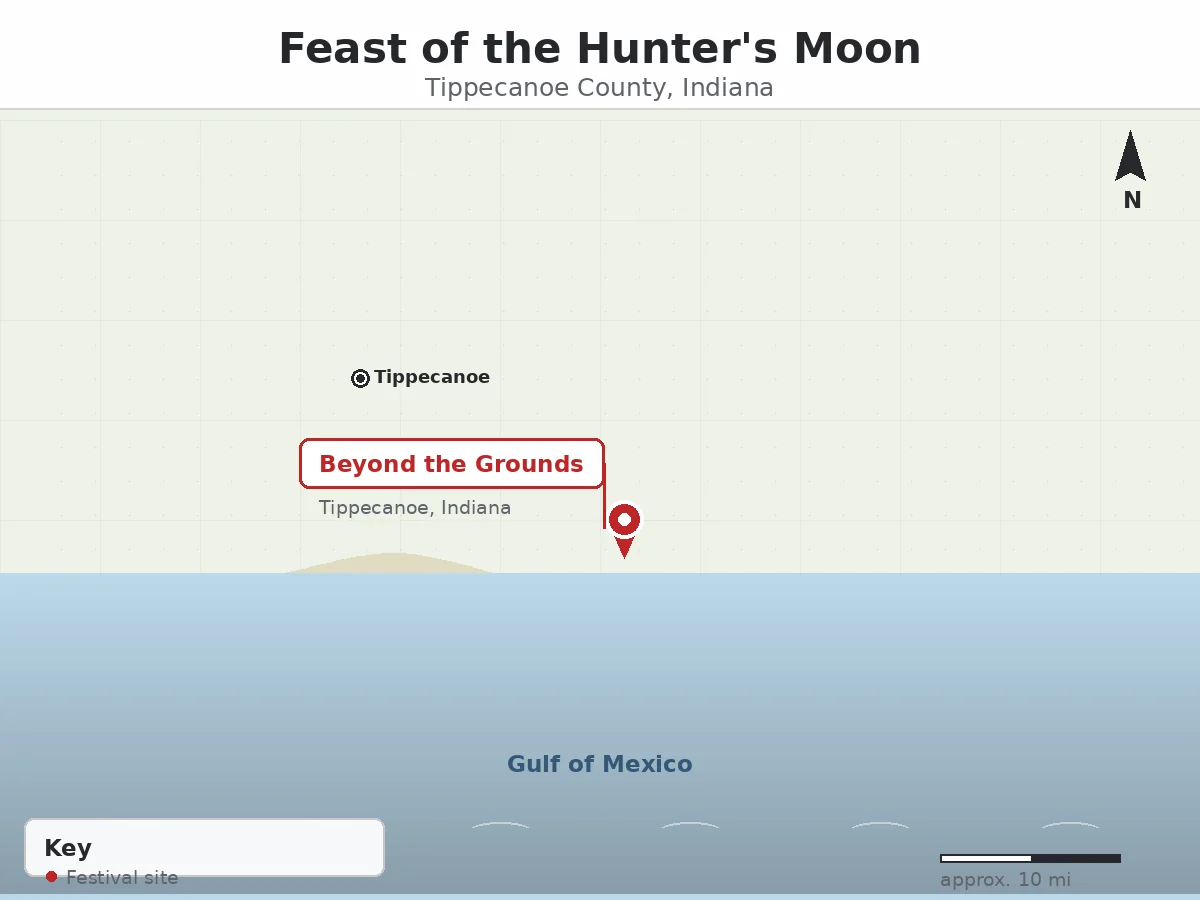
The setting does much of the event’s quiet work. The grounds rest on the banks of the Wabash River, four miles southwest of West Lafayette, close to the ground where the outpost itself stood, and the water is never far from sight or mind during the weekend. West Lafayette supplies the nearest town services, while Lafayette, the county seat, sits within the same small urban pair. A traveller with a spare hour could do worse than simply walk the riverbank and consider that the gathering being portrayed happened here because the river made this a meeting place first.
Why the Feast Matters
Scale alone earns the event its place in the record: a preview figure of over forty thousand visitors, more than eighty acres of portrayal, and thousands of attendees confirmed across a single weekend by coverage of the twenty twenty-six running. Beneath the numbers sits the rarer achievement, a county historical association sustaining an eighteenth-century fur-trade rendezvous for almost six decades, long enough for its fifty-ninth edition to host the United States Army Old Guard Fife and Drum Corps for the two hundred fiftieth anniversary of American independence. Few documented festivals in this series join that depth of run to that breadth of ground. The continuity itself carries weight: the same association that publishes the participant application has carried the gathering across those decades, keeping the outpost’s fall rendezvous legible to each new generation of visitors.
Frequently Asked Questions
Why does the printed name read Hunters’ with the apostrophe at the end?
Because that is how every credible layer prints it. The organiser’s own site and participant application, a university newspaper, and a state newspaper all use the plural possessive, Feast of the Hunters’ Moon, honouring the many hunters of the fur-trade gathering rather than any single figure. The singular form appears in none of the sources consulted.
Does the word Festival belong to the event’s printed name?
No layer read adds it. The name stands in print as Feast of the Hunters’ Moon, complete in itself, and the organiser’s participant document bills the edition simply as the fifty-ninth Feast of the Hunters’ Moon. The longer form used in this article’s title comes from the commissioning list, not from the event’s own pages.
Which organisation stands behind the Feast?
The Tippecanoe County Historical Association presents it. The association describes itself as the parent organisation of the Feast, publishes the participant application that bills each edition, and, on a university newspaper’s account, has offered the event for almost six decades.
Which special guests marked the twenty twenty-six edition?
A university newspaper’s twenty twenty-six layers record the United States Army Old Guard Fife and Drum Corps as that edition’s special guest, invited for the two hundred fiftieth anniversary of American independence. The invitation belongs to that anniversary year and is documented for that edition alone.
What to Expect From the Next Tippecanoe County Indiana Feast of the Hunter’s Moon Festival
How often is Tippecanoe County Indiana Feast of the Hunter’s Moon Festival held?
The rhythm in the record is a single weekend each autumn. The organiser’s participant application bills the event as an annual Feast, the twenty twenty-six running was its fifty-ninth, and a university newspaper describes the association as having offered it for almost six decades.
When is the next Tippecanoe County Indiana Feast of the Hunter’s Moon Festival?
The layers consulted document the twenty twenty-six edition, held on the twenty-fourth and twenty-fifth of October, and announce nothing beyond it. A future date would come from the organiser in due course, and its placement will likely be worked around the Purdue University home football schedule, as the twenty twenty-six dates were.
Will the dates change?
They have shifted before. A news layer notes that the twenty twenty-six dates fell later in October than usual precisely because the weekend is arranged around that football schedule, so the exact Saturday and Sunday can move from one year to the next even though the autumn habit holds.
Closing
Read the name as the sources print it, plural possessive and all, and the event comes into focus: a fifty-ninth-year gathering on historic river ground, where five stages, working crafts, and children’s hands-on history rebuild a fur-trade fall for one weekend. The record behind it is thick, current, and consistent, and that is reason enough to take the Feast on its own documented terms.