Knox County Indiana Spirit of Vincennes Rendezvous Festival
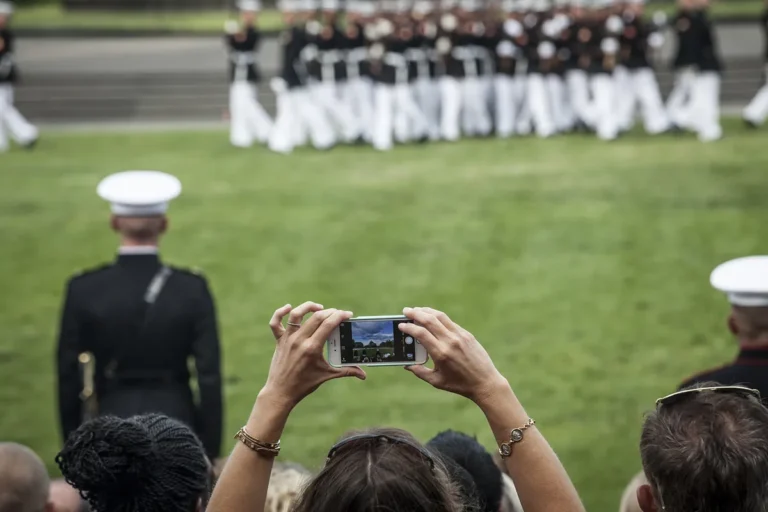
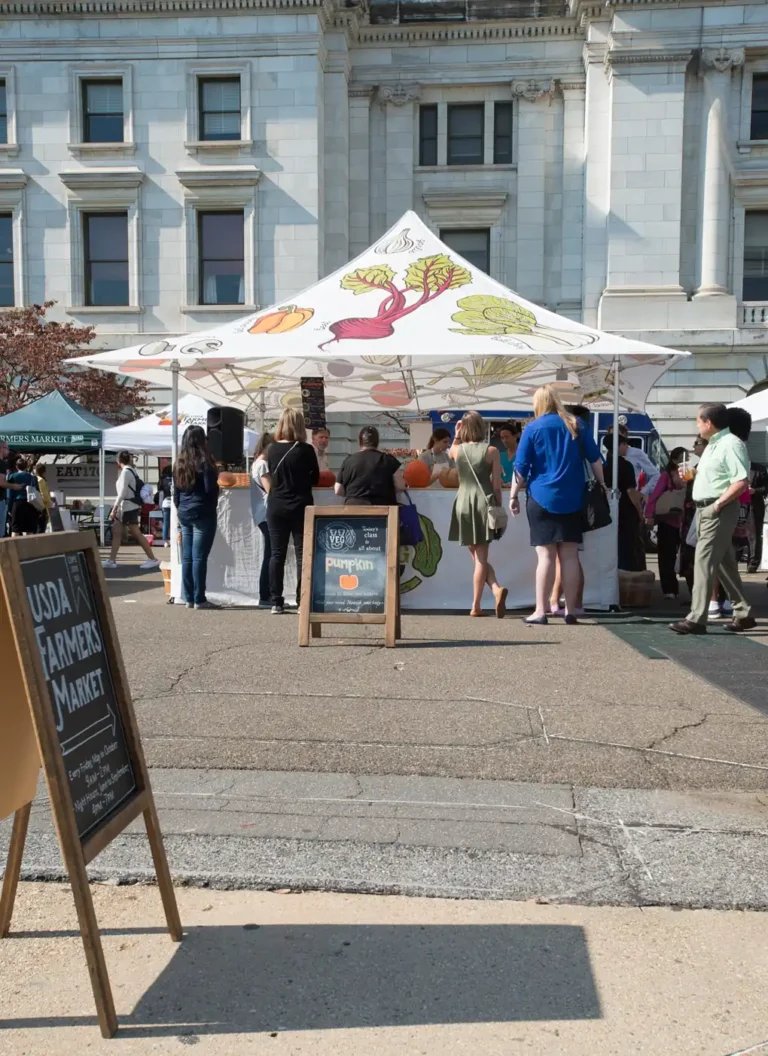
Every Memorial Day weekend, the French Commons in Vincennes fills with canvas tents, campfires, fifes and drums, and hundreds of people dressed for the eighteenth century. The occasion is the Spirit of Vincennes Rendezvous, a Revolutionary War reenactment weekend that has been part of the town’s calendar since the late nineteen seventies. Across two days, visitors watch musket and artillery demonstrations, browse merchant tents stocked with period goods, and eat food cooked over open fires, all beside one of the most important Revolutionary War sites in the old Northwest Territory.
The sheet title for this article adds the word “Festival,” but no source consulted for the event uses that longer form. The National Park Service, the organiser, the Vincennes and Knox County visitors and tourism bureau, and an encyclopedia layer all call the event simply the Spirit of Vincennes Rendezvous, often shortened to the Rendezvous. This article follows the published name.
About the Spirit of Vincennes Rendezvous
The Rendezvous is organised by Spirit of Vincennes, Inc., a nonprofit body whose own site and the encyclopedia layer both give the name in that form. The National Park Service page for the event invites the public to join George Rogers Clark NHP, the Spirit of Vincennes, Inc, and the city of Vincennes in celebrating it, printing the organiser’s name once without its final full stop. The encyclopedia layer adds that the gathering is also hosted by the Northwest Territory Alliance (NWTA) and the George Rogers Clark National Historical Park, so the weekend rests on a partnership between a local organising body, a national reenactment alliance, a federal park, and the city itself.
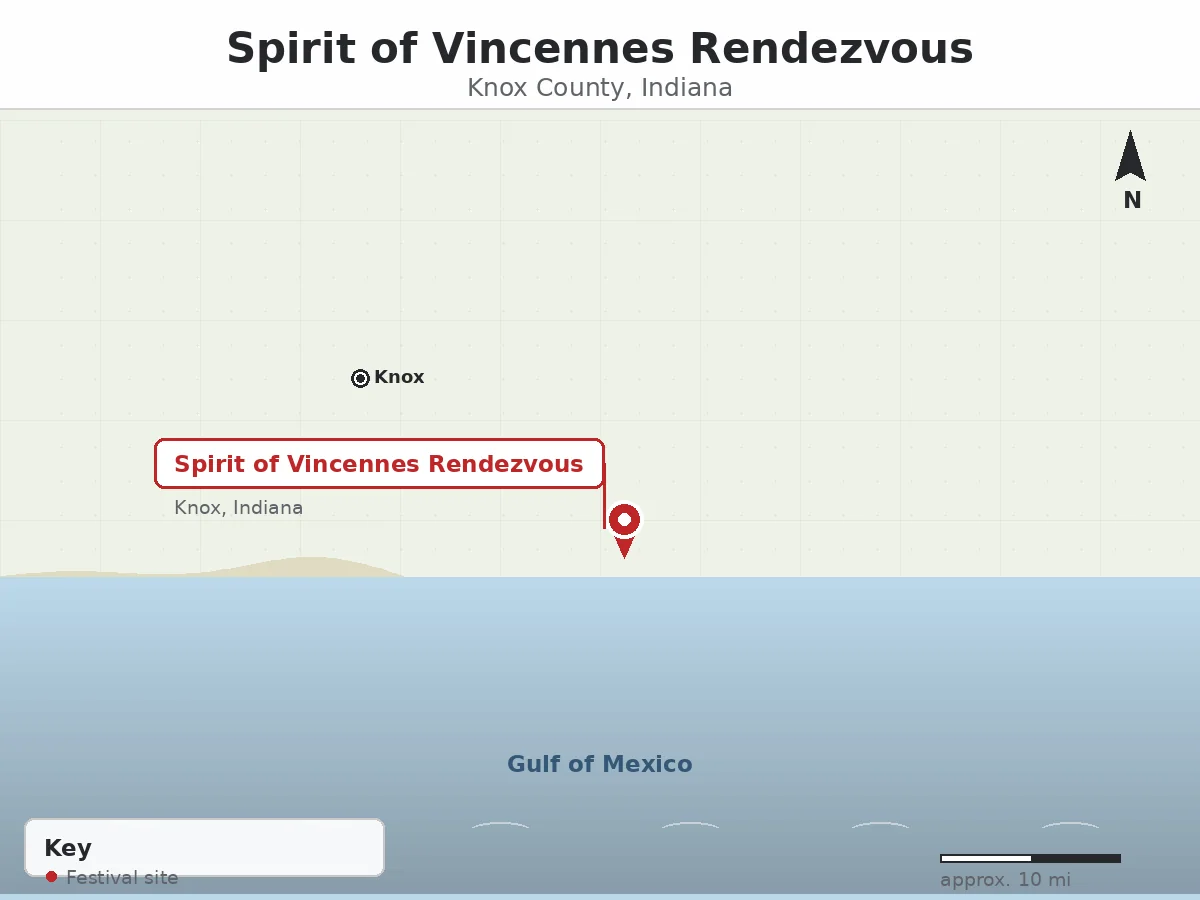
Vincennes is the seat of Knox County, and the venue is the French Commons, the open ground adjacent to the George Rogers Clark National Historical Park. The reenactment does not happen on a neutral fairground borrowed for the weekend; it unfolds in the shadow of the memorial that honours the campaign which carried this corner of the frontier into the young United States.
The format is consistent from year to year. The Rendezvous is held annually on the Saturday and Sunday of Memorial Day weekend, and the documented programme combines scheduled battle reenactments with continuous camp life: demonstrations, music, crafts, food and trading running through both days.
For a useful comparison, see the Knox County Indiana Knox County Watermelon Festival for another county festival.
Quick Facts
| Item | Detail |
| Published name | Spirit of Vincennes Rendezvous |
| Host town | Vincennes, the Knox County seat |
| Venue | The French Commons, beside the George Rogers Clark National Historical Park |
| Organiser | Spirit of Vincennes, Inc. |
| Also hosted by | Northwest Territory Alliance (NWTA) and the George Rogers Clark National Historical Park |
| When held | The Saturday and Sunday of Memorial Day weekend |
| Documented editions | Twenty twenty-two, on the twenty-eighth and twenty-ninth of May; a forty-third billing on a park service page whose year is not printed |
| Recent evidence | The organiser’s site carries post-event notes dated late May twenty twenty-six |
| Programme core | Battle reenactments, artillery demonstrations, fife and drum music, period crafts, open-fire food, merchant tents |
| Admission | Documented edition figures only: nine-dollar advance buttons, ten-dollar single day, twelve-dollar two-day gate pass, under fives free |
History of the Rendezvous
The layers agree on the broad outline while stopping short of a precise founding date. The encyclopedia layer states that the event was started in the nineteen seventies. The organiser’s own site puts it a shade more specifically, saying the Rendezvous has been sponsored annually by Spirit of Vincennes, Inc. since the late nineteen seventies, in collaboration with the reenactors of the Northwest Territory Alliance and the employees of the George Rogers Clark National Historical Park. Both statements are carried here as their layers give them. Nothing consulted pins the first Rendezvous to a single year, and this article does not manufacture one.
A temptation worth resisting concerns the edition numbering. A National Park Service event page for a Memorial Day weekend Rendezvous, held on Saturday the twenty-fifth and Sunday the twenty-sixth of May in a year the copy does not print, bills the gathering as the forty-third Spirit of Vincennes Rendezvous and highlights the Tippecanoe Ancient Fife and Drum Corps among its attractions. That billing shows the event’s longevity, but it cannot be turned backwards into a founding year: edition counts can skip years, restart, or be miscounted, and the honest reading is that the Rendezvous had been running for decades when that page was written.
The more recent trail is thinner but reassuring. The visitors bureau documents the twenty twenty-two edition on the twenty-eighth and twenty-ninth of May of that year. The organiser’s own site then carries post-event notes dated late May twenty twenty-six, which fit a twenty twenty-six edition held on the usual Memorial Day weekend slot. Taken together, the record shows a reenactment weekend that began in the late nineteen seventies and was still occupying its traditional weekend nearly half a century later.
What to Expect at the Rendezvous
Battle reenactments anchor the schedule. In the edition documented by the National Park Service page, the programme carried two battles on Saturday and two on Sunday, giving visitors four chances across the weekend to see lines of reenactors manoeuvre, fire and retire in period fashion. Artillery demonstrations add the deeper voice of cannon fire, and authentic period music runs through the grounds from fife and drum corps, the sound most closely associated with eighteenth-century armies on the move.
Between the set pieces, the French Commons works as a living encampment. Eighteenth-century crafts are practised in the open: blacksmiths at their forges, silversmiths at their benches, and spinners and weavers turning fibre into cloth, each trade a small lesson in how a frontier community supplied itself. Food is prepared over open fires rather than served from modern concessions, which keeps even a meal inside the period frame. Merchant tents sell period goods for reenactors and curious visitors alike, from clothing and camp equipment to handmade wares.
Families are written into the programme as well. The visitors bureau’s twenty twenty-two account lists children’s games and storytellers among the weekend’s offerings, and an annual photo contest invites camera-carrying visitors to compete for the best images of the encampment. The overall effect is layered: a spectator can watch a battle in the morning, study a silversmith at midday, hear the fifes in the afternoon, and still have time to walk the camps and talk with the people keeping these skills alive.
Planning Your Visit
Timing is the first decision, and the pattern is simple. The Rendezvous occupies the Saturday and Sunday of Memorial Day weekend, so anyone planning a trip should fix on that weekend and then watch for the organiser’s announcements as it approaches. Because two of the four documented battle reenactments fall on each day, a single-day visit still delivers the full shape of the event, while a two-day stay lets visitors pace the crafts, music and merchant tents without rushing.
Admission needs careful reading, because the surviving figures belong to the documented edition rather than to a current price list. For the edition described by the park service page and an organiser-mirror listing, advance two-day buttons sold for nine dollars, single-day adult admission was ten dollars, a two-day adult pass at the gate cost twelve dollars, and children under five entered free. A twenty twenty-two visitors bureau listing also noted online tickets through an online ticketing platform. No current price is documented in the layers checked, so travellers should treat those numbers as historical and confirm the standing arrangements before setting out.
The site’s layout rewards a loose plan. Battles and demonstrations run to a schedule, while the encampment, crafts and merchant tents reward wandering. Visitors who want photographs should note the annual photo contest, and everyone should leave time for the neighbouring George Rogers Clark National Historical Park, whose grounds and memorial sit right beside the French Commons.
A Sample Two-Day Itinerary
Saturday can begin with a walk through the waking encampment, when fires are lit and craftspeople are setting up. From there, the first of the day’s two battle reenactments sets the tone, followed by an artillery demonstration and a slow circuit of the merchant tents. Lunch means food prepared over open fires on the grounds. The afternoon suits the quieter arts: spinners, weavers, blacksmiths and silversmiths at work, children’s games and storytellers for younger visitors, and fife and drum music drifting across the Commons before the second battle closes the day’s formal programme.
Sunday repeats the rhythm with fresh details. The remaining two battle reenactments complete the set of four, and a second pass through the camps usually reveals demonstrations missed on the first day. It is also the better day for unhurried conversations with reenactors, for joining the photo contest, and for stepping next door into the national historical park before the drive home.
How the Rendezvous Compares
Vincennes hosts more than one kind of living history, and the distinctions are worth keeping straight. The same organiser, Spirit of Vincennes, Inc., also runs the Muster on the Wabash, a reenactment of the eighteen twelve period held in November at Fort Knox II. The Muster shares the Rendezvous’s commitment to authenticity but belongs to a different war, a different season and a different site; it is a companion event, not another name for the Memorial Day weekend gathering.
Other Vincennes military weekends stand further apart. Events at the Indiana Military Museum devoted to the First and Second World Wars present twentieth-century history, with machinery and uniforms from a mechanised age. The Rendezvous, by contrast, stays in the age of flintlocks and hand-sewn clothing, and its setting beside the Clark memorial ties it to one particular campaign rather than to military history in general. Visitors choosing between them are really choosing between centuries.
A Visitor’s Checklist
- Fix the date first: the Saturday and Sunday of Memorial Day weekend.
- Decide between one day and two; each day carries two battle reenactments in the documented programme.
- Confirm current admission arrangements before travelling, since the published figures belong to a documented edition.
- Bring cash for merchant tents, food prepared on site and admission buttons.
- Leave room in the day for the craft demonstrations, not only the battles.
- Plan time next door at the George Rogers Clark National Historical Park.
- Bring a camera if the annual photo contest appeals.
- Dress for a full day outdoors on open ground, with sun and weather in mind.
- Check the organiser’s announcements close to the weekend for the final schedule.
Beyond the French Commons
The natural companion to the Rendezvous is the George Rogers Clark National Historical Park itself, immediately beside the venue. Its memorial and grounds explain the campaign that the weekend’s reenactors evoke, and the National Park Service is woven into the event’s own presentation, inviting visitors to celebrate alongside the park, the organiser and the city. Vincennes, the Knox County seat, gives the weekend a fitting frame: a town where the eighteenth century is not an imported theme but part of the local inheritance.
Why the Rendezvous Matters
Longevity is the first measure. A reenactment weekend sponsored annually since the late nineteen seventies, as the organiser states, has outlasted the fads that sink many heritage events, and it has done so by holding a fixed place in the calendar and a fixed place on the map. The second measure is scale, stated with its proper caution: the organiser’s webpage, quoted by the encyclopedia layer, says the Rendezvous may attract four hundred to five hundred reenactors and thirty-five thousand visitors. That is the organiser’s claim rather than a counted figure, but even as a claim it describes one of the larger gatherings of its kind in the region.
The deeper significance is educational. Battles draw the crowds, yet the spinners, weavers, smiths and cooks are the ones who show how the world of the reenactors actually worked. By keeping those skills visible beside a national memorial, in a county seat that lived the history being portrayed, the Rendezvous turns a holiday weekend into an open-air classroom about that frontier past.
Frequently Asked Questions
What name does the event actually go by?
Every layer consulted calls it the Spirit of Vincennes Rendezvous, sometimes shortened to the Rendezvous. The word “Festival” in this article’s title appears in no published form checked, so readers searching for details should use the shorter published name.
What did admission buttons cost in the documented edition?
For the edition described by the National Park Service page and an organiser-mirror listing, advance two-day buttons sold for nine dollars, a single day for adults cost ten dollars, a two-day adult pass at the gate cost twelve dollars, and children under five entered free. Those figures are historical; no current price is documented in the layers checked.
How many battle reenactments fill the weekend?
The park service page for its documented edition lists two battle reenactments on Saturday and two on Sunday, four across the weekend. Artillery demonstrations, fife and drum music, craft demonstrations and camp activities fill the hours around them.
Is the Muster on the Wabash part of this event?
No. The Muster on the Wabash is a separate reenactment of the eighteen twelve period, held in November at Fort Knox II. It is run by the same organiser, Spirit of Vincennes, Inc., but it is its own event with its own site and season.
What to Expect From the Next Knox County Indiana Spirit of Vincennes Rendezvous Festival
How often is Knox County Indiana Spirit of Vincennes Rendezvous Festival held?
The published pattern is a single weekend each year: the Saturday and Sunday of Memorial Day weekend, the slot the event has occupied across its documented editions, from the forty-third billing on the park service page to the organiser’s post-event notes in late May twenty twenty-six.
When is the next Knox County Indiana Spirit of Vincennes Rendezvous Festival?
The next edition should be expected on the Saturday and Sunday of the coming Memorial Day weekend, following the pattern every layer records. The organiser’s site is the place to confirm the dates as the weekend approaches, since the layers checked carry no separately announced future date beyond that established pattern.
Will the dates change?
The calendar day moves each year because Memorial Day itself moves, but the anchor has stayed constant in the record: the Saturday and Sunday of Memorial Day weekend. Nothing in the layers checked suggests a different slot, and the twenty twenty-six notes show the weekend still in its traditional place.
Closing Thoughts
The Spirit of Vincennes Rendezvous asks little of its visitors beyond a weekend and a willingness to slow down. In return it offers battles and cannon fire, crafts practised by hand, food from open fires, and music that once set the pace of armies, all beside the memorial to the campaign it commemorates. For a county seat with deep eighteenth-century roots, it is difficult to imagine a fitter way to spend Memorial Day weekend.