Teton County Montana Fair Festival
The Teton County Montana Fair Festival is, in its own published record, the Teton County 4-H Fair in Choteau, and that identity matters from the first line. Choteau is both the county seat and the fair town, set along Montana’s Rocky Mountain Front, and the event that gathers there each late June is an Extension-run youth fair rather than a commercial carnival fair. Its character comes from project work judged face to face, from livestock shown and sold by young exhibitors, and from a community open class that sits beside the 4-H programme instead of underneath it.

About the Teton County 4-H Fair
Two name forms appear in the fair’s own material, and they are kept separate here because the record keeps them separate. The premium book calls the event the Teton County 4-H Fair, while Extension newsletters have used the shorter Teton County Fair in their fair-dates listings. Neither form should be stretched into a different event, and neither hides the fair’s organising hand. MSU Extension Teton County publishes the book and the fair pages, working through the county’s 4-H committee structure, and no separate private fair board is named in the record.
That structure explains the fair’s shape. This is a fair built around a year of 4-H work arriving at one public test, where a quilt, a welding project, a market steer and a rabbit are all part of the same educational system. The open class widens the door to the wider community, and the youngest members appear through Cloverbuds and Exploring 4-H. The result is a county fair whose centre of gravity is the exhibit hall and the show ring, not a midway.
Quick Facts
| Item | Detail |
| Published fair name | Teton County 4-H Fair |
| Other published form | Teton County Fair, used in Extension fair-dates listings |
| Fair town | Choteau, Montana |
| County seat | Choteau |
| Organiser | MSU Extension Teton County, with the county 4-H committee structure |
| Season | Late June |
| Standing date rule | The last full weekend in June that includes a Sunday |
| Grounds | The fairgrounds in Choteau; no street address is published in the record |
| Admission | No gate, pass or parking price is published in the record |
| Defining feature | Interview judging across static and livestock projects, closing with a livestock sale, a carcass competition and an auction of static exhibits |
What to Expect at the Fairgrounds
Static Projects, From Sewing Tables to Welding Benches
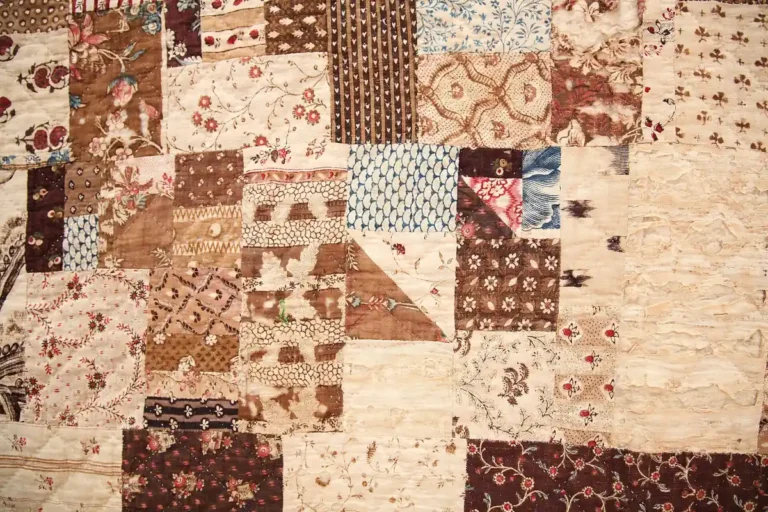
The static side of this fair is unusually broad, and its breadth is the first thing a visitor should understand. Sewing and textiles sit alongside quilting, crochet, knitting and embroidery, while food and nutrition entries cover cooking, baking, food preservation and cake decorating. Visual arts, gardening and crop science share the book with weed science, forestry, entomology and wildlife, and the practical sciences run on through sport fishing, outdoor adventures, small engines, aerospace, electricity, robotics, welding and woodworking. Interior design and family adventures complete a list that treats a teenager’s workshop project and a family’s garden produce as equally serious exhibits.
Within that range, awards mark particular strength. Sewing carries its own awards, specialty food awards recognise standout kitchen work, and a welding award singles out skill in a department many county fairs never offer at all. For visitors, the pleasure is in the variety of the benches and tables, where neighbouring entries can move from preserved food to a robot to a carefully finished piece of furniture in a few steps.
For a useful comparison, see the Sweet Grass County Montana Fair Festival for another county festival.
Small Animals and the Livestock Pens
The animal side begins small. Rabbit, poultry, cat and dog classes give younger and town-based exhibitors a route into the ring that does not require keeping a steer through a Montana winter. Those classes follow the same serious pattern as the larger shows, with preparation, handling and presentation all part of what a judge is assessing.
Livestock then fills the fair’s heavier end. Cattle entries cover showmanship, market beef with exhibitor interviews, beef breeding classes and dairy cattle, and sheep, swine and goats follow a matching pattern of showmanship, market classes with interviews and breeding classes. Each species asks a different kind of stockmanship from the young person leading, fitting or presenting the animal.
A Sale, a Carcass Competition and a Second Auction
Most fairs end their livestock story with a sale, and this fair does hold a livestock sale under published sale rules. Teton County then adds two further endings. A carcass competition, supported by sponsored carcass awards, judges what the market animal ultimately produced, shifting attention from appearance in the ring to quality on the rail. Separately, an auction of static exhibits gives entered project work its own moment under the hammer, so a non-livestock exhibitor is not simply thanked and sent home with a ribbon.
One piece of sale colour belongs strictly to a single documented year. Extension’s record for 2025 describes animals bought at the fair being processed without charge by the Producer Partnership for donation to local food pantries. That practice is carried here only as 2025 record, never as a promise that the same arrangement will operate in any other edition.
Judging by Conversation
The method holding the whole book together is the interview. Interview judging runs through the fair’s departments, with a published process and score sheet, and market livestock exhibitors face interviews as part of their showing rather than as an optional extra. A young person is therefore expected to explain choices, costs, setbacks and learning, not merely to present a polished object or animal and step back.
For a spectator, that method changes the atmosphere in the exhibit spaces. Conversations at tables and pens are part of the competition itself, and a quiet exchange between judge and exhibitor may matter as much as the rosette pinned afterwards.
Looking Back at a Fair With No Published Birthday
No founding year and no edition number are published in the fair’s fetched record, and this article will not manufacture either one. That absence is worth stating plainly, because fairs are often tempted to borrow age from a billing line or to count backwards from an anniversary claim. Teton County’s record offers no such claim to borrow, so its history has to be told through how it operates rather than through a date it has not documented.
What the record does preserve is a scheduling tradition expressed as a rule rather than as a celebration of age. A fair that returns every year to a defined weekend in late June builds continuity through repetition of practice: the same interview discipline, the same progression from project work to judging to sale, and the same meeting of town and ranch families in Choteau.
Planning Your Visit
Reaching Choteau and Finding the Fair
Choteau hosts both the county government and the fair, so a visitor is not choosing between a seat town and a separate fair town. The fair runs at the fairgrounds in Choteau, and the record publishes no street address for those grounds, so none is printed here rather than guessed. Travellers should plan around the town itself and treat the fairgrounds as a Choteau destination during fair week.

The town sits in Montana’s Rocky Mountain Front country, and many exhibitor families travel in from across a rural county where distance is an ordinary part of participation.
Three June Spans, Kept Apart
The fair’s standing rule describes when it belongs in the calendar: the last full weekend in June that includes a Sunday. For 2026, the published record then appears in three distinct layers, and they must not be melted into a single span. One layer is a machinery week running June 22 to June 28, the span carried for entry and fair-week machinery. A second layer is the fair book’s own span, Tuesday June 23 to Saturday June 27. A third layer is the Extension 4-H page’s headline span, June 24 to June 27, describing the fair’s core days.
Each layer answers a different question, which is why blending them would mislead a reader planning a trip. Anyone fixing travel around a particular class, show or sale should confirm that item’s own timing close to the fair rather than relying on any one of the three spans alone.
Costs, Camping and Honest Gaps
No admission price is published in the fair book material or in any other fair-side record behind this article. That means the fair is not described here as free, and no figure borrowed from another county’s fair has been allowed to fill the silence. Visitors who need certainty about entry costs should seek the fair’s current local information before travelling.
The same discipline applies to staying overnight. No fair-week camping offer is published in the fetched record, and a 4-H summer camp elsewhere in Extension’s world is not a fair camping offer. Lodging arrangements therefore remain the visitor’s own planning task.
A Sample Day in Late June
Begin in the exhibit areas while the day is still fresh, moving slowly through the static departments and pausing where interview judging is under way. Shift later toward the small animal classes, and then give the livestock pens the longer block of attention they deserve. If the day carries a market class, stay for the interviews as well as the placings, because the conversation explains the animal in front of you. Close by giving your final hour to whichever finale that day holds: the sale, the carcass results or the static exhibit auction.
How This Fair Differs From a Larger County Fair
A larger county fair often leads with grandstand spectacle and treats exhibits as one attraction among many. Teton County reverses that order, leading with judged work and letting the sale ring provide the drama. It also differs from fairs whose identity rests on a founding claim, because this fair’s public identity rests on a calendar rule and an educational method instead. Visitors expecting a carnival-led event will misread it.
Your Fair Week Checklist
- Confirm the specific day for any class, show or sale you most want to see
- Allow unhurried time in the static exhibit areas rather than only visiting the pens
- Listen to at least one interview judging session from a respectful distance
- Check locally for current entry cost information, since the record publishes none
- Arrange overnight stays independently, as no fair camping offer is published
- Keep the three published June spans separate when planning travel days
- Leave room in the day for the livestock sale or the static exhibit auction
Beyond the Fairgrounds
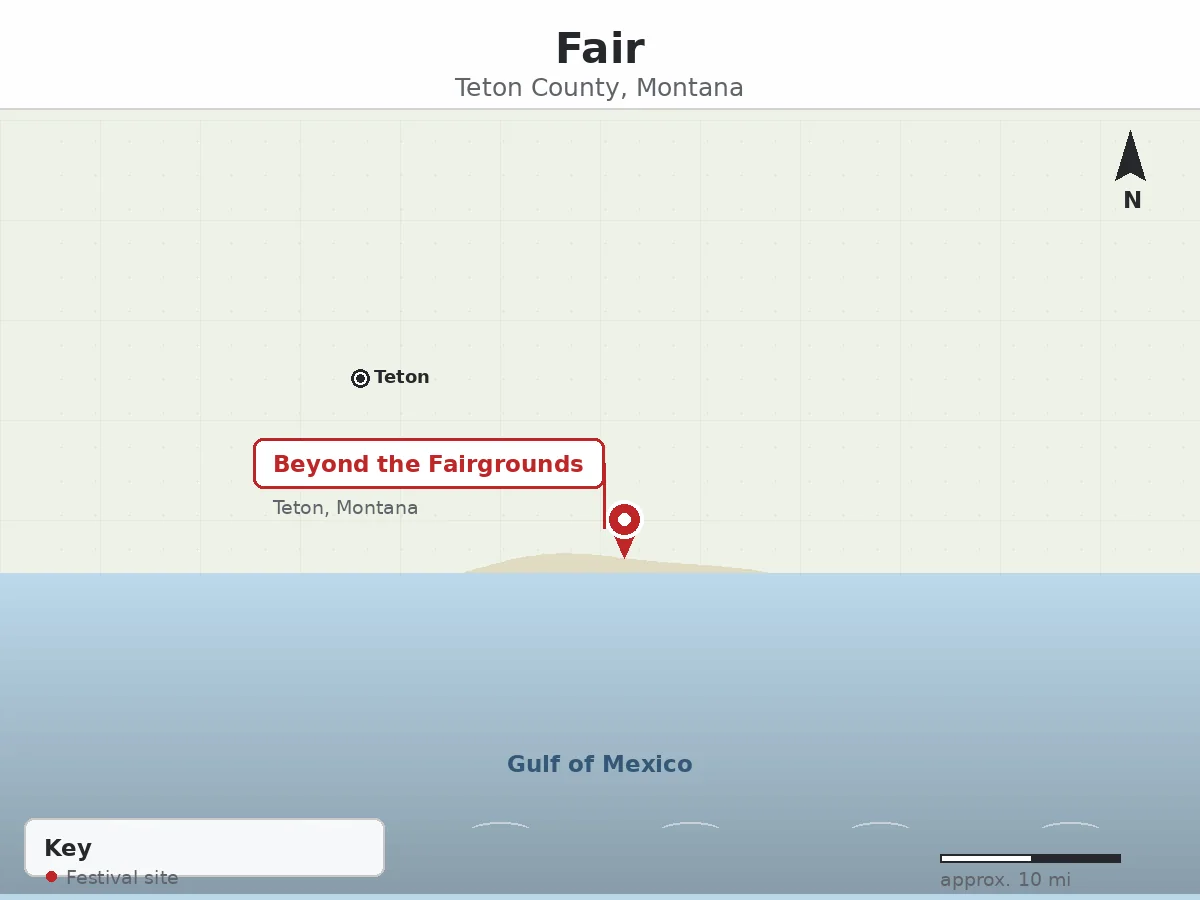
Choteau rewards a visitor who treats the fair as the centre of a stay rather than as the only reason to be in town. Other summer fixtures in Choteau belong to the town’s own calendar, and they are not folded into the fair’s programme here, because the fair’s record does not join them.
The surrounding county explains the fair’s exhibitor base. Ranch and farm families, town households and 4-H clubs spread across Teton County converge on one set of grounds for a few days, bringing animals, food, needlework, machinery projects and garden produce into the same public space.
Why This Fair Matters to Teton County
The fair matters because it makes a year of largely private work publicly visible. A project completed at a kitchen table, a feeding programme managed through winter and spring, or a skill practised in a farm workshop is brought into Choteau and explained to a judge in front of the community that will live with the result. That public accounting strengthens the county’s 4-H culture in a way a purely social gathering could not.
It also matters because its benefits move in several directions at once. Exhibitors gain a sale and, in the carcass competition, a verdict on the finished product, while static exhibitors gain an auction of their own rather than a lesser ending. The documented 2025 food pantry processing shows that, at least in that year, the sale’s value could extend beyond buyers and sellers to neighbours facing food insecurity.
Frequently Asked Questions
Is this the same fair as the ones held in Wyoming or Idaho counties of the same name?
No, and the distinction is fundamental to this article. The fair described here is Montana’s Teton County 4-H Fair in Choteau, organised through MSU Extension Teton County. Nothing from any other state’s Teton County fair has been used to describe its programme, its grounds or its arrangements.
At what point in the year does the fair sit?
The fair belongs to late June under its own standing rule, which places it on the last full weekend in June that includes a Sunday. Published spans for a particular year can appear in several layers for entry machinery, the fair book and the fair’s core days, so a specific item should always be checked against its own timing rather than inferred from the season alone.
Is there a published price for entry?
The record behind this article publishes no admission, pass or parking price, so no figure can responsibly be given. The fair should not be assumed to be free merely because its prices are unpublished, and current local information is the right place to confirm costs before a trip.
What kind of fair should a first-time visitor expect?
Expect an educational 4-H fair centred on exhibits, interviews, animal shows and sales rather than on midway entertainment. Static projects range from quilting and cake decorating to welding and robotics, livestock classes carry exhibitor interviews, and the week closes toward a livestock sale, carcass judging and an auction of static exhibits.
What to Expect From the Next Teton County Montana Fair Festival
How often is the Teton County Montana Fair Festival held?
The fair is an annual event in the record, returning each year to its late June position under the standing weekend rule. Its rhythm is yearly, even though the exact calendar dates move as the rule meets a new year’s calendar.
When is the next Teton County Montana Fair Festival?
The next edition belongs to the last full weekend in June that includes a Sunday, following the fair’s own scheduling rule. Because several published spans can serve different purposes in a given year, the core public days for a coming edition should be taken from that edition’s own fair information when it appears.
Will the dates change?
The calendar dates necessarily change from year to year because the fair is fixed by a weekend rule rather than by a single numbered date. What stays constant is the rule itself and the late June season, so a future edition should be expected in that same window on different specific days.
Closing
The Teton County Montana Fair Festival rewards a reader who respects what its record actually says. It offers a Choteau fair with an interview at its heart, a sale with two unusual companions, and a date carried in a sentence instead of on a poster, and it asks in return only that its gaps be left honest and its June spans be kept in their separate places.