Sussex County New Jersey New Jersey State Fair Festival
One August fair in Sussex County answers to two names at once, and both of them are printed on the gate. The New Jersey State Fair / Sussex County Farm & Horse Show fills the Sussex County Fairgrounds at 37 Plains Road in Augusta, in Frankford Township, for nine days at the turn of July into August. It is not a state fair that visits a county fairground, and it is not a county fair borrowing a grander title for the week. A county horse show that began in Branchville grew into a farm fair, moved to its own grounds in Augusta in 1976, and in 1999 bought the rights to the New Jersey State Fair name outright. Newton, the county seat, hosts no part of it. What arrives each summer is a single event with a dual identity: six barns of livestock, a full horse show, judged halls, a carnival midway and free parking, all run by a non-profit association that receives no government money.
About the Association Behind Both Names
The fair is run by the Sussex County Farm & Horse Show Association, Inc., a not-for-profit corporation recognised as a 501(c)(3) organisation. Its stated mission runs from showcasing New Jersey’s agriculture and promoting youth development to safe, family-friendly entertainment and support for charitable non-profit agencies. The funding position is printed just as plainly: the fairgrounds receive no monetary support from government sources, and the money comes from building rentals, sponsorship and fair admission. Fair week proceeds have supported local charities as a tradition the record traces back to 1933.
Its grounds are a year-round complex of about one hundred sixty-five acres. The buildings a fair visitor uses are the Conservatory, the Richards Building, the 4-H Shotwell Building, the Kosa County Building, the Snook Agricultural Museum and the horse show area. Outside fair week those buildings host other events, but those occasions belong to the grounds’ tenants, not to this fair.
Quick Facts
| Item | Detail |
| Published name | New Jersey State Fair / Sussex County Farm & Horse Show |
| Organiser | Sussex County Farm & Horse Show Association, Inc. |
| Fairgrounds | Sussex County Fairgrounds, 37 Plains Road, Augusta |
| Fair town | Augusta, in Frankford Township |
| County seat | Newton, which does not host the fair |
| Season | Nine days at the turn of July into August |
| Admission in 2026 | Advance: adults twelve dollars, seniors eight dollars, children four dollars; regular: adults sixteen dollars, seniors ten dollars, children five dollars |
| Parking | Always free |
| Camping | Group and camp rates by reservation; no rate is published |
| Roots | A Branchville horse show first held in 1923; the state fair name carried since 1999 |
From a Riding Club’s Show Ring to a State Title
This fair’s own history begins with horses, in Branchville. In 1923 a Sussex County riding club — the Branchville Riding Club, formed in 1919 — put on a horse show for its members’ children, and the show became an annual fixture in Branchville, running there from 1933 to 1975. It was billed as the Sussex County Horse Show from 1936 to 1940, and then, as the agricultural side grew around the rings, as the Sussex County Farm and Horse Show from 1940 onward. The association incorporated in 1940 and has been a non-profit ever since. There was no fair from 1942 to 1945, during the war years, and none in 2020, during the pandemic.
In 1976 the fair left Branchville for the present grounds in Augusta, and the 2026 edition was marked in the trade press as the fiftieth anniversary of the fair at the Sussex County Fairgrounds, alongside billings of a ninetieth anniversary for the horse show and an eighty-sixth for the farm and horse show. Those anniversary figures are that layer’s billings, printed here as billings rather than settled counts.
For a useful comparison, see the Somerset County New Jersey 4-H Fair Festival for another county festival.
The state title arrived by purchase, not by inheritance. In 1999 the Sussex County Farm and Horse Show bought the rights to the New Jersey State Fair name and trademark. Before that purchase, a state fair under that name had operated at Garden State Park in Cherry Hill, and guide layers circulate an older Trenton-era history for it, including a start claimed in 1821. Nothing about Cherry Hill, Trenton or 1821 is a founding date for the fair in Augusta, whose state-fair identity begins with the 1999 purchase and whose own roots are the Branchville show ring of 1923.
What to Expect
Six Barns, a Milking Parlor and a Museum of Farm Life
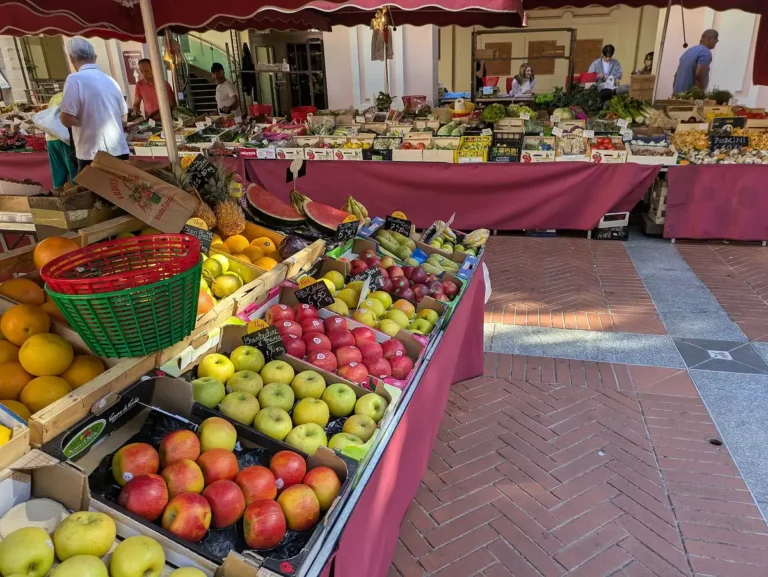
Agriculture is the load-bearing wall of this fair. Six barns house the animals, with livestock shows in the pavilion and a working milking parlor. The Snook Agricultural Museum and the antique engines put older machinery alongside the modern barns, rare heritage-breed animals appear among the livestock, and a farmers market sells from the county’s own producers, with Farm Fun activities bringing younger visitors close to the animals and equipment.
The Horse Show That Started Everything
The horse show is not a sideshow here; it is the founding strand, and it still runs through the fair with its own daily class lists, up to the Sussex County Grand Prix in the wider record. Rings that began with a riding club’s children now carry a full schedule of competition across all nine days, in the fair’s dedicated horse show area.
Judged Work in the Buildings
The 4-H exhibits and club displays fill the Shotwell Building. The Conservatory hosts the Flower and Garden Show and the Forage Show, while the Vegetable Show and the Scarecrow Competition bring the growing season indoors. The Richards Building holds art, photography, honey and bee demonstrations and the creative arts.
Midway Lights, Family Acts and the Two O’Clock Parade
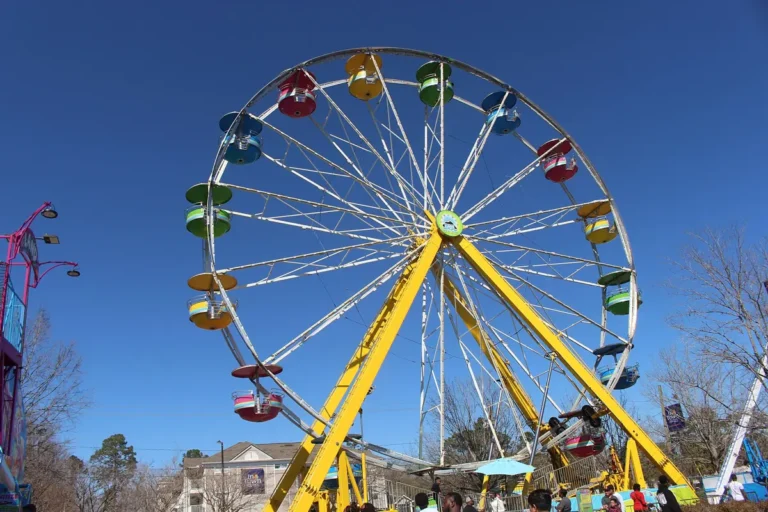
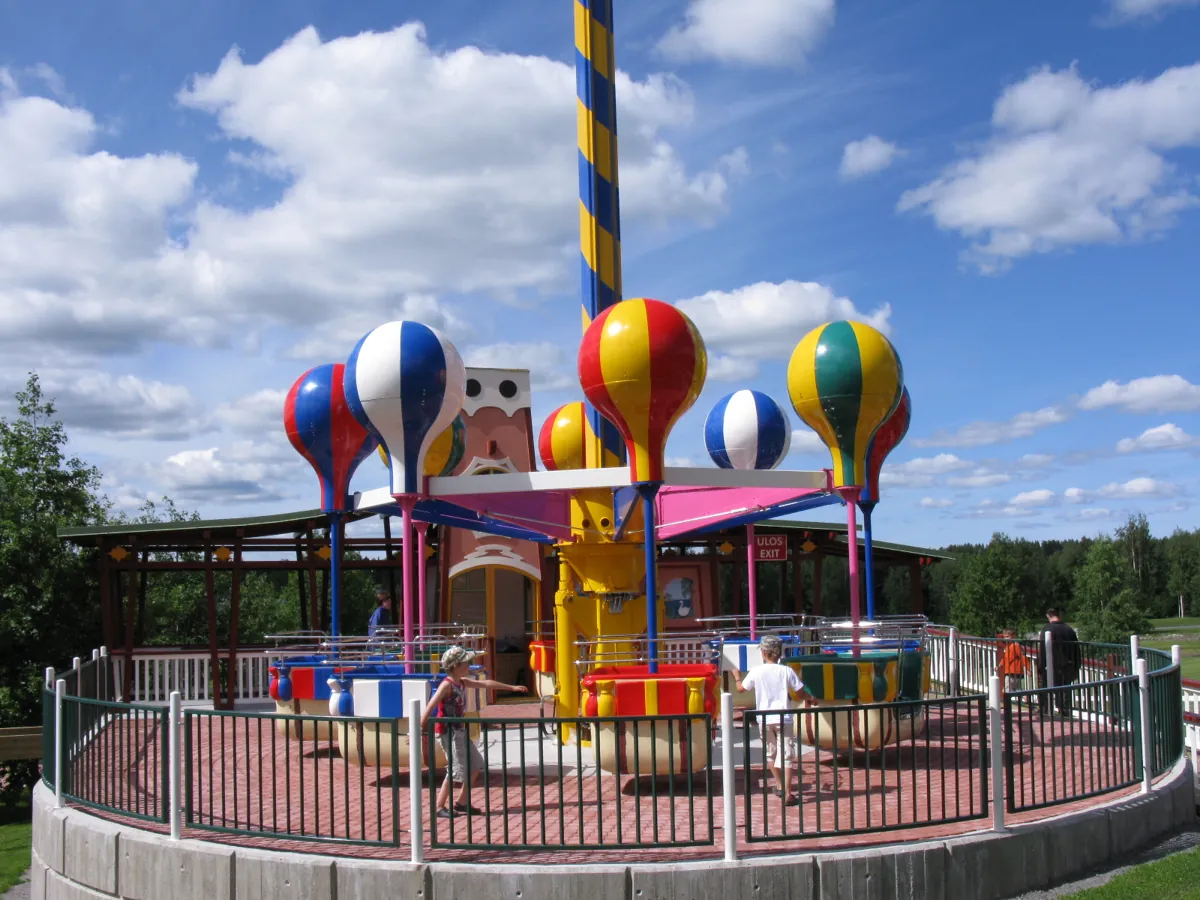
The carnival midway runs alongside the barns and halls, and the Family Entertainment Area carries acts such as Join the Circus, the Commerford Petting Zoo, Hot Dog Pig Races and Circus Incredible, with roaming performers between the set pieces. Every afternoon at two o’clock the Tractor Parade rolls through the grounds. The big arena spectacles — the demolition derby and the monster truck show — are sold as separate tickets in the fair’s listing layers, with fair admission also required, and they are never part of the gate price. Children’s Day and sensory-friendly carnival hours appear in the current listing layers.
Planning Your Visit
Dates and Hours
The fair’s season is the turn of July into August, and the documented 2026 edition ran nine days, from Friday, July 31 to Saturday, August 8, 2026. On the fair’s own published pattern for that edition, opening day ran from five in the afternoon to ten at night, weekends from ten in the morning to ten at night, and weekdays from noon to ten at night. Treat those hours as that edition’s published shape rather than a permanent rule, and check the fair’s current general information before travelling.
Admission: Advance Against the Gate
The fair publishes two ladders, and the gap between them rewards planning. Advance admission for the 2026 edition, on sale until July 30 at five in the afternoon at a saving of twenty percent, was twelve dollars for adults, eight dollars for seniors and four dollars for children. Regular admission from the opening day, online or at the gate, was sixteen dollars for adults aged thirteen to fifty-nine, ten dollars for seniors aged sixty and over, five dollars for children aged six to twelve, and seven dollars for veterans and active military, that last price at the gate only. A VIP nine-day pass was offered at ninety dollars. The advertised prices are the cash prices; card and online prices include fees.
One gap in the ladder deserves care. The fair’s own page prints no admission price for children under six, so no free-under-six rule should be assumed from the published bands — families with very young children should confirm at the gate or with the fair office.
Parking, Groups and Camping
Parking at this fair is always free, in the fair’s own words, and it is the simplest line in the whole budget. Groups and campers are handled differently: the fair’s general information lists group and camp rates with reservations required, arranged through the fair office, and no rate figure is published anywhere in the fair’s own record. Anyone planning to camp during fair week should reserve early and take the price from the office directly.
A Sample Saturday at the Fair
Arrive mid-morning, while the horse rings are warming up. Walk the six barns and the milking parlor first, then cross to the Shotwell Building for the 4-H exhibits. Take lunch from the farmers market end of the grounds. Be in place for the two o’clock Tractor Parade, then give the afternoon to the Conservatory shows and the Richards Building. As the light drops, ride the midway and catch a family entertainment set to close the evening.
How This Fair Compares
Most county fairs run a long weekend or a working week; nine days puts this one at the larger end of the county-fair scale, and the state title in its name is genuinely held rather than honorary, bought as a trademark in 1999. The comparison that matters most, though, is with the fair some readers half-remember at Garden State Park in Cherry Hill. That was a different event, in a different place, and it ended before this fair ever carried its name. What stands in Augusta is a county-born fair that kept its own grounds, its own association and its own charity tradition, and added a state name on top of them.
A Visitor’s Checklist
- Buy advance tickets before the late-July cutoff the fair sets each year; the saving over the gate ladder is real money for a family.
- Budget the gate ladder exactly as published: adults sixteen dollars, seniors ten, children six to twelve five, veterans seven at the gate only.
- Do not assume a free band for children under six; the fair’s own page prints none.
- Leave the car money at home for parking, which the fair states is always free.
- Reserve group or camping places through the fair office early, because no camp rate is published to plan around.
- Put the two o’clock Tractor Parade in the middle of at least one day’s plan.
- Keep one evening for the midway and the family entertainment area after the barns wind down.
- If the arena shows are the draw, price those tickets separately, because they sit outside admission.
Beyond the Fairgrounds
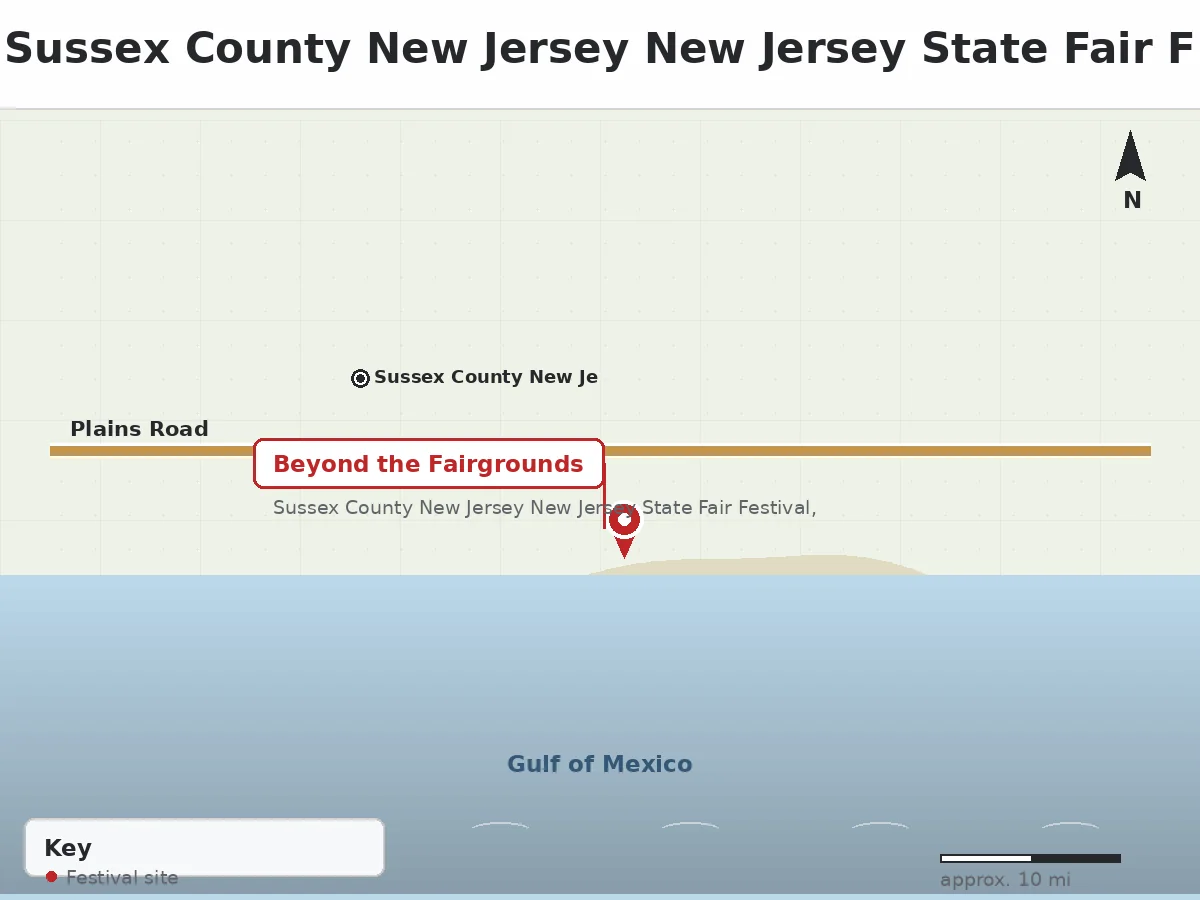
Augusta is a small Frankford Township community, and the fairgrounds are its landmark for nine days a year and a working event complex the rest of the year. Newton, a short drive away, is the county seat — worth naming only so the two towns are never confused: the seat is Newton, and the fair is in Augusta. The grounds themselves reward a second look outside fair week, when the Conservatory, museum and show buildings host the complex’s year-round tenants, though none of those occasions is part of this fair.
Why This Fair Matters in Sussex County
A state fair name usually belongs to a capital city and a state budget. Here it belongs to a volunteer-rooted county association that funds itself from rentals, sponsors and its own gate, donates its proceeds to local charities as it has since the nineteen-thirties, and still builds the week around six barns, a horse show and judged halls. For Sussex County it is the year’s fullest showcase of its own agriculture and its young exhibitors, and for New Jersey it is the unusual case of the state fair living where the farming is, kept underneath the bought name a county fair at heart.
Frequently Asked Questions
Are the New Jersey State Fair and the Sussex County Farm & Horse Show two different events?
No. They are one fair under a dual published name, run by one association on one set of grounds in Augusta. The Sussex County Farm and Horse Show is the older name, carried since 1940; the New Jersey State Fair name was added in 1999, when the association purchased the rights to it.
How did a Sussex County horse show end up carrying the state fair’s name?
By purchase. The state fair name had previously been used by a separate fair at Garden State Park in Cherry Hill, and in 1999 the Sussex County Farm and Horse Show bought the rights and trademark. The Augusta fair’s own history — Branchville in 1923, incorporation in 1940, the move to Augusta in 1976 — is entirely its own and owes nothing to the older state fair’s past.
What will it cost a family at the gate?
On the fair’s own published ladder for its most recent documented edition, gate admission was sixteen dollars for adults, ten dollars for seniors, five dollars for children aged six to twelve and seven dollars for veterans and active military, with advance tickets cheaper across the board and parking always free. The fair prints no price for children under six, so that band should be confirmed rather than assumed.
Can we stay on the grounds during fair week?
Camping and group arrangements exist on the fair’s own record, but only by reservation through the fair office, and no rate is published in any fair-side source. Anyone hoping to stay on site should contact the office well ahead of fair week and take both availability and price from the reply.
What to Expect From the Next Sussex County New Jersey New Jersey State Fair Festival
How often is the Sussex County New Jersey New Jersey State Fair Festival held?
It is held once a year, as a single nine-day edition in the middle of summer. The association runs one fair a year at the Sussex County Fairgrounds, and the rest of the grounds’ calendar belongs to other events.
When is the next Sussex County New Jersey New Jersey State Fair Festival?
The next edition is expected at the same point in the following summer — the turn of July into August — on the same Augusta grounds. The association publishes each edition’s exact dates with its general information for that year, so the confirmed days should be taken from the fair’s own announcement rather than carried over from the edition before.
Will the dates change?
They can move by a day or two between editions, because the fair fixes its run to the calendar of each year rather than to fixed dates. The season itself is steady — late July into early August, opening on a Friday evening — but the precise span is set fresh for every edition and published by the fair.
The fair in Augusta asks to be read on its own record: a Branchville horse show that grew a farm fair around itself, bought a state title, and never stopped being a county fair underneath it. Go for the barns and the rings, stay for the parade at two, and let the two names on the gate tell the story they actually tell — one fair, in Sussex County, keeping both.