Santa Fe County New Mexico Fiestas de Santa Fe Festival
This title names a fiesta, not a fair, and three separations come first. The Fiestas de Santa Fe are the city of Santa Fe’s own September celebration, centred on the Santa Fe Plaza in Santa Fe, the county seat. They are not the Santa Fe County Fair, a separate 4-H fair run by different machinery on different grounds in a different season; not the Burning of Zozobra, the famous fire lit the night before by a different organisation; and not the Entrada reenactment of Don Diego de Vargas’s entry, retired in 2018. What the title names is a gateless, Plaza-based civic and religious observance, run by the body publishing itself as Santa Fe Fiesta, Inc. and the Santa Fe Fiesta Council, billed in 2026 as the 314th Fiesta de Santa Fe.
About a Fiesta Run From the Plaza
The event circulates under two published name forms: Fiesta de Santa Fe, the singular form its organiser trademarks, and Fiestas de Santa Fe, the plural form in this article’s title. The organiser’s name is likewise published in several forms — Santa Fe Fiesta, Inc. on its own site’s current pages, the Santa Fe Fiesta Council in its council pages and candidate guidelines, and Santa Fe Fiesta Council, Inc. in a 2025 Royal Court application. The forms stand here as published and unmerged; the record never settles on one.
The body’s stated purpose, in its non-profit filings, is to commemorate each year the resettlement of Santa Fe by Don Diego de Vargas in 1692. A 2007 state account described the council as a volunteer body of about a hundred members plus representatives of twenty civic organisations and businesses, a fenced layer rather than a current roster. Each spring the organiser selects Don Diego de Vargas and La Reina de La Fiesta de Santa Fe to preside over the fiesta year; candidates must meet published requirements including Santa Fe County residency — a court-contest rule, and the closest this fiesta comes to a county entry condition.
Quick Facts
| Item | Detail |
| Event names | Fiesta de Santa Fe; also styled Fiestas de Santa Fe |
| Festival town | Santa Fe |
| County seat | Santa Fe — the seat hosts the fiesta |
| Organiser | Santa Fe Fiesta, Inc.; also published as Santa Fe Fiesta Council and Santa Fe Fiesta Council, Inc. |
| Season | Early September, around Labor Day week |
| 2026 billing | The 314th Fiesta, September 5–13, 2026 (organiser and city billing) |
| Venues | The Santa Fe Plaza and downtown streets; there is no fairgrounds |
| Admission | No gate; the Plaza programme is documented as free |
| Presiding figures | Don Diego de Vargas and La Reina de La Fiesta de Santa Fe, chosen each spring |
| Camping | None offered — a downtown fiesta |
A History Written in Proclamations and Gaps
The commemoration reaches back to the Spanish return after the Pueblo Revolt of 1680 drove the colonial population into exile at El Paso del Norte. On September 14, 1692, Don Diego de Vargas re-entered Santa Fe. On September 16, 1712, the city council proclaimed that the fourteenth of September be celebrated for all time with vespers, a Mass, a sermon and a public procession through the main Plaza — the fiesta’s founding document in the record.
No unbroken line from 1712 survives scrutiny: scholarly accounts find no known documentation of celebrations following 1712 in the colonial period. Revived in 1883, it was revamped in 1912 and 1919 under Edgar Lee Hewett. There were no celebrations in 1917 and 1918, none from 1942 through 1945, and the 2020 and 2021 editions were streamed only. The city visitor authority bills it as the longest continuously running celebration in the United States — billing, contradicted read literally by those lapses. The edition counts get the same discipline: billed the 313th in 2025 and the 314th in 2026, with no founding year computed from either.
For a useful comparison, see the Sandoval County New Mexico Fair Festival for another county festival.
One element is stricter history. The Entrada, a pageant reenactment of de Vargas’s entry added in the twentieth century — one mediation account dates it to 1911 — was discontinued in 2018, when the Fiesta Council and the Caballeros de Vargas voted to end it after years of Indigenous protest and dialogue. Tourism material still describing an Entrada describes a fiesta from before 2019.
What to Expect
Music From the Plaza Gazebo
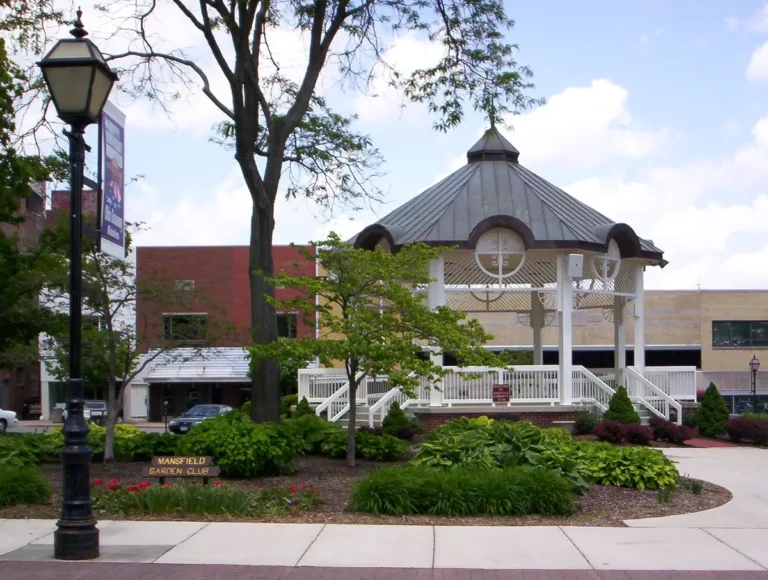
Through the fiesta weekend the Plaza gazebo, its bandstand, becomes the concert venue, and the organiser’s own entertainer call promises free performances celebrating the region’s cultural traditions. The 2025 layers document the shape — Pueblo hoop dancers, Aztec dancers, Mexican folklorico, Matachine dances, mariachi and northern New Mexico music — and state the rule plainly: all performances at the gazebo are free.
Saturday: The Children’s Pet Parade
Saturday belongs to the Desfile de los Niños, the Children’s Pet Parade, which the organiser bills as Santa Fe’s favourite for over a hundred years, its own billing. Hundreds of costumed children bring costumed pets through downtown, judged in categories from Most Original Entry to Best School Group. In the organiser’s 2026 layer the line-up forms at 227 East Alameda Street. The parade is watched free; its only money is an entrants’ registration fee, covered under planning.
Sunday: The Parade of the Whole Town
Sunday closes the fiesta with the Desfile de la Gente, the Historical/Hysterical Parade, setting off at one o’clock in the afternoon in both documented recent editions. Saturday belongs to children and their animals; Sunday is the whole community on wheels and on foot, routed in by Alamo Drive via Saint Francis Drive under the organiser’s 2026 rules.
Booths Around the Plaza
The Santa Fe Fiesta Fine Arts and Crafts Market lines the historic Plaza with booths. Food booths stand around the Plaza too; a family-magazine layer for 2025 put their hours at nine in the morning to ten at night across that edition’s middle days, fenced to that year.
The Religious Spine of the Weekend
Underneath the concerts and parades runs the observance the 1712 proclamation prescribed. The fiesta opens around the Pregón, the proclamation mass. Processions honour La Conquistadora, the Marian devotion at the heart of the fiesta’s religious life, and the celebration closes with a candlelight procession — not heritage colour on a street party, but the event’s surviving core.
Mariachi, a Grand Ball and a Royal Court
The city visitor authority lists a Mariachi Extravaganza among the 2026 events. A fall guide for the same year calls the Gran Baile, the grand ball, the crown jewel of the festivities; the record found publishes no ticket terms for the ball, so none are stated here.
Planning Your Visit
Finding a Fiesta With No Fairgrounds
There is no fairgrounds to navigate to and no single address for the fiesta as a whole. Its ground is the Santa Fe Plaza — listing layers place the Plaza at 63 Lincoln Avenue — with the Palace of the Governors on its north side and market booths around it. Plan around the Plaza and expect fiesta-week closures in the centre: the event is a district, not a venue.
What a Visit Costs, and What the Prices in Print Actually Are
There is no gate, so attending costs nothing: the gazebo performances are documented free and both parades are street events watched free. The only prices the organiser itself publishes are registration fees paid by parade participants, never spectators. Entering the Children’s Pet Parade costs six dollars for an entry of one to four people, twenty-two dollars for five or more, and fifty-five dollars for schools and large groups. Entering the Desfile de la Gente costs forty-five dollars per vehicle for schools, churches, horse groups, clubs and non-profits, sixty-three dollars per vehicle for all other entrants, two hundred eighteen dollars per political group, and ten dollars for a bicycle participant or an individual horse with rider. None of these is a spectator charge.
The Night Before: A Different Organisation’s Fire
The season opens with a fire that is not the fiesta’s. The Burning of Zozobra, at Fort Marcy Park north of the Plaza, is produced by the Kiwanis Club of Santa Fe on Friday, September 4, 2026; it is not run by Santa Fe Fiesta, Inc. or the Fiesta Council. The effigy, a marionette some fifty feet tall, was created by artist Will Shuster in 1924 as a six-foot backyard burning; the Club has managed the pageantry since 1964, and the proceeds support children’s programmes. The 2026 burning was billed as the 102nd, gates at four o’clock and ceremonies at six, on the Club’s own ticket terms: thirty dollars online in advance, forty dollars on the day, fifteen dollars for young people aged eleven to twenty-three, and children ten and under free with a general admission ticket holder. Those figures belong to Fort Marcy Park for one night only.
Staying Over
The fiesta publishes no camping or recreational vehicle offer, and none should be assumed: overnight plans belong in Santa Fe’s ordinary hotels and guest houses. The Kiwanis Club’s separate late-August preview weekend for Zozobra, at a shopping mall, is likewise its own occasion and no part of the fiesta.
A Sample Fiesta Saturday
Begin at the Plaza as the market booths open. Give midday to the Children’s Pet Parade, taking a street position early. Spend the afternoon between the market rows and food booths, returning to the gazebo as the music resumes, and let the evening stay on the Plaza. Keep Sunday in reserve: the Desfile de la Gente steps off at one o’clock and the candlelight close ends the fiesta that night.
The Fiesta and the Fire, Side by Side
The two events share one weekend hinge. Zozobra is one night, one park and one spectacle: a ticketed crowd at Fort Marcy Park watches a single enormous effigy burn, under the Kiwanis Club’s management, on a tradition counted from 1924. The fiesta is the days that follow: a gateless observance across the Plaza and downtown streets, run by a volunteer fiesta body, built from concerts, a market, two parades and processions, and billed with an edition count in the hundreds. A visitor can attend either without the other and pays only for the fire.
Fiesta Checklist
- Anchor everything on the Santa Fe Plaza; there is no fairgrounds and no fiesta gate to find
- Budget nothing for admission, since the Plaza programme is documented free, and keep money for the market and food booths instead
- Treat the parade registration fees in print as entrants’ charges only, never spectator prices
- If you go to the Friday-night burning at Fort Marcy Park, buy that ticket as the Kiwanis Club’s separate event
- Do not plan around an Entrada reenactment; it was discontinued in 2018 and survives only in older descriptions
- Take a street position early Saturday for the Children’s Pet Parade, and again before one o’clock Sunday for the Desfile de la Gente
- Book ordinary city lodging for overnight stays, because the fiesta offers no camping
- Remember the Santa Fe County Fair is a different event entirely; nothing in its record belongs in a fiesta plan
Beyond the Festival Grounds
The Plaza that hosts the fiesta is Santa Fe’s everyday centre as well, with the Palace of the Governors on its north side. The rest of the city’s famous calendar keeps its own footing: the Santa Fe Indian Market in August, the Spanish Market, the Wine and Chile Fiesta and the Renaissance Faire at El Rancho de las Golondrinas are separate events with their own organisers and grounds, named here only so none is mistaken for fiesta programme.
Why This Fiesta Matters
The fiesta’s significance is that a city still organises its September around a document from 1712. The proclamation’s brief programme has outlasted later pageantry: the Entrada came in the twentieth century and was retired in 2018, while the processions honouring La Conquistadora and the candlelight close remain the spine. The fiesta also shows a celebration renegotiated in public — the Entrada’s end followed protest and formal dialogue with Pueblo governors, the Church and the City — rather than simply preserved: a commemoration the city performs for itself first, then for its visitors.
Frequently Asked Questions
Is the Fiestas de Santa Fe the same event as the Santa Fe County Fair?
No. The County Fair is a separate 4-H and Extension fair with its own fair board, grounds and season. The fiesta is a city celebration on the Santa Fe Plaza organised by Santa Fe Fiesta, Inc. and the Santa Fe Fiesta Council. They share a city and part of a name only.
Does it cost anything to attend the Fiesta?
No. The fiesta has no gate and no general admission price: gazebo performances are billed free by the organiser and both parades are watched free from the street. The only published prices are registration fees for parade entrants, never spectators, and no Gran Baile ticket terms appear in the record.
Is the Burning of Zozobra part of the Fiesta?
No. The Burning of Zozobra is the Kiwanis Club of Santa Fe’s own event, at Fort Marcy Park on the Friday night before Labor Day. It opens the fiesta season but is a separate, ticketed event.
Can visitors still see the Entrada reenactment?
No. The Entrada, the pageant reenactment of Don Diego de Vargas’s entry, was discontinued in 2018 by vote of the Fiesta Council and the Caballeros de Vargas after years of protest and dialogue. The modern fiesta follows the 1712 proclamation’s shape — vespers, Mass, sermon and procession — with the candlelight close.
What to Expect From the Next Santa Fe County New Mexico Fiestas de Santa Fe Festival
How often is the Santa Fe County New Mexico Fiestas de Santa Fe Festival held?
Once a year, in early September around Labor Day week. Documented editions run yearly through the modern record, including the streamed-only editions of 2020 and 2021. Each year is billed with the next number in the organiser’s count — the 313th in 2025, the 314th in 2026 — as billing, not a founding calculation.
When is the next Santa Fe County New Mexico Fiestas de Santa Fe Festival?
Following the 314th Fiesta of September 5–13, 2026, the next falls in early September 2027. The organiser announces each edition’s span and parade days as the season approaches; the documented pattern puts the Children’s Pet Parade on the Saturday, the Desfile de la Gente at one o’clock on the closing Sunday, and the Kiwanis Club’s separate burning the Friday night before.
Will the dates change?
The dates are anchored to the Labor Day week rather than a fixed span, so they move: 2025 ran from August 30 to September 7, while 2026 was billed from September 5 to September 13. The shape stays constant — an early-September run on the Plaza, two parades on the final weekend and the candlelight close — so check the organiser’s announcements for each edition.
The fiesta asks little of a visitor: stand on the Plaza, hear the gazebo, watch the parades go past and follow the candles at the close. Arrive knowing which event is which — the fire is the Kiwanis Club’s, the fairgrounds belong to another event, and the Plaza fiesta belongs, gateless and free, to Santa Fe.