Salem County New Jersey Fair Festival
Three places answer to the name Salem in fair season, and only one of them is this fair. This is not the big city-run July fair in Salem, Virginia, nor the state fair held in Salem, Oregon. It is not even held in the city of Salem, the county seat of Salem County, New Jersey, which hosts no part of it. The Salem County Fair takes place on its own fairgrounds in Pilesgrove Township, along Route 40 in southern New Jersey, with Woodstown as its mailing town: a purely agricultural fair, free at the gate, volunteer-run, and built around barns, show rings and an arena, with no commercial midway anywhere in its programme.
The Association Behind the Fairgrounds
The fair is organised and run by the Salem County Fair Association, the body named on the fair’s own record and credited with promoting regional agriculture in the county since 1959. The association works through a published board, with its office on the grounds. Inside the fair, the county’s 4-H clubs and FFA chapters fill the barns and show rings, but they exhibit within the association’s fair rather than running it; no other body shares the organiser’s role.
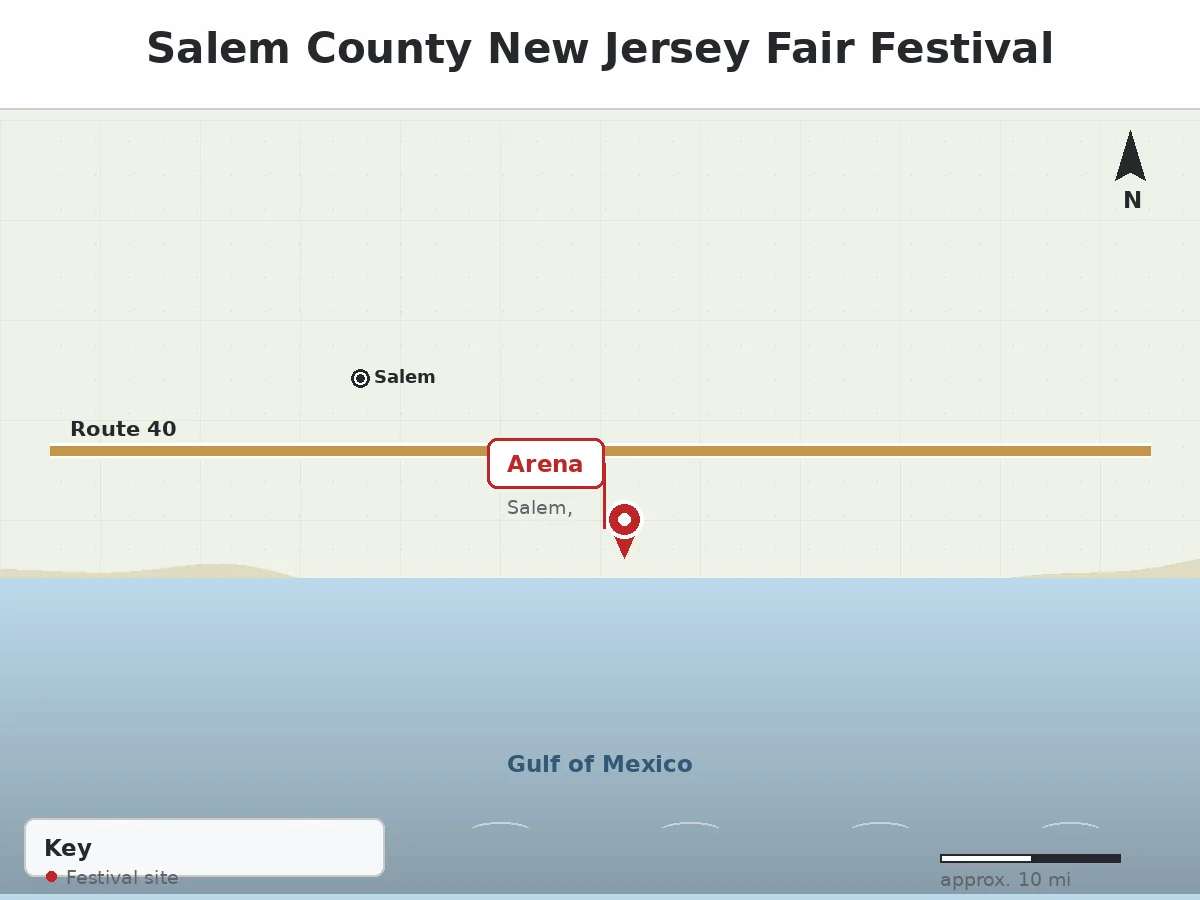
The grounds sit at 735 Harding Highway, which is Route 40, in Pilesgrove Township, roughly seven miles east of the Delaware Memorial Bridge by the association’s own directions. Woodstown, the small borough next door, lends the fair its mailing address, but the fairgrounds stand in the township, not the borough.
Quick Facts
| Item | Detail |
| Fair name | Salem County Fair |
| Grounds | Salem County Fairgrounds, 735 Harding Highway (Route 40) |
| Host township | Pilesgrove Township |
| County seat | Salem, which does not host the fair |
| Organiser | Salem County Fair Association |
| Season | Early August |
| Admission | Free at the gate |
| Parking | One pass at twenty dollars, valid for the whole fair |
| Programme character | Livestock barns, show rings, arena contests and a stage; no commercial midway |
| Fair camping | None published; no camping is offered with the fair |
A Billing That Reaches Back to 1959
The fair’s own masthead carries the line “Since 1959,” and the same year runs through every layer of its record: state listings describe a fair that started in 1959, and fair-week coverage describes the association as having promoted regional agriculture since that year. The billing attaches sometimes to the fair and sometimes to the association’s work, and the record found publishes nothing fuller behind it. So 1959 stands as billing and nothing more; no edition number is computed from it, because billing longevity in years does not promise that every year held an edition.
The recent history is one of a fair gently changing shape. In 2023 it ran four days, Tuesday to Friday, in the second week of August. The 2024 edition kept a four-day span, and the 2025 listings carried five days in the month’s first full week. Then, in 2026, the fair opened on a Monday evening for the first time in the documented record and ran five days through Friday night. A visitor who remembers a Tuesday-to-Friday fair is remembering an older shape, not a fixed tradition.
For a useful comparison, see the Passaic County New Jersey Fair Festival for another county festival.
What to Expect
Opening Night Under a Raised Flag
Fair week in 2026 began on Monday evening with one of the most distinctive openings in New Jersey fair life. During the National Anthem, the American flag was passed up a crew of utility-pole workers and set atop a telephone pole in the middle of the grounds, to fly over the fair all week. A short live auction followed, and then the evening belonged to the Fair Queen Contest and the Little Miss Fair Queen Contest. In 2026 Payton Seamster was crowned Fair Queen, receiving the Nancy Cadwallader Scholarship of five hundred dollars, and Millie Morlino was crowned Little Miss. The Monday start gives the fair a ceremonial first night.
The Arena: Pulls, Scrambles and Skillets
Evenings belong to the arena, the fair’s entertainment engine. Tractor pulls run in four divisions: kiddie pulls on pedal machines, garden tractors, antique tractors and mini-modified tractors, a ladder from small children to serious horsepower. Pig races run daily. The Pig Scramble sends young children into the ring after a pig of their own; the fair’s own schedule has opened it to youngsters aged seven and eight, with registration deadlines set each night. Mutton bustin’ puts the smallest riders on sheep, and bull riding runs in junior and high school divisions in the recent record, with junior, novice and ladies divisions documented earlier. The nightly women’s skillet throwing contest, throwing a cast-iron skillet for distance, is a signature of these grounds, and men’s skillet throwing appears in the state listing beside it.
The Barns and the Show Rings
By day the fair is a full livestock week. Dairy cattle show in 4-H classes and the South Jersey Open Dairy Show; sheep, goats, market hogs and beef cattle and steers each take their turn in the rings. Horse shows run across the week in English and Western classes, versatility, ranch sorting and ranch riding, and barrel racing. Small animals have their own bench: rabbit, cavy and poultry shows, with round robins bringing the best young showmen of each species together. The showing closes on Friday with the Parade of Champions in the Livestock Arena. For a family that comes for animals rather than rides, this is the heart of the fair.
Buildings, Produce and the Stage
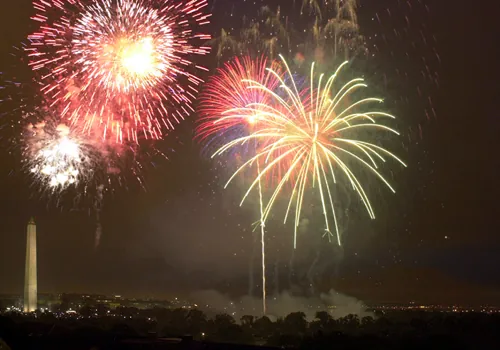
The Open Class Building carries the indoor exhibition life: an open-class home economics show and a tablescaping display, alongside the Heritage Building’s exhibits. The Open Class Produce Show is an institution of its own; in 2026 it drew a record sixty-nine exhibitors and two hundred ninety-eight entries, with the Penns Grove FFA chapter behind the show. Thursday brings the week’s great weigh-in, the Largest Tomato Contest, when the county’s heaviest tomatoes reach the scales. A stage by the food area carries entertainment nightly; the 2026 bills included Alec Marts, Joe Grasso, Vinnie Trav and the Dance Bullies, and a recycling-themed magic act, and pony rides run nightly. Fireworks close the Thursday night programme, its one sky show of the week.
Planning Your Visit
Days, Dates and the Shape of the Week
The fair belongs to early August, and the rule is to confirm the current year’s exact dates before travelling, because the shape has genuinely moved. The documented 2026 edition ran Monday, August 3 through Friday, August 7, opening on Monday evening and closing on Friday night; earlier editions ran four days, Tuesday to Friday. Nothing about the weekday pattern is permanent. What holds steady is the week’s rhythm: barns and buildings by day, arena contests and stage acts by night, the tomato weigh-in and fireworks anchored to Thursday, and the Parade of Champions reserved for Friday. Plan around those anchors and the visit survives any calendar shift.
Money: A Free Gate and One Parking Pass
Admission is free, and has been free as a matter of the fair’s long-standing tradition; there is no ticket ladder, no wristband tier and no gate charge in any layer of the fair’s record. The one payment a driving visitor makes is for parking: a single pass costing twenty dollars covers one vehicle for the whole fair, all five days, come once or nightly. Listings that price parking by a shorter span should be read with care, and any source quoting an admission charge is simply wrong. Budget for food and small spending, not gate money.
Eating at the Fair
The food centrepiece is barbecue. In 2026 Lapp’s BBQ served from Wednesday through Friday beside the main stage, with smoked ribs, chicken and taco plates as the headline dinners of fair week. Barbecue carries a long paper trail: the fair’s own earlier schedules sold ribs and chicken dinners by reserved ticket, machinery from that edition rather than the present rule. Eating here is built around a sit-down barbecue plate near the stage rather than a midway row of fryers, and visitors should aim a midweek evening at the barbecue line before the arena card starts.
A Sample Thursday at the Fair
Thursday is the fair’s fullest day, and it plans itself. Arrive in the late morning and start in the barns during the morning classes. Walk the Open Class Building before lunch and give the record produce show its time. Be at the scales for the Largest Tomato Contest weigh-in, the week’s most good-natured suspense. Take a barbecue plate by the main stage as the evening builds, then move to the arena for the pulls, the pig races and the skillet throwing under lights. Stay for the fireworks, and walk out under the flag raised on Monday. A visitor with only one free day should choose this one.
Getting There and Staying Over
The grounds stand on Harding Highway, Route 40, in Pilesgrove Township, roughly seven miles east of the Delaware Memorial Bridge; the fair’s own pocket directions measure them as a short drive west of the Cowtown complex, the rodeo and market business that is the grounds’ best-known Route 40 neighbour and a landmark on the drive in. Set navigation for the fairgrounds in Pilesgrove rather than for Woodstown, whose name the mailing address borrows, or for the city of Salem. No camping is offered with the fair: none appears anywhere in the association’s published record, so plan day and evening trips from ordinary lodging nearby.
How This Fair’s Model Compares
Most county fairs are built on two charges and a carnival: a per-person gate, a parking fee on top, and a commercial midway in the middle of the grounds. This fair inverts all three. The gate is free, parking is bought once for the whole week in a single pass, and there is no midway at all in the fair’s own record; the entertainment is spent in the arena and the barns. Against a fair charging every person, every day and every ride, five days at twenty dollars a car and nothing per passenger is a different arithmetic: exhibitor families return nightly, and nobody counts the cost of one more look at the barns.
A Fair Week Checklist
- Confirm this year’s dates first; the fair has run four-day and five-day shapes in recent Augusts.
- Carry the twenty dollars for the parking pass, which covers the vehicle for the entire fair.
- Ignore any listing that quotes an admission price; the gate is free.
- Come on Monday evening for the flag-raising and the Fair Queen and Little Miss contests.
- Give Thursday the full day for the Largest Tomato Contest weigh-in and the fireworks.
- Aim at least one evening at the barbecue dinners served beside the main stage.
- Do not arrive expecting carnival rides; the arena card is the evening entertainment.
- Book ordinary lodging nearby, since the fair offers no camping.
- Save Friday for the Parade of Champions, the week’s ceremonial close.
Beyond the Fairgrounds
The fairgrounds work a longer year than fair week. At other seasons the same grounds host separate events of their own, among them a bluegrass festival over the Labor Day weekend, an autumn pumpkin show and a state Holstein dairy show, each run by its own organisation and none of them part of the county fair. Beyond the fence, Woodstown’s main street is a few minutes away, and the city of Salem stands down toward the Delaware River with its own historic streets. The bridge, roughly seven miles west, makes the fair an easy drive from Delaware as well, and the Cowtown complex a few miles east on Route 40 runs its own rodeo and market business, a possible second stop on the same road.
Why This Fair Matters to Its County
Salem County is one of New Jersey’s most agricultural counties, and its fair is shaped like its farmland: vegetables heavy enough to need a weigh-in, livestock benches deep enough to fill five days, and a produce show that can draw a record field of exhibitors. The free gate is part of that identity: by charging cars once and people never, the association keeps the fair open to the whole county in a way a ticketed gate cannot. The scholarship on the Fair Queen’s crown, the FFA chapters showing beside the 4-H clubs, and the open classes that let any gardener bench a tomato against the county’s best all say the same thing: this fair is a county institution, where the farm year is put on show.
Frequently Asked Questions
Which town actually hosts the fair?
It is held at the Salem County Fairgrounds, 735 Harding Highway on Route 40 in Pilesgrove Township. The fair is not held in the city of Salem, the county seat, and Woodstown, the mailing name, is the neighbouring borough, not the township.
What will a visit to the fair cost?
Nothing at the gate: admission is free, in line with the fair’s long-standing tradition. Drivers buy a single parking pass for twenty dollars that covers one vehicle for the whole fair, all five days, and that pass is the fair’s only standard charge.
Should visitors expect a midway?
No commercial midway or carnival rides appear in the fair’s own record. Evenings are filled by the arena instead: tractor pulls in four divisions, pig races, the pig scramble, mutton bustin’, bull riding and skillet throwing, with stage entertainment and pony rides nightly.
Are visitors allowed to camp on the grounds?
No fair camping is published or offered with this fair in any layer of its record. Camping seen at these grounds belongs to other events in their own seasons, so fair visitors should plan on ordinary lodging in the towns around Pilesgrove.
What to Expect From the Next Salem County New Jersey Fair Festival
How often is the Salem County New Jersey Fair Festival held?
Once a year. The Salem County Fair is an annual event of the Salem County Fair Association, held every year in early August at the county fairgrounds in Pilesgrove Township.
When is the next Salem County New Jersey Fair Festival?
Following the documented edition of Monday, August 3 to Friday, August 7, 2026, the next fair is expected in early August of the following year. The association publishes each edition’s dates as its season approaches, and visitors should take the days from that announcement rather than assume the previous year’s span.
Will the dates change?
The weekday pattern can shift inside the early-August season. The documented record shows the fair running four days, Tuesday to Friday, in its earlier editions and five days, Monday to Friday, in 2026, so each edition sets its own shape even though the season is steady.
A Closing Word
A county fair with no gate charge, no midway and no camping might sound like a fair with pieces missing, until an evening in Pilesgrove shows what fills the space instead: a flag raised hand over hand up a telephone pole, children chasing a pig, a skillet sailing down the arena, and the county’s heaviest tomatoes waiting for the scales. The Salem County Fair has kept its own shape while its neighbours took theirs, and the shape still works.