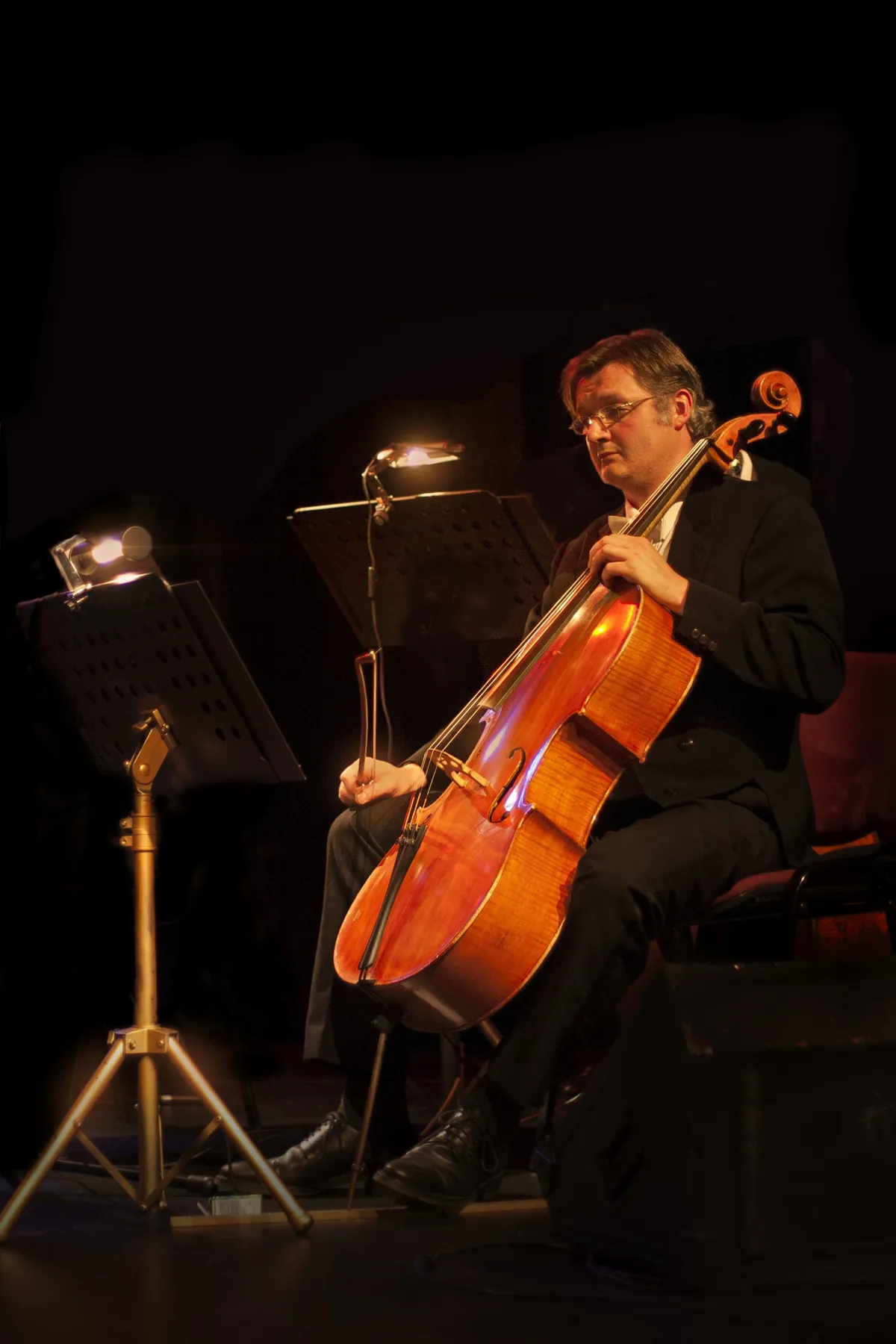
Monterey County California Carmel Bach Festival
The Carmel Bach Festival is one of the nation’s leading classical music celebrations, and it has been part of the Monterey Peninsula’s summer since 1935. Each July it brings two weeks of orchestra and chamber concerts, recitals, master classes and lectures to Carmel-by-the-Sea.
What began as a four-day series of concerts has grown into a full festival, centered on the works and influence of Johann Sebastian Bach but reaching well beyond them. The setting, a village of artists and cypress trees on the California coast, is part of the appeal.
This guide covers what the Carmel Bach Festival is, how the season works, and how to plan a visit to Carmel for it.
What the Festival Is
The Carmel Bach Festival is a classical concert series held annually each July in Carmel-by-the-Sea and around the Monterey Peninsula. Under the leadership of Artistic Director and Principal Conductor Grete Pedersen and Executive Director Nathan Lutz, each season offers orchestra and chamber concerts, recitals, open master classes, lectures and free community events.
The festival’s mission is to celebrate the works, inspiration and ongoing influence of Johann Sebastian Bach by immersing audiences in a festival experience that integrates music, education and ideas. Programming often places Bach alongside composers he influenced or who influenced him, which keeps the two weeks varied.
For a nearby comparison, see the Monterey County California Rodeo Salinas Festival.
A Festival Rooted in Place
The festival began in 1935 as a four-day series of concerts at the Sunset School Auditorium and the Carmel Mission Basilica. The mission, one of California’s historic Spanish churches, gave the early festival a setting that matched the music, and it remains one of the venues that defines the event.
Over the decades the festival grew into a two-week celebration, adding master classes, lectures and open rehearsals. The Sunset School Auditorium became the Sunset Center, bought by the city in 1964 and reopened in 2003 after a major renovation with the 66th annual Carmel Bach Festival.
Carmel itself shaped the festival as much as the music did. The village has drawn artists and writers for a century, and its scale, walkable streets and coastal setting give the festival an intimacy that larger city events lack.
Where and When
The festival is held each July in Carmel-by-the-Sea, with performances at the Sunset Center and other venues on the Monterey Peninsula. A typical season runs for two weeks, with events most days.
| Location | Carmel-by-the-Sea and the Monterey Peninsula, California |
| Typical timing | Two weeks each July |
| Founded | 1935, at the Sunset School Auditorium and Carmel Mission Basilica |
| Focus | Johann Sebastian Bach and his musical influence |
| Program | Orchestra and chamber concerts, recitals, master classes, lectures |
| Leadership | Artistic Director Grete Pedersen; Executive Director Nathan Lutz |
| Setting | A coastal artists’ village on the Monterey Peninsula |
The Music
The festival’s core is Bach, performed by a resident orchestra and chorus of professional musicians. Around that core, the programming reaches into the Baroque repertoire, into later composers who drew on Bach, and into contemporary work that extends the tradition.
Beyond the main concerts, the festival’s education programming is a defining feature. Open master classes let audiences watch musicians work, lectures and pre-concert talks put the music in context, and free community events bring the festival to a wider audience.
Planning Your Visit
Carmel is a small, popular destination, and July is peak season on the Monterey Peninsula. Lodging in Carmel and the surrounding towns fills early, and festival tickets for the most sought-after concerts sell quickly, so planning ahead is essential.
- Book lodging and tickets early; July is peak season on the peninsula.
- Check the season calendar for concerts and free community events.
- Plan to walk, since Carmel’s village center is compact and parking is limited.
- Bring a layer, as coastal evenings in Carmel are cool and often foggy.
- Explore the Carmel Mission, one of the festival’s historic venues.
Beyond the Festival
The Monterey Peninsula offers a great deal beyond the concert hall. The Monterey Bay Aquarium and Cannery Row are a short drive north, the seventeen-mile drive through Pebble Beach and Pacific Grove is one of the coast’s signature routes, and Point Lobos State Natural Reserve just south of Carmel is a favorite for its coves and cypress groves.
Carmel’s own galleries, cottages and courtyards reward a slow walk, and the village’s longstanding role as an artists’ colony gives it a character unlike anywhere else on the California coast.
The Venues and the Village
Much of the festival’s character comes from where it is held. Carmel-by-the-Sea is a small coastal village known for its artists’ colony history, its courtyards and cottages, and its walkable streets. The festival takes place within that setting rather than in a dedicated concert campus, which makes the two weeks feel woven into the life of the town.
The Sunset Center, the festival’s main venue, began as the Sunset School Auditorium in 1931 and was bought by the city in 1964. A major renovation reopened it in 2003 with the 66th annual festival, and it now provides a modern concert hall in the middle of the village.
The Carmel Mission Basilica, one of California’s historic Spanish missions, has been part of the festival since its first season. Concerts in a building of that age give the programming a sense of occasion that a conventional hall cannot, and the mission remains a signature venue for the festival’s sacred and choral repertoire.
Artists, Scholars and the Festival’s Identity
The Carmel Bach Festival is built around a resident company of professional musicians rather than a rotating roster of touring orchestras. That resident model lets the festival develop a coherent artistic identity across its two weeks and gives the performers a chance to work together in depth.
The programming reflects scholarship as well as performance. Lectures and pre-concert talks place the music in historical context, open rehearsals and master classes let audiences see how the work is made, and the festival often pairs Bach with composers who influenced or were influenced by him.
That combination of performance, education and ideas is central to the festival’s stated mission, and it is why the event has attracted serious listeners for nearly a century. It is also why so many attendees return year after year.
The Repertoire Across Two Weeks
A typical season builds from smaller recitals and chamber programs early in the run toward larger orchestral and choral works at its center. The festival’s chorus and orchestra are central to that arc, and the programming often threads a theme through the two weeks, pairing Bach with the composers he influenced and the traditions he drew from.
Because the festival lasts a full two weeks, attendees can choose between immersion and sampling. Some visitors buy packages that cover many concerts; others drop in for a single evening. Both approaches work, and the mix of venues, from the Sunset Center to the mission and smaller spaces, keeps the experience varied.
The festival also programs free and low-cost community events, which opens the music to audiences who might not otherwise attend a classical concert. Those events are part of the organization’s educational mission and a good entry point for first-time visitors.
Carmel in July
Visiting for the festival means visiting Carmel at one of its loveliest times. July brings warm days, cool evenings and the coastal fog that gives the village its characteristic light. The streets are walkable, the courtyards and galleries are open, and the beach at the end of Ocean Avenue is a short stroll from the concert venues.
The surrounding peninsula adds to the trip. Point Lobos, just south of town, offers some of the best coastal walking in California, and the seventeen-mile drive through Pebble Beach and Pacific Grove is a classic afternoon outing. Monterey’s aquarium and Cannery Row are minutes up the coast.
Because Carmel is small and popular, summer lodging is competitive. Booking early, planning meals in advance, and building in time to simply wander the village will make a festival visit far more enjoyable.
Tickets and the Festival Calendar
The festival offers a range of ticket options, from single concerts to packages covering multiple events across the two weeks. Popular programs, particularly the large choral and orchestral works, sell out, so booking early is wise. The box office is based in Carmel and handles both in-person and online sales.
Beyond the ticketed concerts, the festival runs free and open events that give visitors a lower-cost way to sample the programming. Master classes, lectures and community concerts are often free, and they offer a different perspective on the music than a formal performance.
The season calendar is usually published well before July, and it is worth studying to plan a visit. With two weeks of programming across several venues, a little advance planning lets attendees build a schedule that matches their interests, whether that means Bach’s major works, chamber music or the festival’s explorations of his influence.
The Audience and the Experience
The Carmel Bach Festival draws a mix of longtime subscribers, visiting music lovers and curious first-timers. That blend gives the concerts an engaged, attentive atmosphere, and the festival’s size keeps the experience personal rather than anonymous. Regulars often describe the two weeks as a reunion as much as a concert series.
The pace of the festival allows for depth. With performances spread across two weeks, audiences can hear the same ensemble in different repertoire, follow a theme from one concert to the next, and attend talks that connect the programming together. It is a model closer to a summer music academy than a one-off concert.
For anyone considering a first visit, the advice is simple: pick one or two concerts, add a free lecture or master class, and leave time to enjoy Carmel itself. The festival rewards both the committed listener and the curious visitor.
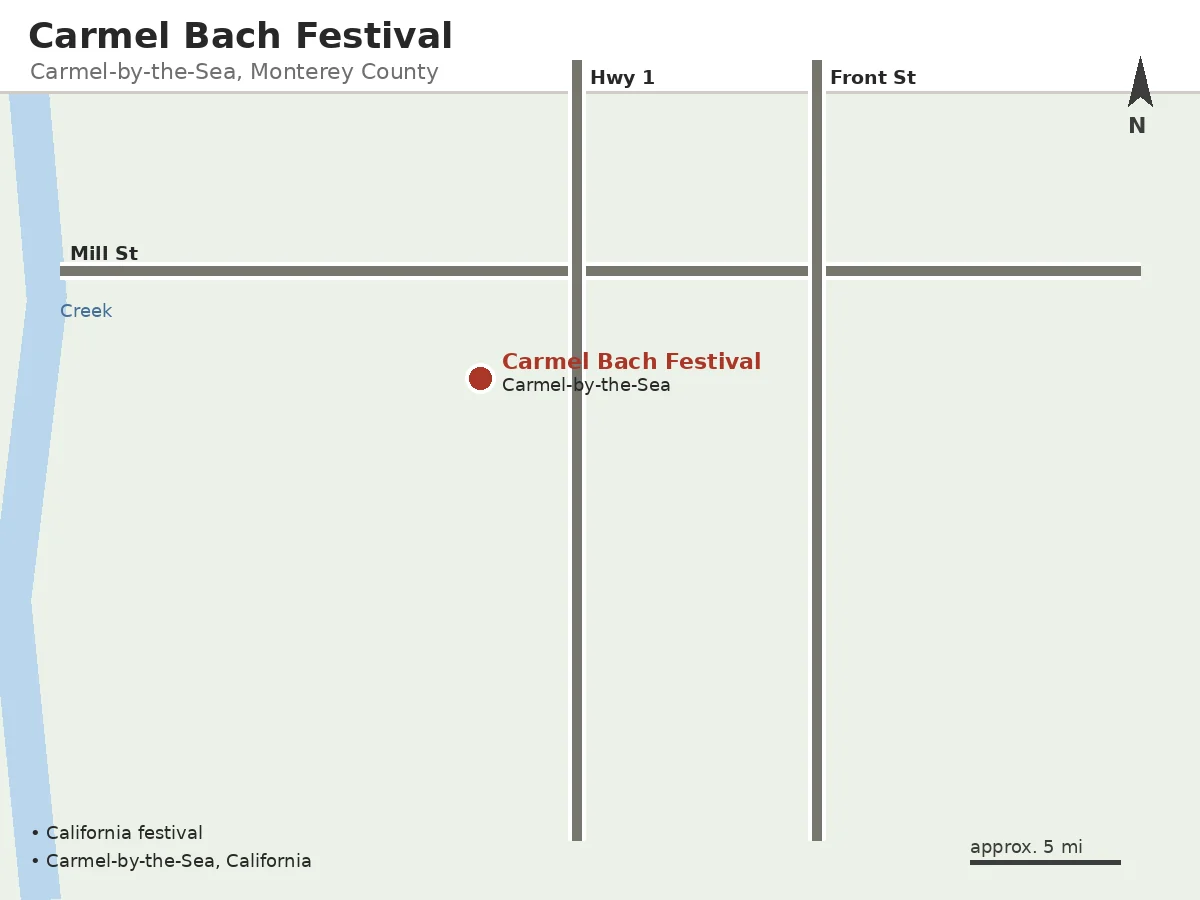
Festival Area Map
The map below marks Carmel-by-the-Sea and the festival venues, with the approach along Highway 1 for planning your visit.
Frequently Asked Questions
When is the Carmel Bach Festival?
It is held for two weeks each July.
Where is it held?
In Carmel-by-the-Sea, California, with performances at the Sunset Center and other peninsula venues.
How long has it been running?
Since 1935, making it one of the oldest classical music festivals in the country.
What music is performed?
The focus is Johann Sebastian Bach and his influence, with orchestra and chamber concerts, recitals and related repertoire.
Is there educational programming?
Yes. The festival includes open master classes, lectures, and free community events.
Do I need tickets?
Yes for most concerts. Some community events are free.
What to Expect From the Next Festival
How often is it held?
It is an annual event, held each July.
When is the next festival?
The next season is expected in July. Confirm dates, programs and ticket details with the organizers.
Will the format change?
The two-week structure of concerts, recitals and lectures has been consistent, while the repertoire and guest artists change each season.
Last updated: October 2026
The Carmel Bach Festival has spent nearly a century making classical music feel at home on the California coast. Its combination of a resident orchestra, serious scholarship and a village setting is hard to match, and for two weeks each July it turns a small town into one of the country’s most engaging places to hear Bach.

One Comment