Mobile County Alabama Joe Cain Day Festival
On the Sunday before Fat Tuesday, Mobile hands its biggest parade to the people. Joe Cain Day is the most democratic day of the city’s Mardi Gras season, a raucous, joyful procession that anyone can join and that honors the man credited with reviving the celebration after the Civil War. It is often called the People’s Parade, and the name fits.
Joe Cain Day is part of Mobile’s Carnival, which the city claims as the birthplace of American Mardi Gras. The day mixes solemnity and silliness in a way that is uniquely Mobile: a morning graveside tribute gives way to an afternoon and evening of floats, bands, and costumed revelers taking over downtown.
Joe Cain Day: Quick Facts
| Location | Downtown Mobile, Alabama |
| Typical timing | The Sunday before Fat Tuesday (Mardi Gras season) |
| Admission | Free to watch; streets are public |
| Named for | Joe Cain, who revived Mobile’s Mardi Gras after the Civil War |
| Also known as | The People’s Parade |
| Part of | Mobile’s Carnival season, which dates to 1703 |
The Story Behind the Day
Mobile’s Mardi Gras is older than New Orleans’, dating to the city’s French founding in 1703. After the Civil War, the celebration had faded, and it was Joe Cain, a local man, who is credited with bringing it back. The story goes that he led an impromptu parade through the streets in costume, and the city has been celebrating ever since.
Joe Cain Day honors that act. It is built around the idea that Mardi Gras in Mobile belongs to everyone, not only to the organized societies and krewes that host the season’s other parades. That spirit of openness is what gives the day its character.
For a look at how another Alabama county builds a festival around its own community and history, see the Mobile County Alabama Bay Bites Food Truck Festival for a useful comparison.
How the Day Unfolds
The day traditionally begins with a graveside observance at Joe Cain’s resting place, where the mood is respectful and a bit eccentric. Costumed figures, including the widows who famously mourn and celebrate him, take part, and the ceremony sets the tone for everything that follows.
The afternoon brings the main event, a parade that is famously open to participation. Anyone can join in, and the result is a lively, unpredictable procession that mixes elaborate floats with homemade costumes and impromptu marching groups. It is less polished than the society parades and more fun for it.
As with all Mobile Mardi Gras parades, throws are part of the fun, and the crowd lines the route to catch beads, trinkets, and the city’s signature MoonPies. The atmosphere is festive and family-friendly by day, growing livelier as the evening approaches.
Experiencing Mardi Gras in Mobile
The parade rolls through downtown Mobile, and the route is lined with spectators who stake out spots hours in advance. Because the streets are public, watching is free, and the density of the crowd is part of the experience.
Downtown Mobile is easy to reach, but Mardi Gras brings heavy traffic and road closures, so arriving early is essential. Parking fills fast, and many locals walk, bike, or use rideshare to avoid the crush.
February weather in Mobile can be cool or warm, so layers help. Comfortable shoes are a must given the walking and standing, and a bag for catching throws comes in handy. Bring cash for food vendors along the route.
Making the Most of the Season
Joe Cain Day is one of many parades that fill Mobile’s Carnival season, which runs for weeks before Fat Tuesday. If you are visiting for the day, consider staying for several, since the season’s atmosphere builds steadily toward its close. The city’s museums, including the Carnival museum, add context for first-timers.
Because the day is about participation, the best experience is often the most spontaneous one. Wander the route, talk to the people around you, and do not over-plan. Joe Cain Day rewards a willingness to go with the flow.
How It Compares to Other Mardi Gras Celebrations
Mobile’s Carnival is distinct from New Orleans’ in tone and history. It is older, more family-oriented, and organized around a season of parades rather than a single day. Joe Cain Day, with its open participation, is the clearest expression of what makes Mobile’s version different.

A Short Checklist
Arrive early, dress in layers, wear comfortable shoes, and bring a bag for throws and a little cash for food. Keep an eye on your group in the crowd, and check the parade schedule so you do not miss the procession you came to see.
Beyond the Festival
Mobile’s Mardi Gras history is on display year-round at the city’s Carnival museum, and the city’s broader cultural calendar, from the International Festival to the seafood celebrations, keeps the port town busy well beyond February.
Why It Matters
Joe Cain Day is a reminder that the best traditions are the ones everyone gets to share. By turning its biggest parade over to the public, Mobile keeps faith with the man credited with saving the celebration in the first place. It is history you can join.
Mardi Gras, Mobile Style
Mobile’s Carnival is a season, not a single day, and Joe Cain Day is one of its high points. Over the weeks before Fat Tuesday, more than forty parades roll through the city, hosted by the societies and krewes that keep the tradition alive. Joe Cain Day stands apart because it is the one the public makes its own.
The season reflects the city’s age and character. Mobile celebrates Mardi Gras with a family-friendly tone, and the parades, balls, and food traditions are woven into daily life for weeks. Understanding that context helps a first-time visitor appreciate why the city takes its Carnival so seriously.
Getting the Most From the Day
The best approach is to arrive early, claim a spot along the route, and let the day unfold. Bring a bag for throws, a little cash for food, and patience for the crowds. Between the morning tribute and the afternoon parade, there is time to eat, wander, and soak up the atmosphere downtown.
Because the celebration is about participation, do not be shy. Talk to the people around you, join in when a group invites you, and follow the crowd when it moves. Joe Cain Day is not a spectacle to be watched from a distance; it is a party you are already part of.
The Joe Cain Story
Joe Cain’s place in Mobile’s history rests on a single act of civic mischief. After the Civil War had quieted the city’s Mardi Gras celebrations, he is said to have led an impromptu parade through the streets, reviving a tradition that had faded. The city has honored him ever since.
His grave became a site of annual observance, and the day built around it grew into a full parade. The story is part legend and part history, but its meaning is clear: one person’s willingness to start something can keep a tradition alive.
Mardi Gras Season in Mobile
Mobile’s Carnival is a season, not a single day. For weeks before Fat Tuesday, parades roll through the city, balls fill the calendar, and the community turns its attention to celebration. Joe Cain Day is one of the season’s most anticipated dates.
Understanding that context helps a visitor appreciate the day. It is not an isolated event but the peak of a long buildup, and the city’s traditions, from the societies to the throws, are all part of a larger whole. The season is what gives Joe Cain Day its energy.

Throws, MoonPies, and Traditions
Mobile’s parades are famous for their throws, and the MoonPie is the city’s signature catch. Riders toss beads, trinkets, and the boxed marshmallow treats to the crowd, and catching them is part of the fun for children and adults alike.
The tradition of throwing dates back generations and reflects the community nature of Mobile’s Carnival. It is not a spectator sport so much as a shared game, and it is one of the things that makes the city’s Mardi Gras feel distinct from other celebrations.
Carnival for Families
Despite its reputation for revelry, Mobile’s Mardi Gras is notably family-friendly. Joe Cain Day draws families with children, and the daytime parade is a safe, cheerful outing. Many locals mark the day as a multigenerational tradition.
For visitors with children, the key is to arrive early, claim a spot with a good view, and plan for the crowds. The atmosphere by day is festive and welcoming, and the throws make it easy to keep younger visitors engaged.
The People’s Parade
What makes Joe Cain Day special is its openness. While the season’s other parades are organized by societies and krewes, this one invites the public to take part. Anyone can join, and the result is a procession that feels genuinely communal.
That spirit is what the day is really about. It honors the man who revived Mardi Gras by handing the celebration back to the people, and it keeps the city’s oldest traditions alive by letting everyone share in them. It is history you can walk into.
Carnival Food and Drink
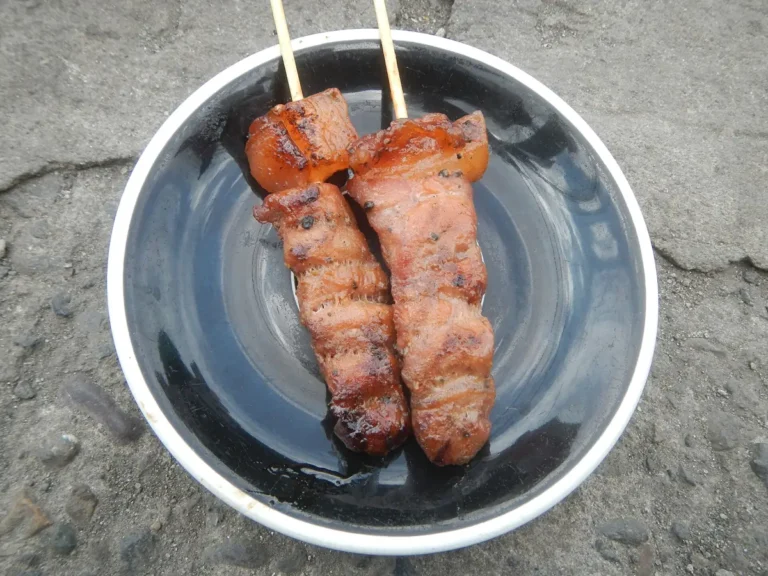
A Mobile Mardi Gras day is also an eating day. Along the parade route and in the surrounding blocks, vendors sell the foods that define Carnival in the city, from sausage and seafood to sweets and the ever-present MoonPie. Families often stake out a spot and make a picnic of it.
Bringing cash helps, since some vendors prefer it, and arriving early gives you time to eat before the crowds peak. The food is part of the tradition, and the smells drifting along the route are as much a part of the day as the floats and the throws.
Watching With Children
Joe Cain Day is well suited to families, and parents have learned a few tricks over the years. A spot with a clear view and a little space lets children move around without getting lost in the crush, and a bag for throws keeps the haul manageable.
Hearing protection can help younger children with the noise of the bands, and a stroller is workable if you arrive early enough to claim space. The daytime atmosphere is festive and safe, and the parade’s open spirit makes it an easy introduction to Mardi Gras for kids.
The End of the Season
Joe Cain Day comes near the close of Mobile’s Carnival, just before Fat Tuesday brings the season to an end. That timing gives the day a sense of culmination, and the city’s energy is at its peak in the days around it.
For visitors, the placement is ideal: the parade falls at the moment when the season is most alive, and the surrounding days offer plenty of other parades and events. A trip built around Joe Cain Day gets the best of Mobile’s Mardi Gras.
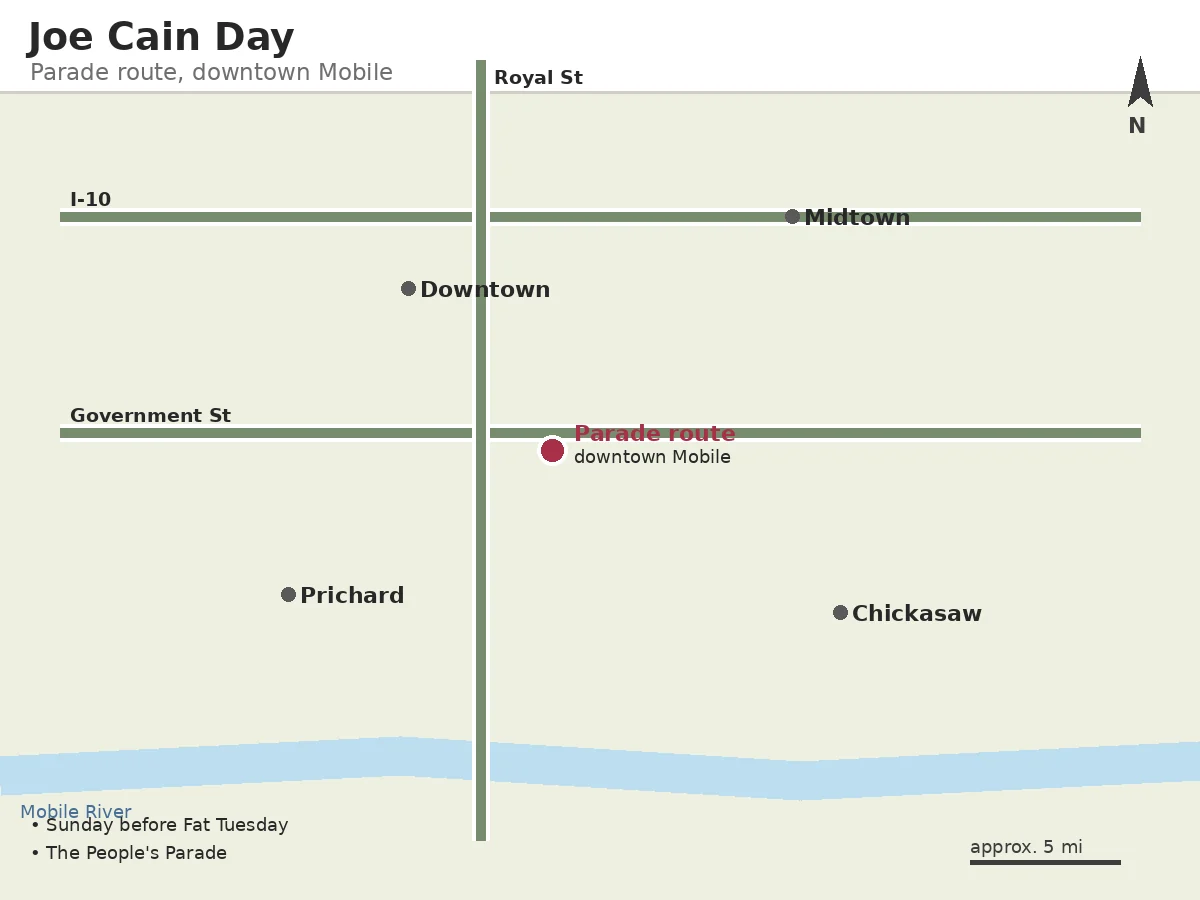
Festival Area Map
The map below shows downtown Mobile and the parade route area, with the main streets marked so you can plan where to stand. The route runs through the heart of the city, and the streets are public and free to watch from.
Frequently Asked Questions
When is Joe Cain Day?
It is observed on the Sunday before Fat Tuesday, during Mobile’s Mardi Gras season.
Where does it take place?
The parade and related events are held in downtown Mobile, Alabama.
Is there an admission fee?
No. The streets are public and watching the parade is free.
Who was Joe Cain?
Joe Cain is credited with reviving Mobile’s Mardi Gras celebration after the Civil War, and the day is named in his honor.
Can anyone participate in the parade?
Yes. Joe Cain Day is known as the People’s Parade because participation is famously open.
Is it family-friendly?
Yes. The daytime parade is family-oriented, though the atmosphere grows livelier into the evening.
What to Expect From the Next Joe Cain Day
How often is Joe Cain Day held?
It is an annual event, held each year during Mobile’s Mardi Gras season.
When is the next edition?
It falls on the Sunday before Fat Tuesday. Because Fat Tuesday moves with the calendar, the date changes each year.
Will the route or timing change?
The parade route and start times can shift, so check the official Mardi Gras schedule before you go.
Last updated: October 2026
Joe Cain Day is Mobile at its most generous: a citywide party with no gate, no velvet rope, and no wrong way to take part. Come early, stay late, and catch a MoonPie or two. It is the people’s parade, and for one Sunday a year, that is exactly what it is.

One Comment