Mitchell County Iowa Mitchell County Fair Festival
The Mitchell County Fair returns to the Mitchell County area of northeast Iowa for a summer weekend of livestock barns, carnival lights, grandstand entertainment, and food stands staffed by people who know your name. Mitchell County is a compact, rural place — 470 square miles, 10,565 residents at the 2020 census, with Osage as the county seat — and its fair reflects that scale. Nothing here is so big that you need a strategy, but a little logistics work makes the weekend far easier.
This guide is built for the planner: the parent juggling nap schedules and a cooler, the grandparent who wants to park near the gate, the visitor driving in from a neighboring county, and the local who just wants to know when to show up. Read it once, make a few decisions, and the fair gets a lot more relaxed.
Mitchell County Fair Essentials: Numbers, Timing, and Setting
| Town / area | The Mitchell County area, Iowa |
| County | Mitchell County |
| County seat | Osage |
| Population | 10,565 (2020 census) |
| Founded / land area | 1851; 470 square miles |
| Region and setting | Northeast Iowa; rural fairgrounds in farm country |
| Typical timing | A summer weekend, most often July or early August |
| Admission | Generally free to enter; rides and some grandstand events cost extra |
| Features | Livestock and static exhibits, midway rides, fair food, grandstand entertainment, family activities |
| Organizer | Volunteer fair board and community organizations |
Inside the Mitchell County Fair: A Summer Anchor in Northeast Iowa
The Mitchell County Fair is an annual county fair held in the Mitchell County area — the kind of event that stitches a county of 10,565 people into one shared weekend. The county was founded in 1851 and covers 470 square miles of farmland, small towns, and river valleys, and the fair is where that geography gathers: farm families, youth exhibitors, Main Street businesses, and neighbors who otherwise only cross paths at the grocery store.
Expect the classic county fair shape. Barns with livestock, a show ring with ribbons on the line, static exhibits ranging from garden vegetables to photography, a midway with rides, a grandstand that fills in the evening, and food stands run by local groups. Admission to the grounds is typically free, with rides and some grandstand events sold separately, so the day costs as little or as much as you decide.
Because the fair is community-run rather than commercial, the schedule leans on local participation. The best moments are often the small ones: a first-place ribbon on a jar of preserves, a kid leading a calf through the ring for the first time, a volunteer at the gate who remembers your father.
For another look at how a community turns its own traditions into a gathering, see the Mills County Iowa Mills County Fair Festival for a useful comparison.
How the Fair Tradition Took Root in Mitchell County
Mitchell County was organized in 1851, when northeast Iowa was filling with settlers from New England, New York, and northern Europe. Across Iowa, annual fairs grew out of exactly this period: farmers needed a place to compare seed, stock, and equipment, and communities needed a reason to gather after harvest and before winter.
What began as agricultural exhibition gradually widened. Livestock shows and produce displays were joined by machinery demonstrations, then by grandstand entertainment, then by carnival rides and youth programs. Osage became the administrative and commercial hub, and the fairgrounds became neutral ground for the whole county — town and country in one place for a few days.
1851 and after — Mitchell County’s early decades build the farm organizations, churches, schools, and county-seat institutions that fairs depend on.
The late 1800s — Iowa county fairs mature into multi-day events with competitive exhibits, livestock classes, and grandstand programming.
The 20th century — Youth agricultural programs become central, adding a pipeline of young exhibitors and a family audience.
Recent decades — The fair settles into its modern rhythm: a summer weekend of exhibits, rides, food, and entertainment that still runs largely on volunteer labor.
The longer record lives in county newspaper archives and in the memories of families who have exhibited across generations — proof that this is an institution built by repetition rather than by any single year.
What a Fair Day in Mitchell County Actually Feels Like
Grounds like these are compact and walkable, which changes how you plan. You are not crossing a state fairground; you are moving between a barn, a midway, a food row, and a grandstand in a few minutes. That means you can do more in an afternoon — and that you should pace yourself rather than sprint.
Fair Food Worth Planning Around
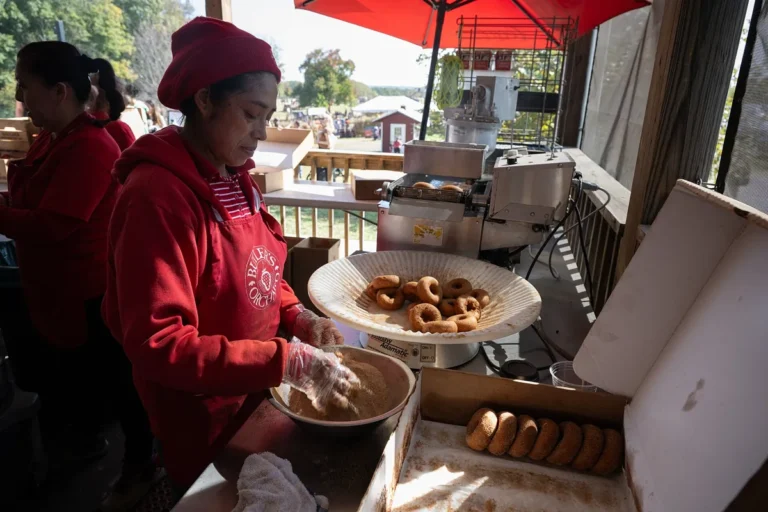
Expect the Iowa county fair canon: pork producers’ sandwiches, walking tacos, corn dogs, funnel cakes, elephant ears, lemonade shake-ups, and pie. Service clubs and church groups typically run the stands, which means the money circulates back into the county.
Two practical moves: eat lunch early, before the noon rush at the most popular stands, and save dessert for mid-afternoon when lines thin. Cash still helps at smaller stands, though most accept cards. If anyone in your group has dietary restrictions, the fried-heavy menu is limiting, so pack a small backup.
Grandstand Entertainment and Live Music
Evenings carry the entertainment weight. County fairs in this part of Iowa typically program a mix of grandstand events — tractor pulls, demolition derbies, racing, or a concert — alongside live music on a smaller stage. Lineups change year to year, so treat any specific act as something to confirm locally.
Grandstand seating is often bleacher-style, so a cushion is worth the carry, and arriving 20 to 30 minutes early gets you a better angle. With young kids, the earlier events tend to fit better.
Family Activities and Kid-Friendly Corners
The fair is genuinely built for families. Beyond the rides, look for the livestock barns, where kids can watch grooming and showing up close; the exhibit halls, where children see projects made by peers; and whatever hands-on activities the fair has arranged — often games, pedal tractor pulls, or craft stations.
Two notes: strollers work on main paths but struggle in gravel and barn aisles, and a change of clothes for kids is not overkill when the day includes animals, rides, and dust.
Planning the Trip: Roads, Rooms, and Rain Plans
Getting There
Mitchell County sits in northeast Iowa, with Osage as the county seat and the practical reference point for out-of-town visitors. The county’s road grid makes arrival simple, but plan on rural two-lane highways rather than interstate speed — the drive is scenic, not fast.
Where to Stay
Lodging in a county of 10,565 people is limited, so reserve early. Options typically include a small number of local motels and inns around Osage, plus bed-and-breakfasts and countryside rentals. Larger hotel clusters exist in nearby regional hubs if local rooms fill. Camping is another common approach for fairgoers, whether at a nearby campground or, when the fair permits it, on or near the grounds.
Parking Strategy
Fairground parking is usually a mix of designated lots and field parking, often free or by donation. The trade-off is familiar: arrive early and park close, arrive late and walk. Families with small children or anyone with mobility limitations should aim for the earliest practical arrival and ask about accessible parking on site. Note your row and a landmark before walking away — field parking all looks alike after dark.
Admission and Costs
General admission is typically free, with costs concentrated in rides, games, grandstand events, and food. That makes budgeting easy: decide in advance what you will spend on the midway, set a limit for the kids, and treat the rest as discretionary. Bring some cash for small vendors and donation buckets.
Weather and Contingencies
Late summer in northeast Iowa means warm, humid afternoons and a real chance of thunderstorms. Plan for heat first: water, hats, sunscreen, and a mid-afternoon break in the shade or an exhibit building. Then plan for rain: a light jacket beats an umbrella in a crowd, and closed-toe shoes handle mud far better than sandals. If a storm rolls through, outdoor activities typically pause and resume when it is safe — ask staff rather than guessing.
A Sample Fair Weekend in Mitchell County, Start to Finish
Day one, afternoon: Arrive mid-afternoon while parking is still easy. Walk the barns first — animals are active, exhibitors are friendly, and the light is good for photos. Eat an early dinner before the evening crowd builds.
Day one, evening: Head to the grandstand for the headline event with a cushion and a little lead time. Finish with a walk through the midway after dark, when the lights are best and ride lines are shorter.
Day two, morning: Come back early for livestock shows and the exhibit hall. This is the fair at its most authentic — judging, ribbons, proud grandparents. Breakfast from a stand or a café in Osage sets up the day.
Day two, midday: Take the heat seriously. Move indoors to exhibits, catch live music in the shade, and let the kids ride a couple of things before the afternoon peak.
Day two, evening: Return for the second grandstand event and a last pass through the food row. With children, leave slightly before closing to avoid the parking-lot crunch.
Day three: A shorter visit. Many fairs wrap with a final round of shows or a community meal. Come for the morning, enjoy the calmer pace, and be on the road by early afternoon.
Mitchell County Fair vs. Nearby Fairs and Towns
If you are building a summer of county fairs, Mitchell County slots neatly into a regional circuit. Osage, the county seat, anchors this fair and is the largest town in the county. St. Ansgar, a smaller Mitchell County community, makes a quiet Main Street stop to pair with a fair afternoon.
Cross the county line and the tradition continues: neighboring northeast Iowa counties run their own fairs on their own summer weekends, and regional hubs offer larger-scale shopping, dining, and lodging. The practical difference is scale, not quality. A bigger county’s fair brings more vendors, bigger grandstand names, and heavier traffic; Mitchell County trades that for shorter lines, easier parking, and a crowd where you will likely run into someone you know.
For most visitors the right call is simple: make Mitchell County the relaxed day and use a nearby larger fair as the spectacle day, rather than cramming both into one weekend.
The Mitchell County Fair Prep Checklist
| Cash and a card | Small stands and donation buckets still run on cash |
| Water bottles | Refilling beats buying bottles all afternoon |
| Sunscreen and hats | Shade is limited on midways and in bleachers |
| Stadium cushions | Grandstand seating is typically bleachers |
| Closed-toe shoes | Barn aisles, gravel, and rain mud |
| Light rain jacket | Better than an umbrella in a crowd |
| Spare kid clothes | Animals, rides, and dust happen |
| Parking landmark | Note your row before you walk away |
| Ride budget | Decide the limit before the midway |
| Local schedule | Confirm times and grandstand lineup locally |
Beyond the Fairgrounds: Osage and the Rest of Mitchell County
Osage, the county seat, is the natural base for the rest of your visit. Downtown covers the small-town essentials — a café, a hardware store, a place to pick up supplies — and the surrounding countryside is classic northeast Iowa: corn and soybean fields, farmsteads, and small communities like St. Ansgar.
Build in an extra hour for a drive. Mitchell County’s 470 square miles reward slow travel, and the roads between towns are quiet enough to enjoy. With kids, pairing the fair with a park stop breaks up the day. Without them, the fair plus a quiet dinner in Osage makes a complete, unhurried weekend.
Neighbors, Volunteers, and the Fair’s Role in Mitchell County Life
In a county of 10,565 people, a fair is not just an event — it is infrastructure. It is one of the few annual occasions when the whole county stands in the same place, and it runs on people who volunteer because their parents did. That continuity matters in rural Iowa, where institutions are sustained by relatively few hands.
The fair also works as an economic and educational engine in miniature. Young exhibitors learn to raise animals, keep records, and present their work. Local businesses sponsor classes and buy ribbons. Food stands raise money for churches, clubs, and scholarships. Money spent at the fair tends to stay close to home, which is one reason county fairs have survived an era of cheap travel and endless entertainment options.
For visitors from outside the county, that is the real appeal: not the biggest rides or the loudest concert, but a weekend that shows how a place like Mitchell County works.
Where the Mitchell County Fair Sits in Northeast Iowa
The Mitchell County Fair takes place in the Mitchell County area of northeast Iowa, with Osage serving as the county seat and the most convenient reference point for visitors.
Mitchell County Fair Logistics: Answers Before You Arrive
Is there an admission fee for the Mitchell County Fair?
General admission to the fairgrounds is typically free, with costs concentrated in carnival rides, games, grandstand events, and food. That makes it easy to attend on a budget: walk the grounds, watch the shows, and spend only on what your group actually wants.
When is the Mitchell County Fair held each year?
The fair is held on a summer weekend, most often in July or early August, in line with county fair season across Iowa. Because the exact weekend shifts from year to year, confirm the current dates through local listings or the fair’s own announcements before you book travel.
Where should out-of-town visitors stay?
Lodging in Mitchell County is limited, so reserve early. Osage and the surrounding area offer a small number of motels, inns, and rental properties, and camping is a popular choice for fairgoers. Regional hubs a short drive away provide larger hotels when local rooms are full.
Is the fair a good fit for young children?
Yes — county fairs are built for families. Rides, barn animals, exhibit halls, and hands-on activities keep kids busy, and the grounds are compact enough that you are never far from a food stand, a restroom, or the car. Bring a stroller for the main paths, a change of clothes, and a plan to leave before the youngest visitor runs out of steam.
Looking Ahead to Future Mitchell County Fair Seasons
County fairs everywhere are navigating the same questions: how to keep young families coming, how to balance tradition with new entertainment, and how to keep volunteer rosters full. Mitchell County’s advantage is scale. With 10,565 residents and a 470-square-mile footprint, the fair can adapt without losing what makes it work — that it is run by the people who attend it.
Expect future seasons to lean harder on youth programs, local vendors, and evening entertainment that appeals across generations, while keeping the barns, the exhibit halls, and the free-admission model that make the fair accessible. The best way to support that is simply to show up, spend a little locally, and come back next year.
Last updated: October 2026
Plan the logistics once — where you will park, when you will eat, which evening you will spend at the grandstand — and the Mitchell County Fair becomes what it is meant to be: an easy, unhurried summer weekend in a part of Iowa that still does things the community way.