Johnson County Iowa Johnson County Fair Festival

Iowa City has served as the seat of Johnson County since the county was organized in July 1838, only months after it was created in December 1837. Today that seat anchors a county of 152,854 residents spread across 623.063 square miles of eastern Iowa — a landscape of university neighborhoods, river towns, and some of the most productive farmland in the state.
Every summer, that mix converges in one place. The Johnson County Fair brings farm families, youth exhibitors, carnival-goers, and curious newcomers onto the same grounds for a few days of livestock judging, fried food, and grandstand entertainment. It is a county fair in the classic Iowa sense: local, unpretentious, and built around the people who actually live here.
Johnson County Fair Essentials: Town, County, and Timing
Here are the basics that shape any visit, from where the fair sits to what it costs to walk through the gate.
| Town / area | The Johnson County area, anchored by Iowa City |
| County | Johnson County, Iowa |
| County seat | Iowa City |
| Population | 152,854 (2020 census) |
| Region | Eastern Iowa |
| Typical timing | Summer, generally in July |
| Admission | Typically free at the gate; rides, food, and some grandstand events cost extra |
| Setting | A county fairgrounds with livestock barns, show rings, exhibit halls, and open-air entertainment space |
| Features | Youth and open livestock shows, static exhibits, carnival rides, fair food, grandstand programming |
| Organizer | The volunteer fair board and county fair association |
What the Johnson County Fair Looks Like Today
This is a traditional county fair, and the word traditional does real work here. The heart of the schedule is competitive: youth livestock shows, static exhibits in home arts, horticulture, and agriculture, and the daily rhythm of judging that turns barns and exhibit halls into classrooms. Families arrive with animals, projects, and coolers, and many of them stay for days rather than hours.
For visitors with no farm connection, the fair works as a summer festival with a strong local accent. Admission to the grounds is typically free, which lowers the barrier for a family to wander in after dinner, watch a show, eat something on a stick, and leave without spending much. Carnival rides, games, and some grandstand events carry their own costs, so the fair scales to whatever budget you bring.
For another look at how a community turns its own traditions into a gathering, see the Jewell County Kansas Jewell County Fair Festival for a useful comparison.
What holds it together is scale. This is not a state fair with miles of walking between attractions. The grounds are compact enough that a visitor can cover the barns, the exhibit halls, the midway, and the food row in an afternoon — then come back the next day and notice something new.
How the Fair Grew From an 1837 County and a New Seat at Iowa City
Johnson County was created in December 1837 and formally organized in July 1838, with Iowa City named as the county seat. In those early decades, eastern Iowa filled with farmsteads, and the county’s population and agricultural output grew quickly. Fairs became the practical answer to a real problem: how to share better methods, better stock, and better seed with neighbors who lived miles apart and rarely had reason to gather.
Across Iowa, county fairs took hold through the nineteenth century, usually organized by agricultural societies and staged in whatever space a community could spare — a field, a grove, a town square. Johnson County’s fair belongs to that lineage. Its purpose was educational before it was recreational, and even now the emphasis placed on exhibits and judging reflects those roots far more than it reflects the carnival midway.
What changed over the generations was the audience. As Iowa City grew into a university and medical center, the fair stopped serving only farm families. Town residents started showing up for the food, the music, and the chance to let children see where their food actually comes from. The grounds became a meeting point between two halves of the same county that otherwise rarely share a calendar.
That continuity is worth noticing. Plenty of local traditions have quietly disappeared from Iowa summers. The fair has lasted because it kept adapting — adding entertainment, keeping youth programs at the center, and staying inexpensive enough that a family can decide to attend on a whim rather than saving up for months.
On the Ground: Fair Food, Grandstand Nights, and Family Traditions
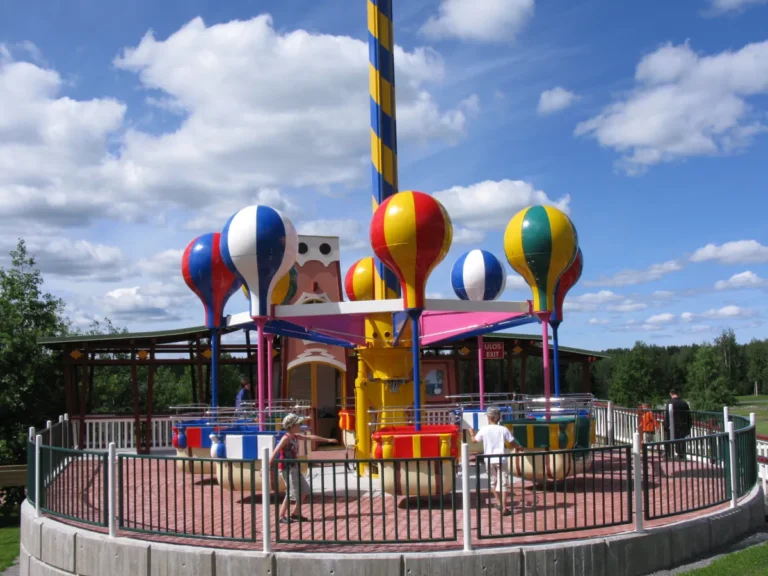
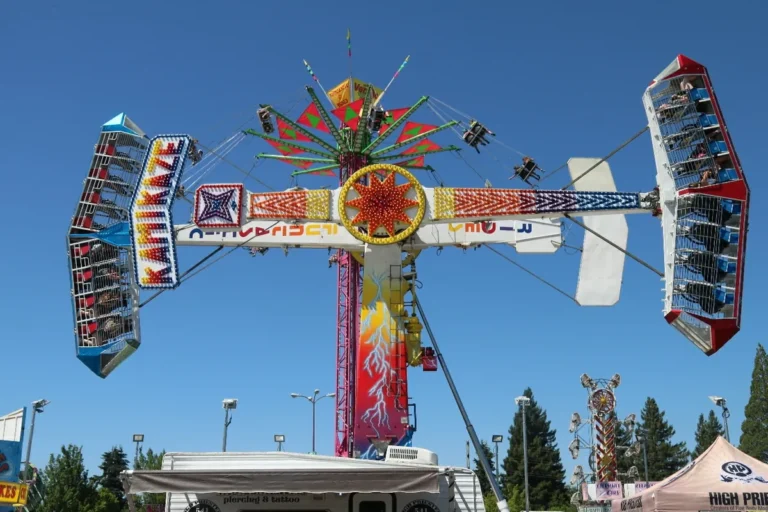
A fair this size is best understood by walking it. Expect a compact footprint: barns and exhibit halls on one side, midway rides and food stands through the middle, and a grandstand or open-air stage where the evening program happens.
Fair Food and the Flavors of Eastern Iowa
Fair food follows the familiar Iowa vocabulary — corn dogs, pork chops on sticks, funnel cakes, lemonade shake-ups, and pie slices sold by community groups raising money for their own causes. Local vendors mix in with traveling concessionaires, and the longest lines tend to form right after the evening livestock shows let out. Portions are generous, prices are moderate, and the food row is where most visitors spend their first dollar of the day.
Grandstand Music and Evening Entertainment
Evenings carry the loudest programming. In most years the schedule includes live music, tractor pulls, demolition events, and other grandstand draws that give the fair a nightlife distinct from its daytime business. Seating is generally open, and many families stake out a spot early, spread a blanket, and eat dinner while the show builds. Weekend nights fill fastest, so arriving before the dinner rush pays off twice.
Family Activities, Livestock, and Youth Exhibits
For children, the fair is a hands-on place. Barns are open to walk through, animals are close enough to see and sometimes touch under supervision, and youth exhibitors are usually happy to answer questions about a heifer, a goat, or a pen of rabbits. Carnival rides run through the afternoon and evening, and smaller activities for younger kids fill the gaps between shows. Parents often find the morning hours calmer and cooler for first-time visits.
Planning a Johnson County Fair Trip From Iowa City or Out of Town
Getting There: Routes Into the Iowa City Area
The fairgrounds sit within the Iowa City area, which means most visitors arrive by car from Interstate 80, U.S. Highway 218, or the local street grid. Coming from Cedar Rapids, the Quad Cities, or Des Moines, plan on a straightforward drive into Johnson County and then a short hop to the grounds. Rideshare and local transit work reasonably well for anyone staying in town.
Where to Stay Near Johnson County
Overnight options cluster in Iowa City and Coralville, with additional rooms in North Liberty and Tiffin. Because the fair overlaps with the university’s quieter summer stretch, hotel availability is usually better than it is during a football weekend or commencement. Booking a few weeks ahead is still wise if you want to be close to the grounds and avoid a longer commute in from the interstate corridor.
Parking Around the Fairgrounds
Fairground parking fills quickly on weekend evenings and during grandstand events. Arriving before the dinner rush makes the biggest difference. Expect to walk a few blocks from satellite or street parking on the busiest nights, and watch for volunteers directing traffic near the main entrances. Carpooling with neighbors is a genuinely practical strategy here.
Admission, Costs, and What Adds Up
Gate admission is typically free, so the real budget is discretionary: rides, games, food, and any ticketed grandstand events. Families who set a per-child limit before arriving tend to have an easier evening. Cash still moves faster at some stands, though card readers are increasingly common. A fair visit can be a cheap night out or a full splurge, depending entirely on how you play it.
July Weather and How to Dress
Summer in eastern Iowa means heat, humidity, and the occasional fast-moving thunderstorm. Dress for a long walk — comfortable shoes, a hat, sunscreen, and a refillable water bottle. Evenings cool off enough that a light layer helps. If storms are forecast, check the fair’s schedule before heading out, since outdoor programming can be delayed or shifted indoors.
A Sample Fair Weekend in Johnson County
Start Friday evening, when the grounds are lively but not yet at weekend peak. Walk the barns first while the light is still good, then eat dinner from the stands near the midway. Stay for the grandstand program, which typically anchors the night and sets the tone for the weekend.
Saturday morning is the best window for exhibits. Judging is underway, the exhibit halls are quiet enough to browse, and youth exhibitors are at their stations. Arrive early for parking, start with coffee and a breakfast sandwich from a vendor, and save the rides for later.
Spend the hot middle of the day on rides and indoor exhibits, then retreat for a break before returning for the evening show. Saturday nights draw the largest crowds of the fair, so build in extra time for parking, food lines, and getting everyone back together.
Sunday is slower and more family-oriented. It is a good day for small children, for revisiting favorite animals, and for one last pass through the food row before the grounds close for another year.
How the Johnson County Fair Compares With Neighboring Fairs
County fairs in neighboring Cedar, Linn, Iowa, and Washington counties run on similar summer calendars, and each has a slightly different personality — some are larger and more suburban in feel, others stay small, quiet, and purely agricultural. Johnson County’s fair lands somewhere in the middle, with the added advantage of a university town on its doorstep.
Within Johnson County itself, the summer calendar also includes Iowa City’s downtown arts and music events, which draw a different crowd and a different mood. The fair’s advantage is breadth: it is the one summer gathering that reaches farm families, university staff, retirees, and new arrivals at the same time, without asking any of them to change how they spend an evening.
Fair Day Checklist for Johnson County Families
Pack water, sunscreen, hats, and a light layer for the evening. Bring cash in small bills, a tote for anything you buy, and a stroller or wagon if you have small children. Wear closed-toe shoes — barns, gravel, and midway pavement are not sandal-friendly, and you will be on your feet far longer than you expect.
Before you go, check the day’s schedule for judging times and grandstand start times, and confirm whether any event requires a separate ticket. Set a spending limit with your group, agree on a meeting point in case anyone gets separated, and keep a phone charged for photos and check-ins. If you are showing an animal, pack feed, bedding, and a change of clothes in advance.
Beyond the Fairgrounds: Iowa City and the Rest of Johnson County
Iowa City rewards a longer stay. The University of Iowa campus, the pedestrian mall downtown, and the city’s well-known literary culture give the area a character that few counties of 152,854 people can match. Bookstores, coffee shops, and restaurants are all within a short drive of the fairgrounds, which makes a fair weekend easy to stretch into a fuller trip.
Coralville adds shopping and hotels along the interstate corridor, while North Liberty and Tiffin have grown into busy family suburbs. To the north and east, Solon and West Branch keep their small-town scale, and Kalona’s rural character makes a good half-day detour. The 623.063 square miles of Johnson County are easy to cover in an afternoon, so nothing on this list requires a separate trip.
Why Johnson County Keeps Returning to Its Fair
A county of this size does not need a fair to survive. It keeps one because the fair does something other events cannot: it puts a university town and its farming neighbors in the same space without any particular agenda. Exhibitors, volunteers, and vendors are overwhelmingly local, and the money spent at the fair stays closer to home than most entertainment budgets do.
For young exhibitors, the fair is often the first place they speak publicly, handle real responsibility, and lose gracefully in front of people they know. Those lessons outlast the ribbons, and they are the reason families keep coming back long after their own children have aged out of competition.
Where the Fairgrounds Sit in the Iowa City Area
The Johnson County Fair is held on fairgrounds within the Iowa City area, the county seat of Johnson County in eastern Iowa.
Johnson County Fair Questions, Answered
Is the Johnson County Fair free to attend?
Gate admission is typically free, so you can walk the grounds without buying a ticket. Costs come from what you choose to do — carnival rides, food, games, and any grandstand events that require their own ticket. That structure makes the fair an easy, low-commitment outing for families who want to test the waters before committing to a full day.
When is the fair usually held?
The fair is a summer event, generally falling in July on the Iowa county fair calendar. Exact dates shift from year to year, so check the current schedule before planning around it. Most activity runs across a long weekend and the days surrounding it, with the heaviest crowds on weekend evenings.
Is the fair a good outing for young children?
Yes, particularly in the morning and early afternoon. Barns, animals, and carnival rides hold attention well, and the grounds are compact enough to cover without exhausting small legs. Sunday tends to be the calmest day, and strollers handle most of the terrain, though gravel and barn floors can be rough on wheels.
How far is the fair from downtown Iowa City?
The fairgrounds are within the Iowa City area, so the drive from downtown is short — minutes rather than a road trip. Many residents combine a fair visit with errands or dinner elsewhere in the county, which is part of why the fair fits so easily into a normal summer week.
The Next Chapter for the Johnson County Fair
County fairs survive by staying relevant, and the Johnson County Fair’s future depends on the same things that keep it strong now: youth participation, volunteer energy, and affordable access. As Johnson County grows — 152,854 people at the 2020 census, and more since — the fair has a chance to become the rare event that a genuinely diverse county actually shares.
The tension is familiar to every fair board: how to modernize without sanding off the character that makes the fair worth attending in the first place. Keep the barns central, keep the gate free, and keep the schedule built around local exhibitors, and the fair should keep drawing eastern Iowa for another generation.
Last updated: October 2026
Come for the livestock, stay for the grandstand, and leave with a sunburn and a funnel cake you did not need. That is the Johnson County Fair in practice — a summer ritual that has outlasted nearly everything else on the county’s calendar, and one that still belongs to the people who show up.
One Comment