Jackson County Alabama Russell Cave Native American Festival
On the first weekend in May, the grounds of Russell Cave National Monument near Bridgeport come alive with storytelling, dancing, flute music, and demonstrations of traditional crafts for the Russell Cave Native American Festival. The free event celebrates the Native American cultures of the Southeast at one of the most important archaeological sites in the country, a cave whose deposits record more than ten thousand years of human use.
The festival is as much an educational event as a celebration. Rangers and presenters demonstrate the skills that sustained the cave’s inhabitants, from flintknapping and spear throwing to pottery and fire building, and a historical reenactment of a Cherokee encampment gives visitors a tangible sense of how people lived in this landscape long before European settlement.
Russell Cave Native American Festival: Quick Facts
| Location | Russell Cave National Monument, near Bridgeport, Jackson County |
| Typical timing | First weekend in May |
| Admission | Free |
| Scale of the site | More than 10,000 years of human history recorded in cave deposits |
| Highlights | Storytelling, dancing, flute music, flintknapping, Cherokee encampment |
| Operator | National Park Service |
A Festival at a Remarkable Place
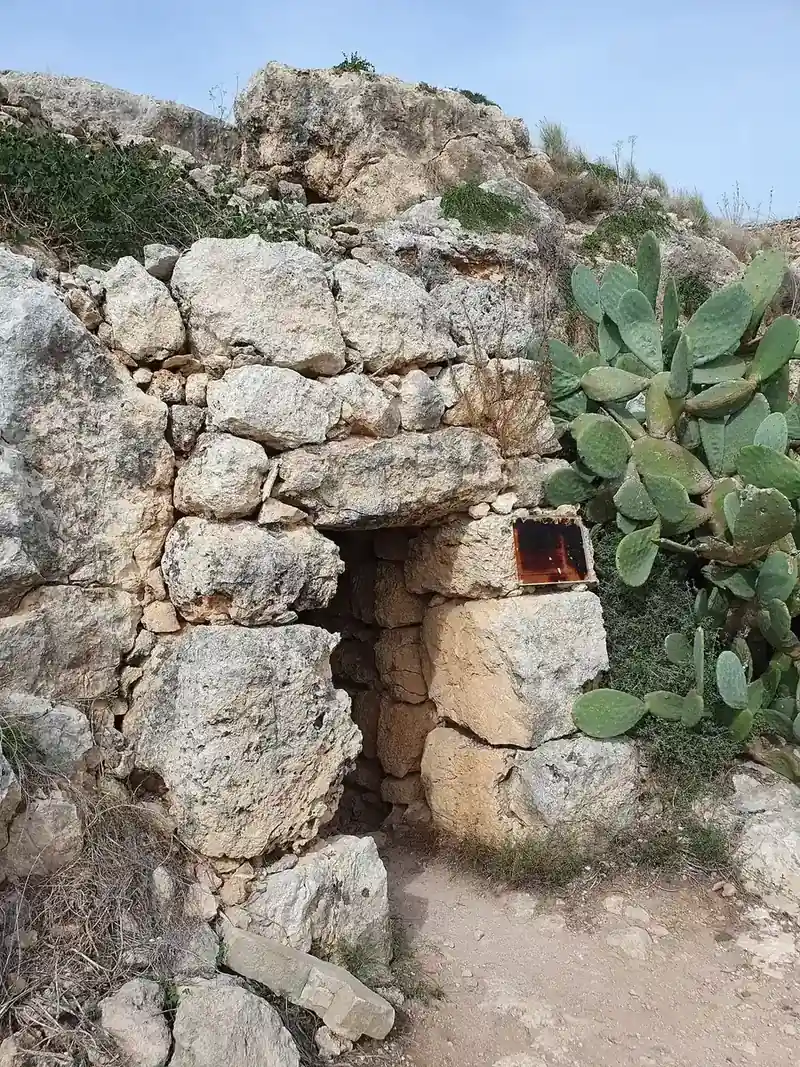
Russell Cave is not a typical festival venue. The monument protects a cave and surrounding land that together contain one of the most complete records of prehistoric culture in the southeastern United States, a sequence of deposits that traces human presence across thousands of years. Holding a Native American festival here gives the demonstrations and performances a context that no ordinary park could provide.
Native American heritage events appear across Alabama, and the Jackson County Alabama Steamers & Dreamers Festival shows how a neighboring county interprets its own history through a festival built around place and craft.
The cave itself is named for the Russell family, which owned the surrounding land for generations before the property was donated to the nation in 1961. Today the monument is administered by the National Park Service, and its visitor center museum walks guests through the long timeline of the site, from the earliest inhabitants to the Cherokee who used the area in more recent centuries.
What Happens at the Festival
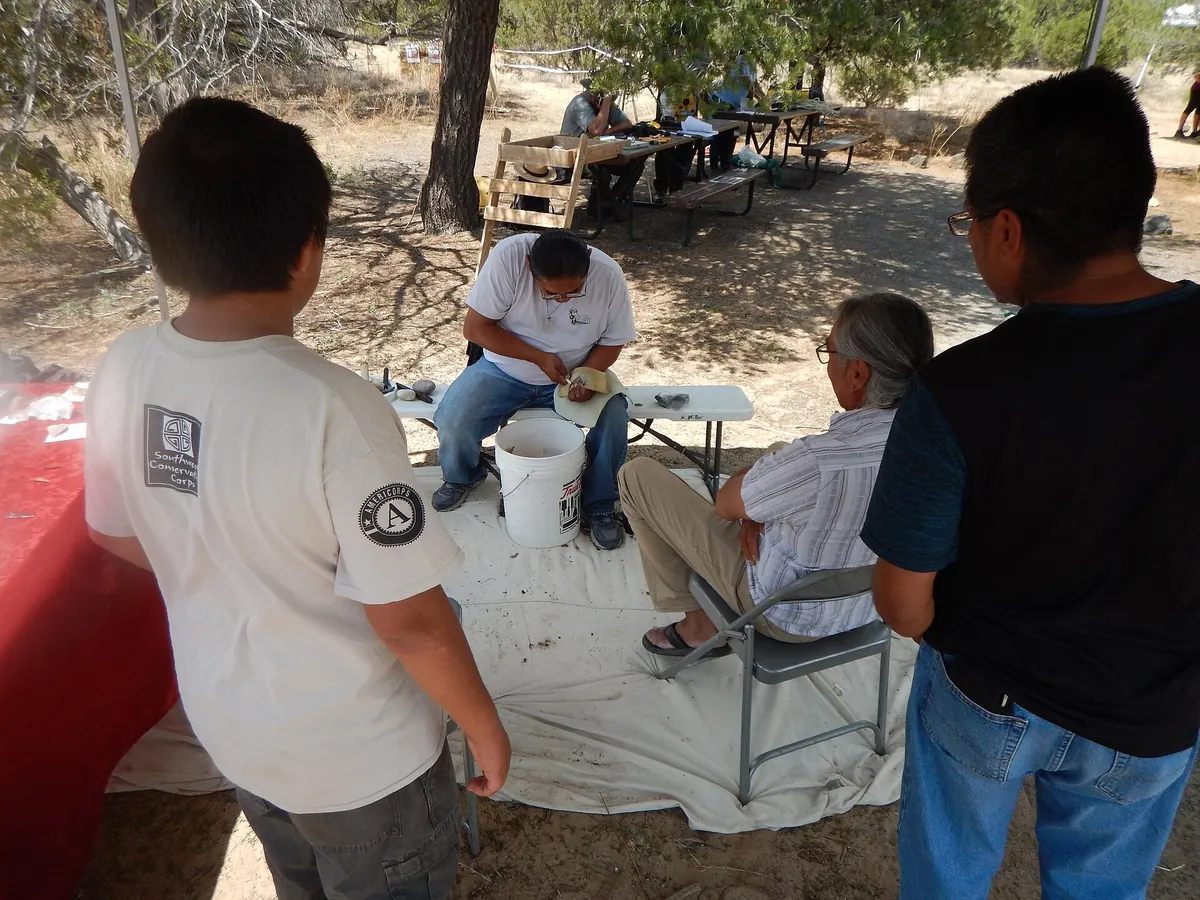
The festival program is built around living history. Presenters demonstrate flintknapping to produce arrowheads and points, use of the atlatl for spear throwing, and the use of bow and arrow. Other demonstrations cover wood carving, hand-built pottery, and fire building, all skills that would have been essential to life in and around the cave. A reenactment of a Cherokee encampment gives visitors a walk-through view of camp life.
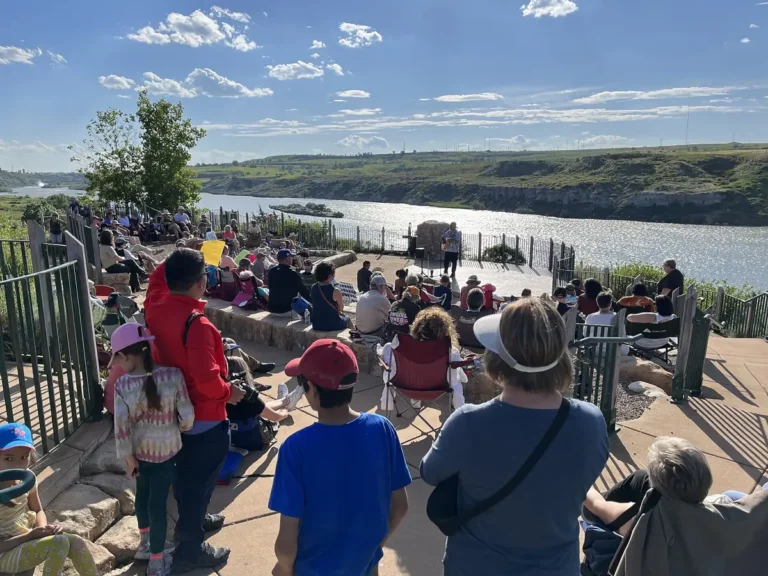
Storytelling, dancing, and Native American flute playing run through both days, and the schedule is designed so that visitors can move between demonstrations at their own pace. Because the event is free and held on park grounds, it is an easy outing for families and school groups, and the setting itself, with its wooded trails and views of Montague Mountain, makes the day feel like more than a single activity.
Visiting the Monument
Russell Cave National Monument is open daily, and the festival weekend is one of the busiest times of the year. The site offers two walking trails, including a paved nature trail and a longer backcountry path, and points along both highlight plants that Native Americans used for food, tools, and daily necessities. The visitor center provides context that makes the festival demonstrations far more meaningful.
Bridgeport sits in the far northeast corner of Alabama, close to the Tennessee line, so the drive in winds through some of the state’s most scenic country. Cell service is spotty in the area, so it is worth downloading directions before you set out. The festival runs from mid-morning into the afternoon on both days.
Why It Matters
The Russell Cave Native American Festival exists to keep a long and complicated history present and legible. By pairing scholarship with hands-on demonstration and performance, it gives visitors a way to engage with the cultures that shaped the Southeast before it was called Alabama. For a region whose Indigenous history is often reduced to a footnote, that work matters.
Life at Russell Cave
Russell Cave’s importance lies in its deposits, which record one of the most complete sequences of prehistoric culture in the southeastern United States. Generations of people used the cave’s shelter over thousands of years, leaving behind tools, food remains, and evidence of how they lived. The festival brings that long history into the present through demonstration and performance.
The cave is named for the Russell family, which owned the surrounding land for generations before the property was donated to the nation in 1961. Today the National Park Service administers the site, and its museum walks visitors through the timeline of human use, from the earliest occupants to the Cherokee who lived in the area in more recent centuries.
What the Rangers Teach
The demonstrations at the festival are hands-on and specific. Presenters show how flintknapping turns raw stone into arrowheads and points, how an atlatl extends a spear thrower’s reach, and how bows and arrows were made and used. Other demonstrations cover wood carving, hand-built pottery, and fire building, all skills that would have been essential in and around the cave.
A historical reenactment of a Cherokee encampment gives visitors a walk-through view of camp life, while storytelling, dancing, and Native American flute playing run through both days. The schedule is designed so that visitors can move between demonstrations at their own pace, and the presenters are usually glad to answer questions.
A Spring Weekend near Bridgeport
Bridgeport sits in the far northeast corner of Alabama, close to the Tennessee line, and the drive in winds through some of the state’s most scenic country. Visitors can pair the festival with hiking on the monument’s trails, a drive along the river, or a look at the surrounding small towns. Spring is a comfortable season for all of it.
The monument offers two walking trails, including a paved nature trail and a longer backcountry path, with points along both highlighting plants that Native Americans used for food, tools, and daily necessities. Because cell service is spotty in the area, it is worth downloading directions before setting out.
Tips for First-Time Visitors
Plan to arrive mid-morning, when the demonstrations are in full swing, and give yourself at least a couple of hours to take in the festival and the museum. Wear comfortable shoes for the trails, bring water and sun protection, and be prepared for limited cell service in the area.
Because the event is educational, it works especially well for families and school groups, and children often find the hands-on demonstrations the most memorable part. Check the National Park Service channels for the exact dates and the demonstration schedule before you travel, and remember that the festival is free.
Reading the Archaeological Record
Russell Cave’s deposits are its treasure. Layer by layer, they preserve the remains of meals, tools, and camp life across thousands of years, giving archaeologists a rare continuous record of how people adapted to a changing world. The festival gives the public a chance to connect that academic story to the tangible skills behind it.
Presenters bridge the gap between scholarship and practice. Watching a flintknapper strike a point from raw stone, or an atlatl send a spear across a field, turns abstract descriptions into something immediate. That immediacy is why the festival is such an effective teaching tool, and why school groups return year after year.
Native Cultures of the Southeast
The festival celebrates the cultures of the southeastern Native Americans, from the earliest inhabitants of the cave to the Cherokee who lived in the region in more recent centuries. Storytelling, dance, and flute music carry traditions forward, while craft demonstrations show the practical skills that sustained communities.
For many Native participants, the park is a meaningful place, tied to ancestry and to the forced removals of the nineteenth century. That weight gives the festival a seriousness beneath its festive surface, and it reminds visitors that the history being demonstrated is living history, not a costume. Approaching the event with respect enriches the experience for everyone.
A National Monument Worth the Trip
Russell Cave National Monument is worth visiting on its own, festival or not. The visitor center museum, the trails, and the cave entrance together tell the story of a place that has been important to people for an extraordinarily long time. The festival simply adds demonstrations and performances to an already rewarding site.
The drive to Bridgeport, in the far northeast corner of Alabama, passes through some of the state’s most scenic country, and the monument’s wooded setting makes the visit feel like a true escape. Because cell service is limited, it is wise to download directions in advance. Spring, when the festival is held, is a comfortable time to explore the trails.
Festival Area Map
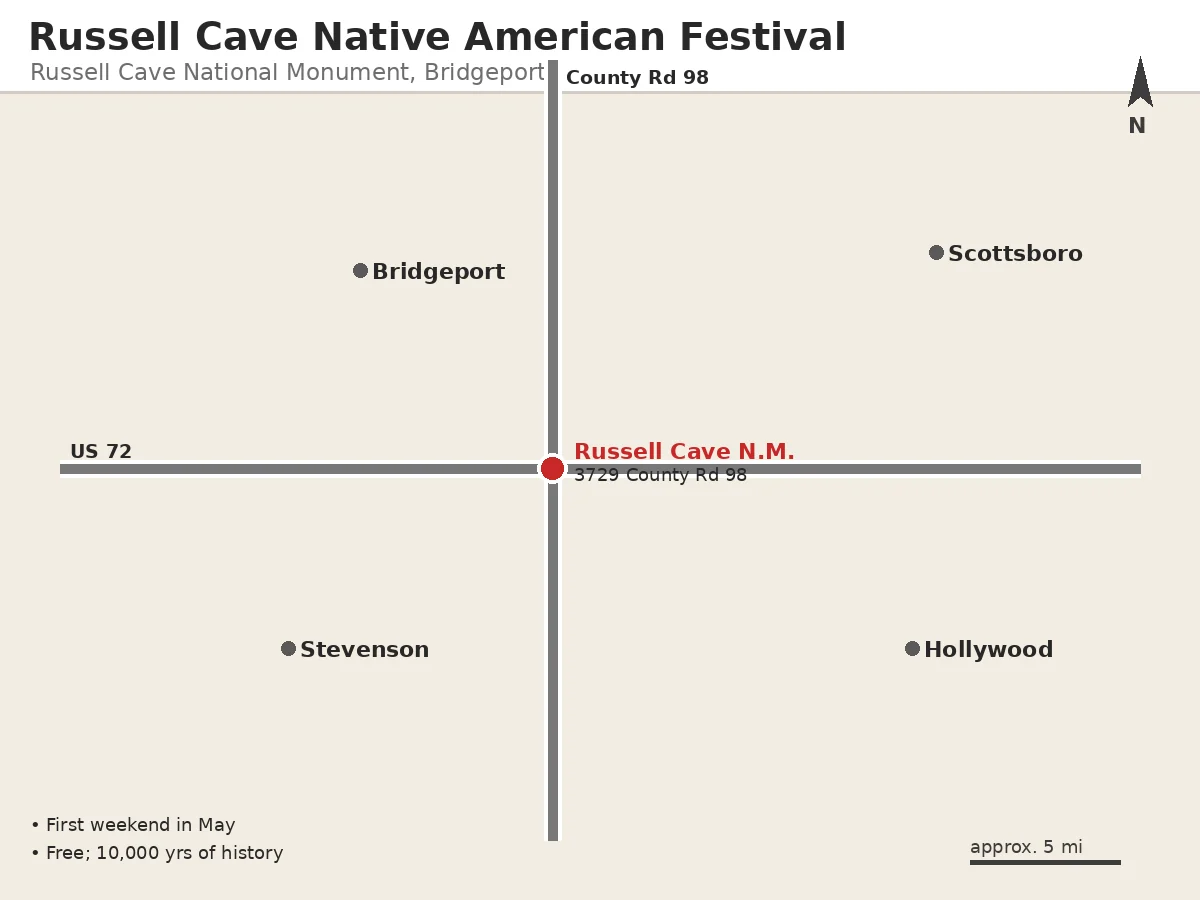
The map below places Russell Cave National Monument near Bridgeport, with the main roads through Jackson County marked for orientation. The monument is reached by county roads off US 72, and parking is available at the site for festival visitors.
Frequently Asked Questions
When is the Russell Cave Native American Festival?
It is held on the first weekend in May each year at Russell Cave National Monument near Bridgeport, Alabama.
Is there an admission fee?
No. The festival is free, and the monument itself does not charge an entrance fee.
What can visitors see and do?
Expect storytelling, dancing, Native American flute music, a Cherokee encampment reenactment, and demonstrations of flintknapping, spear throwing, pottery, wood carving, and fire building.
Is the site good for children and school groups?
Yes. The festival is educational and family-friendly, and the monument’s trails and museum add to the experience for younger visitors.
Where is Russell Cave located?
The monument sits near Bridgeport in the far northeast corner of Alabama, close to the Tennessee border, in Jackson County.
Is there a museum at the site?
Yes. The visitor center includes a museum with displays of artifacts found at Russell Cave and a timeline of the site’s human history, which pairs well with the festival demonstrations.
Can I go inside the cave?
Visitors cannot go deep into the cave, but the entrance area and overlook give a strong sense of the site. The surrounding trails provide the best way to experience the landscape.
Planning Ahead for Next Year
How do I confirm the dates?
The National Park Service and the monument’s official channels publish the festival dates each spring, along with a schedule of demonstrations and performances.
What should I bring?
Comfortable shoes for the trails, water, and sun protection are wise. Cell service is limited, so download directions before you travel.
Is the monument open at other times?
Yes. Russell Cave National Monument is open daily, with trails, a visitor center museum, and ranger programs available outside the festival weekend.
Is the monument open outside the festival?
Yes. Russell Cave National Monument is open daily, with trails, a museum, and ranger programs available throughout the year in addition to the annual festival weekend.
Last updated: October 2026
The Russell Cave Native American Festival offers something rare: a chance to stand where people have lived for more than ten thousand years and watch those lifeways demonstrated by hand. Storytelling and flute music, flintknapping and pottery, all in the shadow of one of the Southeast’s most important archaeological sites. It is free, it is moving, and it is worth the drive to the corner of Alabama.




One Comment