Itasca County Minnesota Fair Festival
Most county fairs take your money at the gate before they show you a single thing. Grand Rapids works the other way round. Admission to the Itasca County Fair costs nothing, the shade is supplied by a stand of tall pines, and the fair has been held on the same generous ground since 1907.
That ground is Fairgrounds Park, a county-owned spread of a little over eighty acres on the north-eastern side of Grand Rapids, the county seat. It behaves less like a venue hired for one week than like public land with a standing appointment: every August it puts on the fair, and otherwise serves as a park, a campground and a jumping-off point for the trail network.
The fair is older than its address. Grand Rapids staged its first county fair in 1892, when Itasca County was still a frontier of logging camps and farms hacked out of the forest, and for its first fifteen years the fair made do with other ground in and around the town.
What fills the week nowadays is a northern mixture given room to breathe. Stock cars and an Enduro race work the grandstand over, a demolition derby settles the week’s loudest argument, and a short walk from the track the campground settles trailers and tents beneath the pines. Eighty acres is enough space for the noise and the quiet to ignore each other.
Minnesota’s fair season runs in clusters, and this fair sits in good company. A month earlier and further south, the Isanti County Minnesota Fair Festival threads a river through its Cambridge grounds; Itasca answers with more acres, older trees and a gate kept free by long habit.
Fairgrounds Park: Eighty Acres the County Keeps in Pines
Plenty of fairs rent a field. Itasca’s occupies a park the county itself owns, addressed at 1336 Fairgrounds Road and also reached as 1336 3rd Avenue NE, which explains the site’s unhurried feel. Nothing here has to be packed away after closing day, and the grounds read as a permanent piece of Grand Rapids rather than a temporary encampment.
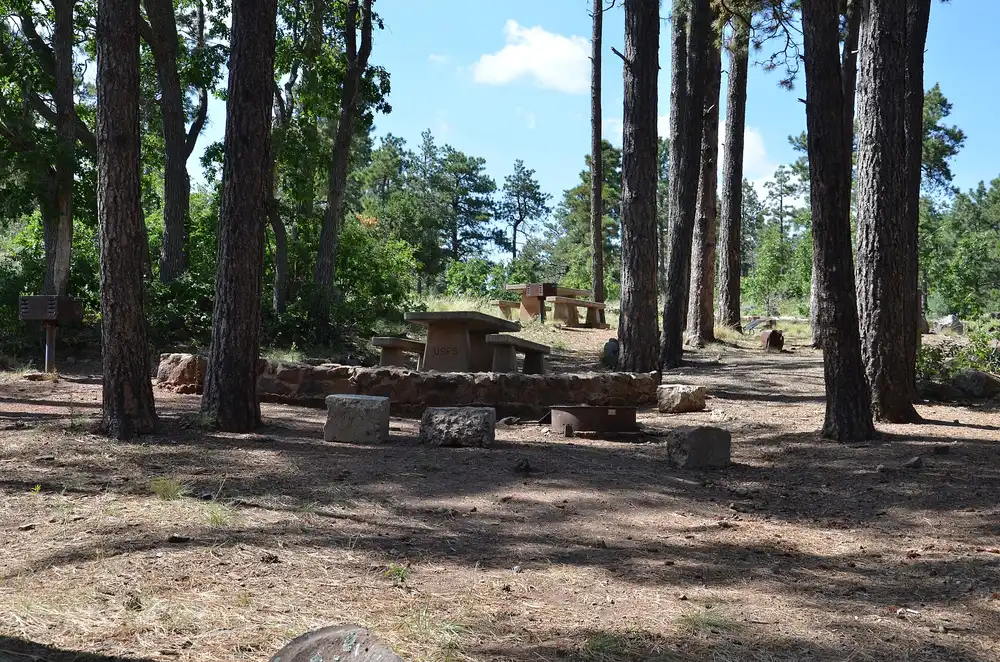
The pines do the architectural work. Red and white pines shade the camping acreage and soften the whole site, so the fair’s backdrop is forest rather than fence line. In a county defined by lakes and timber, the fairground looks like the landscape it serves, and on a hot afternoon that tree cover is worth more than any marquee.
The grounds also open onto the Mesabi Trail, the long-distance route of roughly 115 miles, which makes the park a natural base for visitors who want pedals and fair food in the same trip. Arrive for the racing, stay for the riding: few Minnesota fairgrounds offer a trailhead as part of the package.
The Itasca Ledger: Fair Week in Ten Lines
| Event | Itasca County Fair |
| County | Itasca County |
| State | Minnesota |
| Fair Town | Grand Rapids, the county seat |
| Organiser | Itasca County Agricultural Association |
| Season | Third week of August |
| Grounds | Fairgrounds Park, a little over eighty acres of county-owned land at 1336 Fairgrounds Road |
| First Fair | 1892; on the present grounds since 1907 |
| Admission | Free at the gate |
| Known For | Stock-car racing, the Enduro, the demolition derby and camping under the pines |
Fair Week in Grand Rapids: Speed at the Track, Shade at the Camp
The Grandstand Programme: Stock Cars, the Enduro and Attrition
Motorsport carries this fair’s headline load. Stock-car racing gives the week its regular heartbeat, the Enduro adds the endurance test — machinery asked to keep circulating long after polish has stopped mattering — and together they turn the grandstand into the grounds’ centre of gravity all week.
Derby Night: Finishing the Argument in Bent Metal
The demolition derby is the deliberate counterweight to all that disciplined lapping. Cars built to be expendable meet in the arena, and the crowd’s affection flows to whatever is still moving at the end. It is the week’s purest theatre: no points for style, survival the only statistic anyone remembers.
Ghosts of Programmes Past: Farm Olympics, Fudge and the Coin Scramble
Older fair programmes carried a stranger, gentler bill, worth recording even though it belongs to the past rather than the present. A Farm Olympics pitted neighbours against each other in agricultural contests, a fudge-tasting competition judged the county’s sweetest work, and a coin scramble sent children hunting through the ground for scattered change. Whether or not such items return, they show the fair’s older instinct: participation first, spectators second.
The Campground Belongs to the Fair, Not Just to the Town
Roughly seven acres of the park sit under red and white pines as a campground, and during fair week it becomes the event’s second village. Waking inside the grounds changes the arithmetic of the visit: no drive home after the derby, no hunt for a motel room in a lakes town at peak season, and coffee within earshot of the barns and the track.
Sorting the Practicalities: Money, Parking and a Place to Sleep
A Free Gate, and Where the Money Goes Instead
Walking in costs nothing, and that single fact reshapes the whole budget. What you spend goes on the ordinary costs of a day out and a night on site: food, fuel, a campsite pitch and whatever small extras your party collects along the way. Families who price fair week against other August entertainment usually find the comparison flattering.
Parking: Quoted Everywhere, Confirmed Nowhere
Ask what parking costs here and the honest answer is that no current figure stands confirmed. Numbers in circulation come from different seasons and flatly disagree with one another, so repeating any of them would mislead more than it helped. Carry modest cash for the car, treat anything quoted far in advance as provisional, and take the day’s arrangement at the gate as the true one.
Sleeping on Site: Tiers of Hookups Under the Trees
The fairgrounds campground charges by level of service, stepping up from rustic pitches to fuller hookups, so campers can pay for exactly the comfort they want. Fair week is the busiest stretch of its year, and the pine-shaded sites go first; reserving ahead is the difference between sleeping inside the fair and commuting to it.
August in the North Woods: Hot Days, Cool Nights, Passing Storms
The third week of August in the northern forest usually means warm afternoons, a real chance of a thunderstorm rolling through, and evenings that cool quickly once the sun drops behind the trees. Pack for all three in the same day: sun protection at midday, a layer for the grandstand after dark, and footwear that copes with grass turned soft by rain.
The Shape of a Good Fair Day in Grand Rapids
Start slowly and on foot. Wake in the campground if you have a pitch, or arrive early and walk the grounds end to end while the air is still cool: grandstand and track at one pole, barns and camping rows under the trees at the other. A fair of eighty acres rewards visitors who learn its geography before the crowds thicken.
Give late morning to the two-wheeled option. The Mesabi Trail runs from the grounds’ doorstep, and even a short out-and-back ride earns the afternoon’s fair food honestly. Back on site, graze the grounds through the middle of the day, when the park side of Fairgrounds Park — shade, grass, room to sit — does its quiet work.
Save your voice for the grandstand. Whenever the day’s headline racing runs, be in the seats for it, and if the derby falls on your day, treat it as the finale it is designed to be. Walk out afterwards through grounds gone pine-dark and cool, and the day closes itself.
Two Headwaters Fairs: Park Rapids in July, Grand Rapids in August
Northern Minnesota’s other headwaters fair, in Hubbard County, runs a month earlier. The Hubbard County Fair fills the third week of July in Park Rapids under the Shell Prairie Agricultural Association, and its signatures are scale models of a different philosophy: monster trucks kept since 2014, a free bandshell stage and a restored one-room schoolhouse among its buildings.
Itasca’s edition is the older, larger and cheaper of the pair. Its first fair predates Hubbard’s documented milestones by generations, its grounds run to eighty-odd acres against a town fairground, its gate is free, and its camping is published and bookable rather than left to word of mouth. Because the two fairs sit a month apart instead of clashing, the keen can do both: trucks in July, stock cars in August, and no choosing required.
The Fairgrounds Road List: Packing for the Pines
- The current season’s confirmed running days and grandstand bill, checked in the final week before you travel
- Modest cash in small notes for parking and campsite costs, since no parking figure is published reliably
- A reserved pitch if you are camping, booked well ahead of fair week
- A bicycle, or at least walking shoes, for the Mesabi Trail at the grounds’ edge
- Ear protection for younger children on stock-car and derby sessions
- A warm layer for evenings, when north-woods air cools faster than town air
- Insect repellent for dusk hours spent anywhere under the pines
- Rain gear alongside the sunscreen, because an August week in the forest rarely stays one weather
1892 to 1907: A Fair Finds Its Permanent Ground
The first Itasca County Fair was held in 1892, in a Grand Rapids that was still being built out of the surrounding forest. A county fair in such a place was never mere entertainment: it was the annual audit of a new agricultural community, the one week when scattered farms compared livestock, crops and nerve, and measured how far the clearings had come.
For fifteen years the fair lived on borrowed and temporary ground, as most young fairs did. The decisive act came in 1907, when the fair moved onto the site it occupies today. Plenty of Minnesota fairs kept wandering for decades afterwards, changing address whenever land was sold or outgrown; Itasca’s stopped moving, and the stability compounds.
More than a century on that same plot, the ground has grown into Fairgrounds Park: county-owned, pine-covered, with a campground in the trees and a long-distance trail at its edge. The 1907 decision is the fair’s real founding document — everything visitors use in August stands on land chosen before the motor car reached this part of Minnesota.
A Free Gate Is a Policy, Not an Accident
Free admission is easy to read as a small thing, a few dollars saved. Read it instead as a statement about ownership. The county owns the park, the community runs the fair through its Agricultural Association, and the gate stays open because the event is understood as something the county does for itself, not something sold back to it.
In a county of lakes, forest and long distances, that stance matters. The fair is the one appointment in the year when the whole scattered population is invited into the same eighty acres on equal terms, and a free gate removes the last excuse for staying home. Longevity like this one — a first fair in 1892, the same ground since 1907 — is what that invitation builds over generations.
Beyond the Grandstand: Trails, Lakes and a Separate Timber Party
The strongest excursion from the fair needs no car: the Mesabi Trail, some 115 miles of it, is accessible from the grounds, and an hour’s ride in either direction delivers the lake-and-forest scenery the county is named for. Cyclists can treat the fair as a base camp and the trail as the week’s second programme.
Grand Rapids itself covers the rest of a fair trip — a county seat’s food, fuel, lodging and supplies, with lake country in every direction for anyone extending the stay. One calendar warning: Tall Timber Days, the town’s celebration of its logging heritage, is a separate event of the Grand Rapids summer, not part of fair week, and visitors who conflate the two will find themselves at the wrong party on the wrong week.
Finding Your Bearings in Fairgrounds Park
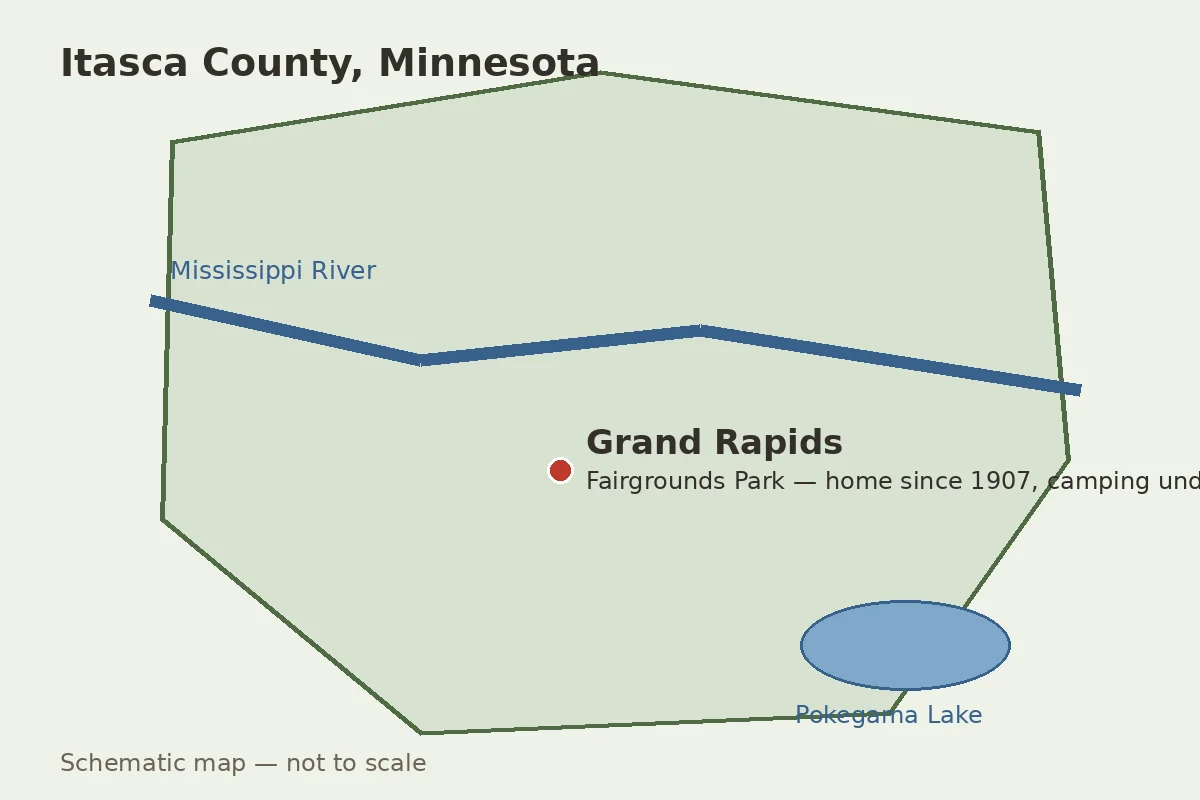
Read the park as three bands of ground. The track and grandstand anchor the active side, where the racing noise lives; the open parkland and exhibit areas take the middle; and the campground withdraws into the pines, roughly seven acres of shaded pitches at the quieter remove. Fairgrounds Road and 3rd Avenue NE bring you in from Grand Rapids, and the Mesabi Trail connection leaves from the grounds for riders. The sketch map below shows the arrangement.
Frequently Asked Questions
Is admission to the Itasca County Fair really free?
Yes. Admission at the gate is free, a standing feature of this fair rather than a one-season promotion. Your spending starts inside the grounds instead — food, a campsite pitch if you are staying over, and the ordinary extras of a fair day out.
How much is parking at the Itasca County Fair?
No current parking figure stands confirmed, and this guide will not print one. Amounts quoted in different places come from different seasons and contradict each other, so treat any number you meet in advance as provisional, carry modest cash, and rely on the arrangement in force when you arrive.
Can you stay overnight at the Itasca County Fairgrounds?
Yes. Fairgrounds Park includes a campground of roughly seven acres under red and white pines, with charges tiered by hookup level from rustic pitches upward. Fair week is its busiest time, so book a pitch ahead rather than trusting to arrival.
How old is the Itasca County Fair, and where is it held?
The first fair was held in 1892, and the fair has occupied its present grounds since 1907. Those grounds are Fairgrounds Park in Grand Rapids, the county seat, at 1336 Fairgrounds Road, and the fair returns there in the third week of August each year.
What to Expect From the Next Itasca County Minnesota Fair Festival
How often is the Itasca County Fair held?
The Itasca County Fair is held once a year, in high summer. The Agricultural Association’s calendar turns on that single August week, while Fairgrounds Park keeps working around it as a campground, a park and a trailhead.
When is the next Itasca County Fair?
The next edition is expected in the third week of August, following the fair’s settled pattern. The confirmed running days and the grandstand bill are published as the season approaches, and those are the details worth fixing travel plans around.
Will the dates change?
A move away from the third week of August looks unlikely, since the fair has kept that late-summer slot as its habit. Minor shifts in the exact run of days remain possible from year to year, so confirm the final schedule before booking a pitch or planning a long drive north.
Plenty of fairs can offer you a midway and a bill of entertainment. Fewer can offer you 1892 at one end of the story, the same pine-shaded ground since 1907, a campsite in the trees and a gate that asks for nothing. Grand Rapids in the third week of August is the north woods holding its annual open house — all you have to do is walk in.
Last updated: October 2026