Houston County Minnesota Fair Festival
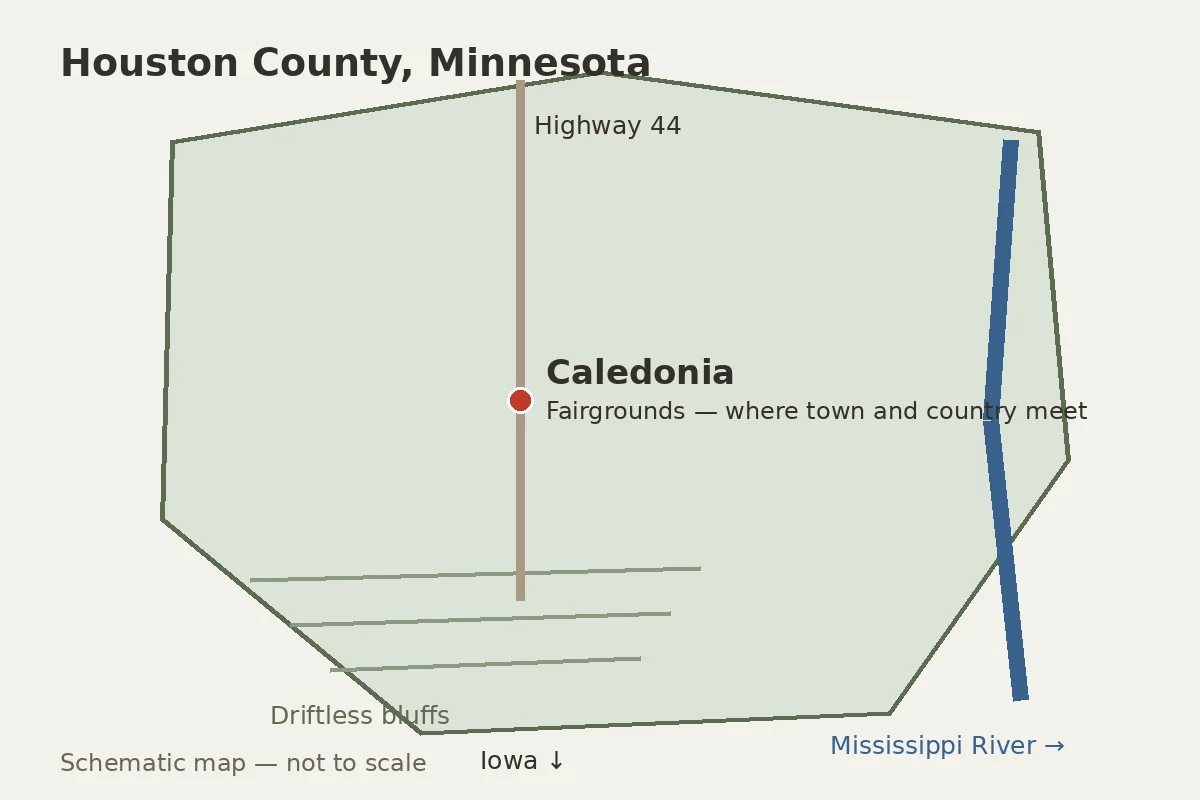
Drive into the far south-eastern corner of Minnesota, where the state folds itself into wooded bluffs above the Mississippi. The Houston County Fair fills the fairgrounds on History Lane in Caledonia during the third week of August, in a county bordering Iowa to the south and facing Wisconsin across the river. It is about as far from the Twin Cities as a Minnesota fair can be, and it wears that distance comfortably.
The fair introduces itself with a line that doubles as a promise: Where Town and Country Meet. Caledonia is a small county seat, yet fair week is when its pavements effectively end. Farmers haul cattle, crops and machinery down from the ridges, townspeople arrive with children, appetites and exhibit entries, and for a few August days both halves of the county share one fenced ground and one programme.
What marks this fair apart is how much teaching is threaded through the entertainment. The Udder Place turns dairy farming into something visitors can touch and try, a travelling reptile experience sets up within sight of the cattle barns, and the county’s smallest riders bounce across the arena in Mutton Bustin’. Add a car show, a children’s pedal tractor pull, a royalty programme and a demolition derby, and the week covers far more ground than its modest size suggests.
The setting does much of the remaining work. Houston County is Driftless country, a landscape of trout streams and steep wooded ridges the glaciers never flattened, and the fair sits squarely inside it. Many visitors plan the trip around the scenery as much as the show rings; here the journey and the destination are made of the same material.
Houston County Fair Facts, Plainly Laid Out
| Event | Houston County Fair |
| County | Houston County |
| State | Minnesota |
| Town | Caledonia, the county seat |
| Organiser | Houston County Agricultural Society |
| Season | Third week of August |
| Grounds | Houston County Fairgrounds, History Lane, Caledonia |
| Admission | Gate price is not stated in the fair’s published material; confirm before travelling |
| Carnival | Ride tickets and passes are sold through the carnival |
| Known for | The Udder Place dairy education, Mutton Bustin’ and the motto Where Town and Country Meet |
Minnesota’s fair season rewards anyone willing to cross the state for it, because no two counties stage the same week. Two months earlier and a long drive to the north-west, the Hennepin County Minnesota Fair Festival squeezes the state’s most urban county into a small-town fair at Corcoran, all free admission and June sunshine. Houston County answers in August with bluffs, border country and a fair built around learning as much as showing.
Counting Backwards From 2003: The 1853 Question
Houston County’s fair may rank among the oldest recurring gatherings in Minnesota, although its earliest chapter survives as arithmetic rather than documentation. A county timeline records the fair’s 150th anniversary falling in 2003, and counting backwards lands on a first fair in 1853, five years before Minnesota became a state. Read it as the timeline’s implication rather than a proven founding date, and it still places the fair’s beginnings among the county’s first farming generation.
The continuity since then is firmer ground. The Houston County Agricultural Society still organises the fair on grounds inside its county seat, and the event still performs the task those earliest exhibitions were invented for: gathering the county’s produce, animals and machinery in one place so neighbours can measure their year against everyone else’s. Buildings and attractions have changed beyond recognition. The underlying appointment has not moved.
A County Seat Fair in the State’s Forgotten Corner
Because Caledonia is the county seat, the fair belongs to the town in the way only a county-seat fair can. The courthouse, the main street and the fair fence stand within a short stroll of one another, and during fair week the grounds function as the county’s front room: where business gets discussed, families reunite and a year’s gossip changes hands.
The geography reaches beyond the county line. Houston County occupies Minnesota’s extreme south-eastern corner, meeting Iowa along its southern border and Wisconsin across the Mississippi. That position shapes the crowd, where number plates from three states are an ordinary sight, and many fairgoers fold the fair into a longer bluff-country loop rather than treating Caledonia as a single stop.
Reptiles, Royalty and a Barn Lesson: What Fills the Week
The programme keeps the classic county-fair skeleton of livestock judging, exhibit halls and a demolition derby, then hangs less expected attractions on it. Half the week behaves like a working agricultural show and half like a small-town festival, with useful education running through both halves.
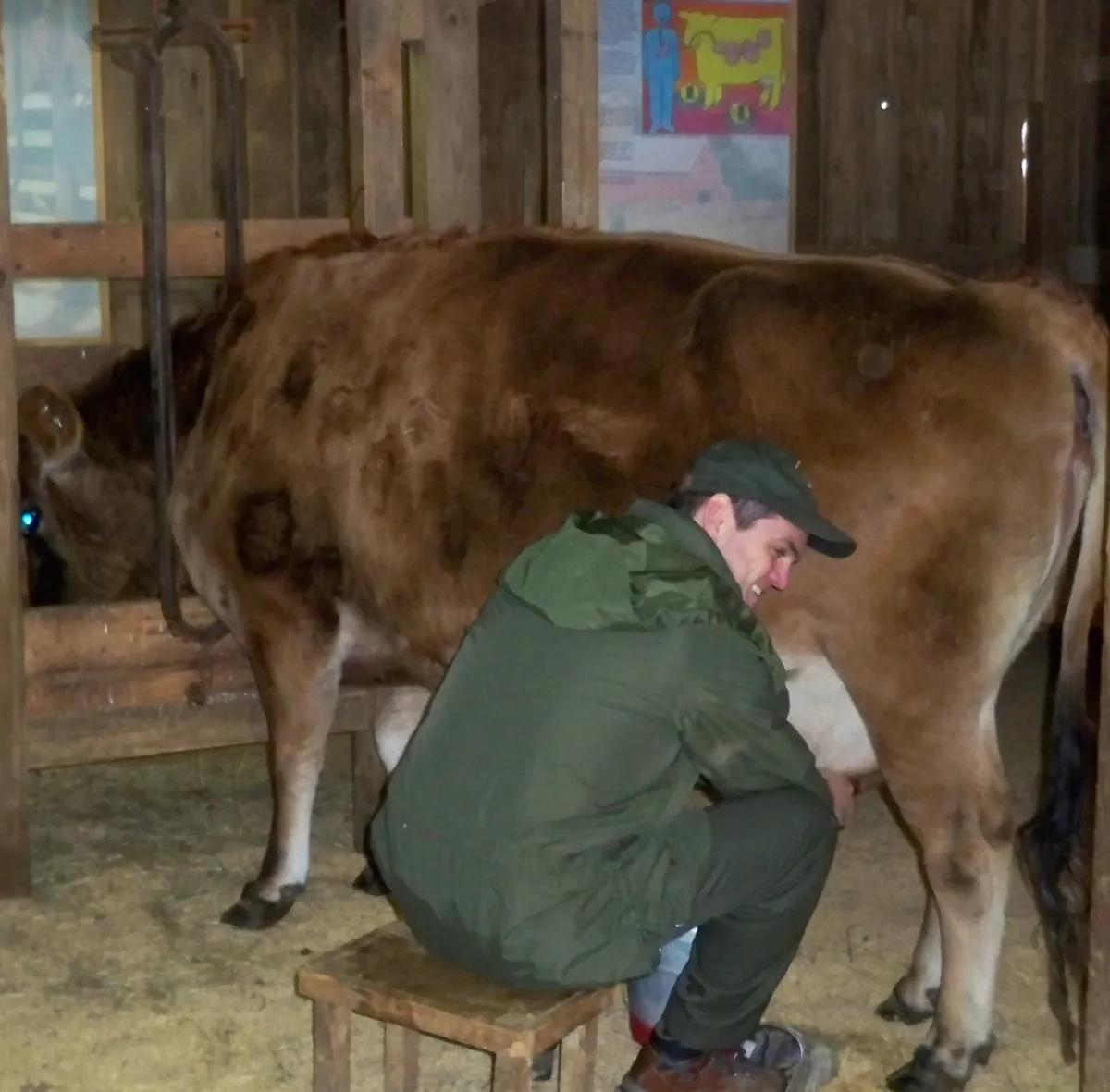
The Udder Place: Dairy Farming You Can Touch
The Udder Place is the fair’s signature exhibit, a hands-on dairy education attraction showing visitors where milk comes from and what running a dairy operation involves. In a county where herds graze the valley floors, it converts the landscape outside the fence into a lesson inside it, and gives children a working picture of the farms visible from the gate.
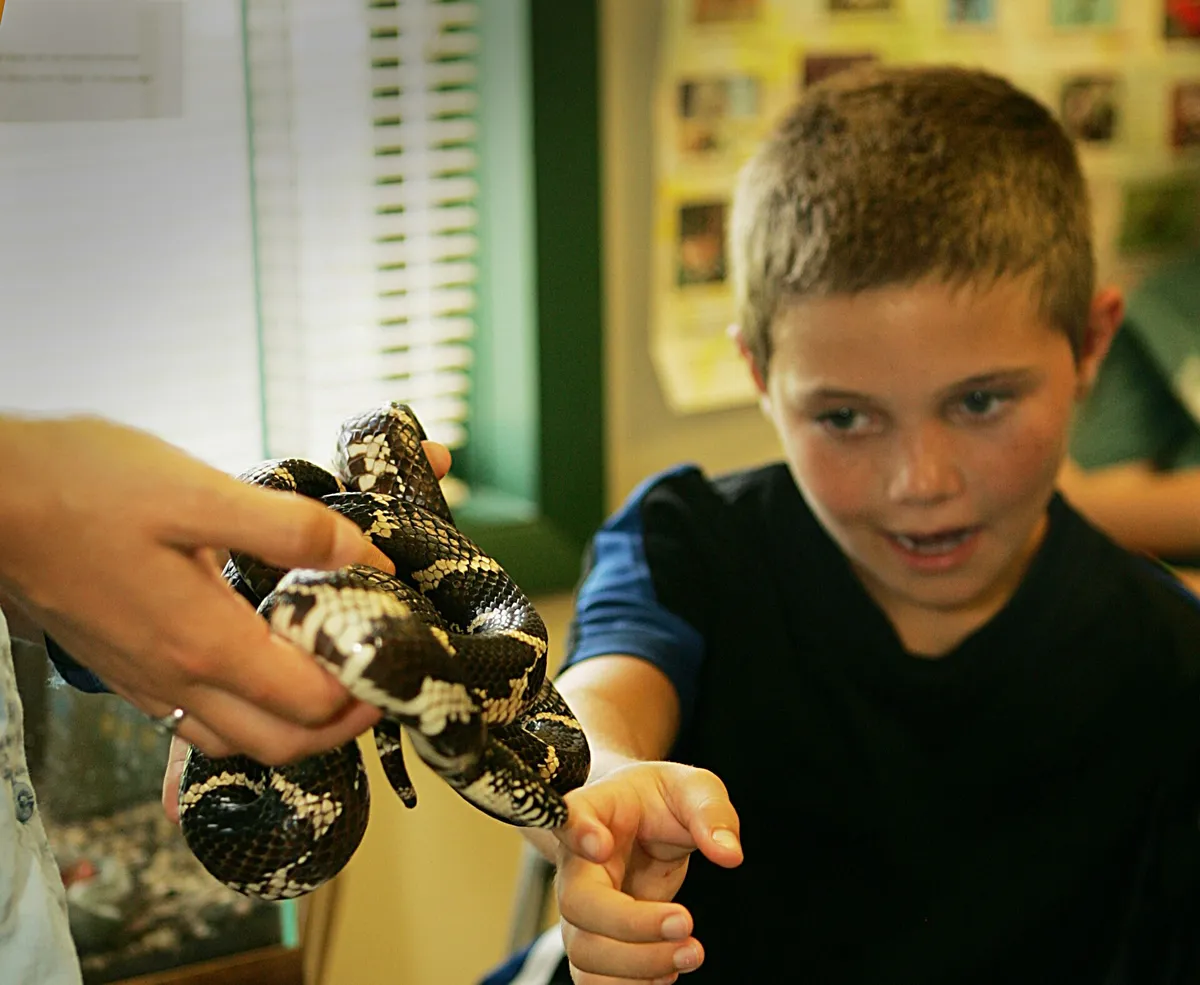
Repterience: Scales Among the Straw
The week’s most unlikely resident is Repterience, a reptile experience bringing snakes and other cold-blooded creatures to a livestock fairground. The change of texture is the point: after an hour among cattle and dairy displays, visitors queue to look a reptile in the eye, and few Minnesota fairs offer anything comparable.
Mutton Bustin’ and the Kiddie Pedal Pull: Small Riders, Loud Galleries
The youngest competitors receive two arenas of their own. In Mutton Bustin’, helmeted small children cling to running sheep for as many seconds as they can manage, while the Kiddie Pedal Tractor Pull sets them on pedal tractors hauling weighted sleds sized to their strength. Both events draw galleries out of all proportion to the competitors’ height, largely because every rider is somebody’s neighbour, grandchild or classmate.
Chrome, Crowns and the Annual Car Show
The annual car show parks polished chrome and patient restoration work on grounds that spend most of the week coated in dust, and the contrast is half the pleasure of walking its rows. Beside it, the Fair Royalty Program supplies the fair’s ceremonial face, crowning representatives who carry the county’s name to parades and events for the rest of the year. Polished and muddy, the two sum up the town-and-country bargain in a single afternoon.
Show Rings and the Derby: The Traditional Spine
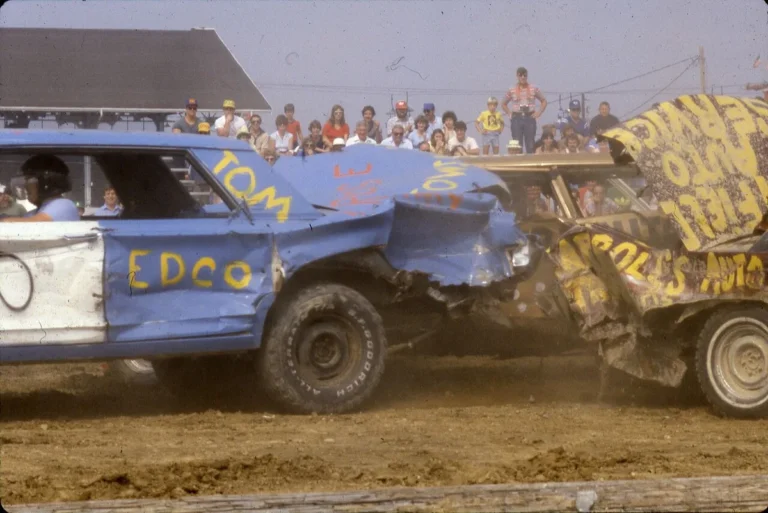
Beneath the novelties runs the programme every county fair is constructed from. 4-H and open-class livestock fill the barns and judging rings, home and farm exhibits compete for ribbons, and the demolition derby delivers the week’s loud, smoky climax as battered cars settle their arguments in the arena. These fixtures supply the rhythm the county has kept for generations.
A Slow Saturday: Working the Fair From Gates to Derby
Begin in the livestock barns while the day is still cool and the animals are settled, because judging mornings are when a county fair is most itself. Work from the barns to The Udder Place before crowds build around it, and let children ask their questions while the educators have time to answer properly.
Spend the middle of the day on the attractions that keep their own schedules. Walk the car show rows while the light flatters the paintwork, catch Repterience before its queue lengthens, and eat from the food stands at midday. The afternoon belongs to the small riders: Mutton Bustin’ and the Kiddie Pedal Tractor Pull reward anyone early enough to stand where a child can see over the rail.
Close the day where the county closes it. Check the exhibit halls for the week’s ribbon results, eat once more from the stands, and settle in for the demolition derby as the light drops off the bluffs. The derby is not an item on the itinerary but the full stop at the end of it.
Before You Point the Car at Caledonia
Gate Money: The Part Nobody Publishes
Honesty is required here, because Houston County’s gate price is the one detail this guide cannot hand you. The fair’s published material promotes carnival ride tickets and passes without stating what admission at the gate costs, so any figure quoted elsewhere should be treated with suspicion until the fair confirms it. Budget as you would for any modest county fair, carry cash as well as a card, and check the fair’s current-season information before travelling.
Finding History Lane
The fairgrounds stand on History Lane in Caledonia, an address that sounds invented and is not. The roads climb ridges, drop into valleys and follow contours rather than a ruler, slower than the map suggests. Allow more time than the mileage implies, and arrive before the evening programme rather than during it.
Sleeping Over, and the Camping Question
Fair-week beds in Caledonia and nearby bluff-country towns are limited, so book earlier than instinct suggests. Camping on the fairgrounds is the one arrangement this guide will not promise, because the fair does not publish clear terms for it; would-be campers should ask the Agricultural Society directly rather than arrive with a tent and a hope.
Third-Week Weather Between the Bluffs
The third week of August in the Driftless usually means warm, humid days in the valleys, strong sun and the standing chance of a summer storm rolling along the ridges. Dress for heat, keep water and sun protection in hand, and carry a light layer for the evening, when air cools quickly after sunset.
Houston and Fillmore: Neighbours Divided by a Ridge Line
The comparison every local makes is with the Fillmore County Fair in Preston, one county to the west and a fellow citizen of the Driftless. Fillmore counters with a society founded in 1858, a trout-capital town and grandstand nights built like a ladder. Houston’s fair is the quieter, more deliberately educational of the two, the one where a dairy lesson and a reptile tent stand as tall in the programme as the derby.
Choosing between them is mostly a matter of temperament. Preston rewards the visitor who wants spectacle stacked night upon night in a river town built around trout water. Caledonia rewards the visitor who prefers to understand a place while enjoying it, and who counts a working dairy exhibit among the week’s headlines. The short ridge line between them is the best argument for seeing both.
What to Have in Hand Before History Lane
- The current season’s gate and carnival arrangements, confirmed before you set out
- Cash in small notes for the gate, the food stands and the small purchases that keep a fair running
- An early start, so The Udder Place and Repterience happen before their queues do
- Sun protection, a hat and water for open ground in third-week August heat
- A light layer for the evening, once the sun leaves the valley
- Footwear that can cope with grass, gravel and barn aisles in the same hour
- Time in the barns for the 4-H and open-class judging, not just the arena shows
- Extra minutes in the driving plan, because bluff-country roads refuse to hurry
- A room booked well ahead if you are sleeping anywhere in the Driftless
Past the Fair Fence: Bluffs, Valleys and Two State Lines
The fair is best treated as the centre of a wider trip rather than the whole of it. Houston County’s ridges and spring-fed streams are classic Driftless terrain, drawing anglers, cyclists and slow drivers all summer, and Caledonia makes a practical base for exploring it. The Mississippi river towns lie a short drive east and Iowa just over the southern line, so a visitor based here can breakfast in one state and sleep in another. Fair week simply gives that landscape a headquarters.
Why the Corner County Still Gathers
The motto earns its place on the gate because it describes the county’s economy. Houston County runs on farms worked by people who shop in town, and towns kept alive by the farms around them; the fair is the one week each year when that exchange becomes visible in a single field. The Udder Place, the royalty crowns and the derby crowds are variations on one theme: a border county, far from every city that might speak for it, explaining itself to itself.
Reading the Grounds From History Lane
The map below sketches the fairgrounds as a visitor meets them: the History Lane approach, the barns and exhibit halls at the working heart of the site, the arena ground hosting everything from Mutton Bustin’ to the demolition derby, and the open space where the carnival sets its rides. Orient yourself by the barns; every route through the week starts among the animals.
Frequently Asked Questions
What does Where Town and Country Meet actually mean?
It is the fair’s own motto, and it describes both the crowd and the county. Caledonia’s townspeople and Houston County’s farming families share the same grounds for a week, the exhibits come from the farms while much of the audience comes from the town, and the whole county meets in one place.
How much is gate admission at the Houston County Fair?
The fair does not state a gate price in its published material, which promotes carnival ride tickets and passes instead, so no figure can be confirmed here. Budget as you would for any modest county fair, carry cash as well as a card, and check the fair’s current-season information before you travel for the confirmed arrangement.
What is The Udder Place at the Houston County Fair?
The Udder Place is the fair’s hands-on dairy education attraction. It shows visitors where milk comes from and what a working dairy operation involves, turning the herds that graze Houston County’s valleys into a lesson visitors can touch and try. For many families it is the exhibit children talk about longest after the fair ends.
Where does the Houston County Fair take place, and in which week?
The fair takes place on the Houston County Fairgrounds on History Lane in Caledonia, the county seat, in Minnesota’s far south-eastern corner. It is held in the third week of August, as it has been in recent years.
What to Expect From the Next Houston County Minnesota Fair Festival
How often is the Houston County Fair held?
The Houston County Fair is held once a year, every August. The Agricultural Society has kept that annual rhythm in Caledonia across the modern era, and it remains the county’s fixed late-summer appointment.
When is the next Houston County Fair?
The next fair is expected in the third week of August, following the pattern of recent seasons. The Agricultural Society publishes its confirmed programme as the season approaches, and that announcement is the moment to finalise travel and accommodation.
Will the dates change?
Recent editions have settled into the same third-week August slot, so a move looks unlikely, though any fair can nudge its pattern by a week. Plan around the established window, then confirm the society’s announcement before booking anything inflexible.
Plenty of fairs are bigger, and a few are older on paper, but very few sit where three states and two centuries of farming meet in one small county seat. Go for the reptiles and the royalty; stay for the dairy lesson, the ridge light and a fair that believes its first job is to teach the county about itself.
Last updated: October 2026
One Comment