Hale County Alabama Native American Festival
The broad title at the top of this page points to one specific gathering: the Moundville Native American Festival, held each autumn at Moundville Archaeological Park in the Hale County town of Moundville. Rather than describing a countywide series of events, the title maps onto that single, well-established festival, and everything below concerns the Moundville gathering and the remarkable park that hosts it.
Few festival settings in Alabama carry the weight of this one. The park spreads across 326 acres and preserves 29 mounds, and for three days at the start of October the grounds fill with dancers, storytellers, artisans and demonstrators celebrating Native American culture. The 2026 edition, billed as the 38th annual festival, runs from October 1 through October 3, 2026, and carries the theme “Year of the Crawfish: Big Changes Start with Small Beings.”
About the Festival
The Moundville Native American Festival is an autumn celebration of Indigenous culture staged at one of the most significant archaeological sites in the American Southeast. Moundville Archaeological Park is a University of Alabama Museums site, which gives the festival an educational backbone that runs through everything on the programme: the entertainment is inseparable from teaching, and the demonstrations are presented by people sharing their own traditions.
The 2026 theme, “Year of the Crawfish: Big Changes Start with Small Beings,” was inspired by a story from Houma artist and storyteller Grayhawk Perkins. A named theme shapes each year’s gathering, giving returning visitors something fresh to look for while the core elements of dance, storytelling, craft and demonstration remain in place.
A theme built on a small creature carries an obvious invitation for younger visitors, and families will find the crawfish story a gentle way into the festival’s storytelling sessions. The theme also gives the artwork, announcements and programming for 2026 a shared thread, so the edition feels deliberately shaped rather than assembled from interchangeable parts.
For a useful comparison, see the Geneva County Alabama Samson Fall Festival for another county festival.
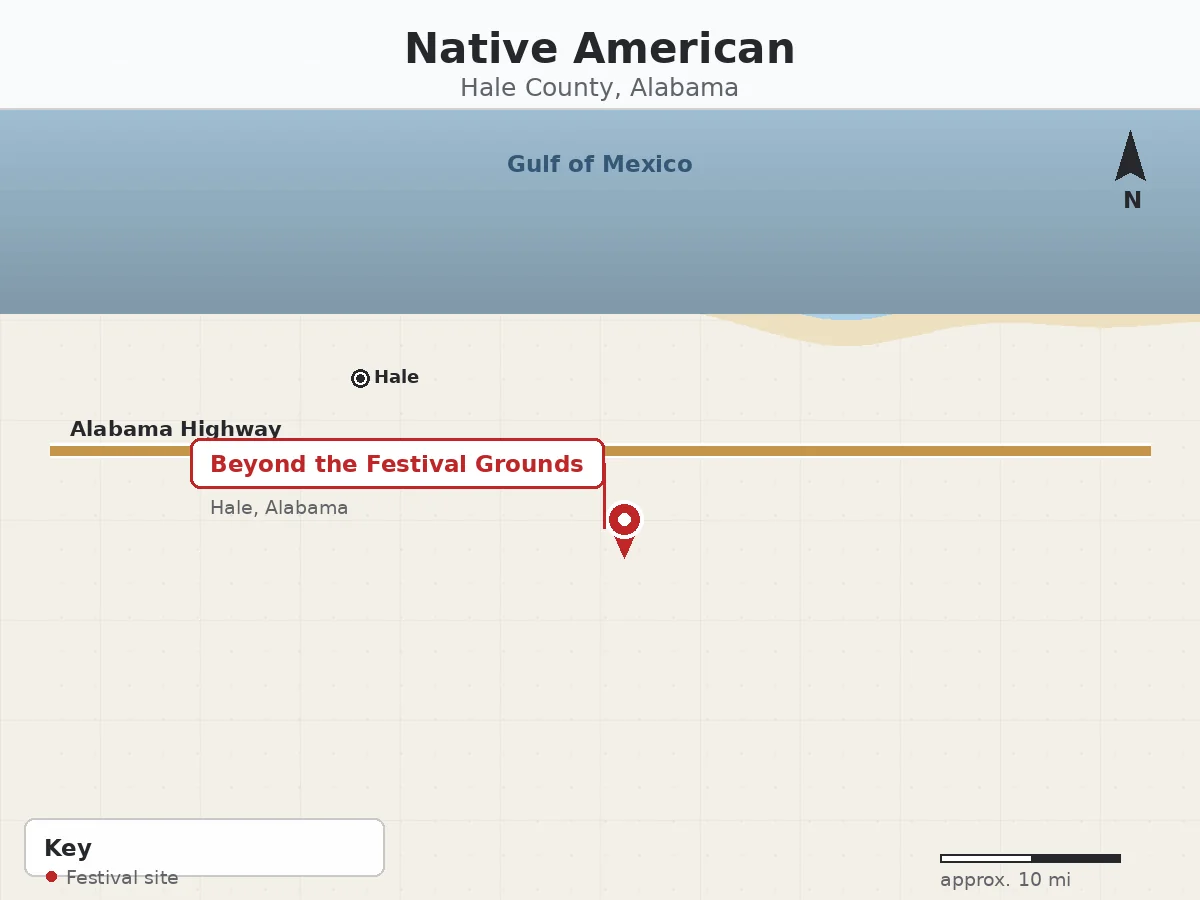
Moundville itself is a small Hale County town, and it is worth stating plainly that it is not the county seat; Greensboro holds that role for Hale County. The festival, though, has made Moundville the county’s best-known destination every October, drawing school groups, families and heritage travellers to a park that sits 13 miles south of Tuscaloosa off Alabama Highway 69.
Quick Facts
| Fact | Detail |
| Event name | Moundville Native American Festival |
| Host town | Moundville, Hale County, Alabama |
| Venue | Moundville Archaeological Park |
| Address | 634 Mound State Parkway, Moundville, Alabama |
| 2026 dates | October 1 to October 3, 2026, billed as the 38th annual edition |
| Hours | Thursday 9 a.m. to 3 p.m.; Friday and Saturday 9 a.m. to 4 p.m. |
| Admission | Ten dollars for adults, students and seniors |
| Young children | Visitors aged five and under enter free of charge |
| 2026 theme | Year of the Crawfish: Big Changes Start with Small Beings |
| Setting | A 326-acre University of Alabama Museums park holding 29 mounds |
History
The clearest measure of the festival’s longevity is its own billing: the October 2026 gathering is presented as the 38th annual edition. That ordinal is recorded here exactly as the organisers state it, and nothing more should be squeezed from it. An annual count says the event has deep roots in the park’s calendar, but it does not by itself establish a founding year, and this article does not pretend otherwise.
What can be said with confidence is that the festival grew up alongside the modern life of Moundville Archaeological Park as a University of Alabama Museums site. The park protects 29 mounds across 326 acres, and the festival gives that protected landscape a living purpose each year, bringing Native American performers and craftspeople onto grounds that might otherwise be experienced only as quiet earthworks and museum displays.
The park’s role deserves emphasis, because the festival did not land on this ground by accident. Archaeological parks can feel static to casual visitors, all preserved shapes and explanatory panels, and a recurring festival answers that problem directly. By returning every year, the gathering has turned the site into a place where heritage is performed, taught and debated, not merely labelled.
Over its long run, the gathering has settled into a dependable early-October slot, with a Thursday that finishes earlier in the afternoon and longer Friday and Saturday programmes. The themed editions of recent years, including the 2026 crawfish theme drawn from a Houma storyteller’s tale, show a festival still renewing itself rather than simply repeating a fixed formula.
What to Expect
Dance sits at the heart of the gathering. Native American dancers perform across the three days, and storytellers hold sessions that connect naturally to the 2026 theme and its crawfish story. For many visitors, hearing a tale told aloud by Grayhawk Perkins’s fellow tradition-bearers is the part of the day that lingers longest.
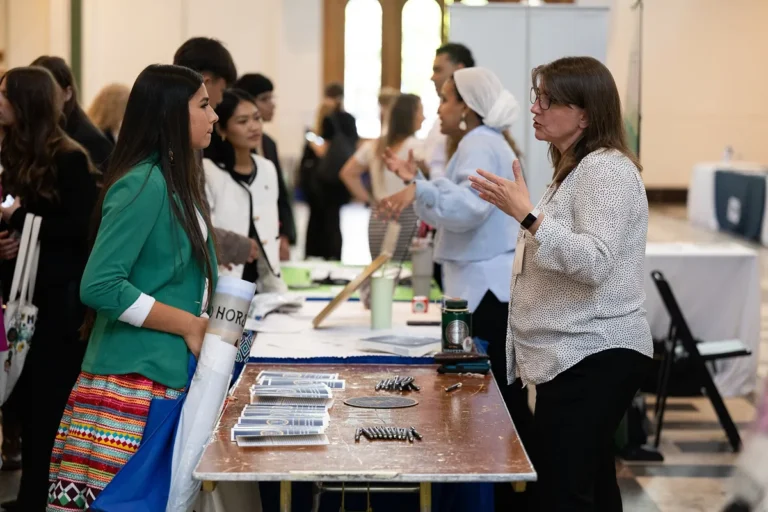
Artisans demonstrate and sell their work throughout the park, so the festival doubles as a marketplace for handmade goods produced with traditional skills. Watching a craft take shape at a demonstration table, and speaking with the person making it, offers a very different experience from buying a souvenir off a shelf.
Two programme elements give the event its distinctive energy. A stickball demonstration introduces visitors to one of the oldest team games in North America, played with pace and physical commitment. A raptor show brings birds of prey into the open, a crowd-pleasing display that suits the park’s wide green spaces. A silent auction runs as part of the festival as well, giving supporters a chance to bid while they explore.
Browsing the artisan area rewards patience. Demonstrations unfold at their own pace, and makers are generally glad to explain how a piece is produced, which materials it uses and what designs signify. Visitors who slow down at these tables usually leave with a far better grasp of the skills on show than those who treat the stalls as a quick shopping lap.
The setting itself is part of the programme. Between performances, visitors can walk among the mounds, take in the scale of the 326-acre park, and appreciate why this ground mattered long before it became a festival venue. The mounds are not a backdrop in the decorative sense; they are the reason the festival exists here, and the programme keeps returning your attention to them.
Planning Your Visit
The festival runs for three days, October 1 to October 3, 2026, and the days are not identical in length. Thursday opens at 9 a.m. and closes at 3 p.m., while Friday and Saturday both run from 9 a.m. to 4 p.m. Anyone travelling a long distance will get the fullest programme from a Friday or Saturday visit, whereas Thursday can suit school parties and those who prefer a shorter day.

Admission is set at ten dollars for adults, students and seniors, and children aged five and under are admitted free of charge, which keeps the outing reasonably priced for families with young children. Because the festival is held outdoors across a large park, comfortable walking shoes, sun protection and a layer for cooler October mornings are all sensible preparations.
The park stands at 634 Mound State Parkway in Moundville, 13 miles south of Tuscaloosa off Alabama Highway 69, so most visitors will arrive by car. Allow time on arrival to orient yourself: with 326 acres to cover, checking the day’s schedule of dances, stories and demonstrations early helps you prioritise what to see.
Pace matters more here than at a compact street festival. Performances and demonstrations are spread across a large site, and rushing between them on grass in October sunshine can tire younger visitors quickly. A relaxed plan that mixes seated sessions, such as storytelling and the raptor show, with walking stretches at the artisan tables tends to work better than trying to see everything in strict order.
A Sample Day at the Festival
Arrive for the 9 a.m. opening on Saturday, the longest day, and begin with a slow walk around the mounds while the park is still cool and quiet. That first circuit gives you the geography of the site before the performance areas fill up.
Mid-morning, settle in for a storytelling session connected to the Year of the Crawfish theme, then move on to the artisan tables while the demonstrations are in full swing. Late morning is a good window for the stickball demonstration, when the day’s energy is building and crowds have gathered.
After lunch, catch the raptor show and a full dance performance, then leave the final hour for the silent auction and a last pass through the craft stalls before the 4 p.m. close. A Thursday visit compresses the same pattern into the shorter 9 a.m. to 3 p.m. window.
How It Compares With Other Alabama Heritage Events
Many Alabama festivals celebrate a crop, a courthouse square or a town anniversary, and their appeal rests on food and local pride. The Moundville gathering is different in kind: it is a cultural festival anchored to a major archaeological park, and its programme is led by Native American dancers, storytellers and artisans presenting their own heritage.
The museum connection also sets it apart. As a University of Alabama Museums site, the park brings an educational mission to the event that a street fair cannot match, so a visit combines festival atmosphere with genuine interpretation of the place. Few other events in the state ask visitors to move so directly between celebration and centuries-old earthworks in a single afternoon.
Your Planning Checklist
- Pick your day with the hours in mind: Thursday ends at 3 p.m., while Friday and Saturday run to 4 p.m.
- Budget ten dollars a head for adults, students and seniors, and remember that children five and under go free.
- Note the dates, October 1 to October 3, 2026, and the address, 634 Mound State Parkway, Moundville.
- Pack walking shoes suited to grass and open ground across a 326-acre park.
- Bring sun protection and a warm layer for cool October mornings in Hale County.
- Arrive near the 9 a.m. opening to catch the first dances and demonstrations.
- Set aside time specifically for the stickball demonstration and the raptor show.
- Leave room in your budget for artisan work and a bid in the silent auction.
Beyond the Festival Grounds
A trip to the festival can anchor a wider Hale County outing. The park itself deserves time beyond the scheduled programme: walking the full site, reading its interpretation and standing among the 29 mounds gives context that deepens everything the performers present. Visitors with a special interest in the region’s history often find the park alone justifies the drive south from Tuscaloosa.
Greensboro, the Hale County seat, lies within reach for those extending the day, and Tuscaloosa, just 13 miles north along Alabama Highway 69, offers the widest choice of meals and lodging for an overnight stay. Building the festival into a Black Belt weekend, rather than treating it as a brief stop, rewards the effort.
Returning to the park on an ordinary, quieter day is a different pleasure again. Without performance schedules to chase, the mounds and the museum setting can be absorbed slowly, and details missed during the festival come into focus. Many visitors find the two experiences complement each other: the October weekend supplies the people and the noise, while a calm visit supplies the contemplation.
Why This Festival Matters
The gathering matters because it keeps living culture in front of the public at a place defined by ancient remains. Dance, story, craft and stickball are not relics; presented by Native American practitioners at Moundville, they demonstrate continuity between the people who raised these mounds and the communities who still carry these traditions today.
There is an economic thread, too, that should not be overlooked. Artisan sales and the silent auction put money directly in the hands of makers and festival supporters, and the crowds drawn to Moundville spend in the surrounding area across three days. For a rural county, a dependable autumn draw of this scale is a genuine asset.
It also matters locally. A festival billed as the 38th annual edition has become part of Hale County’s yearly rhythm, giving a small town a signature event with regional pull. For the University of Alabama Museums, the weekend turns a research and preservation site into a classroom without walls, reaching audiences who might never attend a lecture or read a site report.
Frequently Asked Questions
Which festival does this title actually refer to?
It refers to the Moundville Native American Festival at Moundville Archaeological Park. The county-level title is a general label, and the Moundville gathering is the verified Hale County event behind it, held October 1 to October 3 in 2026.
What does a ticket cost for the 2026 edition?
Admission for 2026 is ten dollars for adults, students and seniors. Children aged five and under are admitted free, so a family with very young children pays only for the older members of the group.
Which activities fill the three days?
Listings for 2026 name Native American dancers, storytellers and artisans, a stickball demonstration, a silent auction and a raptor show. The edition also carries a theme, the Year of the Crawfish, drawn from a story by Houma artist Grayhawk Perkins.
Is Moundville the seat of Hale County?
No. Greensboro is the Hale County seat. Moundville is a separate Hale County town, known for the archaeological park that hosts the festival each October.
What to Expect From the Next Hale County Alabama Native American Festival
How often is Hale County Alabama Native American Festival held?
The Moundville festival follows a yearly rhythm, and its own billing underlines the point: the 2026 gathering is presented as the 38th annual edition. Each edition occupies a single three-day run in early October at the archaeological park.
When is the next Hale County Alabama Native American Festival?
After the October 1 to October 3, 2026 edition, the following gathering would be expected in early autumn 2027 on the festival’s established pattern. No confirmed date for that next edition appears in the verified material behind this article, so check the park’s announcements closer to the time.
Will the dates change?
Exact dates are set edition by edition, so the specific days can shift from one year to the next even though the early-October placement has been consistent. The daily pattern may vary as well; in 2026 the Thursday programme ended an hour earlier than the Friday and Saturday schedules.
Closing Thoughts
For anyone curious about Native American culture, southeastern archaeology or simply a festival with an unforgettable setting, the Moundville gathering rewards the trip. Three days of dance, story, craft and demonstration among 29 ancient mounds make it one of Alabama’s most distinctive autumn events, and the ten-dollar admission keeps it within reach of almost every visitor.