Greene County Alabama Eutaw Pilgrimage Festival
Each October, the doors of some of Alabama’s finest nineteenth-century houses swing open in the small town of Eutaw. The Eutaw Pilgrimage is a tour of historic homes and churches in the seat of Greene County, a chance to walk through the architecture of the antebellum Black Belt and to hear the stories of the families who built and kept these buildings. Organized by the Greene County Historical Society, the pilgrimage draws visitors from across the state and beyond to a town whose historic district is among the most intact in Alabama.
Eutaw is a quiet place, home to fewer than three thousand people, but its streets hold an unusual concentration of houses and public buildings listed on the National Register of Historic Places. The pilgrimage is the community’s way of sharing that inheritance. Wristbands are sold at the Vaughn-Morrow House, and from there visitors fan out across the town, moving from house to house at their own pace, guided by hosts who know the buildings from the inside.
| Festival name | Eutaw Pilgrimage (Historic Pilgrimage Tour) |
| Location | Eutaw, Greene County, Alabama |
| Typical timing | October, annually |
| Format | Self-guided tour of historic homes and churches |
| Admission | Wristband sold at the Vaughn-Morrow House |
| Signature features | National Register houses, historic churches, period interiors |
What the Eutaw Pilgrimage Is
The pilgrimage is a historic tour rather than a street festival, and understanding that distinction helps visitors plan. There are no stages or vendor rows; the draw is the architecture and the history. Ticket holders receive a map and a wristband, then spend the day moving through a roster of private homes and churches that are opened to the public only for this event. Hosts are stationed in each building to explain its history, its construction, and the families associated with it.
Many of the buildings on the tour date from the early and mid-nineteenth century, when Eutaw was a prosperous cotton town at the center of the Black Belt’s plantation economy. The houses show the range of that era’s architecture, from Federal and Greek Revival townhouses to later Victorian additions. The tour also includes churches that have anchored the community for generations. For anyone interested in Southern architecture or in the history of the region, the pilgrimage offers a depth that a driving tour cannot match. Visitors who want the living culture of the same town should also look at the Greene County Alabama Black Belt Folk Roots Festival, held each August on the courthouse square with blues, gospel, crafts, and soul food.
The History Behind the Tour
Greene County was established on December 13, 1819, by the Alabama Territorial Legislature, and it was named for the Revolutionary War general Nathanael Greene. The county seat was first located at Erie, on the Black Warrior River, but flooding and disease pushed the seat inland to Eutaw in 1838. Laid out that same December and incorporated in 1841, Eutaw was named for the Battle of Eutaw Springs, the last major engagement of the Revolutionary War in the Carolinas, where Greene commanded the American forces.
The town’s prosperity in the decades before the Civil War left behind the houses that the pilgrimage now celebrates. Cotton wealth built them, and the labor of enslaved people made that wealth possible, a history that the tour does not avoid. Understanding the buildings means understanding the full story of the Black Belt, including its beauty and its injustice. Greene County remains one of the least populous counties in Alabama, and its small population has helped preserve much of the historic fabric that larger, faster-growing places lost.
What You Will See on the Tour
The pilgrimage rotates its roster of buildings from year to year, so no two visits are identical. The tour typically includes several private residences in and around downtown Eutaw, along with churches and occasionally other historic structures. Hosts open rooms that are normally closed to the public, and the interiors, with their original woodwork, mantels, and furnishings, are a large part of the appeal.
Historic Houses and Interiors
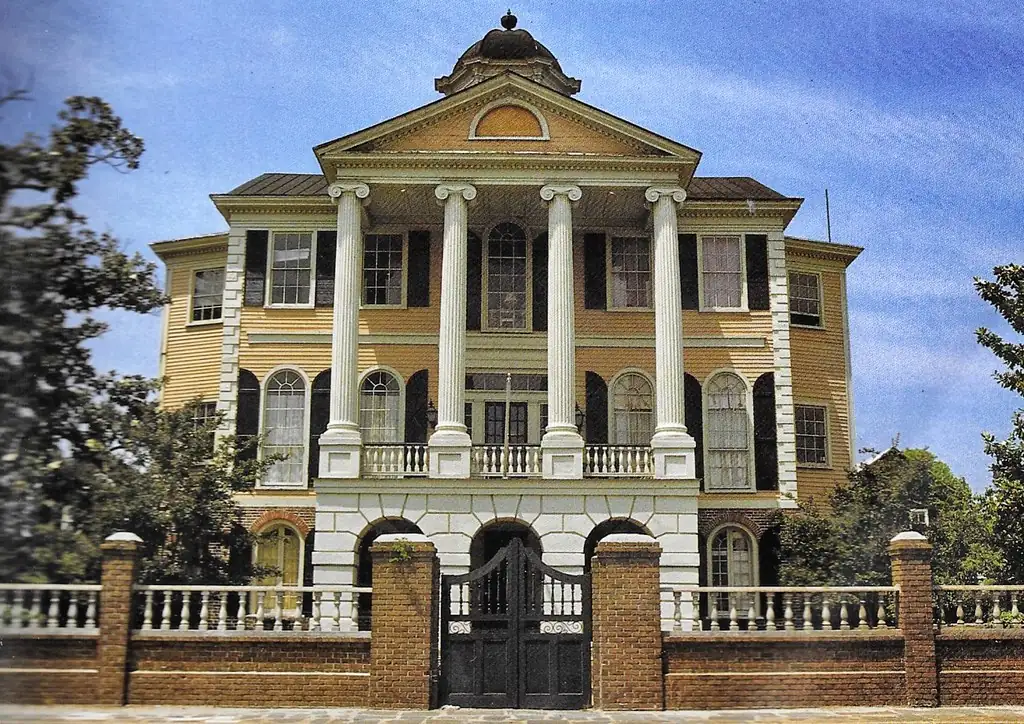
The houses are the heart of the pilgrimage. Visitors move through parlors, hallways, and dining rooms that have been carefully maintained, and the owners and volunteers who serve as hosts are generous with detail. The Vaughn-Morrow House, where wristbands are sold, is itself a landmark and a natural starting point. Because the tour is self-guided, visitors can linger where they are most interested and move quickly through buildings that hold less appeal.
Churches and Public Buildings
Eutaw’s churches add another dimension to the tour. Several congregations occupy buildings that have stood for well over a century, and their sanctuaries, windows, and cemeteries tell their own stories. The courthouse square, ringed by historic commercial buildings, anchors the center of town and makes an easy reference point for visitors navigating between sites. Taken together, the churches and the square give a sense of how the town organized its public life.
The Courthouse Square
The square is the geographic and social center of Eutaw, and it appears on the National Register along with much of the surrounding district. Visitors who arrive before the tour begins can walk its perimeter, look at the storefronts, and get oriented. Because the pilgrimage is a walking event, the square is also the natural place to pause between houses.
Reading Eutaw’s Architecture
A little architectural vocabulary makes the tour more rewarding. Eutaw’s houses reflect the styles that moved west with settlers from Virginia and the Carolinas in the early 1800s. The oldest follow the Federal pattern, with symmetrical facades, delicate fanlights over the doors, and restrained trim. Later houses adopt Greek Revival forms, with heavy columns, pediments, and broad porticoes meant to evoke the temples of antiquity. Still later buildings show the Victorian taste for irregular massing, elaborate porches, and decorative millwork.
Materials tell a story too. Much of Eutaw’s building stock was raised from locally fired brick and hand-cut timber, and the surviving interiors preserve original mantels, stair rails, and heart-pine floors. Hosts on the pilgrimage often point out the marks of the makers, from the tooling on a newel post to the seams in a plaster wall. Paying attention to those details turns a pleasant walk into a lesson in how a nineteenth-century Southern town was actually built.
Planning Your Pilgrimage Weekend
Getting There
Eutaw is conveniently located on the route between Tuscaloosa and Meridian, Mississippi. Interstates 20 and 59 pass through the northwest corner of town with access from Exit 40 onto Alabama 14, and U.S. 11 and U.S. 43 run through the center. Tuscaloosa is about thirty-four miles to the northeast, and Demopolis is about twenty-four miles south. The historic district is compact, and once you park, the tour is walkable.
Where to Stay and Eat
Lodging in Eutaw is limited, so most visitors stay in Tuscaloosa or Demopolis and make the drive in for the day. The pilgrimage itself does not include food vendors, so plan meals around the tour. Several small restaurants and cafes serve the surrounding area, and the larger towns offer a wider range of options for dinner after a day of walking.
Tickets, Costs, and Practicalities
Wristbands for the pilgrimage are sold at the Vaughn-Morrow House, and the cost is modest, with proceeds supporting the historical society’s preservation work. Because the tour involves entering private homes, visitors should plan for uneven floors, stairs, and doorways that were not built to modern standards. Comfortable shoes are essential, and photography policies vary by house, so it is worth asking before taking pictures indoors.
A Greene County History Weekend Itinerary
Build the weekend around the tour. Arrive in Eutaw in the morning, buy a wristband at the Vaughn-Morrow House, and spend the day working through the houses and churches at an unhurried pace. Break for lunch in town or nearby, then return for the buildings you missed in the morning. The tour rewards attention to detail, so it is better to see fewer houses thoroughly than to rush through all of them.
On the second day, explore the rest of the county. The towns of Forkland, Boligee, and Union each hold historic buildings and rural landscapes worth a slow drive, and the Black Belt countryside, with its dark soil and wide fields, is a setting that explains much of the region’s history. Visitors who time their trip to coincide with other Greene County events can combine the pilgrimage with the living culture of the area’s music and food traditions.
How the Pilgrimage Compares
Greene County offers two very different ways to experience its heritage. The Eutaw Pilgrimage, held each October, focuses on architecture and history, opening the town’s houses and churches for a walking tour. The Black Belt Folk Roots Festival, held each August, focuses on living culture, with blues, gospel, crafts, and soul food on the courthouse square. One is about the buildings; the other is about the people. Together they give a fuller picture of a town and a region that have shaped, and been shaped by, the history of Alabama.
Eutaw Pilgrimage Checklist
- Start at the Vaughn-Morrow House to buy your wristband
- Wear comfortable shoes for walking between historic buildings
- Ask about photography policies before shooting indoors
- Allow time for the courthouse square and the historic district
- Plan meals in Tuscaloosa or Demopolis if you stay overnight
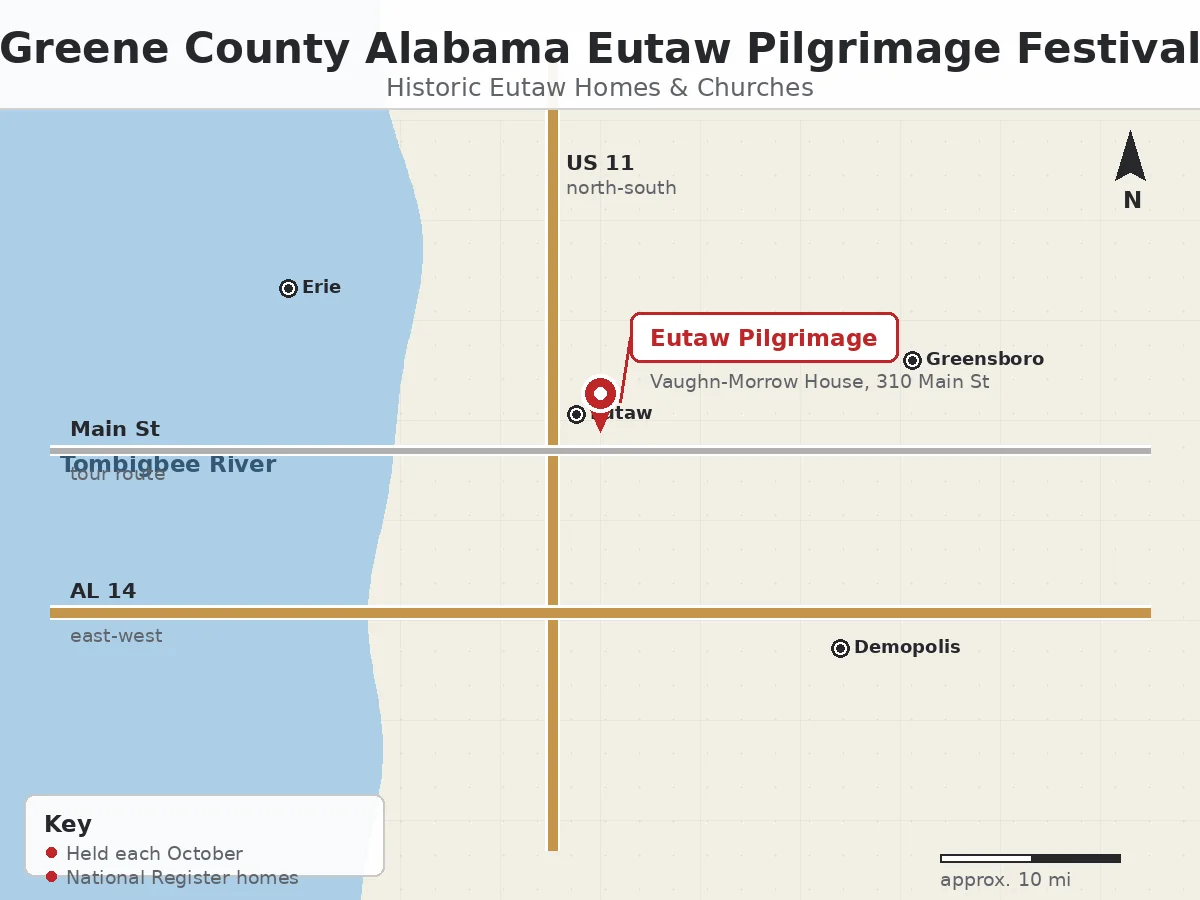
Festival Area Map
The Eutaw Pilgrimage takes place in the historic district of Eutaw, the county seat of Greene County, Alabama, in the heart of the Black Belt.
Frequently Asked Questions
When is the Eutaw Pilgrimage held?
It is held each October in Eutaw, Alabama. The tour runs for a day, with historic homes and churches open to ticket holders.
Where does the tour take place?
The pilgrimage is centered on the historic district of Eutaw, the county seat of Greene County, including the courthouse square and surrounding streets.
How do I get a ticket?
Wristbands are sold at the Vaughn-Morrow House, which serves as the starting point for the tour. Proceeds support the Greene County Historical Society.
What will I see on the pilgrimage?
The tour includes historic houses, churches, and public buildings, many of them listed on the National Register of Historic Places, with hosts on hand to explain their history.
Is the pilgrimage the same as a festival?
It is a historic house and church tour rather than a street festival. There are no vendor rows or stages; the focus is architecture and history.
Who organizes the pilgrimage?
The Eutaw Pilgrimage is organized by the Greene County Historical Society, which uses the event to support preservation in the town.
Is the tour accessible?
The tour involves walking between buildings and entering historic homes, so uneven floors and stairs are common. Comfortable shoes are strongly recommended.
Can I take photographs?
Policies vary by house and church, so ask a host before taking pictures indoors. Outdoor photography around the square is generally fine.
What to Expect From the Next Eutaw Pilgrimage
The Eutaw Pilgrimage is an annual event held every October. The next edition is expected to follow the same format, with wristbands sold at the Vaughn-Morrow House and a rotating roster of historic homes and churches open for touring. Because the tour depends on the willingness of private homeowners to participate, the specific buildings can change from year to year, but the October timing and the historic district setting have been consistent for decades.
How often is the Eutaw Pilgrimage held?
It is held every year, making it an annual October tradition in Greene County.
When is the next Eutaw Pilgrimage?
The next edition is expected in October. Check local listings closer to the date for the confirmed schedule and the roster of buildings.
Will the dates change?
The October pattern has been consistent, though a volunteer-organized house tour can shift its date or its building list from year to year.
Last updated: October 2026



One Comment