Greene County Alabama Black Belt Folk Roots Festival
On the last weekend of August, the old courthouse square in Eutaw fills with the sound of the blues. The Black Belt Folk Roots Festival is a two-day celebration of the music, food, crafts, and traditions of west Alabama, held outdoors under the shade of the square where the county’s history has played out for nearly two centuries. It is free, it is rooted in community, and it has been running since 1975, making it one of the oldest festivals of its kind in the state.
Eutaw is the seat of Greene County, a small Black Belt town where the population has always been majority African American and where the cultural inheritance of the region runs deep. The festival was created to honor the bearers of that inheritance, the musicians, storytellers, quilters, cooks, and craftspeople who keep the traditions of the Black Belt alive. It is less a commercial event than a homecoming, and that is precisely what makes it worth a trip.
| Festival name | Black Belt Folk Roots Festival |
| Location | Old Courthouse Square, Eutaw, Greene County, Alabama |
| Typical timing | Last weekend in August |
| Founded | 1975 |
| Format | Two-day festival with blues, gospel, crafts, and food |
| Admission | Free |
| Signature features | Down-home blues, gospel music, handmade quilts and baskets, soul food |
A Festival Born in the Black Belt
The Black Belt is the band of dark, fertile soil that stretches across the middle of Alabama, a region whose agricultural wealth was built on the labor of enslaved people and whose culture, in the generations since, has produced some of the most influential music and food in America. Greene County sits in the heart of that region. The festival was first produced in 1975 by the Society of Folk Arts and Culture in Eutaw, and its purpose was to give the traditions of the Black Belt a stage and a public audience.
More than four decades later, that mission has not changed. The festival is a gathering of what organizers call tradition bearers: the blues musicians, gospel singers, storytellers, dancers, and artisans who carry the folkways of west Alabama. It is a place where craft and culture are treated as living things rather than museum pieces, and where visitors are welcome to listen, learn, and take part. Readers who value that kind of cultural preservation will find a similar purpose in the Geneva County Alabama Slocomb Tomato Festival, a harvest celebration in the Wiregrass that honors the working traditions of a very different Alabama region.
Why the Black Belt Matters to American Culture
The music heard on the square did not appear from nowhere. The blues that grew out of the rural South, and the gospel that grew alongside it, were shaped by the same communities that the festival serves. Greene County and the surrounding Black Belt counties were home to musicians whose work fed into the broader American musical tradition, and the folk roots festival exists to keep that lineage visible. Listening to a local bluesman on the Eutaw square is, in a small way, hearing the source.
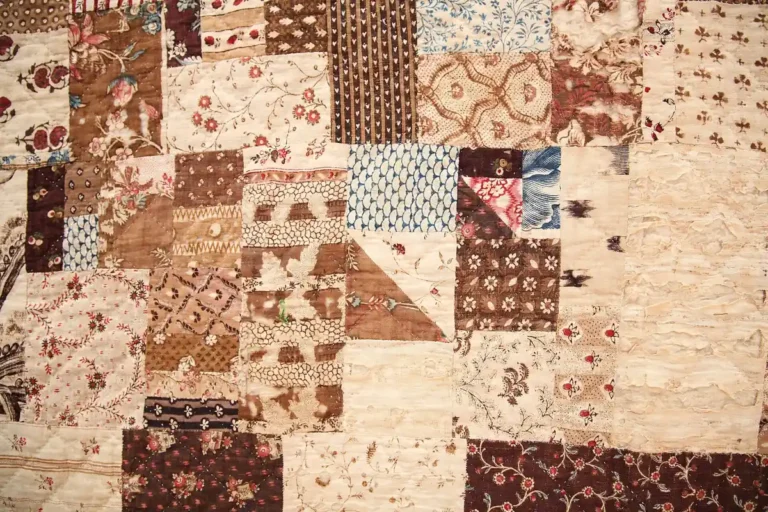
The food tells a similar story. Soul food, with its roots in the cooking of enslaved and sharecropping families, is a cuisine of resourcefulness and flavor, and the festival’s vendors serve it in the setting where it developed. Quilts and baskets carry the same weight: they are crafts born of necessity that became art, and the makers who demonstrate them at the festival are links in a chain that runs back generations.
This is why the festival’s free, open format matters. By holding the event on the courthouse square and admitting everyone at no cost, the organizers keep the traditions accessible to the community that created them and to any visitor willing to show up and listen. It is a model of cultural preservation that treats heritage as something shared and ongoing rather than something behind glass.
Blues on Saturday, Gospel on Sunday
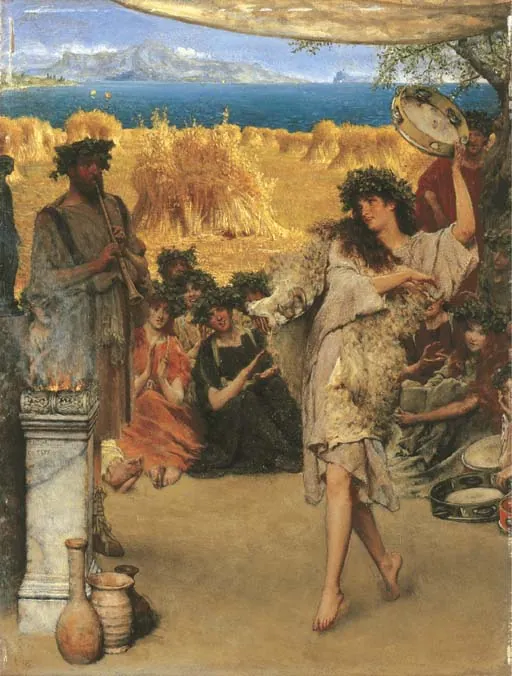
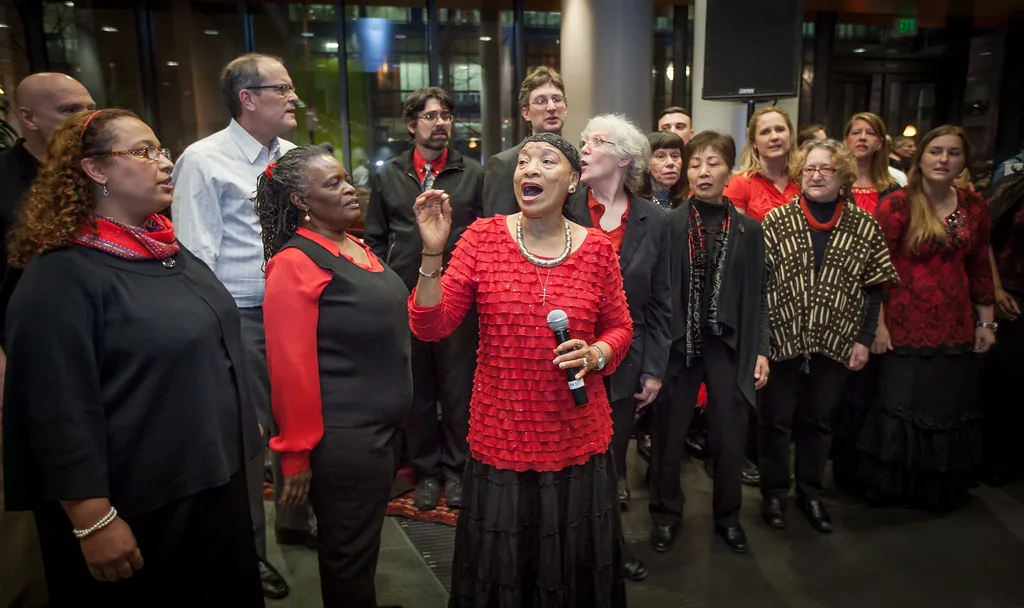
The festival runs across two days and divides its music accordingly. Saturday belongs to the blues, with down-home performers taking the stage through the afternoon and into the evening. Sunday shifts to gospel, with choirs and singers closing the weekend in a more reflective key. Both days include craft demonstrations, food, and the easy conversation that comes with a community event held on its own square.

Crafts, Quilts, and Baskets
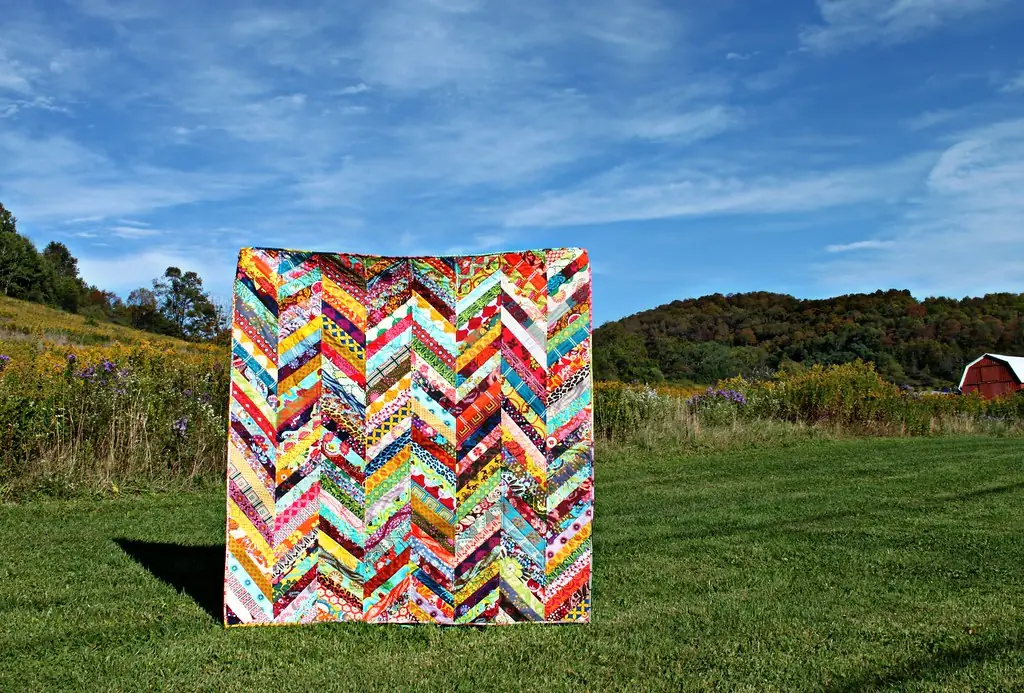
Handmade crafts are central to the festival. Vendors and demonstrators bring quilts, baskets, and other handwork that reflect generations of skill, and visitors can watch many of the pieces being made. The craft tradition here is not decorative trivia; it is a living practice passed down through families, and the festival is one of the few places where it is displayed and sold in the community that produced it.
Soul Food and the Children’s Tent
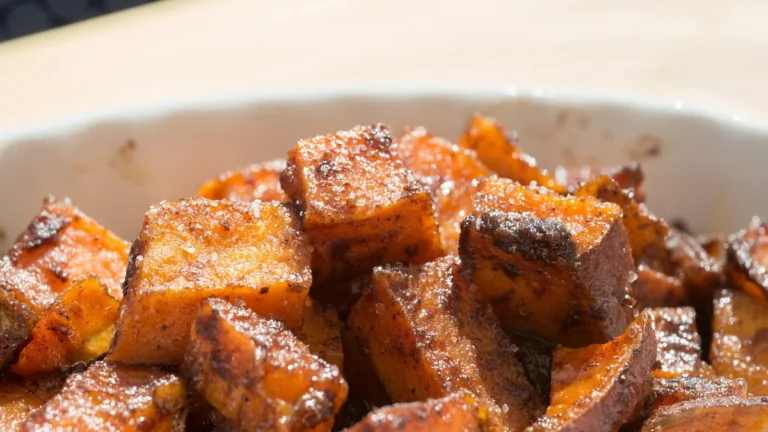
The food is a draw in its own right. Vendors serve soul food dinners, barbecue, fried fish and chicken, pork skins, homemade ice cream, and the sweet tea and lemonade that make a late-summer afternoon in Alabama bearable. A children’s tent keeps younger visitors engaged with art activities, pottery making, face painting, and games, which helps the festival function as a true family gathering rather than an adults-only concert.
Greene County and the Old Courthouse Square
Greene County was established on December 13, 1819, by the Alabama Territorial Legislature, one day before Alabama became a state, and it was named for the Revolutionary War general Nathanael Greene. It is the least populous county in Alabama, home to fewer than eight thousand people across about 660 square miles. Eutaw has been the county seat since 1838, when the seat was moved from Erie, and the town grew up around the courthouse that still anchors the square.
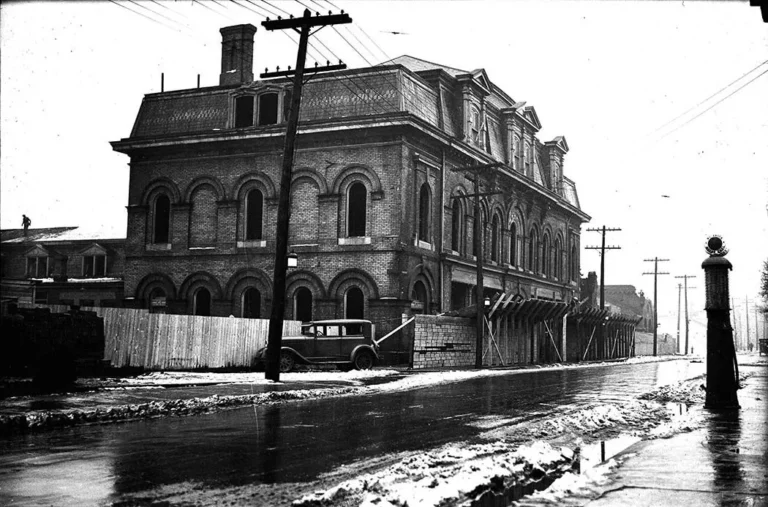
The square itself is a historic setting, surrounded by buildings that appear on the National Register of Historic Places. Holding a folk festival there is deliberate: the architecture and the culture belong together. Visitors who arrive early can walk the streets around the square, look at the historic structures, and get a sense of the town that has hosted the festival for generations.
Planning Your Trip to Eutaw
Getting There
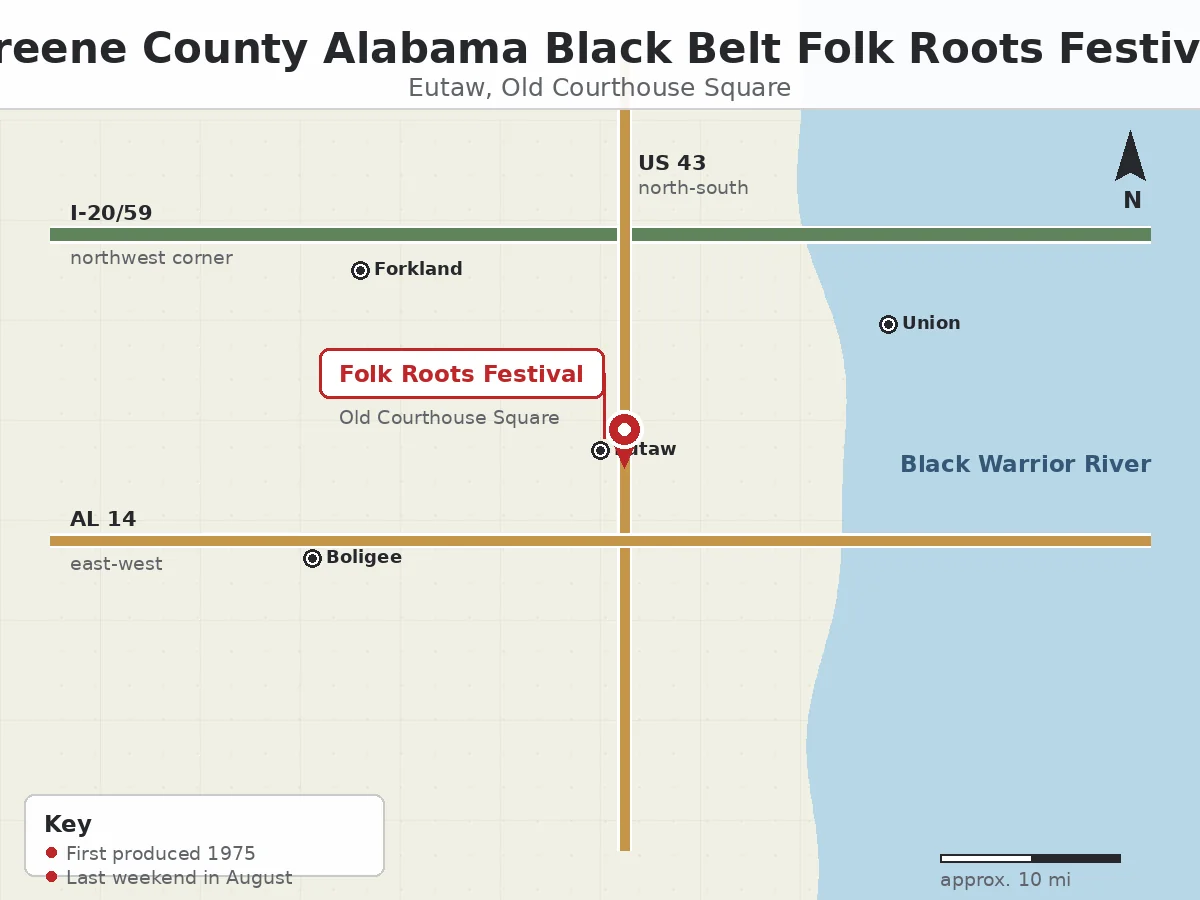
Eutaw is easy to reach. Interstates 20 and 59 run through the northwest corner of the town, with access from Exit 40 onto Alabama 14, and U.S. 11 and U.S. 43 pass through the center of Eutaw. Tuscaloosa lies about thirty-four miles to the northeast, and Demopolis is about twenty-four miles south. The courthouse square is in the middle of town, and the festival grounds are within easy walking distance of nearby parking.
Where to Stay and Eat
Lodging in Eutaw is limited, so many visitors stay in Tuscaloosa or Demopolis and drive in for the day. During the festival, the food vendors provide the full range of soul food and festival fare, so meals are easy to handle on-site. For anyone staying over, the surrounding Black Belt countryside, with its rolling farmland and historic towns, makes for a rewarding drive.
What It Costs and What to Bring
The festival is free to attend, with costs limited to food and crafts. Late August in Alabama is hot, so bring a hat, sunscreen, and water, and dress for the heat. A folding chair is useful for the music, since the performances run for hours, and cash is the most reliable way to pay vendors. Comfortable shoes matter if you plan to explore the square and the surrounding streets.
A Black Belt Folk Roots Weekend Plan
Give the festival both days if you can, since Saturday’s blues and Sunday’s gospel are different experiences and the weekend is designed to be taken as a whole. Arrive Saturday afternoon for the music and the craft demonstrations, sample the food, and stay into the evening. Return Sunday for the gospel program and a final pass through the vendors before the festival closes.
Use the rest of the weekend to see the Black Belt. Eutaw’s historic district rewards a walking tour, and the nearby towns of Forkland, Boligee, and Union each hold their own pieces of the region’s history. The landscape itself, the dark soil and the wide fields that gave the Black Belt its name, is part of the story, and driving through it between festival sessions adds context to everything on the stage.
How the Folk Roots Festival Compares
Greene County hosts more than one tradition worth traveling for. The Eutaw Pilgrimage, held each October, opens the town’s historic homes and churches for a tour that focuses on architecture and the antebellum past. The Black Belt Folk Roots Festival, by contrast, is about living culture: music, food, and handmade craft. One looks at the buildings, the other at the people. Visitors who come for either will find that the other adds a different dimension to the same town.
Black Belt Folk Roots Checklist
- Plan for both days to catch the blues on Saturday and gospel on Sunday
- Bring cash for food and handmade crafts
- Pack a hat, sunscreen, and water for the late-August heat
- Bring a folding chair for the long music sets
- Walk the historic courthouse square between performances
Festival Area Map
The Black Belt Folk Roots Festival is held on the Old Courthouse Square in Eutaw, the seat of Greene County in Alabama’s Black Belt region.
Frequently Asked Questions
When is the Black Belt Folk Roots Festival held?
It is held on the last weekend in August, with music and activities on both Saturday and Sunday.
Where is the festival located?
The festival takes place on the Old Courthouse Square in Eutaw, the county seat of Greene County, Alabama.
Is admission free?
Yes. The Black Belt Folk Roots Festival is free to attend. Costs are limited to food and any crafts you choose to buy.
What kind of music is performed?
Saturday features down-home blues, and Sunday turns to gospel. The lineup celebrates the traditional music of the West Alabama Black Belt.
How long has the festival been held?
It was first produced in 1975 by the Society of Folk Arts and Culture in Eutaw, making it one of the oldest folk festivals in Alabama.
What can I buy at the festival?
Handmade crafts such as quilts and baskets, along with soul food and other festival fare from the food vendors.
Is the festival family-friendly?
Yes. A children’s tent offers art activities, pottery making, face painting, and games, making the event welcoming for families.
What should I bring?
Bring cash, water, a hat, sunscreen, and a folding chair for the music. Comfortable shoes are helpful for walking the square and nearby streets.
What to Expect From the Next Black Belt Folk Roots Festival
The Black Belt Folk Roots Festival is an annual event held every year on the last weekend in August. The next edition is expected to return to the Old Courthouse Square in Eutaw with the same blend of blues, gospel, crafts, and food that has defined it since 1975. Because the festival depends on community participation and the summer weather, the exact lineup can change from year to year, but the weekend and the setting have been remarkably consistent.
How often is the Black Belt Folk Roots Festival held?
It is held every year, making it an annual late-summer tradition in Greene County.
When is the next Black Belt Folk Roots Festival?
The next edition is expected on the last weekend in August. Check local listings closer to the date for the confirmed schedule.
Will the dates change?
The last-weekend-of-August pattern has been consistent, though a community festival can adjust activities if weather requires it.
Last updated: October 2026