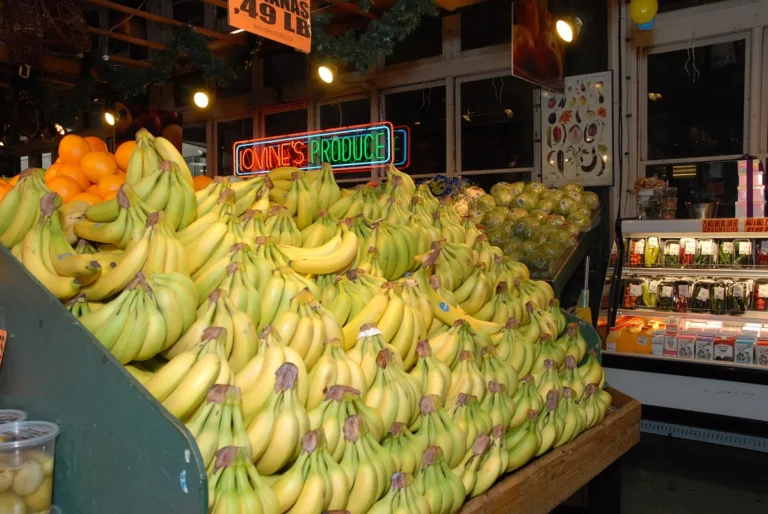
Fulton County Kentucky Banana Festival
September in Fulton, Kentucky, belongs in part to a fruit that has never grown in Kentucky soil. Listing layers record a multi-day banana celebration in this small Fulton County town under two names rather than one: International Banana Festival and Banana Festival. No layer read for this article prints the county-and-state title at the top of this page; that prefix is a filing construction, added for catalogue purposes, and it belongs to the catalogue rather than to the celebration itself.
What the layers provide beyond the names is a skeleton: a set of September date spans in recent years, a statement that the festival was first held in nineteen sixty-three, and very little else. No layer read settles where in Fulton the gathering happens, who organises it, what it charges, or what fills its days beyond the banana theme. This article stays inside that skeleton, and where the layers fall silent, the silence is named rather than papered over.
About
The celebration at the centre of this article is a September festival in Fulton, a town in Fulton County in the far southwestern corner of Kentucky. The listing layers give the event two published name forms, kept apart throughout this article rather than blended into one: International Banana Festival, the grander styling, and simply Banana Festival, the plain form.
Fulton’s place in its county needs one clarification, because town and county share a name and the sharing invites an easy mistake. Fulton is not the seat of Fulton County: a state reference layer names Hickman as the county seat, and nothing in the layers read contradicts that. Fulton hosts the festival; Hickman holds the seat.
The remaining facts are defined as much by absence as by presence. No single venue in Fulton is settled in the layers read, so no park, street, fairground or hall is named here as the festival’s home. No organiser name form was settled either, so no organiser is credited with running it. What the layers do settle is the theme and the shape: a festival built around bananas, spread across several September days.
For a useful comparison, see the Franklin County Kentucky Millville Daze Festival for another county festival.
Quick Facts
| Detail | What the layers record |
| Published names | International Banana Festival; Banana Festival |
| Host town | Fulton, Kentucky |
| County | Fulton County |
| County seat | Hickman, named by a state reference layer |
| Season | September |
| Two thousand twenty-three span | the eighth to the sixteenth of September, with a festival-guide weekend listing of the seventh to the tenth kept separate |
| Two thousand twenty-four span | the fourteenth to the twenty-first of September |
| Two thousand twenty-six span | the fourteenth to the twenty-first of September |
| First held | nineteen sixty-three, as the listing layers state |
| Venue and admission | neither settled nor stated in the layers read |
History
The one historical statement the layers read offer is a beginning: in their accounts, the festival was first held in nineteen sixty-three. That claim is recorded here exactly as what it is, a statement carried by the listing layers, because no layer read adds the texture that would let it be checked or expanded. No accompanying account tells who founded it, what prompted it, or where in Fulton the first edition gathered.
Between that claimed beginning and the recent September listings, the layers read offer nothing further: no anniversary celebrations, no interruptions, no revivals. A festival that traces itself to nineteen sixty-three and still appears in September listings more than six decades later has plainly had a long life, but its shape is not in the record.
The recent end of the trail is listing entries for three Septembers. In two thousand twenty-three, listing layers give a span from the eighth to the sixteenth of September, while a festival-guide layer places a Banana Festival in Fulton inside a weekend roundup covering the seventh to the tenth of the same month; both spans stand here as printed, unmerged. For two thousand twenty-four the listings give the fourteenth to the twenty-first of September, and for two thousand twenty-six they give the same span.
What to Expect
The published record contains no programme, and this section will not manufacture one. The layers read describe the festival’s particulars only in the broadest terms: a banana theme, carried by a celebration running across multiple September days in Fulton. No layer read names an act, a contest, a parade route or a single scheduled happening, and none is supplied here.
What can honestly be drawn from the record is the shape of the occasion. The main two thousand twenty-three span, the eighth through the sixteenth of September, covers nine calendar days, and the later spans cover eight: a festival unfolding across more than a single weekend’s attention.
The practical expectations follow from the gaps. Because no venue is settled, a visitor should expect to confirm the gathering point from a current listing. Because no admission statement appears in any layer read, neither a charge nor free entry can be counted on in advance. And because programme particulars stop at the theme and the span, the festival’s texture is something to discover on the ground.
Planning Your Visit
September is the one firm coordinate the published record hands a prospective visitor: every dated edition in the layers read falls in that month. Beyond the month, the record loosens: the spans differ between years, the eighth to the sixteenth in two thousand twenty-three and the fourteenth to the twenty-first in both two thousand twenty-four and two thousand twenty-six, and they differ between sources for two thousand twenty-three, when a festival-guide weekend roundup gives the seventh to the tenth. Confirm the current year’s span in a current listing before fixing travel dates, and treat any older span as pattern, not promise.
Search under both published names, since a search under only one form may miss the entry carrying the current dates. Contact details, where they exist, sit in the listing layers; none are reproduced here.
Two open questions deserve attention. The gathering point should be confirmed close to the visit, through the current listing or local enquiry on arrival, since no venue is settled in the layers read. Admission should be approached the same way: no layer read states a gate price, and none states that entry is free, so the only honest preparation is to arrive ready for either. The multi-day span helps throughout: with eight or nine September days in the recent listings, a visit need not land on one particular date.
Sample Itinerary
The record behind this article supplies spans, not schedules, so the itinerary below is a pattern for using a multi-day festival whose hours and happenings are not published in the layers read. It invents no events; it arranges a short stay around the fixed points the record does provide: Fulton, September, and a celebration stretching across more than a week.
On the first day, arrive with the current listing in hand and the gathering point already confirmed from it, since nothing in the layers read fixes the venue in advance. Give the middle of the day to the festival itself and keep the evening loose; a span of eight or nine days rewards an unhurried first pass. On a second day, go back: a festival spread across that many days is not built to be exhausted in one visit, and a return on a different day of the span is the closest thing to a programme this record supports.
How the Editions Compare
The three documented Septembers invite comparison because they are nearly all the record contains. Two thousand twenty-three carries the longest main span, the eighth to the sixteenth of September, and also the record’s one internal disagreement, since a festival-guide layer places the same year’s festival inside a weekend roundup running the seventh to the tenth. Two thousand twenty-four and two thousand twenty-six match each other exactly, the fourteenth to the twenty-first, as if the festival had settled into a preferred window. Whether that matching is habit or coincidence cannot be told from listing layers, so it is left here as an observation rather than a conclusion.
The two published names also bear comparing: the record does not say that International Banana Festival replaced Banana Festival, or that the forms belong to different eras. They stand as two forms in current use, one expansive and one plain. Set against banana festivals in other states and other countries, this event shares a theme and nothing else; those celebrations are different events and lend this one no history, programme or date. Set against better-documented Kentucky festivals, the comparison cuts the other way, since this record has no settled venue, organiser, programme or admission, which is why its claims stay fenced to the listing layers throughout.
Checklist
- Search current listings under both published names, International Banana Festival and Banana Festival, before assuming the event is missing from a calendar.
- Confirm the current September span before booking travel, since printed spans differ between years and, for two thousand twenty-three, between sources.
- Treat the gathering point as unconfirmed until a current listing settles it; no venue is published in the record behind this article.
- Carry no assumption about admission, because the layers read neither price the entry nor call it free.
- Keep Hickman and Fulton straight when planning county errands: the seat is in Hickman, the festival in Fulton.
- Allow more than one day inside the span, because recent listings give the festival eight or nine September days.
Beyond the Festival
A September trip to the festival is also a trip to Fulton County, and the record supports a small amount of orientation and no more. The county sits in the far southwestern corner of Kentucky. Its seat is Hickman, named by a state reference layer, while Fulton, the festival’s host, is a separate town in the same county, so a visitor mixing celebration with county business will travel between the two.
The banana theme is the festival’s outward identity, the thing that makes a small town’s September celebration findable in statewide listings at all. Banana festivals elsewhere are separate events with their own records. What is distinctive here is local: a Fulton County town keeping a banana-named celebration on the September calendar, under two published name forms, across the recent years the listings document.
Why the Festival Matters
The significance of the Fulton celebration, on the published evidence, is persistence. A festival whose listing layers carry a first-held date of nineteen sixty-three, and which still draws dated September entries in two thousand twenty-three, two thousand twenty-four and two thousand twenty-six, has remained visible in the state’s festival record across more than six decades. For a small town in the far corner of its state, that continued carriage in statewide and festival-guide listings is itself the achievement the record documents, and the International styling in one of its names underlines the point.
The limits of the record matter too. A festival can be locally substantial and publicly thin at the same time, and here the printed trail consists of names, September spans and a single founding claim. That thinness describes the documentation rather than the event. Readers who want the rest of the story will have to find it where the listings cannot take them: in Fulton, in September, on the ground.
Frequently Asked Questions
Which of the festival’s two printed names is the right one to use?
Both are in use, and the record does not rank them. Listing layers carry the event as International Banana Festival and as Banana Festival, and this article keeps the two forms unmerged rather than choosing between them, so a reader searching should try both. The county-and-state title at the top of this page appears in no layer read; it is a catalogue construction, not a third name.
Why does the two thousand twenty-three listing appear with two different September spans?
Because two kinds of layer printed it differently. Listing layers give a span from the eighth to the sixteenth of September in two thousand twenty-three, while a festival-guide layer places a Banana Festival in Fulton within a weekend roundup covering the seventh to the tenth of that month. Both spans stand here as printed, unmerged, because the record provides no basis for deciding which is the truer account of that year’s run.
What fills the festival’s days, and where in Fulton does it gather?
The layers read answer neither part, and this article does not guess. Programme particulars stop at the banana theme and the multi-day September span, and no single venue is settled, so no venue is named here as the festival’s home. Both answers have to come from a current listing or from the festival itself.
Is Fulton itself the seat of Fulton County?
No. A state reference layer names Hickman as the seat of Fulton County. Fulton is the festival’s host town, and the celebration documented here belongs to Fulton, but the two roles are kept separate throughout this article.
What to Expect From the Next Fulton County Kentucky Banana Festival
How often is Fulton County Kentucky Banana Festival held?
The recent listings show a September event recurring across the years they document, with dated editions for two thousand twenty-three, two thousand twenty-four and two thousand twenty-six. The layers read do not document every year in between, and no layer read publishes a rule of recurrence, so the honest answer is a September rhythm in the printed record.
When is the next Fulton County Kentucky Banana Festival?
No layer read publishes a span beyond the fourteenth to the twenty-first of September in two thousand twenty-six, the latest dated edition in the record. The pattern points to September as the month to watch, but a pattern is not an announcement, so a reader planning ahead should watch current listings under both published names as the next September approaches.
Will the dates change?
The documented spans suggest they can. Two thousand twenty-three is listed from the eighth to the sixteenth of September, while two thousand twenty-four and two thousand twenty-six both give the fourteenth to the twenty-first, and a second source shortens two thousand twenty-three to a weekend window. Future dates should therefore be confirmed from a current listing rather than carried over from a previous year.
Closing Thoughts
The Fulton celebration, as the published record preserves it, is a study in how much and how little a listing can hold. It holds two names, a September habit, three recent spans and a claimed beginning in nineteen sixty-three. It does not hold a venue, an organiser, a programme or a price. This article has reported the first list faithfully and refused to invent the second.