Elliott County Kentucky Minnie Adkins Day Festival
On the third Saturday of July, the small seat town of Sandy Hook turns its attention to wood, paint and one woman’s carved animals. The Elliott County Kentucky Minnie Adkins Day Festival is a single day of folk and fine art gathered around Little Sandy Lodge, and every part of it exists to honour Minnie Adkins, the Elliott County folk artist whose carved-wood work reached national museums. The layers that describe the day do not all call it by the same name, and they do not agree on every detail of its history, but they agree on the essentials: one July Saturday, one host town, one artist at the centre of everything.
About the Festival
A state magazine events layer and a state history museum layer both print the short form “Minnie Adkins Day”. A legislative layer uses “Elliott County Minnie Adkins Day”, while a state crafts encyclopedia layer prints “Minnie Adkins Day Festival” for Elliott County and Sandy Hook — the closest any layer comes to the full form carried in this article’s title. A local newspaper social column rounds out the picture with “Minnie Adkins Days”. Each form stands here exactly as its own layer prints it; none has been merged into another.
Sandy Hook is the county seat of Elliott County, and every documented edition of the day has taken place there. The host venue is Little Sandy Lodge, named by the state magazine layer, the museum layer and the artist-opportunity layers alike. No single organiser name is printed consistently across the record: the artist-opportunity layers name an event contact person, the lodge hosts the day, and a county heritage arts network’s minutes discuss the gathering, as a local newspaper layer reports. The contact is not named in this article.
Three dated editions anchor the article. Artist-opportunity layers document the twentieth of July two thousand twenty-four, an exhibition event open to artists and crafters on the third Saturday of July. A state history museum layer documents the nineteenth of July two thousand twenty-five in Sandy Hook, again the third Saturday, honouring the folk artist whose carvings are held by national museums. A state magazine events layer then invites visitors to the day at Little Sandy Lodge on the eighteenth of July two thousand twenty-six, running from eight in the morning to four in the afternoon — although the same listing’s structured date field prints the nineteenth of July two thousand twenty-six instead. That one-day discrepancy is left exactly as printed, unmerged.
Quick Facts
| Item | Detail |
| Host town | Sandy Hook, the county seat of Elliott County, Kentucky |
| Venue | Little Sandy Lodge, Sandy Hook |
| Timing | The third Saturday of July |
| Edition in two thousand twenty-four | The twentieth of July, an exhibition event open to artists and crafters |
| Edition in two thousand twenty-five | The nineteenth of July, documented by a state history museum layer |
| Edition in two thousand twenty-six | The eighteenth of July in the magazine text; the nineteenth in its structured date field |
| Hours for the two thousand twenty-six edition | Eight in the morning to four in the afternoon (state magazine events layer) |
| Honouree | Folk artist Minnie Adkins, known for her carved-wood work |
| Visitor admission | No layer read states a gate admission for visitors |
| Exhibitor entry | Ten dollars for artists and crafters, per the artist-opportunity layers |
History
The state magazine layer gives the festival its own straightforward beginning: Minnie Adkins Day started in July two thousand fourteen as a way to honour the local folk artist. That is the layer’s account, and it stands here as printed.
For a useful comparison, see the Elliott County Kentucky Tobacco Festival for another county festival.
The official recognition of the day arrives in the record in two unmerged accounts that do not line up neatly, and this article keeps both. A radio layer states that the General Assembly honoured Adkins in two thousand fourteen by declaring the third Saturday of each July to be Minnie Adkins Day. The legislative record layer tells a later and narrower story: a House resolution recognising the third Saturday in July as Elliott County Minnie Adkins Day was adopted in April two thousand eighteen. Whether the honour was proclaimed in the year the day began or formalised four years later is a question the two layers answer differently, and the difference is reported rather than resolved.
Behind the day stands an older gathering that is fenced apart from it here. The radio layer also records that Adkins and her husband organised the Day in the Country Folk Art Festival at their Isonville farm from nineteen ninety-three. That festival is a predecessor event, a different and earlier celebration at a different place, and forms no part of the Lodge festival’s own history. A county already gathering around the Adkins family’s art in the early nineteen nineties eventually built a July day at Sandy Hook bearing her name alone.
What to Expect
Folk art is the heart of the day, and the layers describe it in broad, consistent strokes: folk and fine art on show, traditional heritage-inspired crafts, and the carved-wood work that made the honouree’s reputation. The artist-opportunity layers frame the gathering as an exhibition event open to artists and crafters, with working makers showing and selling alongside the celebration of one particular maker. A visitor should picture tables and displays rather than a midway — this is a day built around objects made by hand.
Around the art, the programme adds food, music and entertainment, as the artist-opportunity layers and the state magazine layer describe them. The museum layer’s account of the two thousand twenty-five edition keeps the emphasis on the honour itself: the day keeps work held in national collections in front of the home county. The two thousand twenty-six listing supplies the practical shape — a full day at the lodge, from eight in the morning until four in the afternoon — while the earlier editions supply the pattern of one Saturday given over entirely to art and to Adkins.
Planning Your Visit
The single most useful planning fact is also the most fragile one. The state magazine events layer invites visitors to Little Sandy Lodge on the eighteenth of July two thousand twenty-six, yet its own structured date field prints the nineteenth of July for the same edition. Both dates sit in the record, so a careful traveller treats the weekend as the unit of planning until a fresh listing settles the matter. The third-Saturday pattern helps: the twentieth of July two thousand twenty-four and the nineteenth of July two thousand twenty-five were both third Saturdays, and the eighteenth of July two thousand twenty-six falls on a third Saturday as well, while the nineteenth does not fit the pattern the other layers describe.
Money needs the same care. No layer read states a gate admission for visitors. The only price the record prints is an exhibitor one: the artist-opportunity layers set a ten-dollar entry fee for artists and crafters showing their work. That fee buys a maker’s place in the exhibition; it says nothing about what a visitor pays.
Getting word to the organisers runs through channels the layers print but this article does not reproduce: the artist-opportunity layers carry an event contact’s email address, and the venue’s telephone number appears in the same record. Artists weighing the exhibitor entry will want those routes. For everyone else, the advice is simple: aim for the third Saturday of July, arrive early in the eight-to-four window, and leave the exact date question to the final listing.

A Sample Day at the Festival
Arrive at Little Sandy Lodge near the eight o’clock opening of the two thousand twenty-six edition, while the exhibitors are arranging carved figures, paintings and heritage crafts. Spend the first hour with the folk art tables, and look longest at the carved-wood work in the tradition the festival celebrates.
Let the middle of the day carry you between fine art displays and the traditional crafts, pausing for food as the programme provides it, and catch the music and entertainment in the stretches between browsing. The afternoon belongs to slower looking: return to the pieces that caught your eye in the morning, talk with the makers while the crowds thin, and finish by four in the afternoon, when the magazine listing says the day closes.
How This Day Compares
Plenty of Kentucky festivals celebrate a crop, a food or a season; this one celebrates a person. The Elliott County Tobacco Festival belongs to the harvest economy that shaped the county, while Minnie Adkins Day belongs to one woman’s hands and the animals she carved from wood. The comparison clarifies both: where a tobacco festival looks outward to markets and seasons, this day looks inward to a single body of work and the neighbours who grew up around it.
The festival also stands apart from the gathering that came before it. The Day in the Country Folk Art Festival at the Isonville farm was, by the radio layer’s account, the Adkins family’s own gathering, running from nineteen ninety-three. The Sandy Hook day is the public, county-seat version of that impulse — moved to a lodge, fixed to the third Saturday of July, and recognised, in one account or another, by the legislature. The family festival honoured folk art generally; this one honours a named artist on a named day.
A Visitor’s Checklist
- Confirm the exact July date against a fresh listing before travelling, since the two thousand twenty-six record prints both the eighteenth and the nineteenth
- Plan around the third Saturday of July, the pattern every layer describes
- Arrive within the eight-in-the-morning to four-in-the-afternoon window the magazine listing gives
- Carry money for food and for artwork, since exhibitors sell their own pieces
- Remember that the ten-dollar figure in the record is an exhibitor entry fee, not visitor admission
- Artists and crafters: seek the event contact route early, since the exhibition is open to makers
- Leave time to look at carved wood slowly; it is the reason the day exists
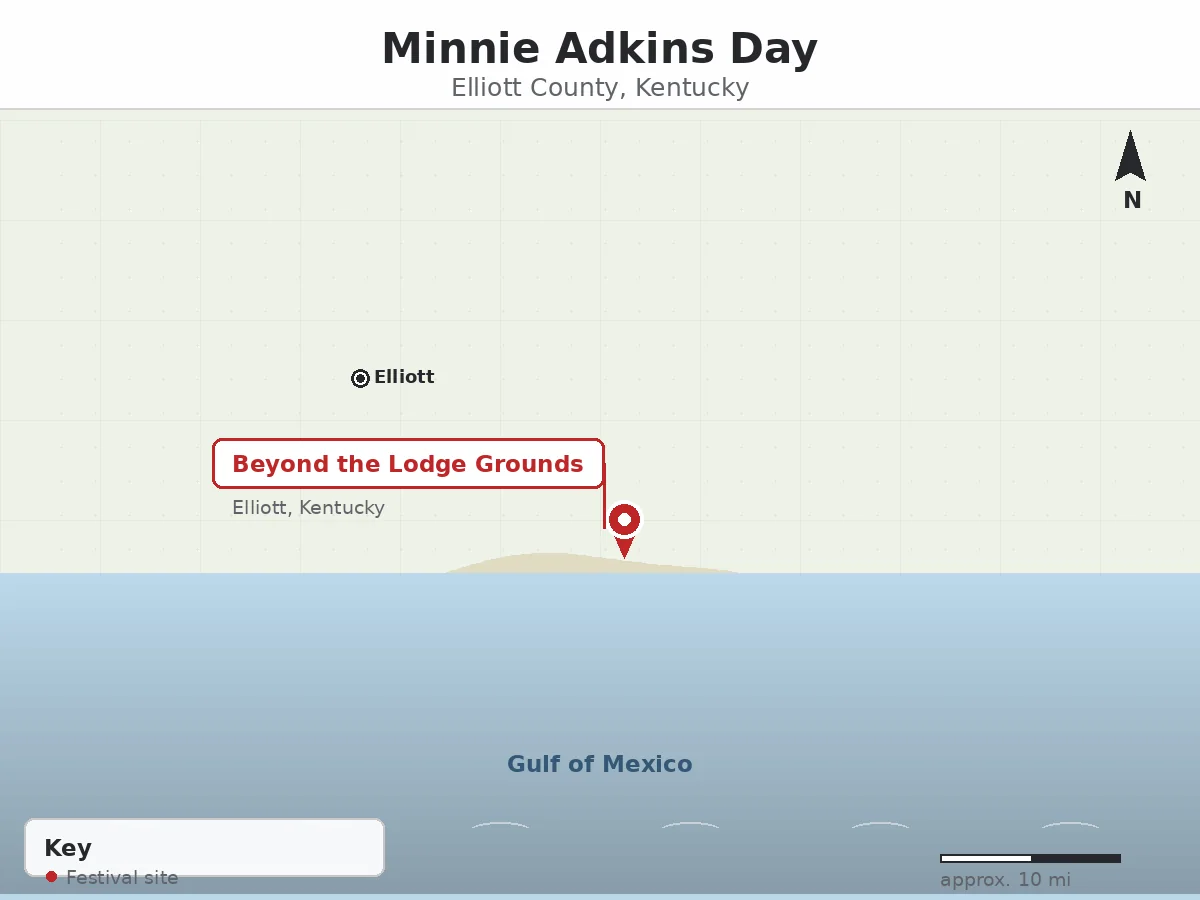
Beyond the Lodge Grounds
Sandy Hook rewards a little wandering once the festival closes. It is the seat of Elliott County, set in the hills of eastern Kentucky. The drive in and out of the county passes through the landscape that produced the folk-art tradition the festival honours: small farms, woodland and communities where carving, quilting and handwork stayed living skills rather than hobbies.
The honouree’s reach extends far beyond the county line. The museum layer notes that Adkins’s carvings are held by national museums, so a visitor who first meets her work at the lodge can meet it again in major collections. The festival is the home-county end of that story: where the artist lived, worked and, with her husband, first gathered neighbours around folk art at Isonville.
Why the Day Matters
A county seat town of modest size holding an annual day for a folk artist is a statement about what a community counts as wealth. The record shows the statement being made at several levels at once: a state magazine layer carrying the beginning of the day in July two thousand fourteen, a state history museum layer documenting its two thousand twenty-five edition, a crafts encyclopedia layer giving the festival its fullest printed name, and a legislative layer recording formal recognition of the third Saturday in July.
The name forms matter for the same reason. “Minnie Adkins Day” is a person and a date fused together; “Elliott County Minnie Adkins Day” ties that person to her county; “Minnie Adkins Day Festival” frames the honour as a public celebration. All three survive in the record because all three are true to some part of what happens in Sandy Hook each July.
Frequently Asked Questions
Which name does the festival officially use?
No single name governs the whole record. The magazine and museum layers print “Minnie Adkins Day”, a legislative layer prints “Elliott County Minnie Adkins Day”, a crafts encyclopedia layer prints “Minnie Adkins Day Festival”, and a newspaper social column once used “Minnie Adkins Days”.
Why does the two thousand twenty-six edition show two different July dates?
The state magazine events layer behind that edition contradicts itself: its invitation text names the eighteenth of July two thousand twenty-six, while its structured date field prints the nineteenth. The eighteenth matches the third-Saturday pattern of the documented earlier editions, but the record prints both, so travellers should confirm before setting out.
What does the ten-dollar charge actually cover?
It is an entry fee for artists and crafters exhibiting their work, set by the artist-opportunity layers. Nothing in the layers read states a gate admission for visitors, and the exhibitor figure should never be mistaken for one.
How is this festival different from the Day in the Country Folk Art Festival?
The Day in the Country was an earlier, separate gathering that Minnie Adkins and her husband organised at their Isonville farm from nineteen ninety-three, according to a radio layer. The Sandy Hook festival began in two thousand fourteen by the magazine account, is hosted at Little Sandy Lodge, and honours Adkins herself.
What to Expect From the Next Elliott County Kentucky Minnie Adkins Day Festival
How often is Elliott County Kentucky Minnie Adkins Day Festival held?
The pattern is one day each year, fixed to the third Saturday of July. Documented editions fell on the twentieth of July two thousand twenty-four and the nineteenth of July two thousand twenty-five, and the two thousand twenty-six listing continues the July pattern.
When is the next Elliott County Kentucky Minnie Adkins Day Festival?
On the third-Saturday pattern, the next edition would fall in July two thousand twenty-seven. No layer read prints a two thousand twenty-seven date outright, and the two thousand twenty-six listing’s own internal disagreement — the eighteenth against the nineteenth — is a reminder to confirm the day against a fresh listing.
Will the dates change?
The day itself looks firmly anchored: July, the third Saturday, Sandy Hook. What may shift is which printed date a listing leads with, as the two thousand twenty-six record shows. The weekend is the stable fact; the precise Saturday deserves a final check.
Closing Thoughts
For one July Saturday a year, Sandy Hook measures itself against a carved wooden animal and finds the comparison worth repeating. The layers disagree about who declared the day and when, and one listing cannot settle on its own date — but they converge on the lodge, the town, the third Saturday and the artist. That convergence, repeated from two thousand fourteen’s beginning through the editions of two thousand twenty-four, two thousand twenty-five and two thousand twenty-six, is the real record of the Elliott County Kentucky Minnie Adkins Day Festival: a small county keeping a great maker’s name in annual circulation.