Dougherty County Georgia Juneteenth Freedom Day Festival

Albany is the county seat of Dougherty County and the anchor city of a wide stretch of southwestern Georgia, where the Flint River slides past pecan groves and peanut fields on its long run toward the Gulf. Every June, the Dougherty County Georgia Juneteenth Freedom Day Festival turns that landscape into a gathering place — part history lesson, part block party, part family reunion for a county of 85,790 people (2020 Census). If you are the kind of traveler who wants to know when to show up, where to leave the car, and what the day will cost before you point the wheels down U.S. 19 or U.S. 82, this guide is built for exactly that.
The short version: aim for mid-June, prepare for heat and humidity, expect admission to be free, and budget more time in Albany than a single afternoon. The table below puts the logistics in one place so you can skim it, screenshot it, and get on with the trip planning.
| Town | Albany, Georgia |
| County | Dougherty County |
| County seat | Albany |
| Population | 85,790 (2020 Census) |
| Region | Southwestern Georgia |
| Typical timing | Mid-June, built around June 19 |
| Admission | Typically free to attend |
| Setting | Downtown Albany and community venues near the Flint River |
| Signature features | Live music, soul food vendors, family activities, history and heritage programming |
| Organizer | Community groups and local volunteers |
Inside Albany’s Juneteenth Freedom Day: What the Celebration Actually Is
The Dougherty County Georgia Juneteenth Freedom Day Festival is a community-rooted observance of June 19, 1865 — the day freedom was announced to enslaved people in Galveston, Texas, more than two years after the Emancipation Proclamation was signed. In Albany, that anniversary gets marked the way southwestern Georgia marks most things that matter: with food, with music, with church fans and folding chairs, and with a long afternoon of people greeting each other by name across the grass.
Programming generally centers on a main stage that carries gospel, soul, R&B, spoken word, and youth performances through the day. Around that stage you will usually find a vendor row, a children’s activity area, heritage and history tables, health and community resource booths, and often some form of procession, motorcade, or opening ceremony to start things off. Because the festival is organized by local community groups and volunteers rather than a large commercial promoter, the scale stays human. You can walk the whole footprint in a morning and still find something new in the late afternoon.
What it is not: it is not a ticketed arena concert with a wristband, a bag check, and a set of gates that close at a fixed hour. It is a civic celebration, which means the schedule can shift, the footprint can move a block or two from one year to the next, and the best information usually comes from local listings, community bulletin boards, and word of mouth in the weeks leading up to June. Check those sources before you travel, and treat every time in this article as a planning window rather than a promise.

How Juneteenth Reached Albany and Dougherty County
1865. On June 19, Major General Gordon Granger stood in Galveston and read General Order No. 3, informing the people of Texas that enslaved men and women were free. The date stuck, and the celebration that grew out of it — Jubilee Day, Emancipation Day, Freedom Day — became the oldest continuous commemoration of the end of slavery in the United States.
Late 1800s and early 1900s. For decades, Juneteenth lived mostly in Texas. As families moved east and north, the observance traveled with them, and in Georgia it frequently took the form of church-centered emancipation programs, benevolent-society gatherings, and schoolyard picnics. In Black communities across the region, the date was kept alive by the people who refused to let it fade — long before any state or federal government gave it a stamp of approval.
1961–1962. Albany’s own freedom story is tightly wound into the civil rights era. During those years, the Albany Movement became one of the first sustained mass desegregation campaigns in the country, drawing hundreds of local students and residents — and eventually Martin Luther King Jr. and the Southern Christian Leadership Conference — into a direct challenge to segregation in Dougherty County. That history gives local Juneteenth programming a natural throughline: this is a city that has spent generations working out, in public, what freedom actually requires.
2021 and after. When Juneteenth became a federal holiday, observances that had been neighborhood-scale for generations stepped into larger public spaces. In Albany, that shift meant bigger stages, more vendors, and a wider regional draw, while the core of the day — family, faith, food, and remembrance — stayed recognizably local.
What a Juneteenth Freedom Day Weekend in Albany Actually Feels Like
Set your expectations around three things: heat, sound, and hospitality. A mid-June day in southwestern Georgia runs hot and humid, the music carries across the whole footprint, and strangers will talk to you. Here is how the day typically breaks down.
Food: Smoke, Soul Plates, and Peach-Country Sweets
Vendor row is the heart of the festival for a lot of attendees. Expect the classic South Georgia lineup: fried fish and grits, smoked ribs and pulled pork, fried chicken, red rice, collards, cornbread, turkey legs, and sausage dogs, alongside snow cones, funnel cakes, pound cake, and peach cobbler. Food trucks usually mix in with pop-up tents, and the people running them are often the same families who have been cooking for this crowd for years. Bring cash as a backup even though many vendors take cards, and drink more water than you think you need — the heat sneaks up on visitors from cooler parts of the state.
Music and Entertainment: Gospel, Soul, and Spoken Word in Downtown Albany
The stage programming generally opens with gospel — choirs, praise teams, soloists — and then loosens into soul, R&B, hip-hop, and spoken word as the afternoon wears on. Between sets you will often find youth dance teams, step performances, DJs, and community announcements from the microphone. The sound is loud and the seating is whatever you brought, so a folding chair and a wide-brimmed hat are worth their weight. If you want the best acoustics, position yourself back from the speakers rather than directly in front of them.
Family Activities: Kid Zones, History Tables, and Room to Run
Juneteenth in Albany is deliberately a family day. Expect bounce houses, face painting, crafts, story time, and games, plus tables from local organizations offering health screenings, school and scholarship information, and voter registration. The heritage tables are the quiet highlight — photographs, oral histories, and conversations with people who remember how this celebration looked decades ago. Strollers work fine on paved sections, less so on grass, and shade is the single most valuable real estate on the grounds. Stake out a spot under a tree early and treat it as base camp.
Planning the Trip: Getting to Albany and Making the Day Work
Albany is a regional hub, which makes it easy to reach and easy to underestimate. Give yourself a real plan for arrival, lodging, parking, spending, and weather before the trip, and the day itself becomes relaxed.
Getting There: Routes Into Dougherty County’s Seat
Most travelers reach Albany by car. U.S. 19 comes down from the north and continues south, U.S. 82 runs east–west through the city, and the South Georgia Parkway corridor links Albany to the rest of the region. Interstate 75 passes well to the east, so plan on a two-lane-and-highway approach from that direction rather than a straight interstate shot. The city also has a regional airport for those flying in, with connections through larger hubs. If you are coming from Atlanta, the drive is long enough that an overnight stay makes far more sense than a same-day round trip.
Where to Stay in and Around Albany
Lodging clusters along the main highway corridors and near downtown, with a mix of national chain hotels, limited-service properties, and extended-stay options. Book early. Mid-June in Dougherty County overlaps with family reunions, church homecomings, and summer travel, so rooms that look plentiful in March can be gone by late May. If Albany itself is full, nearby smaller towns within a reasonable drive offer alternatives — you trade a few minutes of windshield time for a quieter night and sometimes a lower rate.
Parking Strategy for a June Festival Day
Arrive early — genuinely early, not twenty minutes before the opening ceremony. Public lots and on-street spaces around downtown fill quickly, and street closures near the festival footprint can eliminate the spot you were counting on. Carpool with family or friends if you can. Take a photo of your parking spot and the nearest intersection, because after a few hours in the sun every block starts to look alike. Do not park in private business lots that are not marked for public use; you may come back to a towed vehicle and a ruined afternoon.
Admission, Costs, and What to Budget Beyond the Gate
Admission to the Dougherty County Georgia Juneteenth Freedom Day Festival is typically free, which is part of the point — nobody should have to buy a ticket to commemorate freedom. Your real spending happens inside: food, drinks, kids’ activities, merchandise from local vendors, and maybe a donation to the organizations keeping the event running. Bring smaller bills, since vendor change can run short during peak hours. A reasonable budget for a family of four covers meals, a few treats, and a little spending money at the vendor tents, and leaves room for a stop somewhere local afterward.
June Weather in Southwestern Georgia and How to Dress
Mid-June in this part of Georgia means heat, humidity, and a real chance of an afternoon thunderstorm. Dress light and loose, wear a hat, and choose comfortable shoes over anything fashionable. Sunscreen, a refillable water bottle, and a compact rain poncho cover nearly every scenario. If you have small children or older adults in your group, plan a midday retreat to shade, a vehicle, or an air-conditioned stop, then return for the evening programming when the temperature drops.
A Sample Juneteenth Weekend Itinerary in Albany
Friday evening. Drive in and check into your hotel before dark. Have dinner at a local restaurant, then take a slow loop through downtown to see where the festival footprint sits and where you might park in the morning. If a kickoff event or community program is scheduled, that is an easy, low-key way to start the weekend.
Saturday morning. Arrive early, park, and walk the grounds before the crowd thickens. Grab breakfast from a vendor, catch the opening ceremony and the first gospel sets, and claim a shady base camp. This is the best window for the heritage tables and history programming, while it is still cool and quiet.
Saturday afternoon. Eat your way down vendor row, let the kids loose in the activity area, and settle in for the main stage acts. Take a shade break around the hottest part of the day, then come back for the evening sets and the closing moments of the program.
Sunday. Attend a local church service if you are so inclined, then have brunch downtown. Spend the afternoon on Albany’s heritage sites and riverfront, and head home in the late afternoon rather than fighting fatigue on a night drive. If you have the flexibility, Monday morning departure is the calmer choice.
How Albany’s Juneteenth Compares With Nearby Celebrations
Albany’s Juneteenth is the largest-scale observance in this corner of the state, largely because Albany is the population and cultural center of Dougherty County and the surrounding rural counties. Smaller towns across the region — Leesburg to the east, Americus to the north, Thomasville to the southeast — typically host their own observances, often church-centered, park-based, or organized around a single afternoon program rather than a full weekend.
What sets Albany apart is the combination of scale and setting. You get a downtown footprint, a regional draw, and a civil rights history that gives the programming weight beyond the music and the food. The trade-off is crowds and parking pressure. If you want a quieter, more intimate Juneteenth experience, a smaller neighboring town may suit you better; if you want the full weekend — stage acts, vendor row, family programming, and heritage sites within walking distance — Albany is the one to plan around.
Juneteenth Freedom Day Packing and Prep Checklist for Albany Visitors
Before you leave the house: confirm the current year’s dates, times, and location through local listings, since the footprint and schedule can shift. Book lodging early. Fill the gas tank before you get into town. Charge a portable battery for your phone, and screenshot your parking area and any maps you may need, because a crowded network can make loading a map slow.
In the bag: refillable water bottles, sunscreen, hats, sunglasses, a compact rain poncho, folding chairs or a blanket, a small cooler if allowed, cash in small bills, wet wipes, hand sanitizer, bug spray for the evening hours, and a change of shirt if you are staying for the full day. Leave the pets at home unless you have confirmed that the current year’s venue allows them, and leave glass containers behind entirely. Wear shoes you can stand in for six hours.
Beyond the Festival: Albany and Dougherty County After the Music Stops
Albany rewards a slower second day. The Flint River shapes the city, and the riverfront and nearby springs are worth an unhurried morning. Radium Springs, one of Georgia’s natural wonders, offers cool water and walking paths, while Chehaw Park gives families a place to stretch out with trails and open space. Downtown, the Albany Civil Rights Institute connects visitors directly to the movement history that gives this city’s Juneteenth its depth, and the Thronateeska Heritage Center covers the region’s natural and cultural past.
Music fans should seek out the Ray Charles Plaza on the riverfront — the legendary musician was born in Albany, and the tribute there is a fitting bookend to a weekend built on Black musical traditions. Beyond the city, Dougherty County’s 335 square miles of farmland, pecan orchards, and small communities make for an easy, scenic drive. Nearby towns offer antique shops, meat-and-three lunch counters, and the kind of unhurried Main Streets that pair well with a hot June afternoon.
Why Freedom Day Carries Extra Weight in Dougherty County
Dougherty County is home to 85,790 people (2020 Census), and Albany is both its county seat and its civic engine. In a region where so much history — the plantations, the sharecropping economy, the long fight over the ballot and the schoolhouse door — is recent enough to be remembered by living people, Juneteenth is not an abstraction. It is a family story told out loud in a public square.
The festival also does practical work. It puts money in the hands of local food vendors and small entrepreneurs. It gives young people a stage, a microphone, and a reason to learn the history behind the holiday. It brings churches, sororities and fraternities, service organizations, and neighbors into the same space for a few hours. And it reminds everyone who attends that freedom in this part of Georgia was contested, celebrated, and carried forward by ordinary people — which is exactly the kind of inheritance worth showing up for.
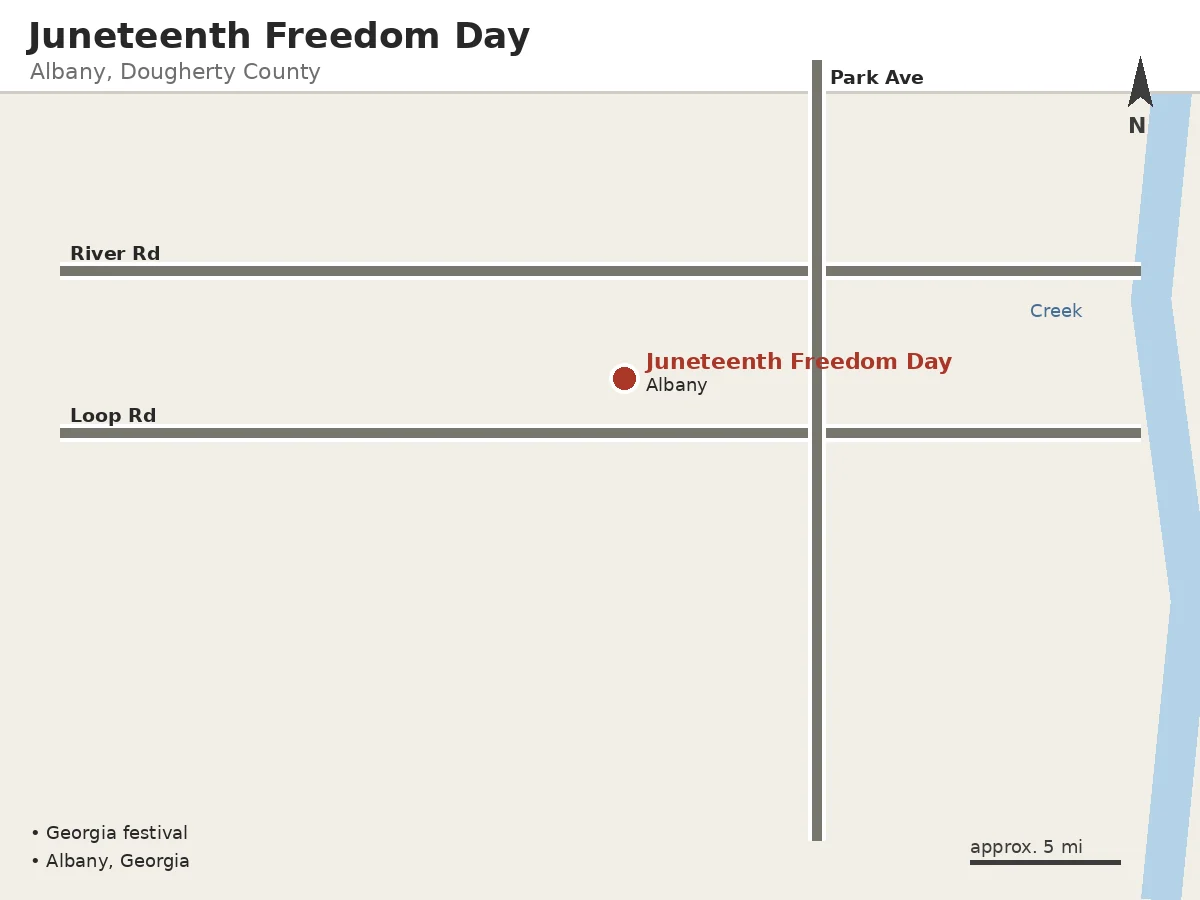
Where the Dougherty County Juneteenth Festival Sits in Albany
The celebration takes place in Albany, the county seat of Dougherty County in southwestern Georgia, with most activity centered on the city’s downtown core near the Flint River.
Albany Juneteenth Freedom Day: Answers for First-Time Visitors
When is the Dougherty County Juneteenth Freedom Day Festival held?
It is held in mid-June, anchored to June 19, the date of the original Juneteenth announcement in 1865. Depending on the year, programming may fall on the holiday itself or spread across the nearest weekend. Confirm the exact dates through local Albany listings before you book lodging or take time off work.
Is admission free, and what will I actually spend money on?
Admission is typically free. Your spending goes to food and drink vendors, children’s activities, merchandise, and optional donations to the community organizations that put the event together. Bring cash in small denominations, since card readers and change can get stretched during the busiest hours of the afternoon.
Where in Albany does the festival take place?
Programming is generally centered on downtown Albany, with community venues nearby. The precise footprint and any street closures vary from year to year, so check current local announcements in the days before the event and plan your parking accordingly.
Is it a good event for young children and older adults?
Yes. The day is built around families, with kid-friendly activities, seating areas, and plenty of food options. That said, mid-June heat in southwestern Georgia is real, so bring water, plan shade breaks, and consider arriving in the morning and returning in the evening rather than staying through the hottest hours.
How early should I arrive to find parking?
Earlier than you think. Aim to be downtown well before the opening program begins, especially if you are traveling with a group or need accessible parking. Carpooling, taking a rideshare from your hotel, and photographing your parking spot are three small habits that make the day noticeably easier.
What happens if it rains?
Summer thunderstorms are a normal part of June in this region, and they usually pass quickly. Outdoor programming may pause, shift, or move to an alternate location depending on the year’s setup. Follow local updates on the day of the event and keep a poncho in your bag rather than cancelling your plans over an afternoon shower.
Do I have to be from Albany to attend?
Not at all. Visitors from across Georgia and neighboring states come for the weekend, and the festival is designed as a public celebration of freedom rather than a private community gathering. Come curious, come respectful, and come ready to eat.
What’s Ahead for Juneteenth Freedom Day in Dougherty County
Since Juneteenth became a federal holiday in 2021, observances like Albany’s have grown steadily in visibility and regional draw. Expect that trajectory to continue: more out-of-town visitors, more vendor interest, and more pressure on downtown parking and lodging during the mid-June window. The community-led character of the Dougherty County Georgia Juneteenth Freedom Day Festival is likely to remain its defining feature, which means planning ahead matters more each year, not less.
For future trips, the smartest approach is to book lodging early, watch local listings for the confirmed schedule, and treat the festival as the centerpiece of a full Albany weekend rather than a single stop. The history here deserves more than an afternoon, and so does the food.
Last updated: October 2026
Albany’s Juneteenth is one of those events that rewards preparation without requiring perfection. Show up early, park smart, drink water, bring a chair, and let the day unfold at the pace of a South Georgia afternoon — gospel on the stage, smoke rising off the grills, kids running between the tents, and a whole county remembering together why the nineteenth of June still matters.


One Comment