Cumberland County Kentucky River Festivus Festival
For two days each August, the seat of Cumberland County trades its usual quiet for paddle strokes, guitar chords and the splash of a community float, all gathered under a name that sounds like a joke and behaves like a homecoming. The event is published simply as River Festivus, and it fills Veterans Memorial Park on the banks of the Cumberland River in Burkesville with racing canoes, food trucks, working competitions drawn from the county’s timber and river heritage, and headline concerts that the published layers describe as free. Four consecutive editions are documented in the record, running from two thousand twenty-three through two thousand twenty-six, and each one adds a piece to the picture of a festival that began, by one account, as nothing grander than a single kayak race. What follows sets out what those layers actually say: who publishes the event, where it happens, how the programme is built, and where the record stays silent, because a festival this young deserves to be described on its evidence rather than on enthusiasm alone.
About River Festivus
River Festivus is the only name form the sources print. The event’s own site carries it, the county tourism alliance carries it on its site, and a regional events magazine layer uses it as well; no layer prints the longer county-prefixed title under which this article is filed. The organising credit is likewise recorded in two unmerged forms. The event’s own pages speak in the festival’s name, while the body that publishes those pages and serves as the contact point is the Explore Cumberland County Alliance, the county tourism alliance. Neither form is folded into the other here, because the record itself keeps them side by side.
The setting is Veterans Memorial Park, which the county tourism layer and the regional events magazine place on the Cumberland River in Burkesville. A travel blog layer’s first-person account of the two thousand twenty-three edition adds a wrinkle worth keeping: it says the festival began on the town square and had expanded into a park it names as Veterans Memorial City Park. Both park name forms are therefore carried as printed, each attached to the layer that uses it. Burkesville itself is the county seat of Cumberland County, a status a reference encyclopedia layer’s county list confirms, so the festival sits in the county’s administrative centre as well as on its river.
The alliance’s published pages carry an email address, a postal box and a phone number for the organisation; those routes exist and are noted here only as existing, since contact details are not reproduced in this article.
Quick Facts
| Item | Detail |
| Published name | River Festivus |
| Host town | Burkesville, Kentucky |
| County seat status | Burkesville is the seat of Cumberland County |
| Venue | Veterans Memorial Park, on the Cumberland River |
| Publishing body | Explore Cumberland County Alliance, the county tourism alliance |
| Documented editions | Two thousand twenty-three, twenty-four, twenty-five and twenty-six |
| Usual timing | A Friday and Saturday in the middle of August |
| Headline concerts | Billed as free in the layers read |
| Signature contests | Battle of the Bands, paddle races, Festivus Float |
| Funding note | Described as entirely donation-funded in two thousand twenty-four |
History
The earliest history in the record comes from a regional events magazine layer published alongside the two thousand twenty-four edition, and it is carried here strictly as that layer’s account. The magazine states that River Festivus was created seven years before its writing as part of a community effort to designate Burkesville as a certified Kentucky Trail Town, and that the event started as a humble kayak race. No founding year is adopted from that remark, because the layer frames the festival’s age in relation to its own publication date rather than naming a first year, and this article does not convert a relative claim into a calendar date the sources never printed.
For a useful comparison, see the Crittenden County Kentucky Gem and Mineral Show Festival for another county festival.
What can be followed year by year begins in two thousand twenty-three, when a travel blog layer recorded the festival in first person. By that August the event had already outgrown its beginnings: the account notes that it started on the town square and had expanded into the park, that Friday brought a Battle of the Bands with four bands competing, and that Saturday belonged to the water and the headliner. The seven-mile Cumberland River Run set off at half past nine on the Saturday morning, food trucks fed the crowd through the day, Diamond Rio headlined on Saturday, and a fireworks display closed the weekend. The shape visible there, river sport by day and music by night, becomes the festival’s durable pattern in every later edition the record holds.
What to Expect
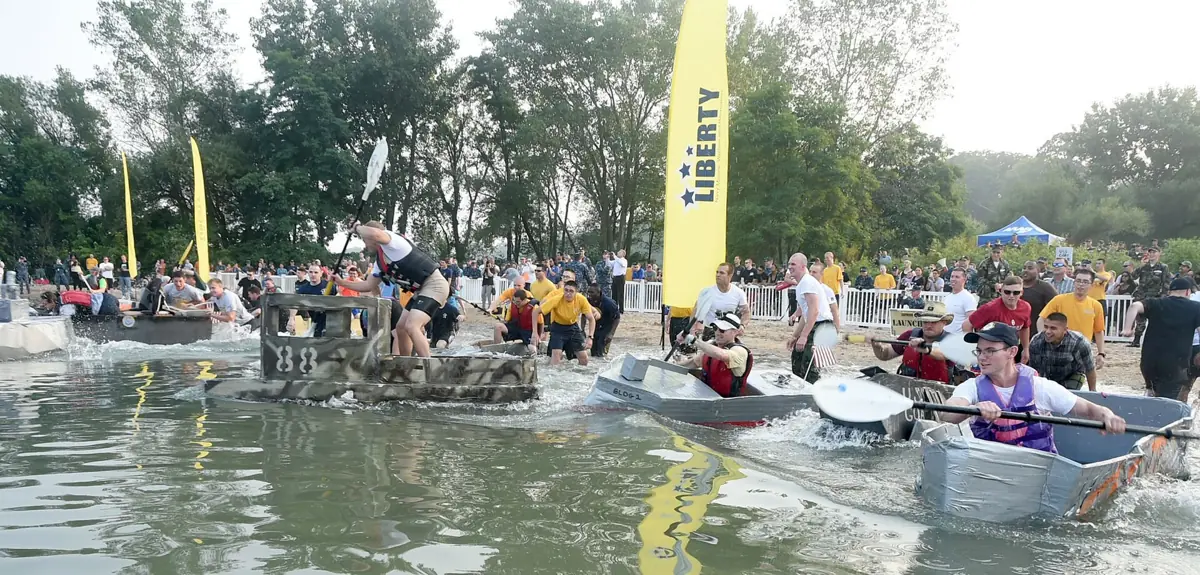
The water programme is the festival’s spine. The two thousand twenty-four edition, documented by the regional events magazine, centred on the Mighty Cumberland River Run, a paddle race sanctioned by the American Canoe Association, while the two thousand twenty-five layers describe kayak and canoe races sanctioned by both that association and the United States Canoe Association. The programme summary across the layers gives paddle courses of twelve miles and seven miles, so racers choose between a long downriver test and a shorter one. The Festivus Float offers the unhurried alternative, a communal drift rather than a race, and competitive anglers get a trout fishing tournament in the two thousand twenty-four programme.
Dry land answers with contests rooted in local work. Catfish Wrangling puts hands directly into the river’s most famous resident, and a Cross Cut Saw Competition turns a two-person timber skill into a spectator event. Runners climb instead: the Run for the Hills 5K/10K sends its field up Alpine Hill, and the Festivus Fun Run arrived as a new element in two thousand twenty-four, then returned in two thousand twenty-five as the Festivus Family Fun Run, held a week early on the ninth of August that year.
Music bookends both days. The Battle of the Bands is billed as free, and the headline concerts carry the same billing: The Marshall Tucker Band topped the two thousand twenty-four bill, Montgomery Gentry featuring Eddie Montgomery played a concert the two thousand twenty-five layers call free, and in two thousand twenty-six the winner of the 5th Annual Battle of the Bands earned the right to open for The Frontmen. Food trucks and local brews run throughout, and a headquarters tent at Veterans Memorial Park anchored the two thousand twenty-four edition.
Planning Your Visit
Timing is the first decision, and the documented editions make it a narrow one: every recorded festival falls on a Friday and Saturday in the middle of August, so a visitor planning around the pattern should watch the alliance’s published pages as summer approaches rather than trusting any older listing. The event’s own site carried the two thousand twenty-six details, including a battle of the bands vote running through June and July, which suggests the programme firms up well before the weekend itself.
Money planning is unusually simple at the gate, because there is no gate price in the record at all: the concert programme is stated to be free, and the two thousand twenty-four magazine layer describes the festival as entirely donation-funded. Racers should treat entry arrangements separately, since race entries are individual components and the layers read take no position on their fees. A donation-minded visitor can support the event in the spirit its funding model describes.
On the ground, the shape of the days rewards an early start. The river run’s documented Saturday start at half past nine in the morning means the park is alive early, while Friday belongs to the bands. August on a Kentucky riverbank argues for water, shade breaks and patience at the food trucks during the evening concert build-up.
A Sample Visit Across the Two Days
A Friday arrival might begin with a walk through the park to learn its layout while the headquarters tent is still easy to find, then settle in for the battle of the bands, where in the two thousand twenty-six edition the finalists performed live on the Friday and the prize was Saturday’s opening slot. Food trucks cover supper, and the evening stays musical rather than rushed.
Saturday divides naturally into water and land. The morning belongs to the river, with the long and short paddle races and the float giving spectators a rolling show from the bank. Midday suits the contests and the running events, the cross cut saw, the catfish wrangling and the hill run, with the fishing tournament running for its entrants. By evening the crowd gathers for the headline concert, and the two thousand twenty-three account ends its weekend with fireworks, a closing worth staying for if that year’s programme follows the pattern.
How River Festivus Compares
Many county festivals build their identity around a courthouse square, a pageant stage or an agricultural fairground. River Festivus is organised around moving water instead, and that single choice rearranges everything else: the marquee daytime events are races and a float rather than exhibits, the signature contests test river and timber skills, and the grounds are a memorial park on the bank rather than a closed fairground. Its musical structure also differs from the single-headliner model, because the battle of the bands turns Friday into a genuine competition with a documented prize, the chance to open Saturday’s headline set, rather than a warm-up bill. Finally, its funding and admission picture is distinctive in the record: a festival described as entirely donation-funded, with headline concerts billed as free, asks its audience for goodwill rather than gate money, a model few events of its documented size attempt.
A Visitor Checklist
Before the weekend and during it, a short list keeps the trip simple:
- Check the alliance’s published pages for the current year’s dates and programme before travelling.
- Decide early whether you are racing, floating or only spectating, and arrange race entries in advance.
- Bring river-appropriate footwear for the park banks and the float area.
- Carry water and sun protection for a full August day outdoors.
- Arrive before half past nine on Saturday morning to see the river run start.
- Keep Friday evening free for the full battle of the bands programme.
- Plan supper around the food trucks rather than leaving the grounds.
- Set aside a donation, in keeping with the festival’s stated funding model.
- Stay for the closing concert and, when programmed, the fireworks.
Beyond the Festival Grounds
The festival’s own origin story, as the magazine layer tells it, points visitors outward: the event grew from a community effort to win Burkesville a certified Kentucky Trail Town designation, which means the river and the country around it are part of the same invitation. A visitor with an extra morning can follow that logic, taking in the Cumberland River at a slower pace than race day allows and walking the town square where, on the travel blog account, the festival first took place before it expanded into the park. Burkesville’s role as county seat gives the small downtown an administrative gravity beyond its size, and the veteran-honouring park itself rewards a quieter visit outside the festival’s two loud days.
Why River Festivus Matters
For a county seat of modest size, four consecutive documented editions of a free-concert river festival amount to a civic argument: that Burkesville’s river is an asset worth organising a summer around. The donation-funded model spreads ownership widely, since no single gate receipt keeps the event alive; the sanctioned paddle races tie a small-town weekend to national canoeing bodies; and the battle of the bands gives regional musicians a documented route onto a headline stage. The record also shows adaptation rather than repetition, with a fun run added in two thousand twenty-four, renamed and moved a week earlier the next year, and a formal band competition structure in place by two thousand twenty-six. Festivals that survive their first years usually do so by changing in public exactly like this.
Frequently Asked Questions
Are the headline concerts genuinely free to watch?
That is how the layers bill them. The two thousand twenty-four magazine layer describes the battle of the bands and the headliner concerts as free, the two thousand twenty-five layers call the Montgomery Gentry concert a free concert, and no layer states any gate price. Race entries are separate components, and their fees are not addressed here.
Which organisations sanction the river races?
The two thousand twenty-four layer names the Mighty Cumberland River Run as an American Canoe Association sanctioned race, and the two thousand twenty-five layers describe the kayak and canoe races as sanctioned by that association together with the United States Canoe Association.
How does a band win the Saturday opening slot?
In the two thousand twenty-six edition documented by the event’s own site, the 5th Annual Battle of the Bands brought its finalists to perform live on the Friday, after a vote held through June and July, and the winner opened for The Frontmen on the Saturday.
Did River Festivus really begin as just a kayak race?
A regional events magazine layer says so, stating that the festival started as a humble kayak race within a community push for a certified Kentucky Trail Town designation. That origin is recorded as the magazine’s claim, and no founding year is derived from it.
What to Expect From the Next Cumberland County Kentucky River Festivus Festival
How often is Cumberland County Kentucky River Festivus Festival held?
The documented editions form an annual August pattern, with festivals recorded in two thousand twenty-three, twenty-four, twenty-five and twenty-six, each on a Friday and Saturday in the middle of the month.
When is the next Cumberland County Kentucky River Festivus Festival?
The layers read end with the two thousand twenty-six edition, held on the fourteenth and fifteenth of August that year. Following the established pattern, a further edition would be expected in August two thousand twenty-seven, but no date for it appears in the record, so treat that as expectation rather than announcement.
Will the dates change?
The mid-August Friday and Saturday placement has held across all four documented editions, including a fun run that shifted a week earlier within the two thousand twenty-five programme while the festival itself stayed put. Small elements clearly can move; the weekend’s anchor has not yet done so.
Closing Thoughts
River Festivus, on its evidence, is a young festival with an old landscape: a working river, a memorial park, a county seat that wanted a trail town title and built itself a celebration to earn it. Its layers agree on the essentials, free concerts, serious paddle racing, contests drawn from local skills, and they stay honestly silent where they are silent, on gate prices that do not exist and a founding year nobody has printed. For a visitor, that is enough to plan on, and for Burkesville, it is a record of four Augusts that turned a humble kayak race into the county’s signature weekend.