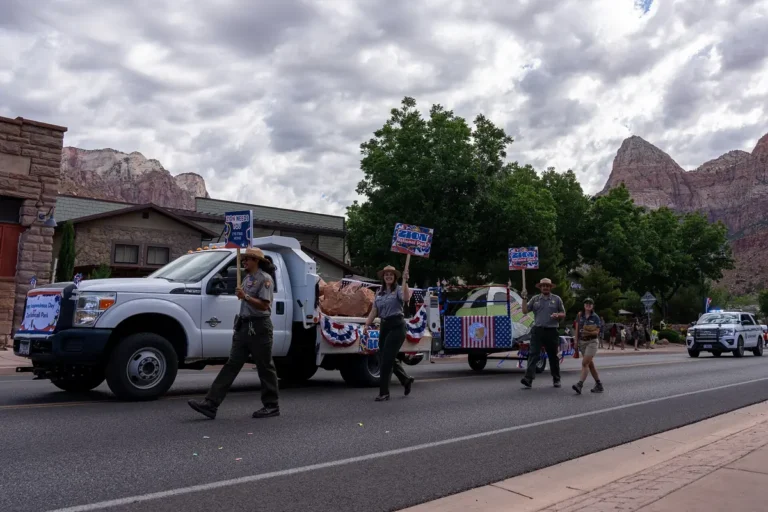
Clackamas County Oregon Fair Festival
Each August, five days of county fair take over the grounds at Canby: exhibit halls and livestock barns, a carnival lot, three stages and a professional rodeo sharing one fair week. The geography catches many readers out: Oregon City is the seat of Clackamas County government, yet it hosts no part of this fair — Canby does. The documentation is unusually good, because the fair’s own history page, 2018 price list and 2026 camping rules all survive to anchor everything below.
Names That Never Merge at Canby
The plain Clackamas County Fair is the form on the fair’s own history page, on the City of Canby’s fair page and in the county’s advisory-boards layer. Fair-week layers join the rodeo to the name — Clackamas County Fair and Rodeo, Clackamas County Fair & Canby Rodeo, Clackamas County Fair and Canby Rodeo (court-contract layers), Clackamas County Fair & Rodeo (2025 premium book and magazine layers) — and none of those forms is merged or shortened here. Clackamas County Fair Board is the standing organiser form, assigned oversight of the fairgrounds and the annual county fair in the county’s advisory-boards layer and named among the protected parties in the 2026 camping rules. Names attach to it only inside dated layers — Chindgren, director in 1929 and president in 1941, and Traverso, a seventeen-year member in a 2017 layer — while 2019 and 2021 board layers name only that era’s officers. No current roster exists.
Clackamas County Fair Association belongs to history alone, organised in 1908, buying the Canby site in 1909 and operating the fair until 1925. Clackamas County Fair and Event Center is an operator form only in a state layer, with a grant attached in that layer. The Canby Rodeo Committee and Canby Rodeo Association govern the rodeo court in contract layers only, and OSU Extension – Clackamas County is the supporting 4-H office.
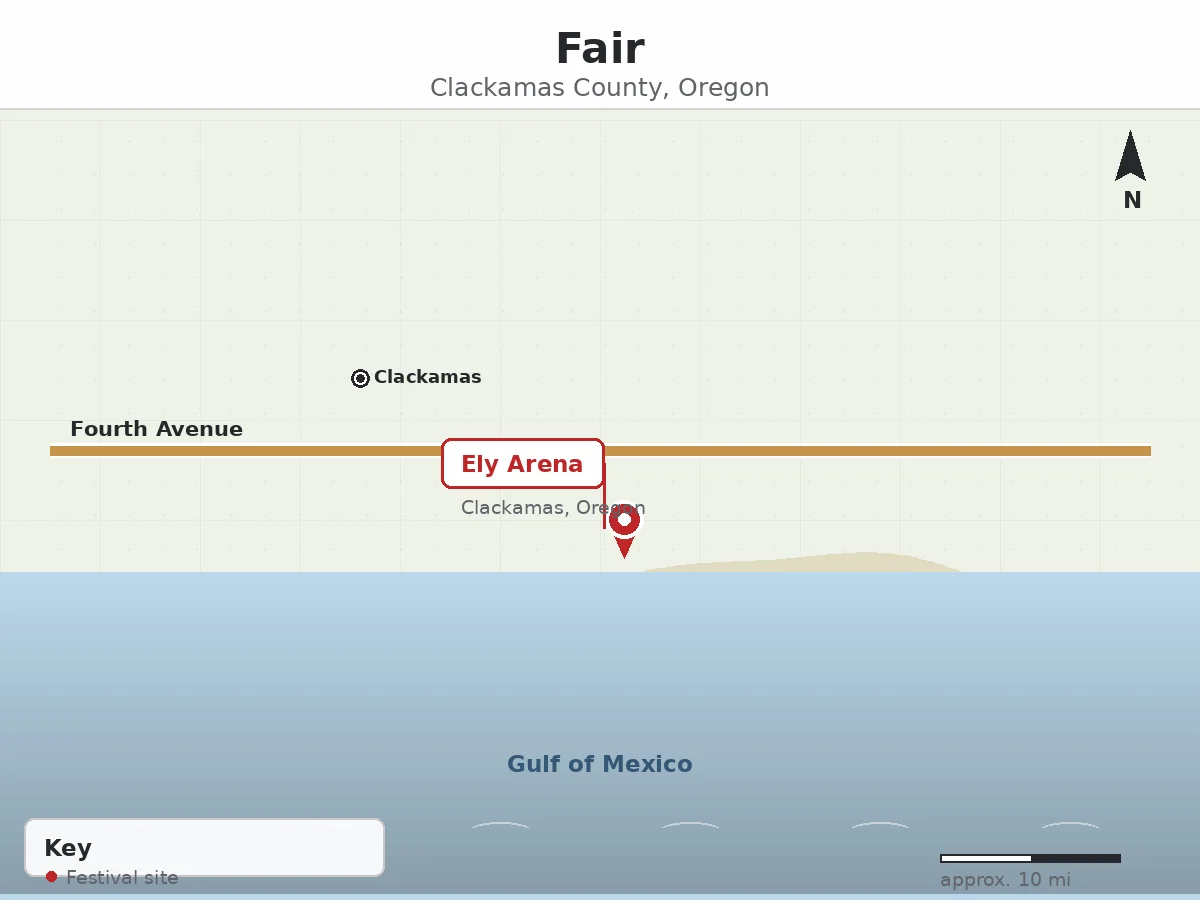
The grounds answer to Clackamas County Event Center on the fair site’s homepage, which calls the centre the home of the Clackamas County Fair since 1907, to Clackamas County Fair and Event Center in the site’s title form, and to Clackamas County Fairgrounds in county and city layers; the site was long the Canby Fairgrounds, renamed in 2009 in the history layer. Its street is Northeast Fourth Avenue in Canby, printed with unsettled punctuation — “694 NE 4th Ave. Canby, OR 97013” on the fair site, the grounds name and a comma added in the county layer, “694 N.E. 4th Ave.” in a 2025 magazine — and the grounds hold the Main Pavilion, Clackamas Hall, Horning Hall, the 4-H Exhibit Hall, Ely Arena and the carnival lot.
Quick Facts
| Point | What the layers show |
| Event | The Clackamas County Fair at Canby, with joined fair-and-rodeo forms in fair-week layers |
| Host town | Canby, Oregon, which is not the county seat |
| County seat | Oregon City, seat of Clackamas County government, which does not host the fair |
| Grounds | Clackamas County Event Center or Fairgrounds, on Northeast Fourth Avenue, Canby |
| Documented spans | August 14 to 18, 2018; August 16 to 20, 2022; August 13 to 17, 2024 (tourism); August 12 to 16, 2025; August 18 to 22, 2026; August 17 to 21, 2027 (fair site) |
| Organiser form | Clackamas County Fair Board; the Fair Association ran it from 1908 to 1925 (history layer) |
| Gate record | Only the fair’s own 2018 price list; no fair-side ladder for 2024 to 2027 |
| Fair camping | Dry camping only under the 2026 rules; fee unpublished |
A History Page That Does the Talking
The fair’s own History page states: the first official Clackamas County Fair was held in 1907 in Gladstone Park. In 1908 the Clackamas County Fair Association organised and sold membership certificates; in 1909 it bought land from the estate of Aaron Wait for three thousand six hundred ninety-two dollars and fifty cents, with the county court adding two hundred fifty dollars. The Association operated the fair until 1925, when state law placed fairs under the jurisdiction of counties.
For a useful comparison, see the Benton County Oregon Fair Festival for another county festival.
The same page dates the Main Pavilion, livestock barns and grandstand to 1924, records wartime curtailment to a youth show, and a first free rodeo in 1958; the fair was honoured as an Oregon Heritage Tradition in 2014, and in 2017 the rodeo arena took the name Bob Traverso Arena and the board voted the fair down from six days to five, never back-applied.
The billings stand apart, never reconciled with those statements: 100 years celebrated in 2006, the 2018 edition billed as the 112th Annual, themes claiming 85 years in 1991 and 105 years of fun in 2011. No founding year is calculated from any of that, and the venue’s home-since-1907 claim stays a homepage wording.
What to Expect
The mix every fair-week layer describes
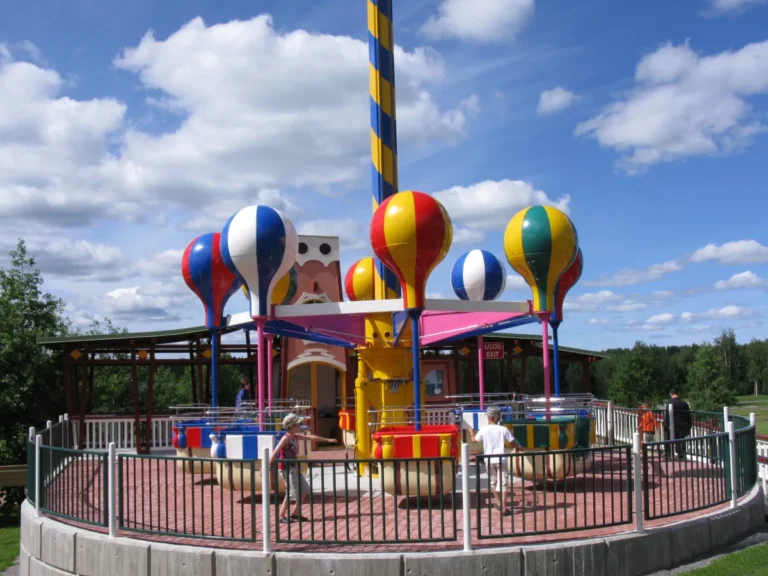
City and fair layers describe the same recurring blend: amusement rides, livestock exhibits and competitions, live entertainment across three stages, handcraft work and produce, 4-H and FFA exhibits and the PRCA rodeo.
Two earlier bills: 2018 and 2022
The 2018 price list doubles as a programme scrap, printing the theme GROW IT…SEW IT…SHOW IT and a flag-raising opening on Tuesday at 11 in the morning. For 2022, a fair-info layer puts the Canby Kiwanis Kiddie Parade at 10 on opening day, from Knight School to the fairgrounds, children of 12 and under admitted free for taking part; the Canby Rodeo at half past seven on fair nights; a Saturday Junior Livestock Auction; and a Miss Rodeo Oregon Coronation.
Five nights on the 2025 main stage
The 2025 premium book and community magazine give the theme as Stirrup Some Fun!, and the magazine sets out the main-stage sequence: Jessie Leigh on August 12, Olivia Harms with The Roadrunners on August 13, Jacquie Roar on August 14, Precious Byrd on August 15, and Jeff Miller and the Congregation on August 16, closing with the Junior Livestock Auction and Rodeo Court tryouts.
What survives for 2026
For 2026, an August press layer in the Herald Pioneer describes the Kiwanis Kiddie Capers Parade opening fair week on August 18 — registration at 8, judging at 9, step-off at 10 from behind Knight Elementary School — calls it a fair tradition since 1948 in that layer, with free entry and a free fair ticket for participating children and accompanying adults while supplies last. Bike decorating sits on August 17 in the same layer, and the theme is Pigs, Pies, and Patriotism; no fuller 2026 programme was gathered.
Planning Your Visit
Spans that belong to single years
Six editions carry documented spans: August 14 to 18 in 2018 (the fair’s own price list); August 16 to 20 in 2022 (a fair-info layer); August 13 to 17 in 2024 (a tourism description); August 12 to 16 in 2025 (press layers); August 18 to 22 in 2026 (city and camping-rule layers; the fair closes at 11 nightly); and August 17 to 21 in 2027 (the fair site’s homepage). No span appears for 2023 — a June 2023 Fair Board agenda publishes no fair dates — so that year stands as a gap.
The gate: one full ladder, from 2018
The only fair-side ladder belongs to 2018 entire: daily gate at nine dollars for adults of 13 and older, five dollars for juniors from 7 through 12, nothing for children of 6 and under, five dollars for senior citizens from 65 to 74, and nothing for Diamond Jubilee seniors of 75 and older. The list’s parking section survives without figures, so 2018 parking is unrecorded; a 2022 fair-info layer prices parking at ten dollars per car, cash only, run by Canby High School Athletics.
Theme days soften the gate in their own years only. For 2025, a community magazine makes August 12 a Family Day (children of 12 and under free for joining the Kiddie Caper Parade), August 13 a Senior Citizen Day (reduced entry at 65 to 74, free from 75 up), August 14 a First Responder Day (police, fire and paramedics free on identification, the public free until 3 in the afternoon), printing no 2025 base prices behind those terms. A 2022 fair-info layer prices its own theme pattern at two dollars — seniors at 65 to 74, children of 12 and under with a grandparent of 65 or older, and visitors needing disability assistance, whose assistant enters free. A 2025 tourism listing instead charges nine dollars for adults and five for seniors and youth yet frees children of 7 and under, clashing with the 2018 list’s 6 and under and left unreconciled; for 2024 through 2027, no fair-side base gate price was found at all.
Rodeo seats and the money that is not the gate
The 2018 price list prices the rodeo separately, for 2018 only: combined fair and rodeo admission at twenty dollars for a reserved grandstand seat, seventeen for bleachers, fifty for box seating and twenty-two for the over-21 Bull Pen; rodeo admission alone at eleven dollars reserved, eight for bleachers, fifty for box seating and thirteen for the Bull Pen. Exhibitor money is not visitor money: a 2025 premium-book layer charges ten dollars per Grange or Club booth, and an Extension 4-H layer sets a five-dollar static exhibitor fee, a contest fee of five dollars for up to two contests or ten for three or more, a five-dollar livestock entry fee per animal and a two-dollar small animal entry fee per animal. Carnival bracelet prices were never published in the layers gathered.
Camping by the fair’s own 2026 rulebook
Fair-time camping is documented in the fair’s own 2026 Campground Rules and Regulations: dry camping only, with no hook-ups for power, water or sewer. Admission passes are required on top of the camping fee, expressly not included in it. Move-in is staggered — row A on Saturday, August 15, rows B through E on Sunday, August 16 and Monday, August 17, from 8 in the morning to 8 at night — and each permit covers one campsite and one vehicle. Generators must be off by 11 at night, and alcohol, smoking and vaping, pets and open fires are prohibited. A sanitary service empties holding tanks for an unstated fee; cancellations after August 10, 2026 earn no refund; and all campsites must be vacated within twenty-four hours of the fair’s close on August 22. The rules carry a fees heading with no figures beneath it, so a space’s cost is unpublished.
A Day Built From the 2025 Layers
The 2025 magazine layer sketches a satisfying first day: arrive on the morning of Tuesday, August 12, walk the Main Pavilion and 4-H Exhibit Hall, and — if children are with you — join the Kiddie Caper Parade, since taking part carried free admission for children of 12 and under on that Family Day. The afternoon belongs to the carnival lot and the handcraft displays, and the evening closes on the main stage with Jessie Leigh, first of five named nights.
Records That Belong to Other Events
The Canby Rodeo keeps a record of its own. Beyond the fair-week forms joining it to the fair, the rodeo’s own site, ticket and circuit layers and the Rodeo Committee’s and Association’s papers belong to the rodeo alone: no standalone purse, performer or price is imported here, and neither record’s prices are read as the other’s. The Event Center’s other tenants are not the fair: an Oregon Renaissance Faire, the Harefest gathering with its own camping, a Winter Fair and Holiday Market, a Country Christmas Bazaar, swap meets and a spring 4-H tack and bake sale with charges of its own in its layer. The Oregon State Fair is a separate record entire, including its 1861 first-fair siting near Gladstone; the Oregon Country Fair at Veneta merely sounds similar; and the Clark County Fair at Ridgefield, Washington, is another state’s fair with colliding initials.
Before You Set Out
- Check the fair’s own current layers for the year’s dates before fixing travel.
- Treat the 2018 price list as history when budgeting.
- If a theme day fits your party, note its year and terms, since the 2022 and 2025 patterns differ.
- Campers should arrive inside their row’s move-in window, ready for dry camping.
- Do not confuse the fair with the standalone rodeo’s own listings when buying seats.
Beyond the Fairgrounds
Oregon City, the county seat, hosts no part of the fair, but its own record — a one-of-a-kind municipal elevator in its encyclopedia entry, and territorial-capital history in other layers — is town history only.
The Fair’s Place in County Life
A fair moved by state law from a private association to county jurisdiction in 1925, and still overseen through the county’s Fair Board, is a civic institution as much as an entertainment, and its 2014 Oregon Heritage Tradition honour recognises that standing from outside.
Frequently Asked Questions
Is the fair held in the county seat?
No. Oregon City, the seat of Clackamas County government, hosts no part of the fair; the fair is held at Canby, which is not the seat, and its first edition in 1907 stood at Gladstone Park.
What does admission cost?
The only published ladder is the fair’s 2018 price list: nine dollars for adults, five dollars for juniors and younger-band seniors, and free entry for children of 6 and under and seniors of 75 and older — all for 2018 only. No fair-side base price was found for 2024 to 2027.
Can visitors camp at the fairgrounds during the fair?
Yes, on the fair’s own 2026 rules: dry camping only, no hook-ups, generators off by 11 at night, and fair admission required on top of the camping fee. The rules print a fees heading without figures, so a space’s cost is unpublished.
When did the fair begin?
The fair’s own history page states that the first official fair was held in 1907 in Gladstone Park, that an association organised in 1908 bought the Canby ground in 1909, and ran the fair until 1925.
What to Expect From the Next Clackamas County Oregon Fair Festival
How often is Clackamas County Oregon Fair Festival held?
The pattern is annual, five days at a time in August, with six editions between 2018 and 2027 carrying their own spans; no span was found for 2023, and the fair’s shape changed once, when the board voted in 2017 to shorten it from six days to five.
When is the next Clackamas County Oregon Fair Festival?
After the August 18 to 22 edition of 2026, the fair site’s homepage heads the next fair for August 17 to 21, 2027 — a span to confirm against the fair’s own publications.
Will the dates change?
They have moved before: documented editions open anywhere from August 12 to August 18, and the length itself changed in 2017, so treat any single year’s span as that year’s alone.
The fair endures in the record as a Canby institution, its 1907 beginning stated plainly by its own historians, and its paper trail honest enough to show where its prices and programmes stop.